

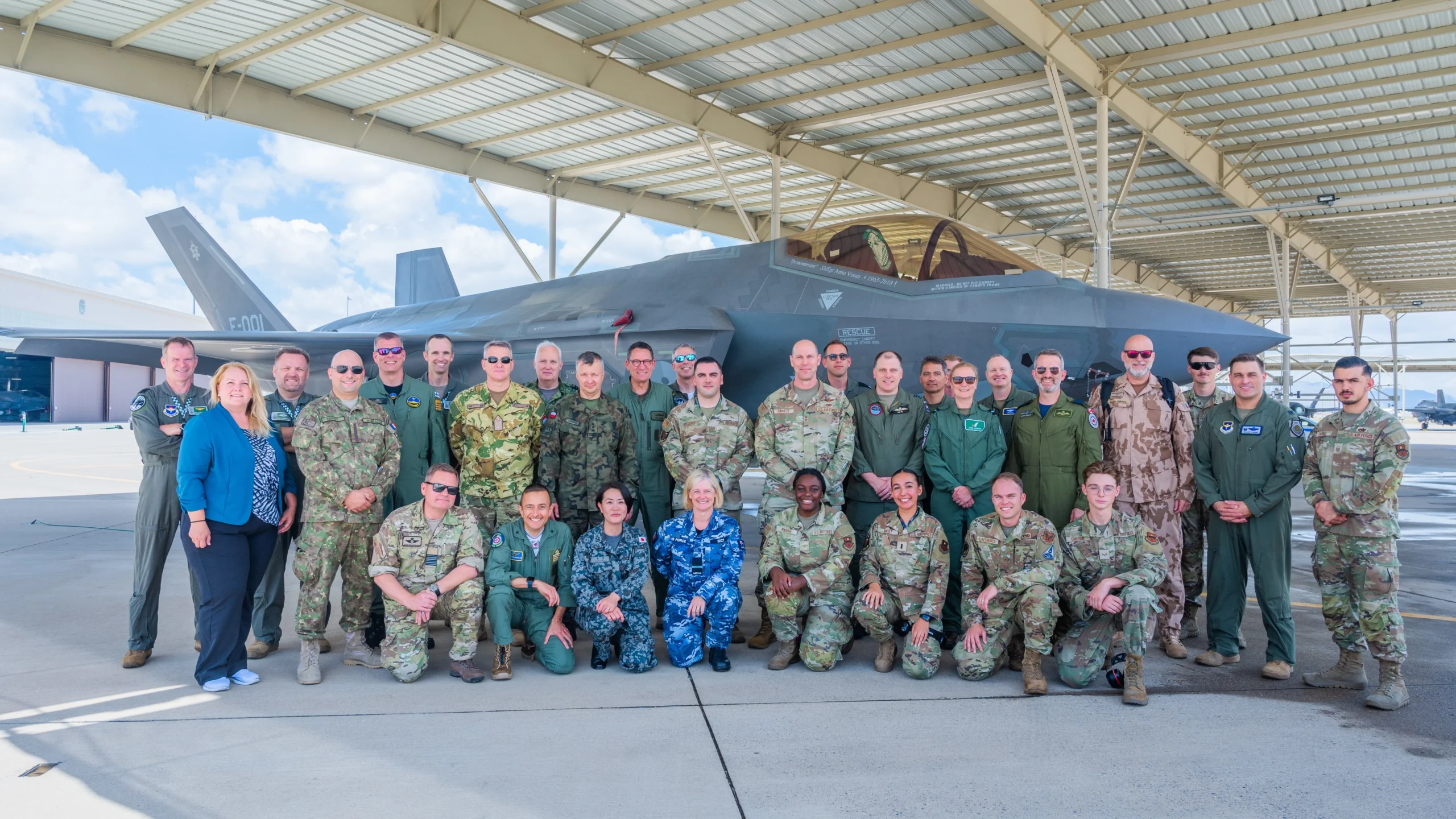
TEXAS- The US Air Force is adding real combat realism to Basic Military Training by building two mock airfields that allow trainees to work directly with operational aircraft and airfield systems.
The initiative is part of BMT 3.0, a new phase of training focused on preparing Airmen for contested and expeditionary operations through hands-on, mission-driven instruction.
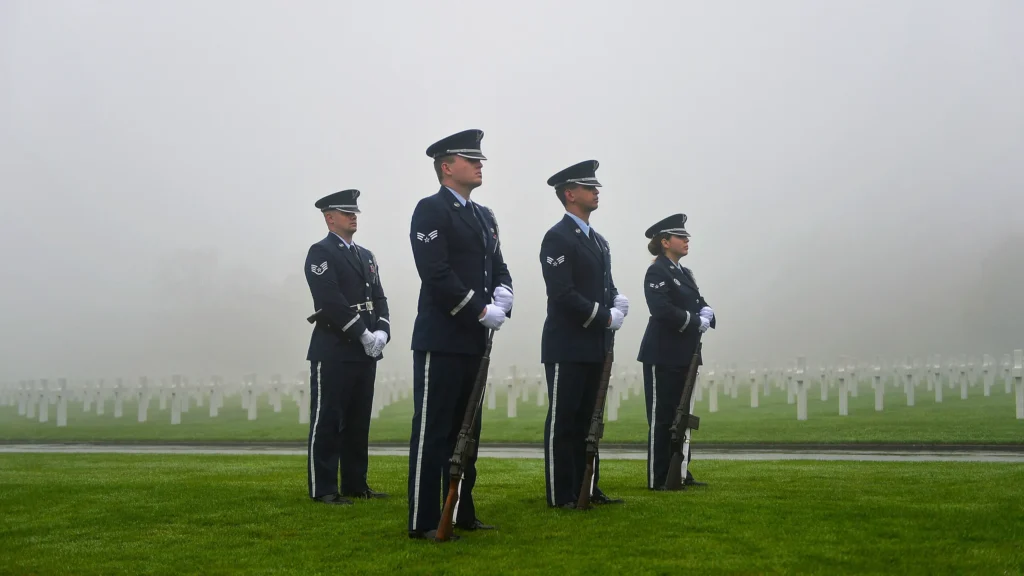
Airfields for Combat-Focused Training
The first mock airbase is scheduled for completion by October and will replicate a permanent airfield environment. It will include a short concrete runway, full tarmac infrastructure, two C-130 Hercules aircraft, and one F-16 Fighting Falcon. The site is located near existing Basic Military Training drill pads to allow seamless integration into daily instruction.
Trainees will practice essential airfield support tasks such as aircraft arming, refueling, casualty evacuation, cargo loading, and post-attack runway repair. These activities are designed to move beyond classroom instruction and expose Airmen to the physical and operational demands of sustaining airpower during conflict.
A second training range, focused on expeditionary operations, is expected to be completed by the end of the year. This site will feature dirt assault strips and simulate austere, forward-deployed conditions aligned with Agile Combat Employment concepts. It will support PACER FORGE, the final multi-day field exercise introduced in 2022.

BMT 3.0 and the Shift Toward Multi-Capable Airmen
BMT 3.0 builds on changes introduced under BMT 2.0, which emphasized physical conditioning and small-team operations. The new phase prioritizes realistic environments that allow Airmen to apply core skills under simulated combat conditions.
The training framework centers on the Air Force’s DOGS construct: defend, operate, generate, and sustain airpower. The goal is to ensure every Airman understands how their role supports airfield operations during high-end conflict scenarios.
Infrastructure Investment and Long-Term Expansion Plans
The Air Force has allocated approximately $30 million across fiscal years 2025 and 2026 to develop the initial permanent mock airbase. The facility will cover an area slightly larger than a football field and is considered a proof-of-concept for future expansion.
Long-term plans include a more formal military construction project that would double the size of the training range and add more operational environments. Total costs for the permanent expansion are expected to remain under $100 million, with potential funding requested in fiscal year 2028, Air and Space Forces reported.
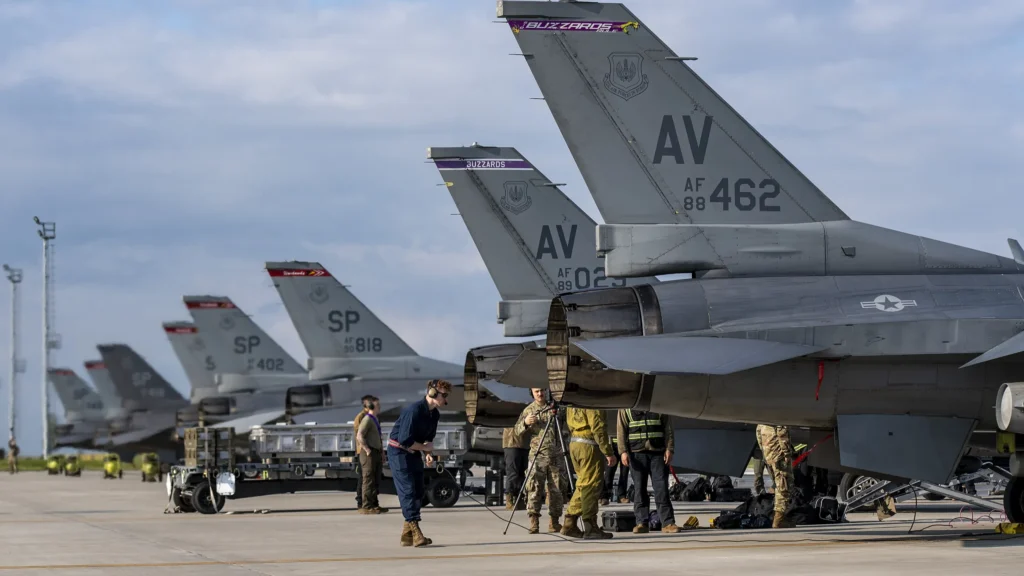
Aircraft and Training Systems on the Mock Airbase
The mock airbase will be equipped with retired F-16 and C-130 aircraft transferred from Sheppard Air Force Base. These aircraft are no longer flight-capable and are dedicated solely to training use.
Sixteen containerized training stations will support eight core mission tasks, including aircraft arming, refueling, casualty evacuation, cargo handling, airfield repair, aircraft marshaling, aircraft familiarization, and entry control operations.
Each station is designed for short, intensive sessions that evaluate teamwork, communication, and decision-making rather than technical mastery.
Hands-On Training for High-Tempo Operations
Airmen will load inert AIM-9 missiles, rocket pods, chaff, and flares on the F-16 to understand weapons handling procedures. Fueling stations will use weighted hoses to replicate real-world physical demands.
For post-attack runway repair, trainees will assess simulated bomb damage and select appropriate repair materials based on standard Air Force guides. Training will progress from classroom instruction to controlled scenarios, then to full-scale expeditionary exercises during PACER FORGE.
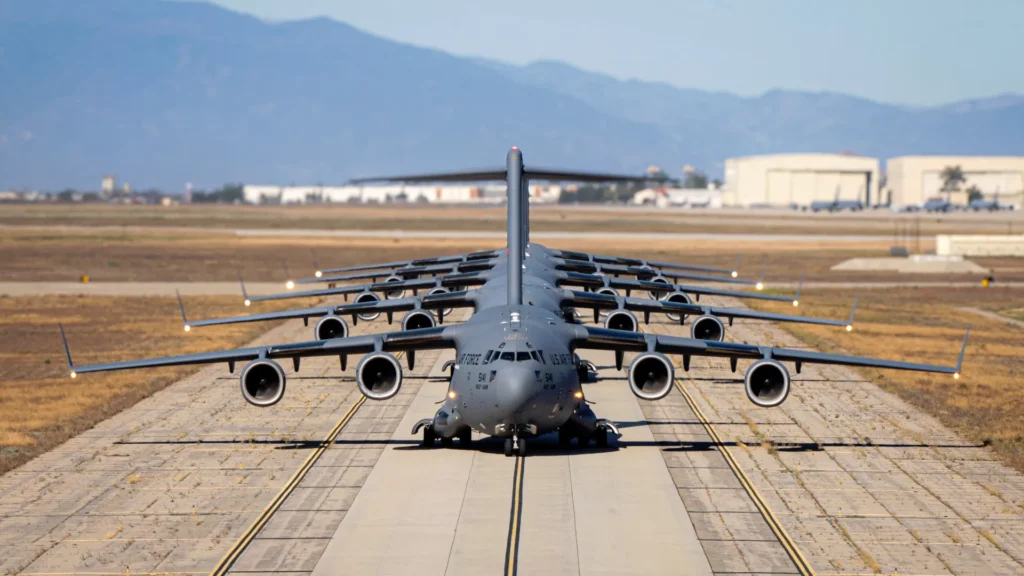
Preparing Airmen for Expeditionary Environments
The expeditionary airbase training range will shift trainees from fixed-base operations to austere, dirt-strip environments. While aircraft assignments for this site are still under review, the focus remains on adaptability, mission continuity, and operating under degraded conditions.
The transition from drill pad training to functional airfield operations is intended to give Airmen a clear understanding of how airpower is generated and sustained in real-world conflict.
Stay tuned with us. Further, follow us on social media for the latest updates.
Join us on Telegram Group for the Latest Aviation Updates. Subsequently, follow us on Google News
