


ABU DHABI- Etihad Airways (EY) has increased service between Tel Aviv (TLV) and Abu Dhabi (AUH) to six daily flights. This marks the first time the airline has scheduled more than five daily services on a route to Israel.
The enhanced schedule took effect on June 15 and now provides 42 weekly flights, strengthening air connectivity between the UAE and Israel while supporting growing demand for both point-to-point and connecting travel.

Etihad Adds 6th Daily Flights to Tel Aviv
Traffic between Israel and Abu Dhabi has grown steadily in recent years. The Tel Aviv station, managed by Ran Pollak under Maman Aviation, now ranks fifth among Etihad’s European markets by activity volume, after Germany, France, Spain, and Italy.
Over the past year, more than 300,000 passengers traveled between Israel and Abu Dhabi, with average load factors of around 90 percent.
Around 30 percent of passengers ended their journey in Abu Dhabi for business or leisure. The remaining 70 percent continued to onward destinations across Asia. Demand growth has been especially strong for Thailand, Tokyo, South Korea, and the Philippines.
The sixth daily rotation is operated using an Airbus A321 with 188 seats.
- One of the new departures leaves Tel Aviv at 15:00 and arrives in Abu Dhabi at 19:15.
- The return service departs Abu Dhabi at 08:45 and lands in Tel Aviv at 11:00.
Etihad has also highlighted competitive long haul fares from Israel, including Bangkok itineraries available from around 960 USD for one-stop connections.
The expanded schedule improves connection options through Abu Dhabi for passengers traveling onward to Asia and the Pacific. Higher frequency allows for shorter transfer times and broader itinerary choice. The consistently high seat occupancy levels indicate balanced demand across leisure, business, and transit traffic.
Using the Airbus A321 on the route enables Etihad to match aircraft capacity with frequency and maintain operational flexibility. The move supports broader network planning while meeting market demand between Israel and the UAE.
Ran Pollak noted that the increased schedule reflects the strengthening role of Abu Dhabi as a connecting hub for Israeli travelers.
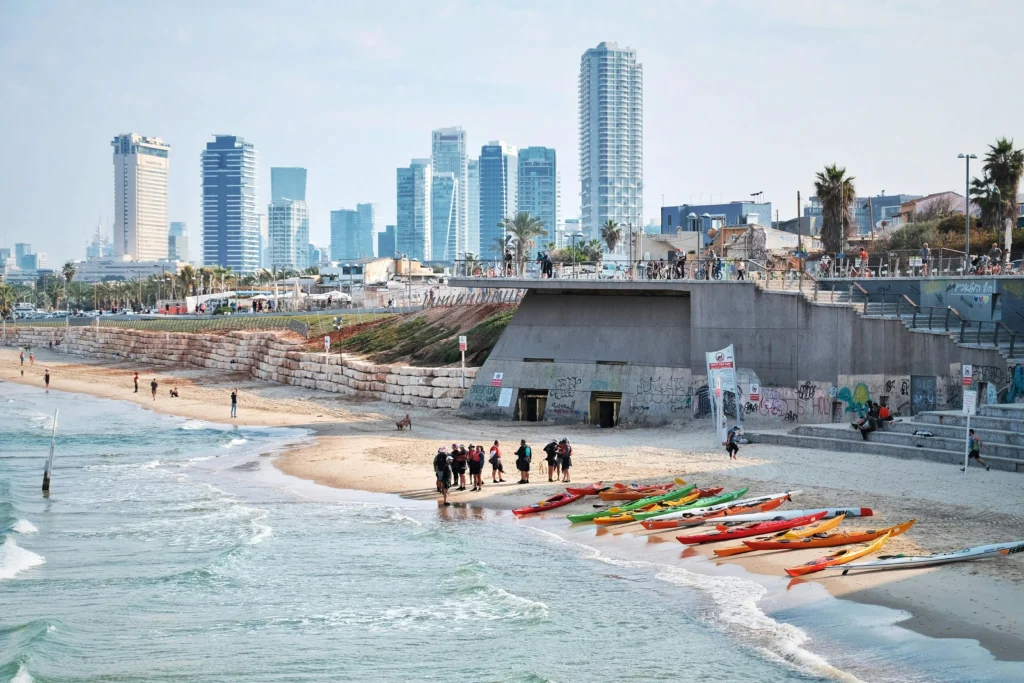
Tel Aviv Travel Guide
Tel Aviv is known for its lively spirit, beach culture, and strong creative energy. It blends modern life with historic charm in a way few cities do.
Here’s the thing, the city offers architecture, food, nightlife, and culture, all in one compact and welcoming destination for visitors.
Exploring Tel Aviv’s Vibrant Urban Energy
Tel Aviv grew from coastal dunes into one of Israel’s most important economic and cultural centres.
Today, it supports innovation, technology, design, and the arts while still keeping a relaxed, open social atmosphere. The city is also known for inclusivity, with events like annual Pride celebrations that attract visitors from around the world.
Tourism here revolves around beaches, nightlife, heritage areas, museums, and local cuisine. Each neighbourhood has a different pace, from the luxury seafront to the narrow old streets of Jaffa. This mix of modern life and historic depth makes Tel Aviv both dynamic and approachable.
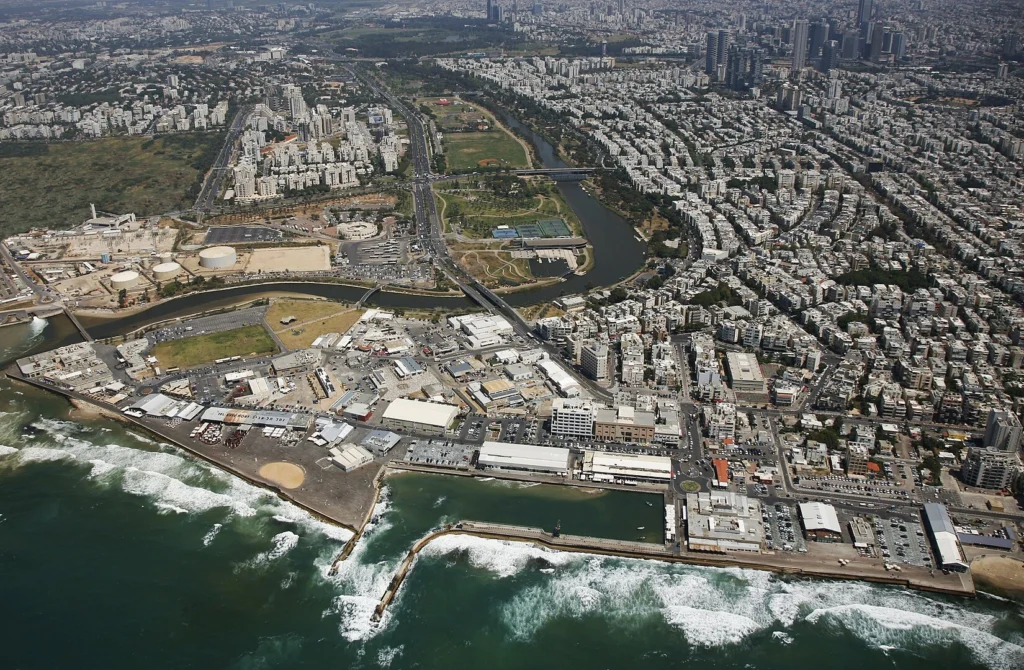
Top Places to Visit
Beaches and the Tayelet
The Mediterranean coastline is the heart of Tel Aviv. Popular spots include Banana Beach, Frishman Beach, and Gordon Beach. A paved boardwalk called the Tayelet runs between central Tel Aviv and Jaffa, lined with cafes and restaurants where visitors gather in the evenings.
Jaffa Old Town
South of central Tel Aviv, Jaffa offers stone alleyways, old port views, flea markets, and artisan shops. It contrasts sharply with Tel Aviv’s skyline and provides a slower, calmer atmosphere.
Yemenite Quarter
This historic area is known for local eateries, market stalls, and narrow streets. It offers affordable food and an authentic neighbourhood feel.
Bialik Street
This street houses landmarks like Bialik House, Beit Ha’ir, and the Rubin Museum, all significant to the city’s artistic and civic history.
Rothschild Boulevard
One of the most scenic walking streets in the city, Rothschild Boulevard is also home to Independence Hall and the Haganah Museum.
Where to Stay in Tel Aviv
Luxury Hotels
High-end options include:
- Dan Tel Aviv
- David Intercontinental
- Herod Hotel
These hotels offer ocean views, premium dining, and upscale service.
Budget-Friendly Choices
More affordable stays include:
- Crowne Plaza Tel Aviv City Centre
- Hotel Gilgal
- The Spot Hostel Tel Aviv
- Hermitage Hotel
- The Savoy Hotel Seaside
- Sea-Land Suites
Food and Local Cuisine
Tel Aviv cuisine reflects Middle Eastern and Mediterranean influences. Key dishes include:
- Falafel
- Shakshuka
- Schnitzel
- Hummus
- Israeli salad
These foods are widely available in cafes, markets, and street stalls.
Travel Tips for Visitors
Plan travel documents and currency needs before arrival. The local currency is the Israeli Shekel. Public transport options include buses, taxis, and sheruts. Walking and cycling are also common. Hebrew is the official language, although English is widely understood in tourist areas.
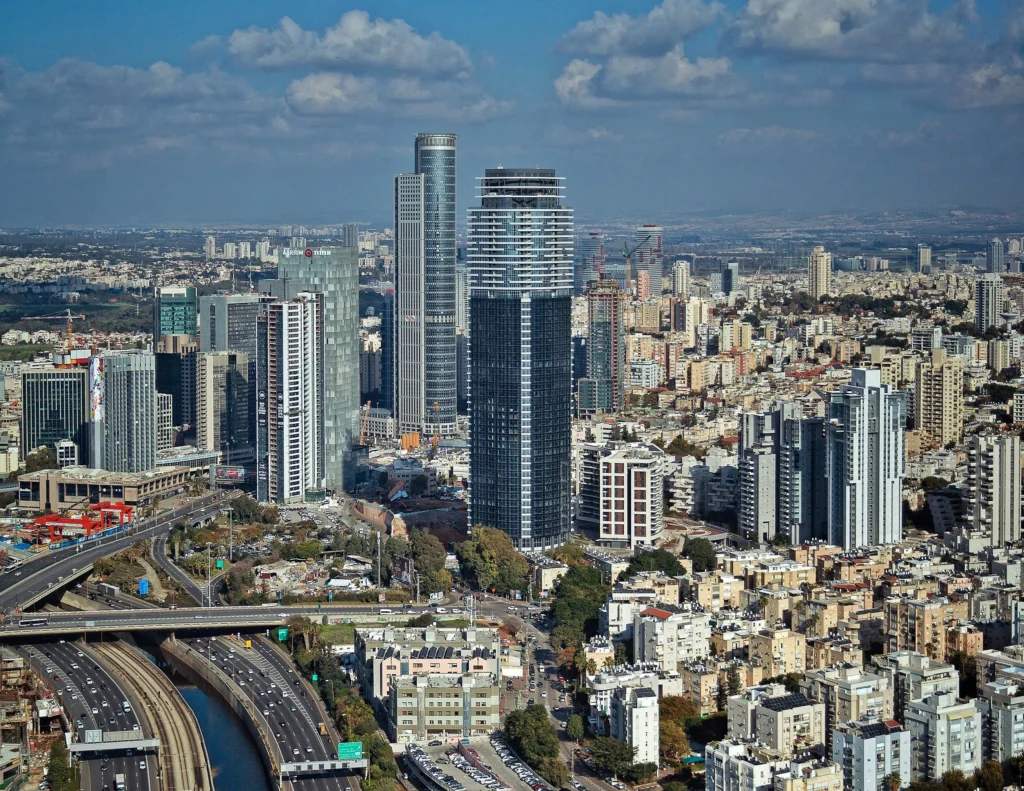
Getting to Tel Aviv
By Air
Ben Gurion Airport serves as the main international hub and is one of the busiest in the region.
By Rail
Train services connect Tel Aviv with major cities such as Jerusalem and Haifa, with frequent and comfortable services.
By Road
Border crossings are available from Egypt and Jordan for travellers entering Israel before continuing to Tel Aviv.
Weather and Climate
Tel Aviv has a Mediterranean climate. Summers are hot and dry. Winters are mild and wet. Average highs in summer reach about 32°C while winter temperatures usually stay above 10°C.
Best Time to Visit
The most comfortable months are March to April and September to November. Summer brings higher prices and stronger heat, but many visitors still come for the beaches.
Stay tuned with us. Further, follow us on social media for the latest updates.
Join us on Telegram Group for the Latest Aviation Updates. Subsequently, follow us on Google News
