

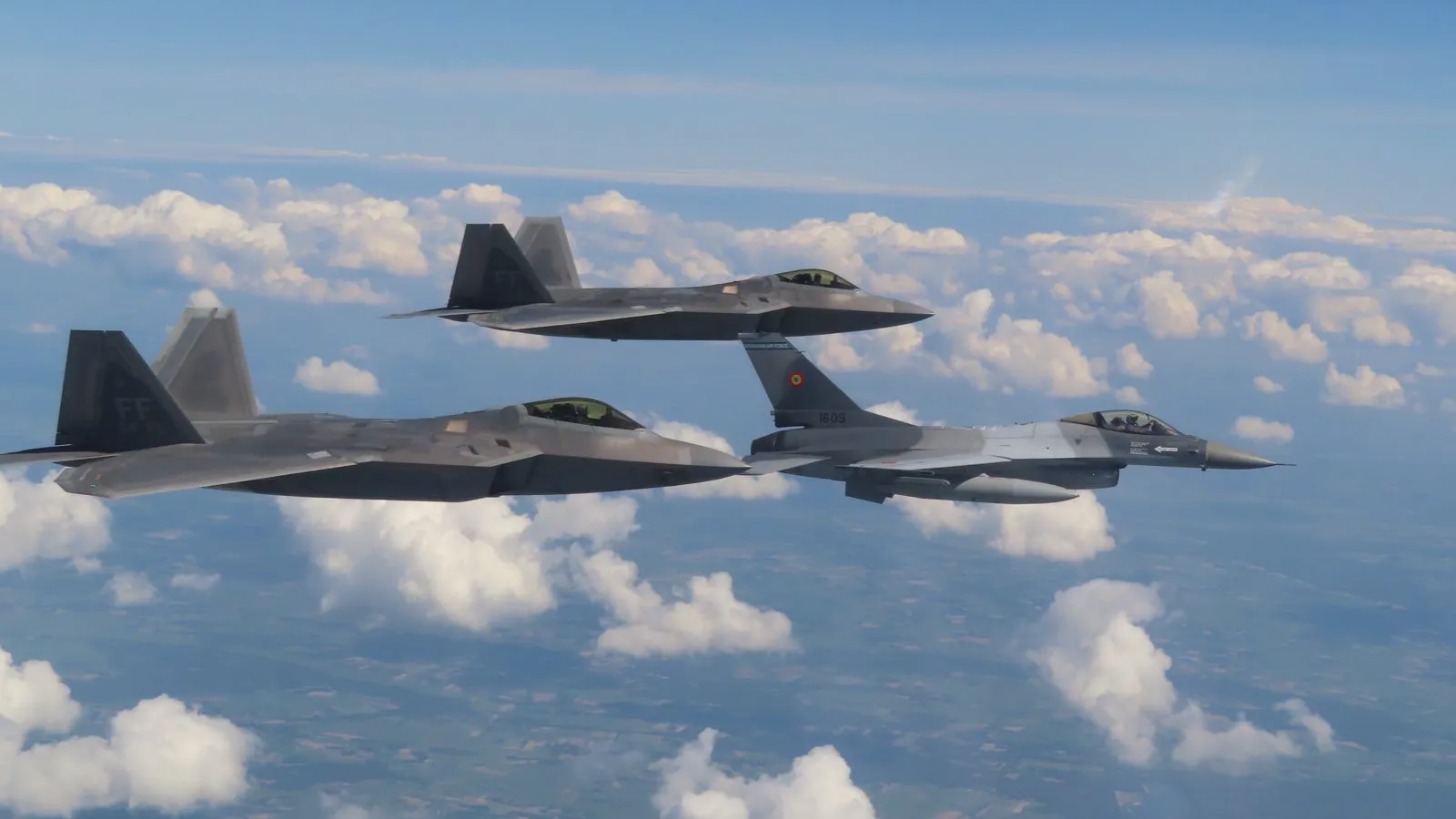
TAIWAN- As Chinese warships and aircraft moved into position around Taiwan for the launch of the People’s Liberation Army’s (PLA) latest large-scale exercise, “Justice Mission 2025,” Taipei responded not with words, but with imagery.
Hours after Beijing announced the start of joint drills involving live-fire exercises and simulated control of critical ports and sea lanes, Taiwan’s Ministry of National Defense released a short but carefully curated video. The footage was not dramatic, but its message was unmistakable: Taiwan is watching, and it can strike without warning.
Taiwan F-16 Tracks Chinese J-16
The video, titled “Resilient Taiwan, Steadfast Defense,” shows a Republic of China Air Force (ROCAF) F-16V fighter quietly tracking a Chinese J-16 multirole aircraft, while a Taiwanese Navy Cheng Kung–class frigate, Tian Dan, shadows a PLA Navy Type 054A frigate, Anyang, at sea. Together, the scenes form a subtle but pointed rebuttal to China’s display of force.
The most consequential moment in the video is not immediately obvious. The F-16V is shown monitoring the J-16 using the AN/AAQ-33 Sniper Advanced Targeting Pod, a passive electro-optical system that does not emit radar signals.
Key targeting data in the footage is deliberately blurred, but the implication is clear: the Taiwanese jet was able to detect, identify, and potentially engage the Chinese aircraft without alerting it.
According to analysts cited in Eurasian Times, this matters because a passive sensor deprives the opposing pilot of warning. Without radar emissions, the tracked aircraft may never know it has been locked on—until a missile is in the air.
Shu Hsiao-huang, an associate research fellow at the Institute for National Defense and Security Research, noted that this capability could allow an ROCAF F-16V to cue an AIM-9X Sidewinder missile while remaining electronically silent, creating what amounts to a “silent kill” scenario in a real conflict.
Previous images released during the PLA’s “Joint Sword–2024A” exercises had already hinted at this capability, showing Taiwanese F-16s maintaining targeting solutions while maneuvering aggressively. The new video reinforces that message at a moment of heightened tension.
Signaling Under Pressure
China’s Eastern Theater Command announced earlier today that “Justice Mission 2025” would include live-fire drills across five designated sea and air zones surrounding Taiwan, alongside simulated naval and air blockades.
Taiwanese officials say the exercise also includes psychological and cognitive warfare components designed to undermine public confidence on the island.
Taipei’s response has been twofold. Militarily, the Ministry of National Defense activated a response center and initiated immediate combat readiness drills.
Strategically, it released imagery meant to reassure the domestic audience—and warn Beijing—that Taiwan’s forces retain credible deterrent capabilities despite being numerically outmatched.
This latest round of drills marks the PLA’s seventh major exercise around Taiwan since former U.S. House Speaker Nancy Pelosi’s visit to the island in 2022.
It is also the first since Japan’s Prime Minister Sanae Takaichi publicly stated that a Chinese blockade of Taiwan could constitute a “survival-threatening situation” under Japanese law, a remark widely interpreted as lowering the political threshold for Japanese military involvement.
The drills also follow closely on the heels of Washington’s approval of an over US$11 billion arms sales package for Taiwan earlier this month, further intensifying Beijing’s strategic messaging.
The Technology Behind the Message
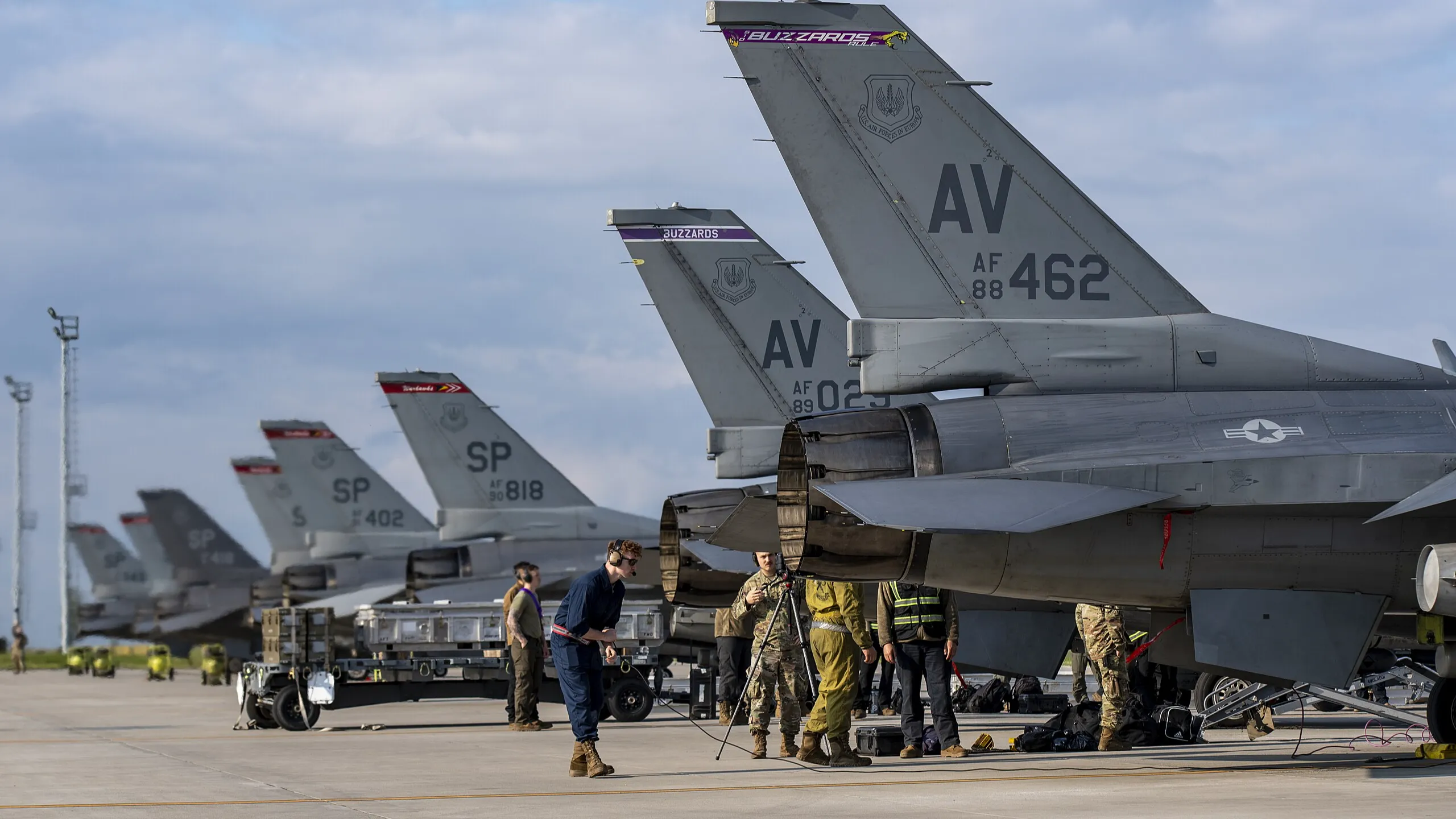
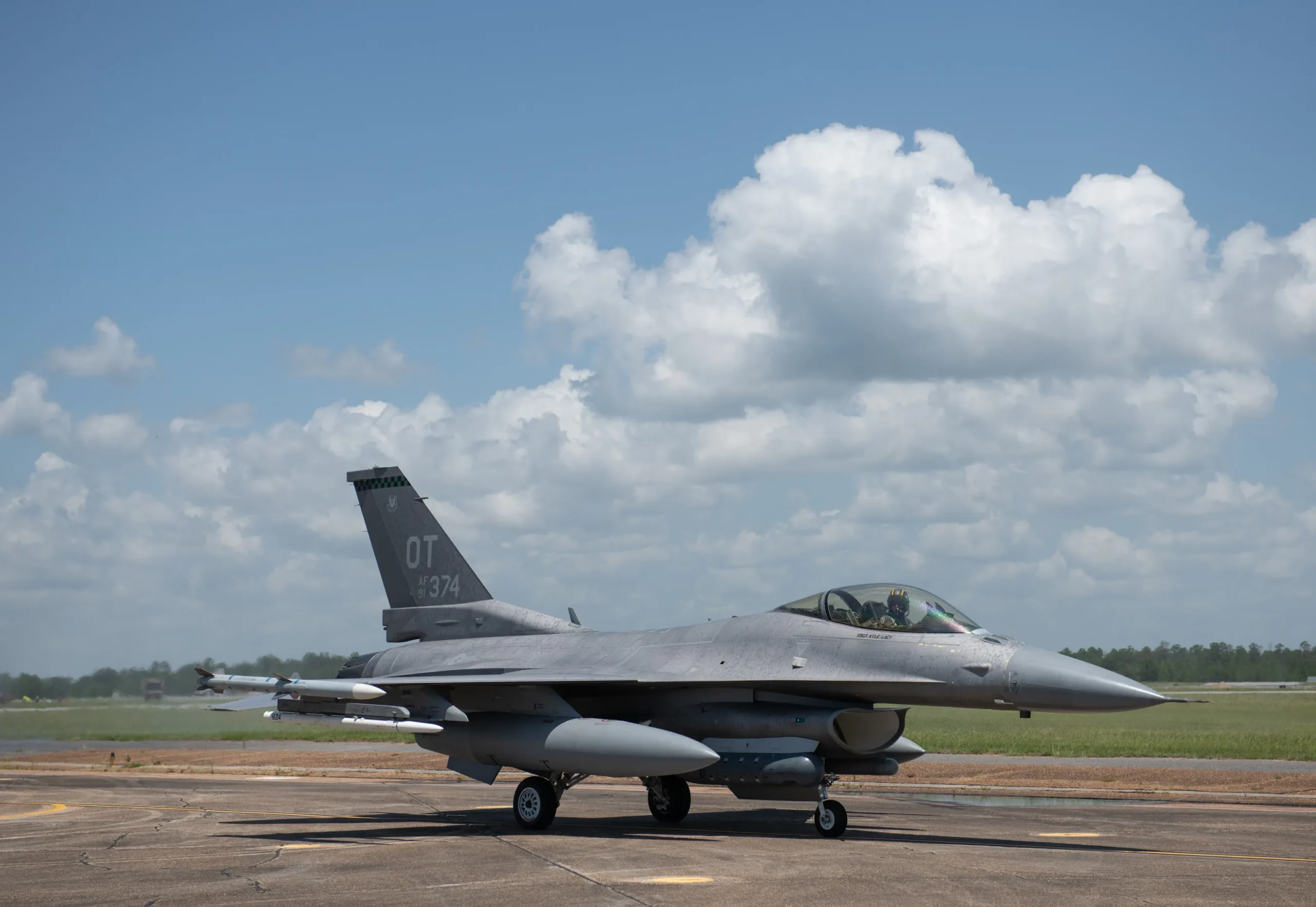
At the center of Taiwan’s aerial deterrence is the F-16V, the result of an ambitious modernization effort known as the Peace Phoenix Rising program.
Launched in 2016 at a cost of approximately US$4.5 billion, the program upgraded 139 of Taiwan’s legacy F-16A/B Block 20 fighters to the advanced F-16V configuration.
These aircraft now feature AESA radar, modern data links, helmet-mounted cueing systems, advanced mission computers, and compatibility with weapons such as the AIM-9X.
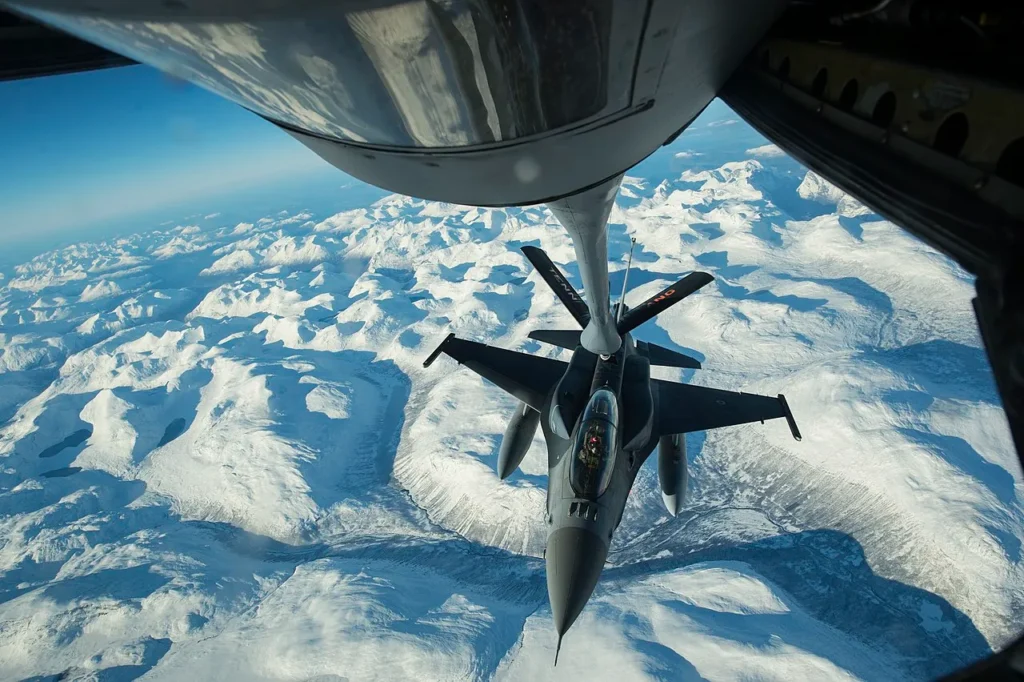
The AN/AAQ-33 Sniper pod, in particular, allows long-range detection of airborne targets using electro-optical sensors, with reported air-to-air detection ranges approaching 187 kilometers.
Defense scholar Su Tzu-yun of the National Defense Academy explained that, compared to older systems like LANTIRN, the Sniper pod integrates both search and targeting functions across visible and infrared spectra—making it well-suited for tracking adversary aircraft without revealing its presence.
Taiwan completed delivery of its last upgraded F-16V in December 2023 and commissioned its first fully operational Viper wing in late 2021.
While the island has yet to receive the 66 new-build F-16 Block 70 fighters ordered from the United States in 2019, their eventual arrival is expected to further strengthen ROCAF’s air combat capability.
The J-16 Factor
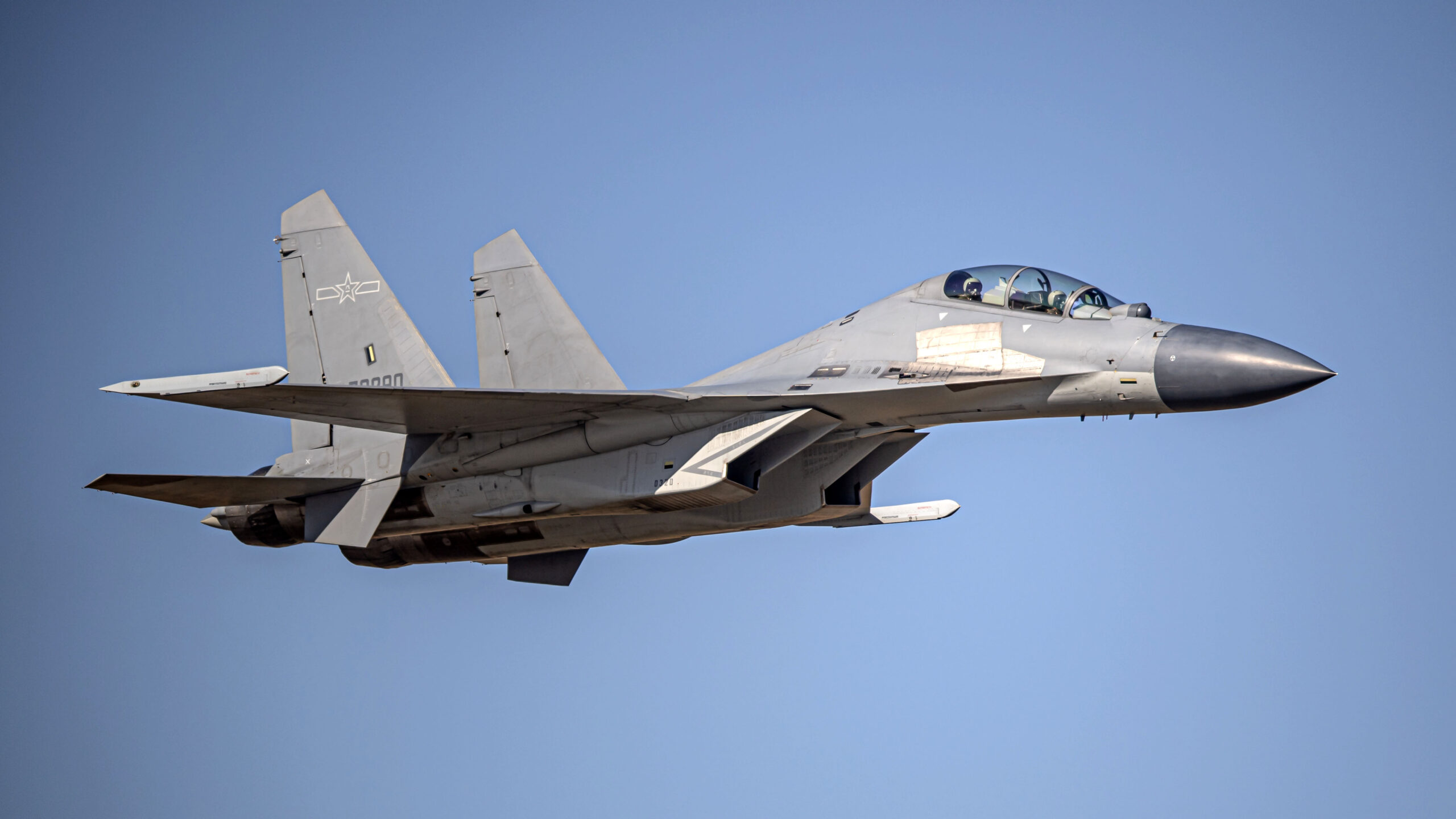
The aircraft shown being tracked—the Chinese J-16—is no lightweight opponent.
Derived from the Russian Su-27 lineage, the J-16 has evolved into a heavily modernized strike fighter equipped with AESA radar, advanced electronic warfare systems, and Chinese-made WS-10B engines.
Nearly 400 J-16s serve with the PLA Air Force, making it one of its primary frontline platforms.
Chinese analysts often describe the J-16 as the world’s most capable “Flanker,” likening it to aircraft such as the U.S. F-15 or France’s Rafale. Western assessments, including those from the Royal United Services Institute, similarly regard it as China’s most versatile multirole strike aircraft.
Yet despite its sophistication, the J-16 has never been tested in combat. Its most notable real-world encounters have involved intercepts of foreign reconnaissance aircraft, including a controversial 2022 incident involving an Australian P-8 Poseidon over the South China Sea.
That lack of combat experience stands in contrast to the F-16, which has seen decades of operational use across multiple conflicts worldwide.
Bottom Line
By releasing footage of a silent lock-on rather than missile launches or dramatic maneuvers, Taiwan appears to be making a deliberate choice.
The message is less about escalation and more about capability—specifically, the ability to complicate PLA planning in any future confrontation.
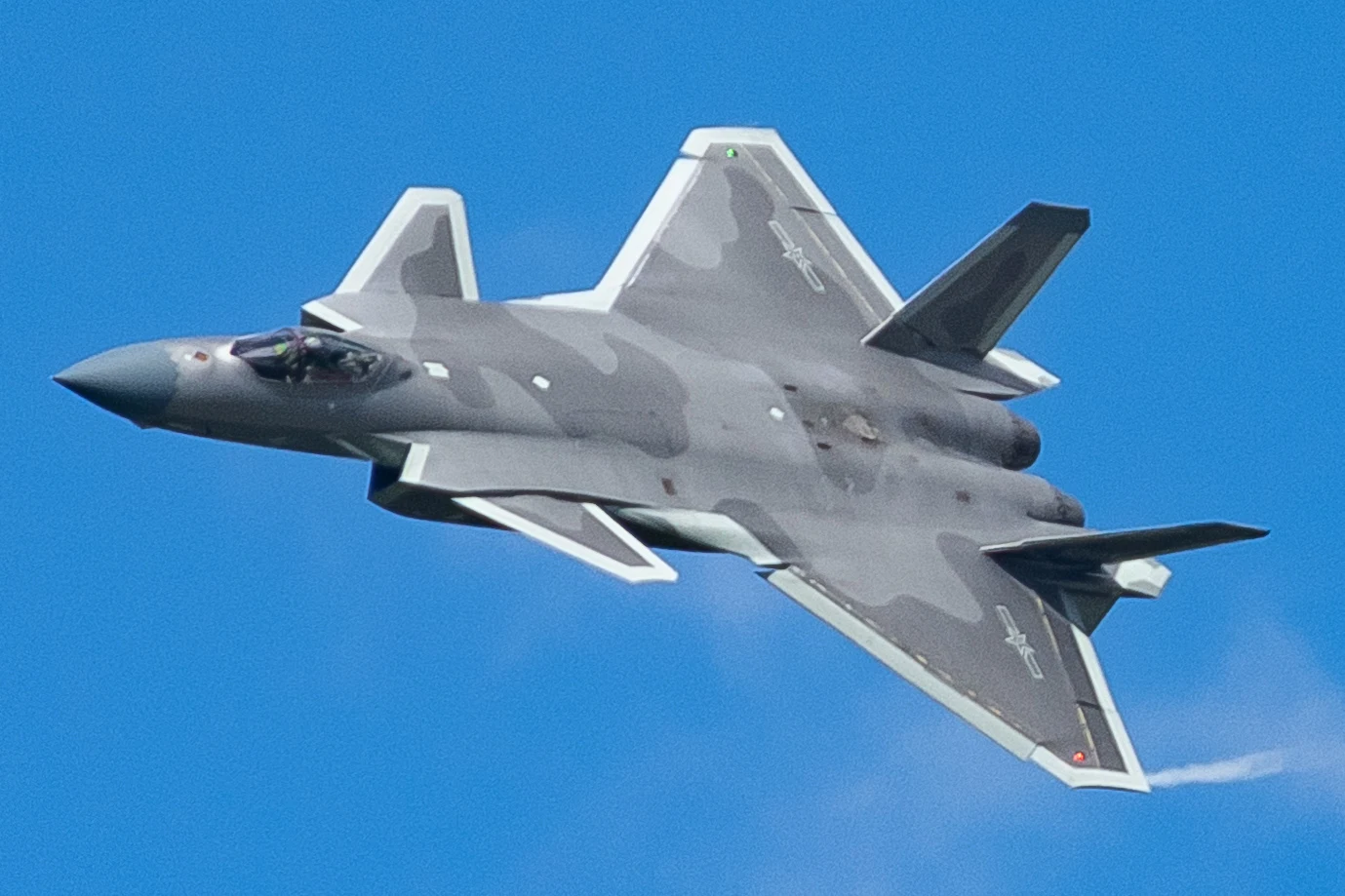
As China fields growing numbers of fifth-generation fighters like the J-20 and the newly inducted J-35A, Taiwan remains without a stealth aircraft of its own.
What it does have, however, is a refined ability to exploit sensors, integration, and tactics to offset numerical and technological gaps.
In that sense, the video serves its purpose. It reassures a domestic audience facing mounting pressure, signals resolve to allies, and introduces a quiet note of uncertainty into Beijing’s otherwise confident show of force.
Stay tuned with us. Further, follow us on social media for the latest updates.
Join us on Telegram Group for the Latest Aviation Updates. Subsequently, follow us on Google News
