

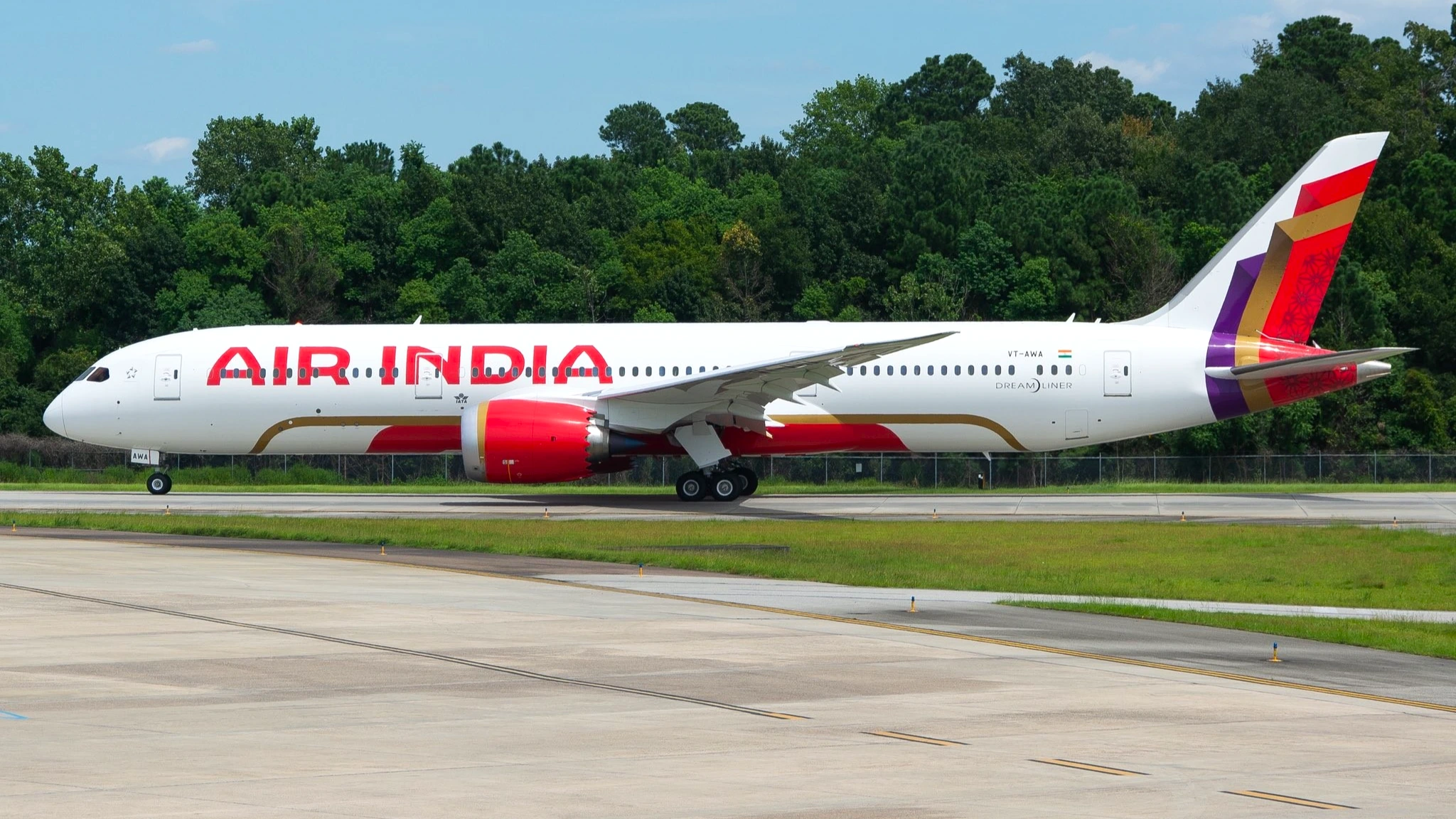
CHARLESTON- Tata Group-owned Air India (AI) is preparing to induct its first Boeing 787-9 Dreamliner, registered as VT-AWA, in the coming weeks (Q1 2026), marking a key milestone in its wide-body fleet expansion. The aircraft will support rising long-haul demand from major hubs such as Delhi (DEL) and Mumbai (BOM).
Boeing confirmed with BusinessLine that the aircraft delivery is expected before the end of the current quarter, with production already underway on subsequent units. The induction is part of Air India’s 2023 mega order aimed at modernizing its international operations.
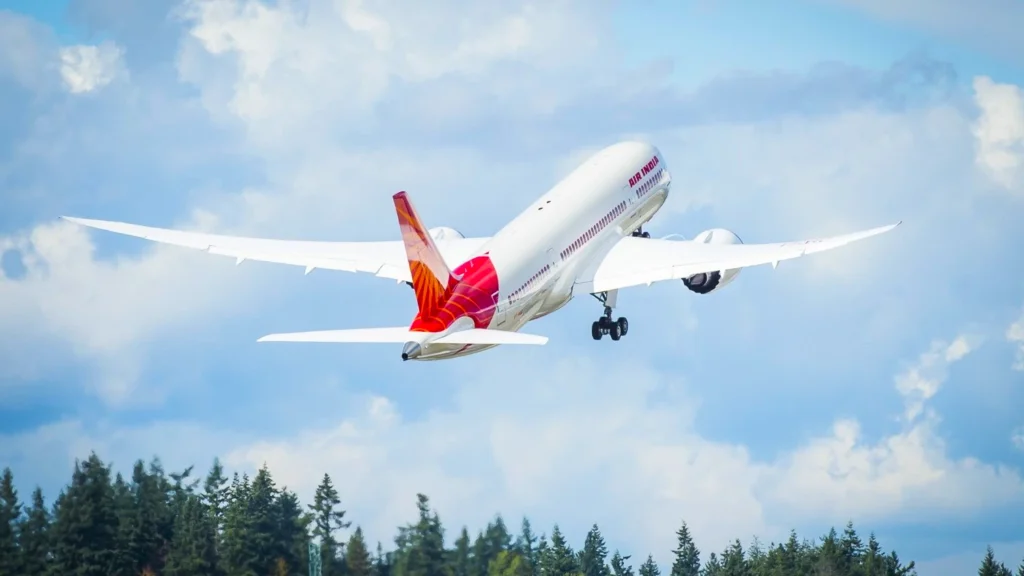
Air India First 787-9 Delivery Soon
The Boeing 787-9 Dreamliner is a twin-aisle, long-range wide-body aircraft positioned between the smaller 787-8 and larger 787-10. Compared with Air India’s existing 787-8 fleet, the 787-9 offers a longer fuselage, higher payload capability, and improved range.
The aircraft typically seats between 250 and 290 passengers in a three-class configuration. Air India’s 787-9s are expected to feature an updated cabin layout aligned with the airline’s refreshed brand, including an expanded premium economy section and upgraded business class product, subject to final configuration disclosures.
Built largely from advanced composite materials, the 787-9 is around 20 percent more fuel-efficient than the older wide-body aircraft it replaces. Its next-generation engines deliver lower fuel burn, reduced emissions, and quieter operations.
The aircraft has a range of approximately 7,565 nautical miles, allowing Air India to operate nonstop services to Europe, East Asia, and North America. Initial deployments are expected on long-haul routes from Delhi (DEL) and Mumbai (BOM), where demand continues to outpace available capacity.
Passenger comfort is enhanced through larger windows, improved cabin pressurization, better air filtration systems, and higher humidity levels. These features are designed to reduce fatigue on flights exceeding ten hours.
Delivery Sequence and Fleet Integration
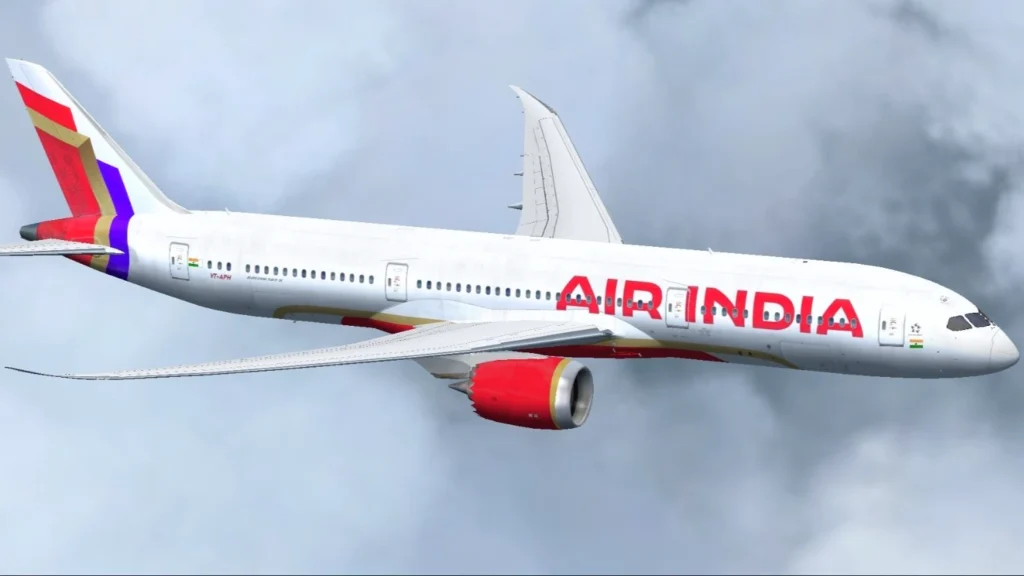
This aircraft will be the first of 20 Boeing 787-9s ordered by Air India as part of its purchase of over 200 Boeing aircraft in 2023. The delivery will be followed by a phased induction schedule, with multiple 787-9s expected to enter the fleet over the next two years.
The aircraft is undergoing final acceptance checks, with regulatory approvals from the Directorate General of Civil Aviation expected before entry into service. The initial unit will carry an Indian registration prefix, consistent with Air India’s existing wide-body fleet.
Air India has also stated that it plans to induct six new wide-body aircraft in 2026, including Boeing 787-9s and Airbus A350-1000s. At the same time, the airline will return older leased aircraft, keeping the overall fleet size broadly stable while significantly lowering average fleet age.
The airline aims to address the widening gap between international demand and available capacity, particularly on high-yield long-haul routes.
Industry Constraints Beyond Aircraft Supply
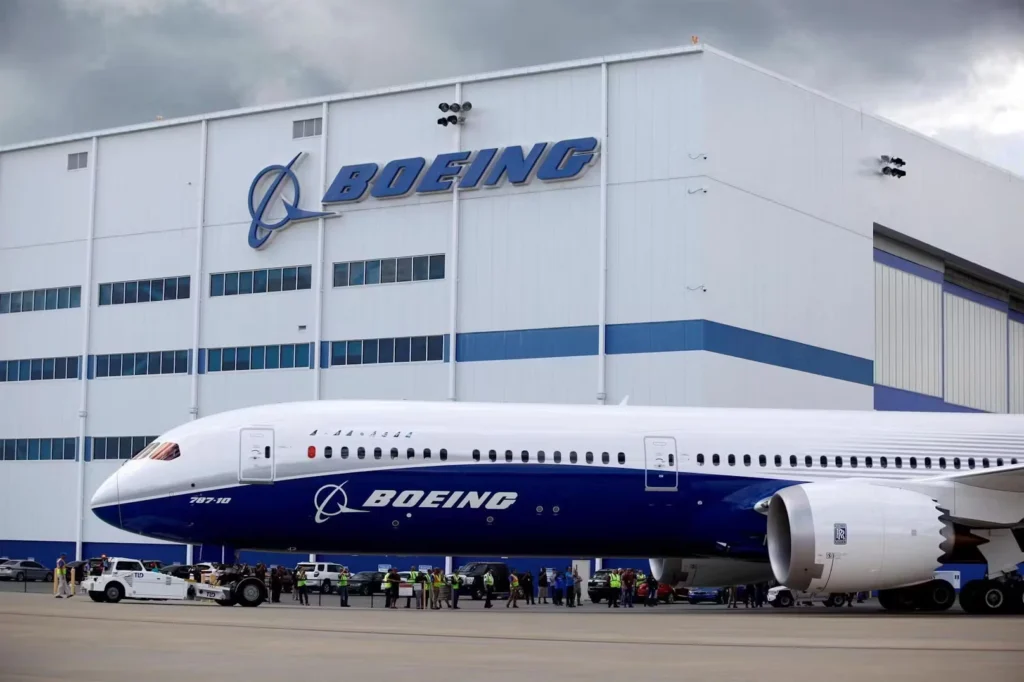
Boeing noted that aircraft availability is only one element influencing capacity growth in India’s aviation market. Infrastructure readiness at major airports, availability of landing and parking slots, regulatory timelines, and global maintenance capacity remain key constraints.
Pilot availability and engine maintenance bottlenecks continue to affect how quickly airlines can deploy new capacity, even as demand remains strong.
Boeing stated that it has implemented systemic production changes over the past 18 months to strengthen safety, quality control, and delivery reliability. These measures are part of a broader effort to rebuild customer confidence.
The manufacturer emphasized its commitment to supporting airline customers through improved manufacturing processes and long-term fleet support, delivering aircraft with a focus on safety and consistency.
Stay tuned with us. Further, follow us on social media for the latest updates.
Join us on Telegram Group for the Latest Aviation Updates. Subsequently, follow us on Google News
