

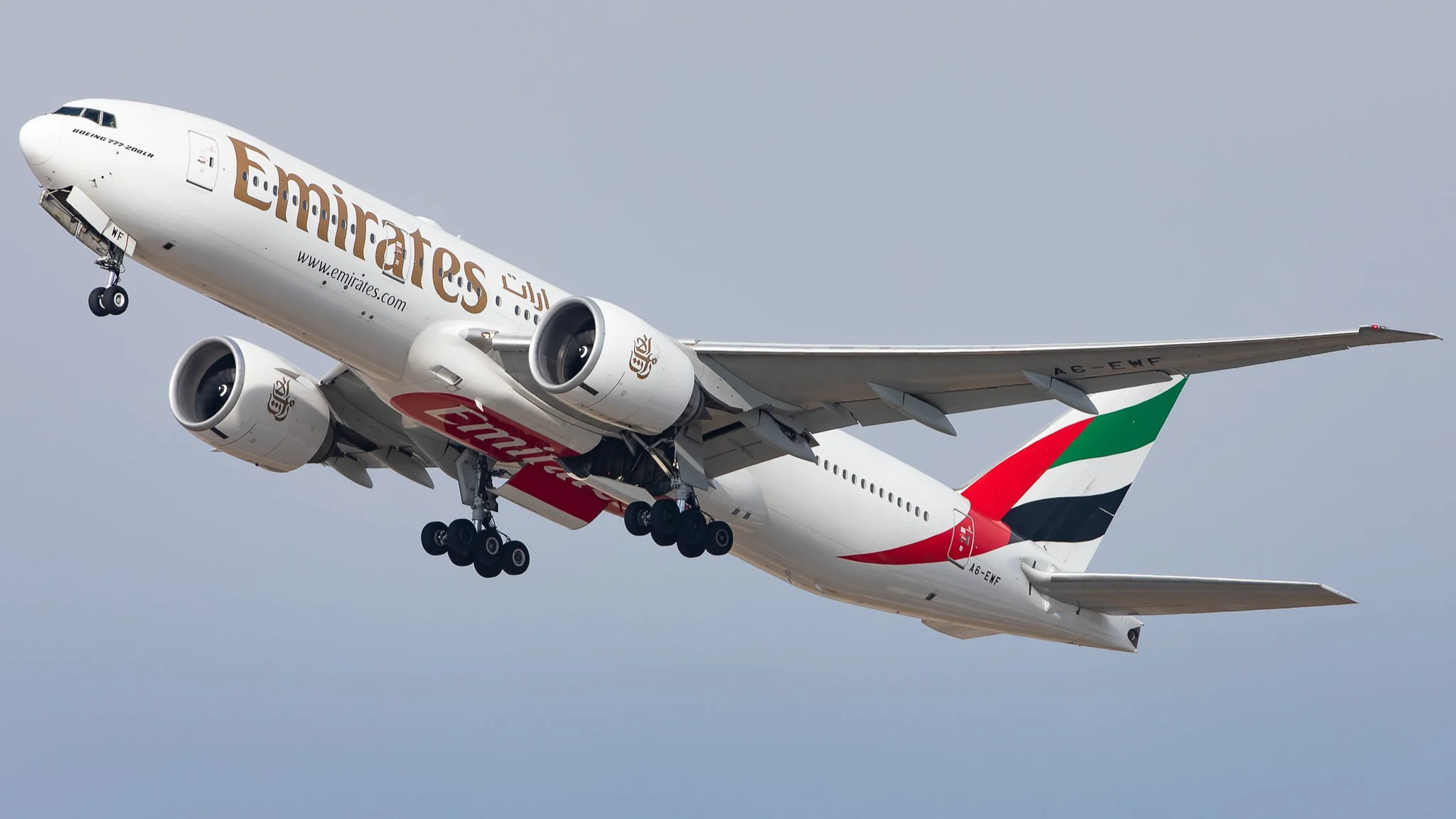
DUBAI- Emirates Airline (EK) is introducing its retrofitted Boeing 777 with Premium Economy on routes to Beirut (BEY) and Beijing (PEK). The airline will deploy the upgraded aircraft on EK953 and EK954 to Beirut starting 6 January 2026, and on EK306 and EK307 to Beijing from 1 February 2026.
The move brings Premium Economy to Beirut (BEY) for the first time and expands the product across mainland China, supporting growing demand for upgraded cabin options on medium and long-haul services.
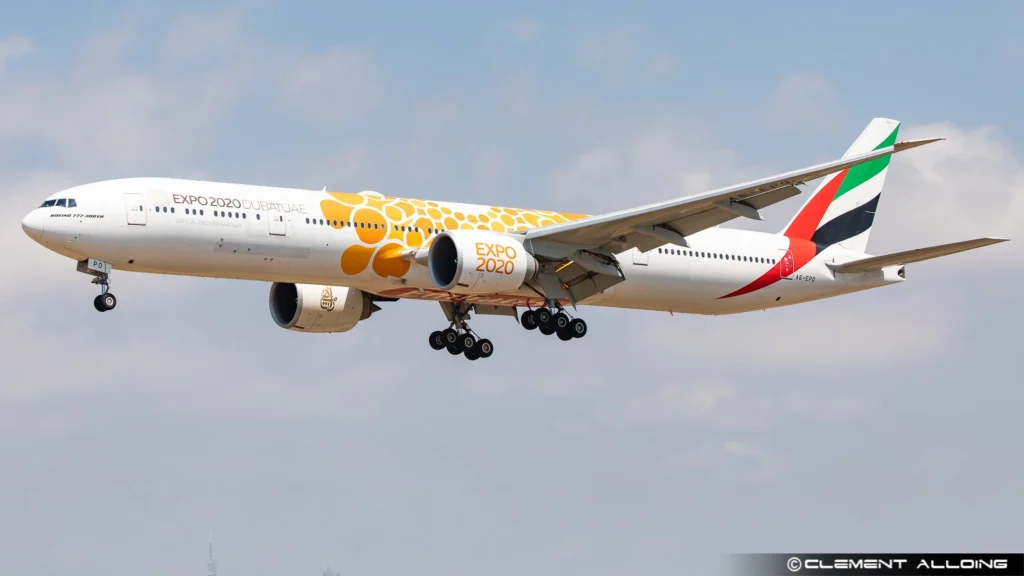
Emirates 777 Premium Economy to Beirut and Beijing
Emirates will offer the retrofitted Boeing 777 on two key markets that continue to show strong passenger traffic.
Beijing (PEK) becomes the fourth mainland Chinese city to receive the airline’s latest cabin products. Beirut (BEY) gains a higher standard of service with Premium Economy and a new Business Class cabin in a 1 2 1 layout.
- For Lebanon, flight EK953 departs Dubai at 1540, arriving in Beirut at 1700.
- EK954 leaves Beirut at 1945 and lands in Dubai at 0050.
The timings support onward connectivity for major Lebanese diaspora hubs across Australia and North America. Many of these cities already operate retrofitted Boeing 777s or A380s, allowing travellers to maintain the same Premium Economy experience throughout their journey.
- Flight EK306 to Beijing departs Dubai at 0320 and arrives at 1445.
- The return EK307 leaves Beijing at 0040 and lands in Dubai at 0530.
Travellers gain access to Premium Economy connections to destinations across Europe, the Americas, Africa, the Indian Ocean, and the Gulf region.
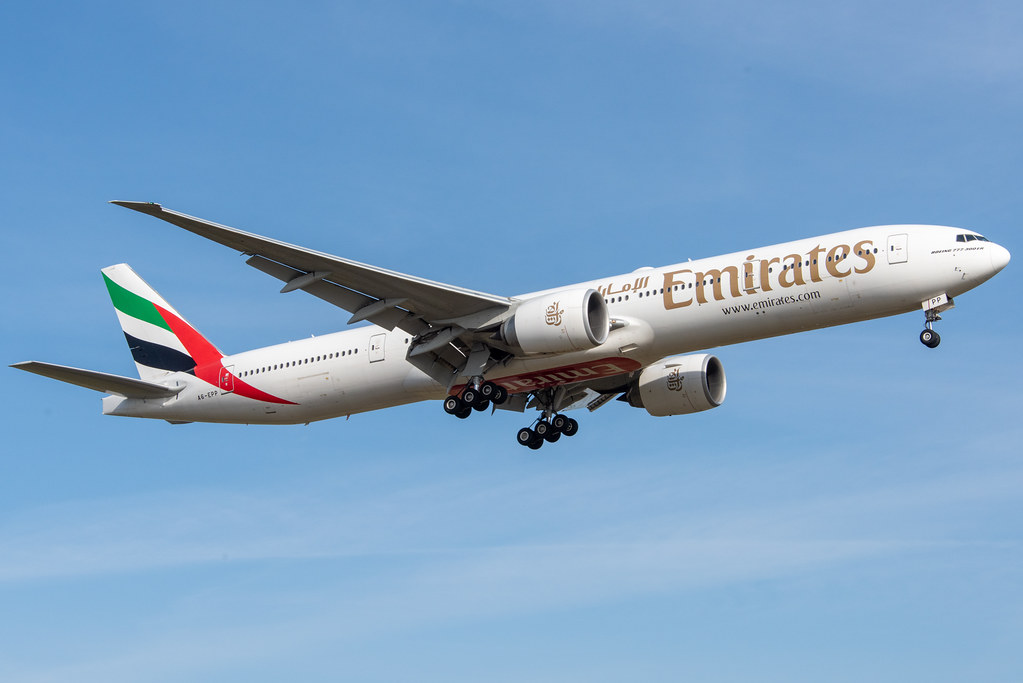
Key Updates to the Four-Class 777 Cabin
The refurbished Boeing 777 features a redesigned interior with modern colour themes, Ghaf Tree motifs, and wood finishes.
The layout includes 260 Economy seats, 24 Premium Economy seats, 40 Business Class seats, and eight First Class Suites.
Premium Economy offers wide leather seats with deep recline, leg and footrests, adjustable headrests, in-seat charging, a wood finished side table, and a 13.3-inch screen.
Passengers also receive larger pillows and blankets, complimentary amenity kits on select routes, and Chandon Vintage Brut 2017.
The Boeing 777 Business Class cabin has been updated with a 1 2 1 configuration that gives every seat full aisle access and greater privacy.
Champagne coloured leather seats match those on the newest Emirates A380, with refined stitching and soft cushioned headrests for long-haul comfort.
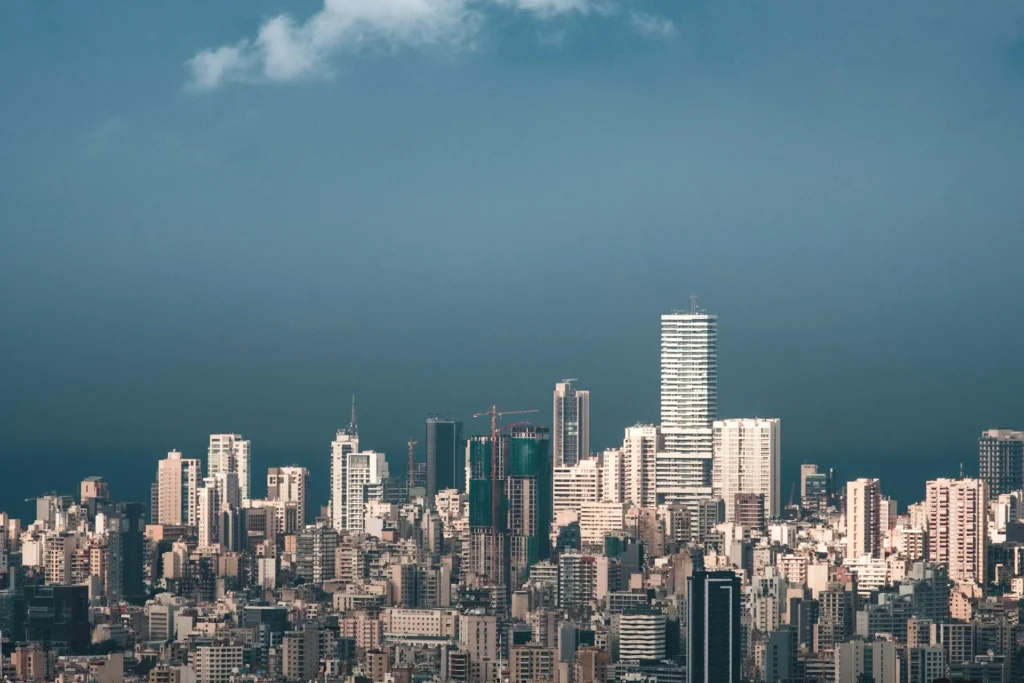
Beirut Travel Guide
Beirut invites travelers to explore a city shaped by conflict yet defined by resilience. Middle East Airlines (ME) and Beirut Rafic Hariri International Airport (BEY) anchor the city’s global connections.
The capital blends historic depth with a vibrant cultural scene that stretches across diverse districts and communities. Visitors soon discover a destination that rewards curiosity and close observation.
Understanding Beirut’s Modern Identity
Beirut stands as one of the region’s most diverse and socially open cities. Its districts reflect a layered past shaped by migration, politics, and a long civil conflict that ended in 1991.
Neighborhoods such as Gemmayzeh, Hamra, Bourj Hammoud, and Bourj al Barajneh reveal contrasting stories through architecture, community life, and cultural expression. The city’s mix of Christian and Muslim communities is visible in daily life and in the placement of mosques and churches, often built side by side.
The city offers a rich culinary landscape, ranging from simple local eateries to celebrated restaurants known across the Middle East. Beirut’s nightlife remains a major draw, with underground venues, rooftop lounges, and clubs that attract a wide mix of residents and visitors.
Even with economic hardship, the social and cultural energy of the capital continues to shape the experience of those who spend time here.
Navigating Beirut During the Economic Crisis
Lebanon currently operates as a cash-driven economy. Banks still use the outdated exchange rate of 1500 LBP per USD while the market rate fluctuates at far higher levels.
Visitors avoid ATMs and instead exchange euros or dollars at private exchange offices. Hamra Street is one of the most reliable areas for competitive rates.
Accommodation Options
Beirut offers limited budget choices but a wide range of mid-range and high-end properties. Hamra Urban Gardens appeals to backpackers who want a social environment and easy access to Hamra Street.
Embassy Hotel remains the main budget hotel, though facilities are basic. O Monot Boutique provides strong mid-range comfort in a central location. Radisson Blu Hotel delivers full-service amenities with direct access to a shopping center and beach proximity.
Transport Within and Beyond the City
There is no public transit from the airport to central Beirut. Taxis and ride-hailing apps dominate airport transfers, and fares vary based on negotiation. Local minibuses operate from the highway near the airport entrance.
Within the city, shared taxis known as service run fixed or semi-fixed routes at low cost. Uber and standard taxis remain widely available. For intercity travel, Cola Station serves destinations to the south while Charles Helou Station offers better access to northern regions, including Tripoli and Baalbek.
Key Neighborhoods and Places of Interest
Gemmayzeh
A lively district known for narrow streets, French-era buildings, and a high density of bars and cafés. Although heavily damaged by the port explosion, it remains a core part of Beirut’s social life.
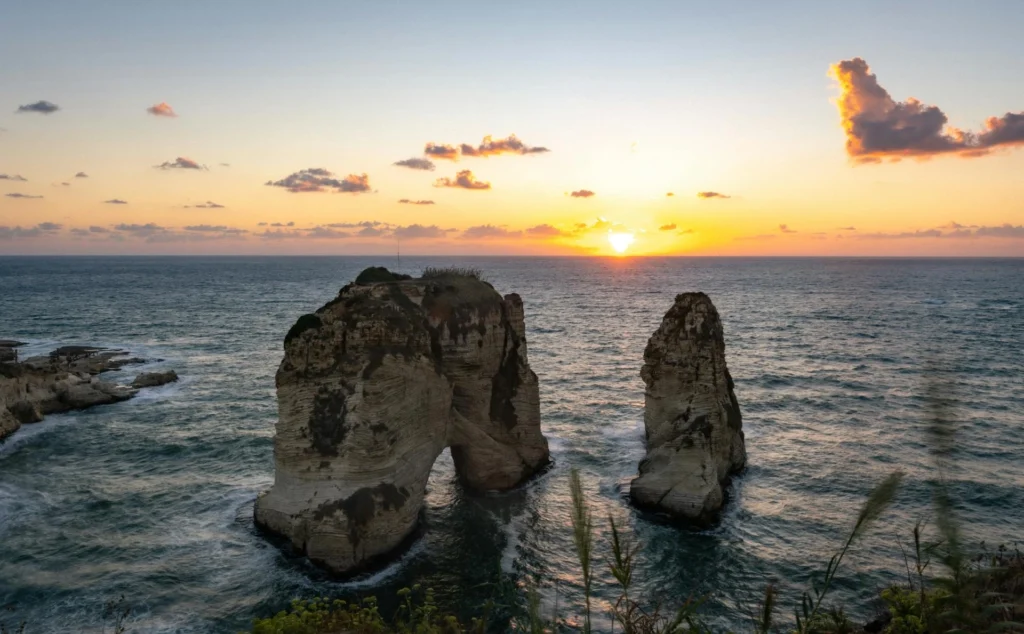
Pigeon Rocks
A natural coastal formation of two large rock arches. The site offers open views, sunset spots, and a weekend gathering place for families.
Hamra
Historically regarded as an intellectual hub, Hamra is home to the American University of Beirut. The district maintains a strong student presence with cafés, bookstores, and cultural venues.
Downtown Beirut
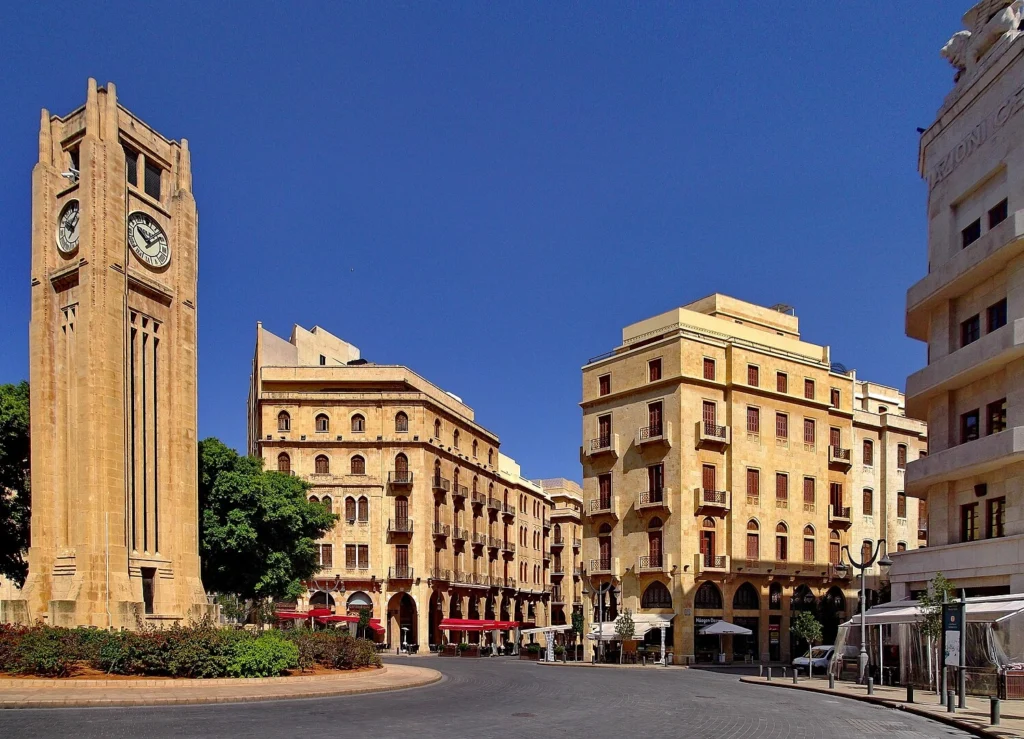
Rebuilt after the Civil War, this district features pedestrian zones, high-end retail, and notable restaurants. While clean and orderly, it has drawn criticism from residents who feel it lacks the character of the older city.
Bourj Hammoud
Often called Little Armenia, this district was established by survivors of the Armenian Genocide. It remains a cultural center with Armenian shops, bakeries, and street art, and it is known for competitive prices on goods.
War Remnants Across the City
Many buildings damaged during the Civil War still stand unrepaired. Some residents consider these structures part of Beirut’s visual identity, offering insight into the city’s past and the endurance of its communities.
Shatila
One of the region’s oldest Palestinian refugee camps is known for its complex history and present-day challenges. Visitors approach the area to understand the living conditions of its residents and the sociopolitical context shaping daily life.
Bourj al Barajneh
A dense neighborhood associated with Hezbollah and known for narrow alleys and a heavy security presence. Photography is restricted, and visits are safest with a local guide.
Food and Local Dining
Restaurant Le Chef offers rotating home-style dishes and attracts a loyal local crowd. Bayt em Nazih and T Marbouta rank among the most popular Lebanese restaurants and specialize in traditional mezza. El Soussi is widely regarded for classic breakfast dishes such as hummus.
Beijing Travel Guide
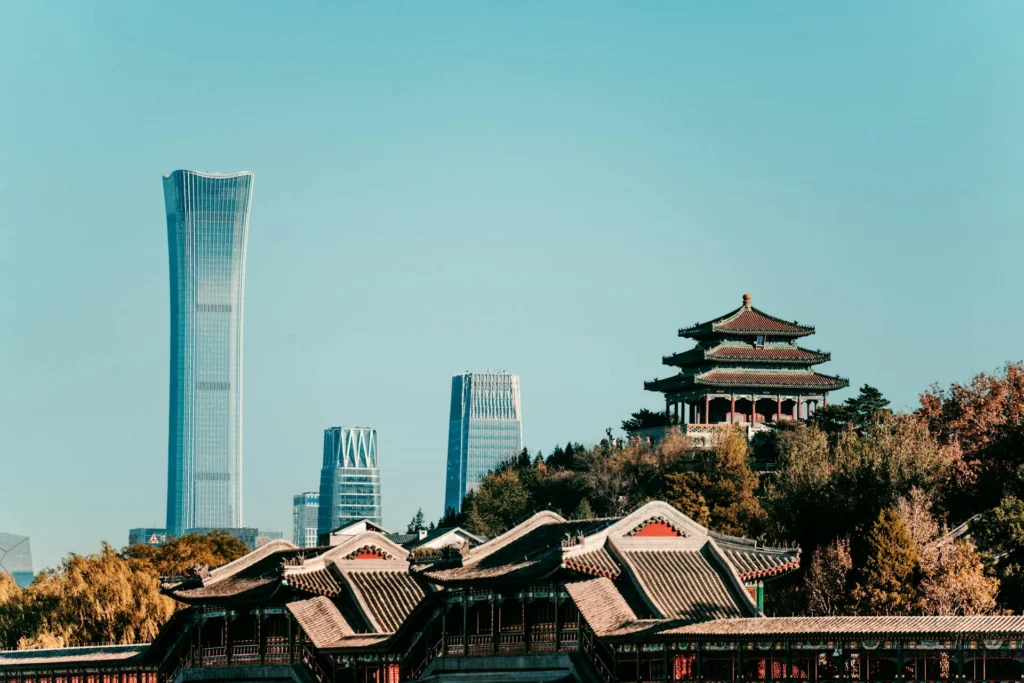
Beijing offers a rare mix of ancient heritage and modern development that draws visitors from around the world. Its historic sites, vibrant culture, and efficient infrastructure make it one of Asia’s most dynamic capitals.
This guide outlines the city’s layout, climate, transport links, attractions, cuisine, shopping, local culture, and practical travel information to help visitors plan with confidence.
Understanding Beijing’s Urban Landscape
Beijing sits in northern China at the edge of the North China Plain with Tiananmen Square at its geographic center. The municipality includes 16 districts and 2 counties.
The inner districts form the historic and administrative core, while the outer districts and suburban counties cover a wide area that blends residential, industrial, and rural environments.
The city operates in the UTC+8 time zone, uses Mandarin as its primary language, and follows national standards for telecom, internet, and currency. The local power supply runs on 220 volts at 50 hertz. These details support a predictable environment for travelers and business visitors.
Key Administrative Divisions
Inner districts include Dongcheng, Xicheng, Chongwen, Xuanwu, Chaoyang, Haidian, Fengtai, and Shijingshan.
Outer districts include Mentougou, Fangshan, Tongzhou, Shunyi, Changping, Pinggu, Huairou, and Daxing.
Miyun County and Yanqing County lie within the suburban perimeter.
Climate and Best Times to Visit
Beijing experiences four distinct seasons. Spring brings shifting weather, wind, and occasional sandstorms. Summer is hot and humid with periods of heavy rain. Autumn is clear, dry, and widely considered the most comfortable season. Winter is cold with dry air and strong winds but minimal snowfall.
Travelers often choose September to November for the mild temperatures, lower crowds, and excellent visibility across major landmarks.
Transportation and Connectivity
Beijing is accessible by air, rail, and road. International visitors generally arrive through Capital Airport or Daxing Airport. Capital Airport sits about 30 kilometers from the center and usually requires about one hour by car. Daxing Airport is roughly 50 kilometers away with a travel time of about 75 minutes.
The city’s subway system includes 29 operational lines that cover business centers, residential areas, and key tourist locations. Domestic travelers can choose between frequent flights and an extensive high speed rail network that links Beijing to most major Chinese cities.
Major Attractions Across the Capital
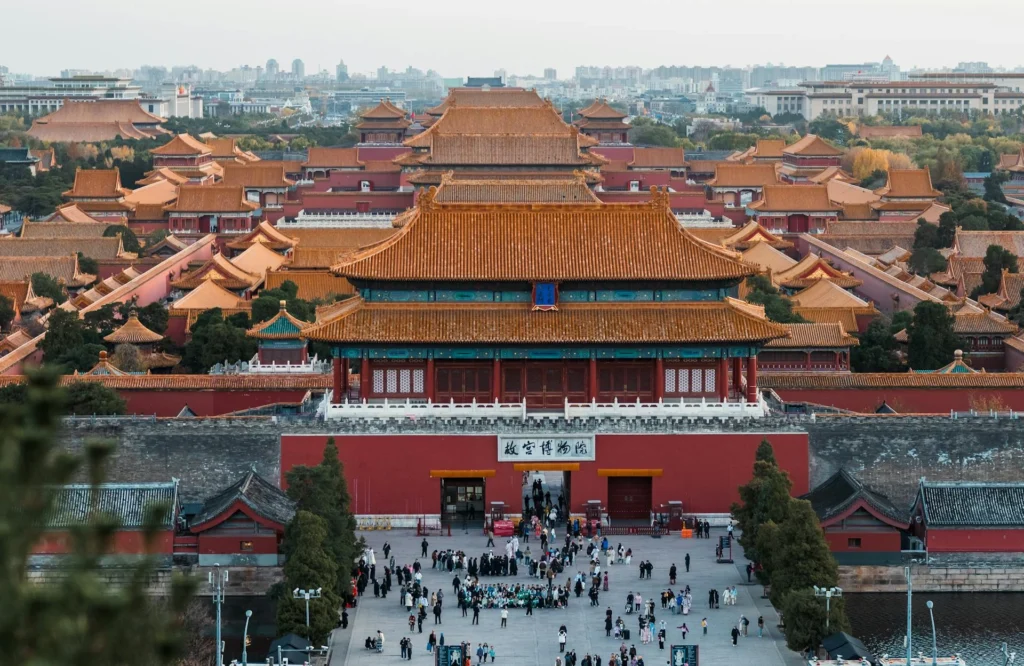
Beijing holds more World Heritage sites than any other city. The Forbidden City remains the largest palace complex in the world and serves as the Palace Museum. The Temple of Heaven preserves centuries of ritual tradition.
The Summer Palace, Old Summer Palace, and Beihai Park offer classic garden landscapes. The Great Wall stretches through the municipality at several accessible points, such as Badaling and Mutianyu.
Other notable sites include Tiananmen Square, the Hutong neighborhoods, the Ming Tombs, Yonghe Temple, the Bell and Drum Towers, Beijing Zoo, the National Stadium, the National Aquatics Center, the 798 Art District, and the National Center for the Performing Arts.
Food Culture and Local Specialties
Beijing is known for distinctive flavors that reflect its long culinary history. Peking Roast Duck stands as the city’s signature dish while Douzhi offers a traditional local taste. Street markets and small eateries serve regional snacks that appeal to visitors interested in authentic flavors.
Shopping Districts and Local Markets
Wangfujing Pedestrian Street brings together long-established brands and international labels. Xiushui Street offers clothing and souvenirs at a wide range of prices. Hongqiao Market is known for pearls and specialty goods. These areas serve both casual shoppers and visitors looking for local crafts.
Seasonal Activities and Leisure
Winter visitors often combine sightseeing with skiing, hot spring visits, and traditional temple fairs. Nightlife centers on popular streets and open-air markets where dining, entertainment, and late evening shopping continue well into the night.
Cultural Identity and Traditional Arts
Beijing remains a cultural hub that preserves architecture, customs, and performing arts. The Hutong alleys and courtyard houses offer insight into traditional urban life.
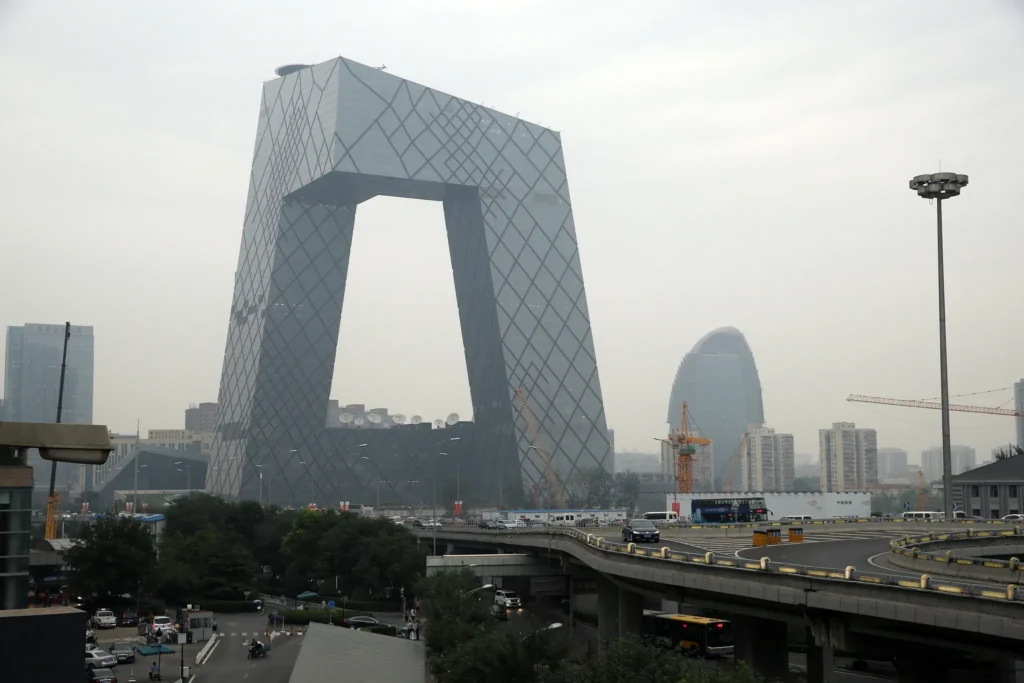
Peking Opera, recognized as a national treasure, continues to attract domestic and international audiences. Contemporary architecture throughout the city highlights Beijing’s role as a modern cultural center.
Practical Information for Travelers
Visa Requirements
Entry rules vary by nationality. China offers a 240-hour visa-free transit program for qualifying travelers. It also maintains mutual visa-free agreements with 29 countries and unilateral visa-free entry for citizens of 47 countries.
Language Use
Mandarin is spoken citywide. English is increasingly common in tourist areas, major hotels, and transport hubs.
Public Holidays
Peak travel periods occur during the Chinese New Year, Labour Day week in May, and National Day week in October. Transport and accommodation often reach full capacity during these periods.
Festivals
Many festivals follow the lunar calendar. Chinese New Year is the most important celebration nationwide.
Weather and Travel Timing
The city averages about 12 degrees Celsius across the year. January is the coldest month, while July is the hottest.
Payments and Currency
Visa, MasterCard, American Express, Diner’s Club, and JCB are accepted at major hotels and large retail centers. Currency exchange is available at banks and hotels. Travelers may carry less than 20,000 RMB without declaration on arrival.
Dietary Needs
Vegetarian and Muslim restaurants are available across the city.
Top Activities
Essential experiences include the Great Wall, Forbidden City, Hutong tours, Temple of Heaven, Summer Palace, Tiananmen Square, Wangfujing Street, Olympic Green, Roast Duck dining, and Peking Opera.
Stay tuned with us. Further, follow us on social media for the latest updates.
Join us on Telegram Group for the Latest Aviation Updates. Subsequently, follow us on Google News
