

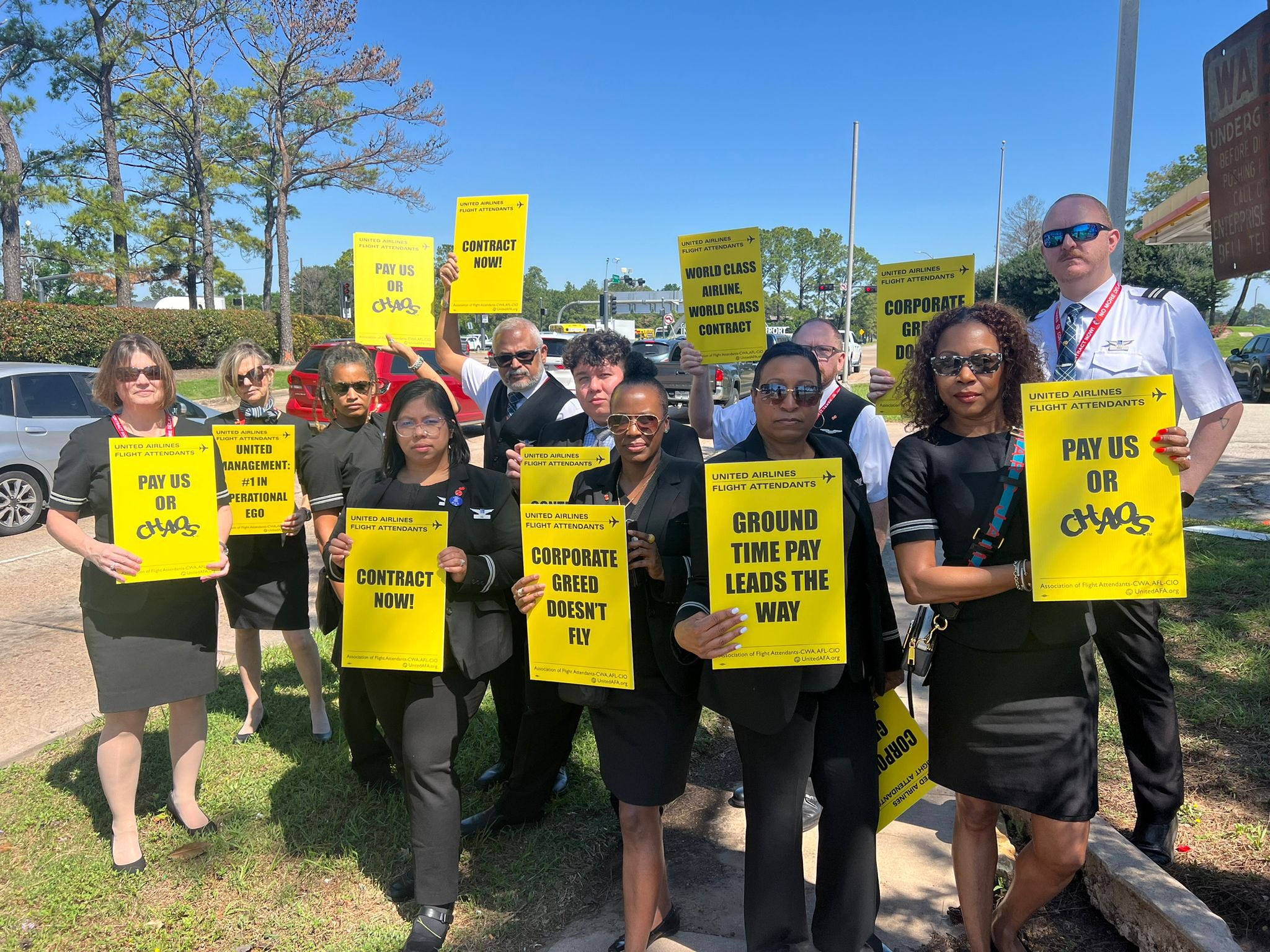
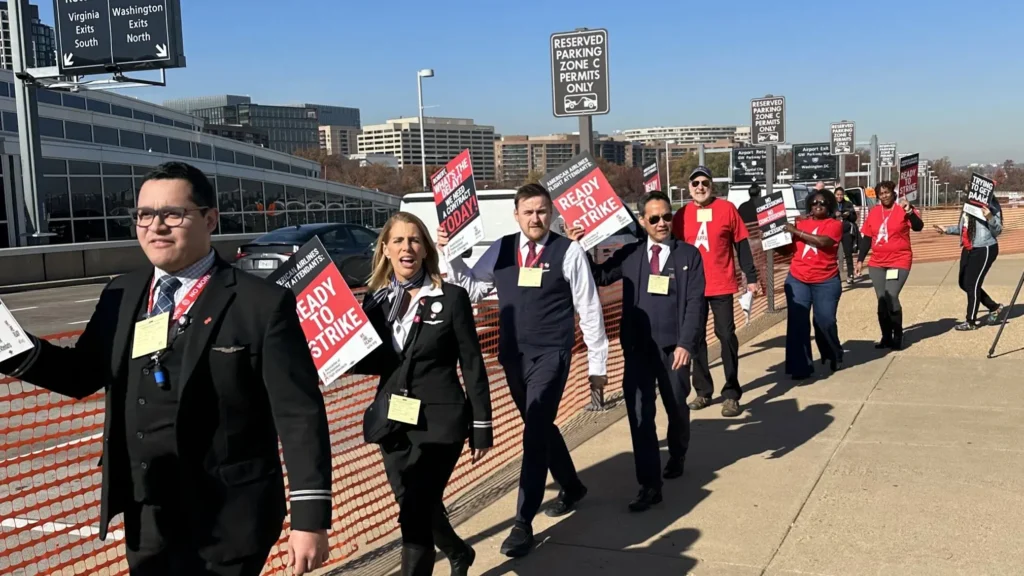
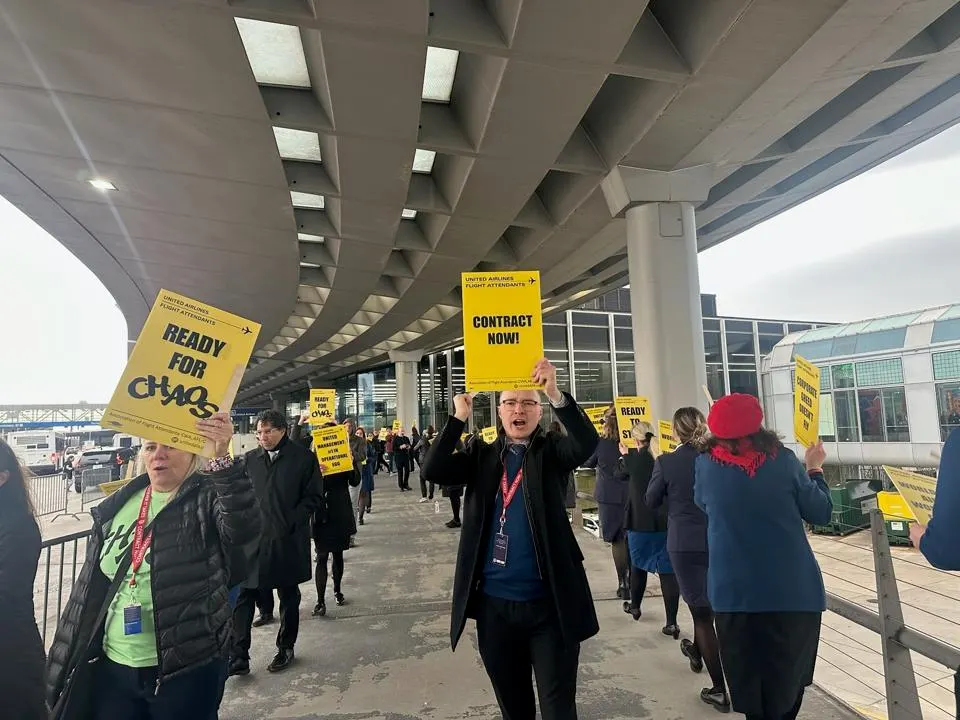
CHICAGO- United Airlines (UA) flight attendants have rejected a tentative labor agreement after nearly 5 years without a pay raise, forcing negotiations back to the table. The rejection reflects frustration over wages that failed to fully recover lost purchasing power and concerns over working conditions.
The vote now exposes deeper trade-offs in the bargaining process, as United reintroduces operational demands, including changes to how flight attendant schedules are built and assigned.
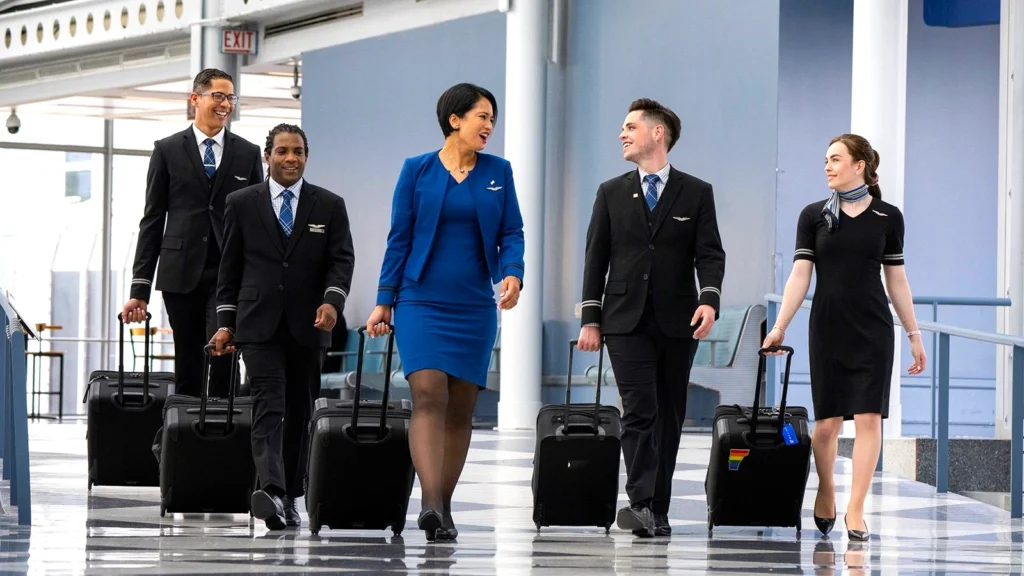
United Flight Attendant Vote Down Contract
More than 71% of United Airlines flight attendants voted against the tentative agreement negotiated by their union. The rejection followed a prolonged period without raises, during which the real value of flight attendant wages declined by an estimated 25 percent due to inflation.
The proposed contract offered average wage increases of less than 27 percent, which many members viewed as insufficient to restore lost earning power.
The union presented the agreement as the strongest outcome achievable under current conditions. However, flight attendants raised objections beyond pay.
Contract language related to layover hotels drew criticism for potentially allowing lower-quality accommodations farther from city centers.
Others rejected the deal on principle, believing that accepting an initial offer would limit leverage in future negotiations.
After the vote, union leadership acknowledged that member priorities had been misjudged during the first round of talks.
The union subsequently surveyed flight attendants to better understand concerns, particularly around scheduling practices and layover standards.
The union’s negotiating strategy has been shaped by regulatory realities. Airline strikes have not been authorized under either the Trump or Biden administrations, significantly weakening labor’s leverage. With limited ability to apply external pressure, additional gains now require internal trade-offs.
Union leaders understood that pursuing higher costs for United would prompt the airline to seek offsets elsewhere. This context explains why previously settled issues have resurfaced as negotiations continue.
Scheduling Returns as a Bargaining Tool
As renegotiations progressed, United moved to place previously agreed-upon concessions back on the table.
Central among these is the method used to assign flight attendant schedules. Management has stated that any enhancements to compensation or work rules must be balanced by efficiency improvements.
United informed flight attendants that it had begun a “joint process with AFA to modernize bidding” aimed at increasing flexibility and choice.
The union sharply disputed this framing, stating that management presented a list of concessions that had already been rejected in the earlier tentative agreement.
Union leadership emphasized that no improved offer was being withheld and warned members against expecting automatic gains from rejection.
Reported by View from the Wing, this disconnect highlights the strategic tension between public messaging and bargaining reality.
Preferential Bidding System
The Preferential Bidding System, or PBS, replaces traditional seniority-based line selection. Under the legacy model, flight attendants select from a published list of trip lines in strict seniority order. PBS instead requires each crewmember to submit ranked preferences.
Preferences can include days off, credit hours, trip length, report times, aircraft types, destinations, commutability, and reserve versus lineholder status. These preferences are organized into priority layers, such as Layer 1, Layer 2, and Layer 3.
An optimization engine then processes all bids simultaneously. The system functions as a constraint-satisfaction model, balancing individual priorities against coverage needs, legal requirements, and contractual rules.
Seniority remains a factor but operates within the algorithm rather than through direct selection.
Why Flight Attendants Oppose PBS
PBS offers clear advantages for the airline. It improves coverage of undesirable flying, reduces the number of unassigned trips, lowers manual scheduling workload, and minimizes the need for premium pay. From an operational standpoint, it delivers efficiency and predictability.
For flight attendants, the experience is often negative. PBS assigns schedules that technically meet stated preferences but may violate practical expectations.
A crewmember requesting “no redeyes” may receive a 5:30 AM report time. The system follows instructions literally, not intuitively.
Senior flight attendants are particularly resistant. Under PBS, recurring trip lines may be redistributed to satisfy a broader set of preferences, reducing predictability. While seniority still matters, it no longer provides the visible control many associate with career progression.
Effective bidding often requires deep knowledge of contract language, solver behavior, and defensive strategies to avoid undesirable outcomes.
Industry and Negotiation Dynamics
Other airlines have adopted PBS. American and Alaska use the system for flight attendants, and similar models are applied elsewhere in the industry.
United has also invested heavily in AI and AI-adjacent tools to improve efficiency, making PBS a natural operational objective.
However, United previously agreed to forego PBS in earlier talks. Its reappearance now suggests a tactical move rather than a firm implementation plan.
By proposing a system flight attendants strongly oppose, management creates space for future concessions that can be withdrawn in exchange for agreement elsewhere.
Resolution of the Dispute
The current negotiations reflect structured positioning rather than a fundamental reset. United cannot materially exceed the financial terms already offered, and the union must demonstrate tangible progress to secure ratification. This dynamic encourages symbolic wins that allow both sides to claim success.
Given the intensity of opposition and prior agreements, PBS is unlikely to be implemented in the final contract. Its role appears primarily as leverage, enabling the union to later block an unpopular change and present that outcome as a meaningful victory.
Stay tuned with us. Further, follow us on social media for the latest updates.
Join us on Telegram Group for the Latest Aviation Updates. Subsequently, follow us on Google News
