

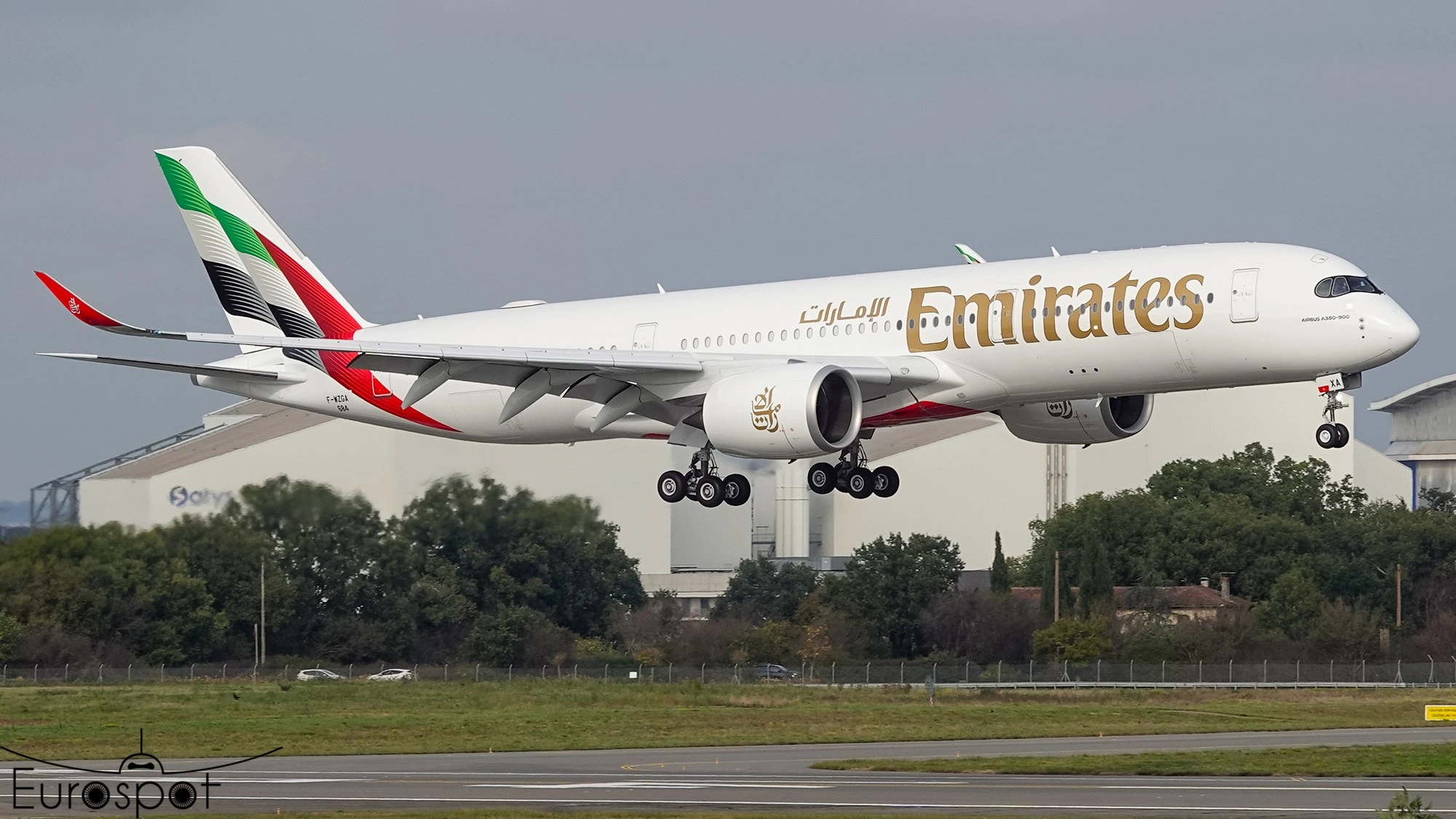
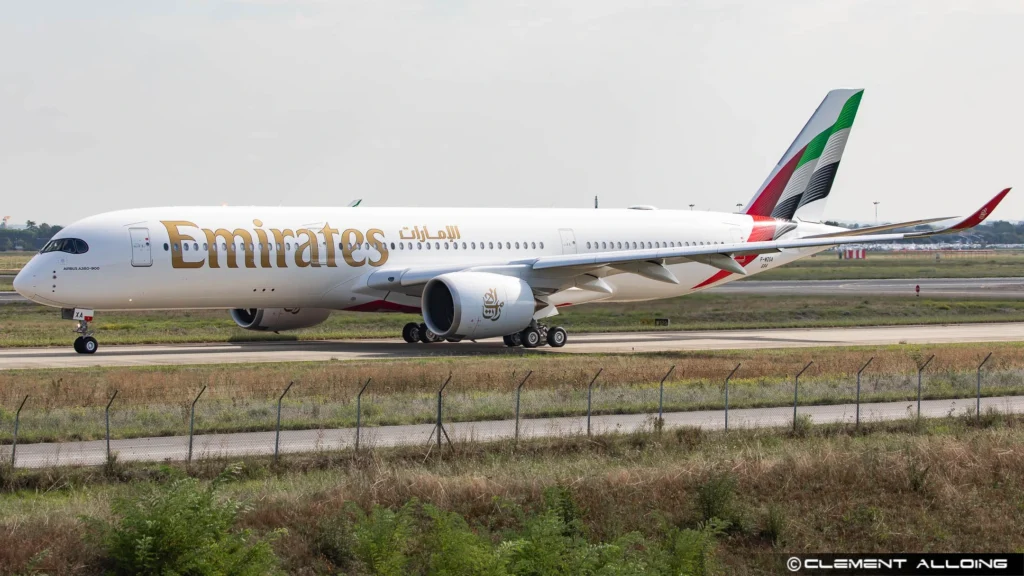
DUBAI- Emirates Airline (EK) will place the Airbus A350 on all seven weekly flights between Dubai (DXB) and Baghdad (BGW) starting 1 January 2026. This shift brings a uniform aircraft type on the route and introduces the airline’s newest cabins to every service.
The A350 will take over from the Boeing 777 currently used on four weekly rotations, giving travelers a consistent product across all EK 943 and EK 944 flights. Emirates aims to enhance comfort on the Baghdad route with upgraded seating, quieter cabins, and modern in-flight features.
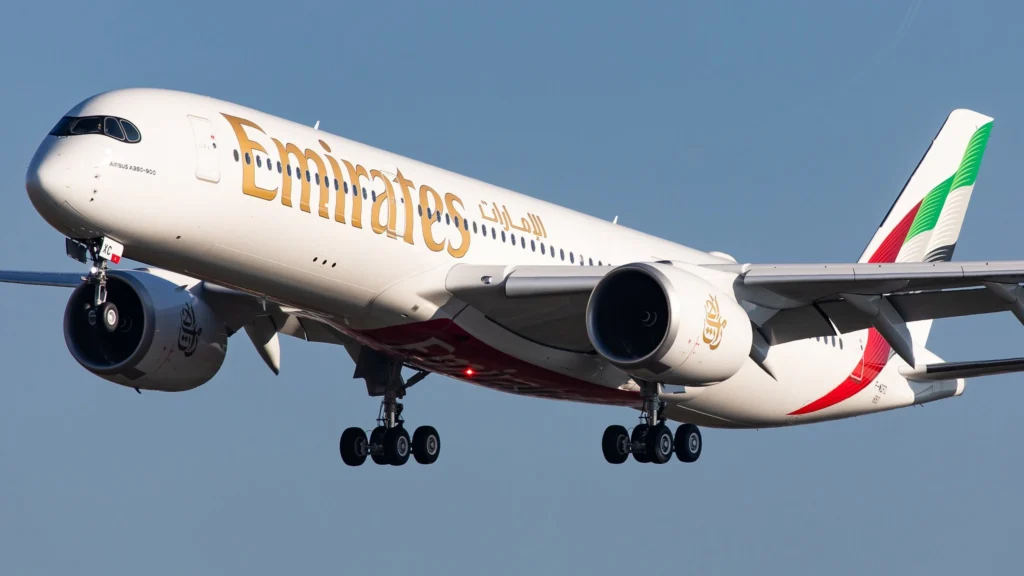
Emirates All A350 Flights to Baghdad
The move to an all A350 schedule supports Emirates’ ongoing effort to modernize its fleet on high-demand regional routes.
The aircraft enters the Baghdad schedule after being gradually introduced earlier in the year on flights EK 941 and EK 942.
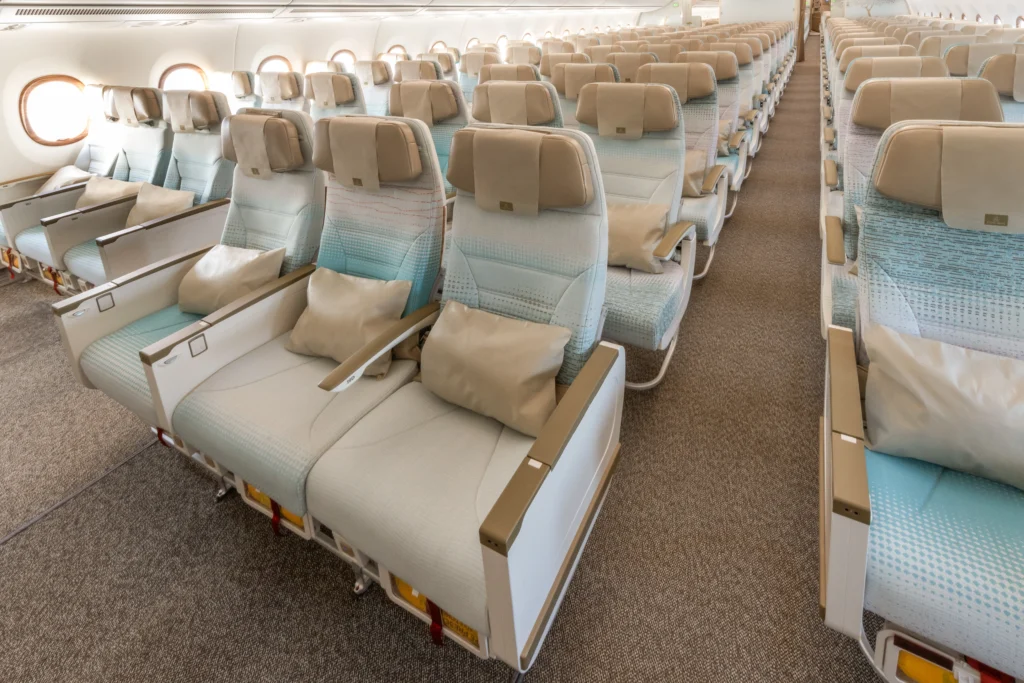
The A350 arrives with a three-class layout that includes 32 Business Class lie-flat seats in a 1 2 1 formation, 21 Premium Economy seats in a 2 3 2 layout, and 259 Economy seats arranged 3 3 3.
The design aims to improve cabin flow with wider aisles and quieter interiors. Travelers also gain access to the latest version of the ice entertainment system, which offers a sharper display and a broader content library.
Emirates expects the improved lighting and noise control to support better rest during both day and evening flights.
Enhanced Passenger Experience
The uniform A350 deployment allows the airline to offer predictable service standards on every departure to and from Baghdad.
The consistent product helps improve operational planning and aligns with rising demand in Iraq for premium seating and stable connectivity through Dubai.
The upgrade reinforces Emirates’ long-term interest in the Iraqi market, which has seen capacity adjustments and product improvements over the past decade.
Baghdad Travel Guide
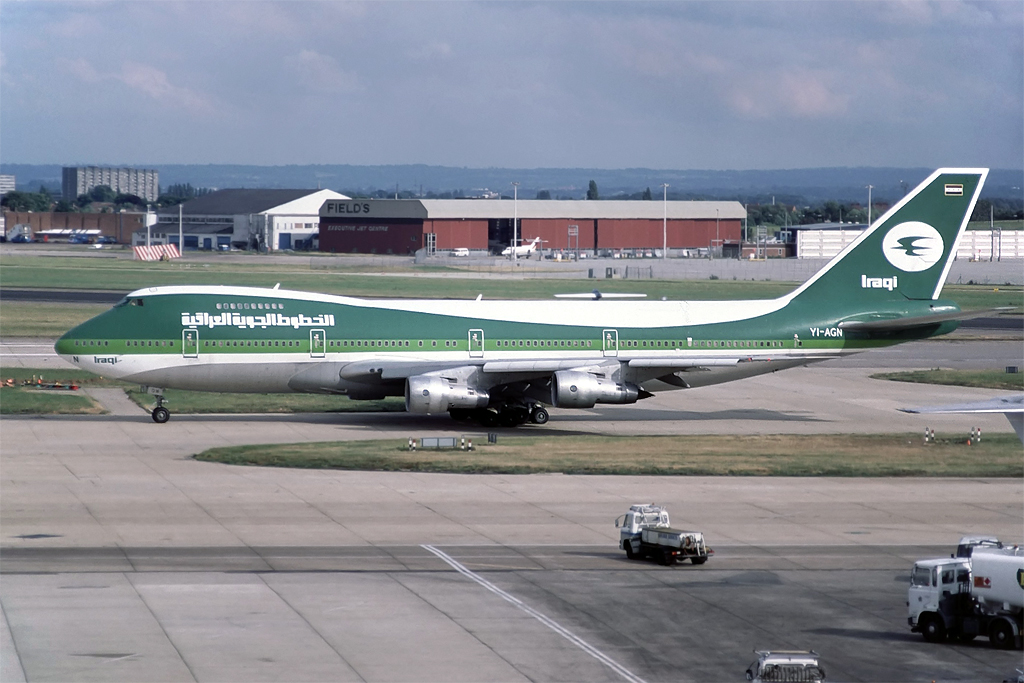
Iraqi Airways (IA) connects travelers to Baghdad International Airport (BGW), placing them at the gateway to one of the world’s oldest cultural capitals. The city offers a rare chance to experience layered history, sacred landmarks, and a strong artistic identity.
Visitors arriving through Iraqi Airways (IA) at Baghdad International Airport (BGW) step into a destination shaped by Mesopotamian heritage and modern urban life. The appeal lies in its museums, shrines, riverside spaces, and historic neighborhoods that reflect centuries of resilience.
Understanding Baghdad’s Historical Weight
Baghdad’s story stretches across ancient Mesopotamia, the Abbasid era, Ottoman rule, and today’s modern Iraq. The city grew on the banks of the Tigris, where scholarship once flourished inside grand libraries, madrasas, and palaces.
That legacy remains visible across archaeological sites, cultural institutions, and restored monuments. Exploring these spaces helps visitors understand how Baghdad influenced knowledge, architecture, and spiritual life across the region.
Key Cultural Sites and Museums
The Iraq Museum preserves artifacts from Sumerian, Assyrian, Babylonian, and Abbasid civilizations. Exhibits include carved reliefs, cuneiform tablets, and iconic works like the Warka Vase.
The galleries trace the development of writing, governance, religion, and daily life, offering valuable context for the rest of the city.
Old Baghdad offers another perspective with Shorja Bazaar, Mutanabbi Street, and the Baghdadi Museum. Markets, bookshops, and small cultural spaces reflect the social and creative traditions that still shape the city.
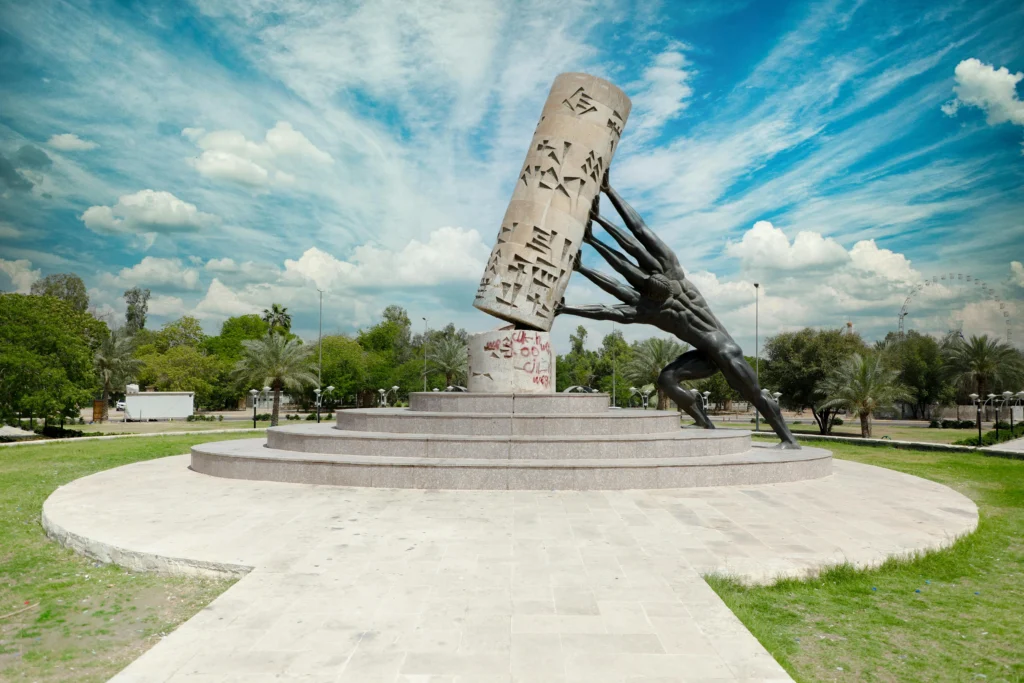
Architectural and Religious Landmarks
Al Mustansiriya Madrasa, founded in 1227, stands as one of the earliest structured universities in the world. Its courtyards and patterned brickwork illustrate Abbasid architectural principles.
Nearby, the Abbasid Palace presents a similar blend of engineering and artistic detail, giving visitors a closer look at political life from that era.
A short trip outside the city leads to the Arch of Ctesiphon, known for its massive brick vault and importance in Sasanian history. Within Baghdad itself, the Kadhimayn Shrine draws pilgrims to a complex known for its craftsmanship, golden domes, and religious significance.
Experiences Along the Tigris and in Modern Districts
The Tigris River remains central to local life. Cafés line the waterfront where residents gather for meals, tea, and conversation. Evenings here offer a relaxed look into the city’s rhythm.
Modern Baghdad adds another layer with venues like the National Theatre, Hewar Art Gallery, Zawraa Park, Karrada’s cafés and boutiques, and major shopping streets. These areas highlight how contemporary culture thrives alongside ancient heritage.
Food and Local Cuisine
Baghdad’s food scene blends tradition and comfort. Dishes such as masgouf, kubba, and kahi with qaimar showcase Iraqi culinary identity. Meals often emphasize hospitality, shared plates, and simple ingredients prepared with care.
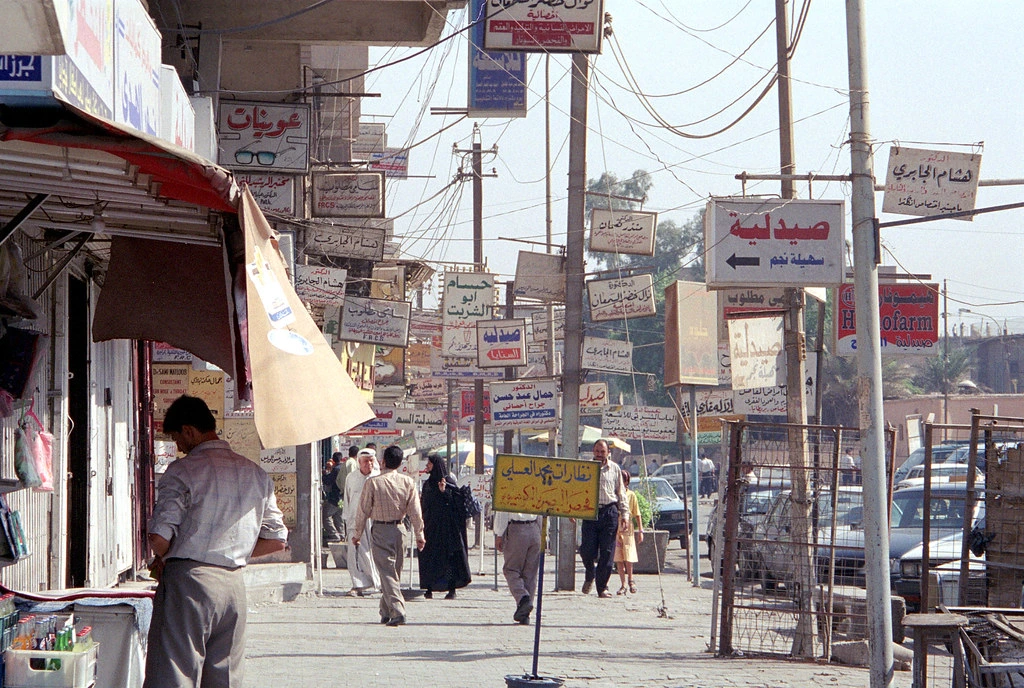
Safety, Practical Tips, and Itineraries
Travelers should check official advisories, rely on trusted drivers, dress modestly, and avoid restricted photography zones. Spring and autumn provide the most comfortable weather, while summers often reach extreme heat.
A three-day itinerary typically includes the Iraq Museum, Mutanabbi Street, Shorja Bazaar, Al Mustansiriya Madrasa, the Abbasid Palace, Kadhimayn Shrine, and the Arch of Ctesiphon. Travelers with more time often extend their trip to Karbala, Najaf, Babylon, or Erbil.
Traveling Beyond the Capital
Karbala and Najaf serve as major pilgrimage hubs. Babylon offers archaeological highlights linked to ancient kings. Erbil brings a different cultural landscape anchored by its citadel and lively bazaars. Many operators offer structured routes that connect these destinations with Baghdad.
Baghdad rewards curious travelers with a clear look at human history, faith, and creativity. Its museums, shrines, riverside settings, and modern districts create a multidimensional journey. With preparation and cultural awareness, visitors gain insight into a city that continues to evolve while honoring its past.
Bottom Line
The updated schedule also supports smoother links from Baghdad into the airline’s global network.
The A350 fits strategic growth plans by offering fuel efficiency, improved environmental performance, and a cabin design suited for both regional and long-haul travel.
Emirates positions the shift as a continued investment in passenger comfort and regional stability.
Stay tuned with us. Further, follow us on social media for the latest updates.
Join us on Telegram Group for the Latest Aviation Updates. Subsequently, follow us on Google News
