

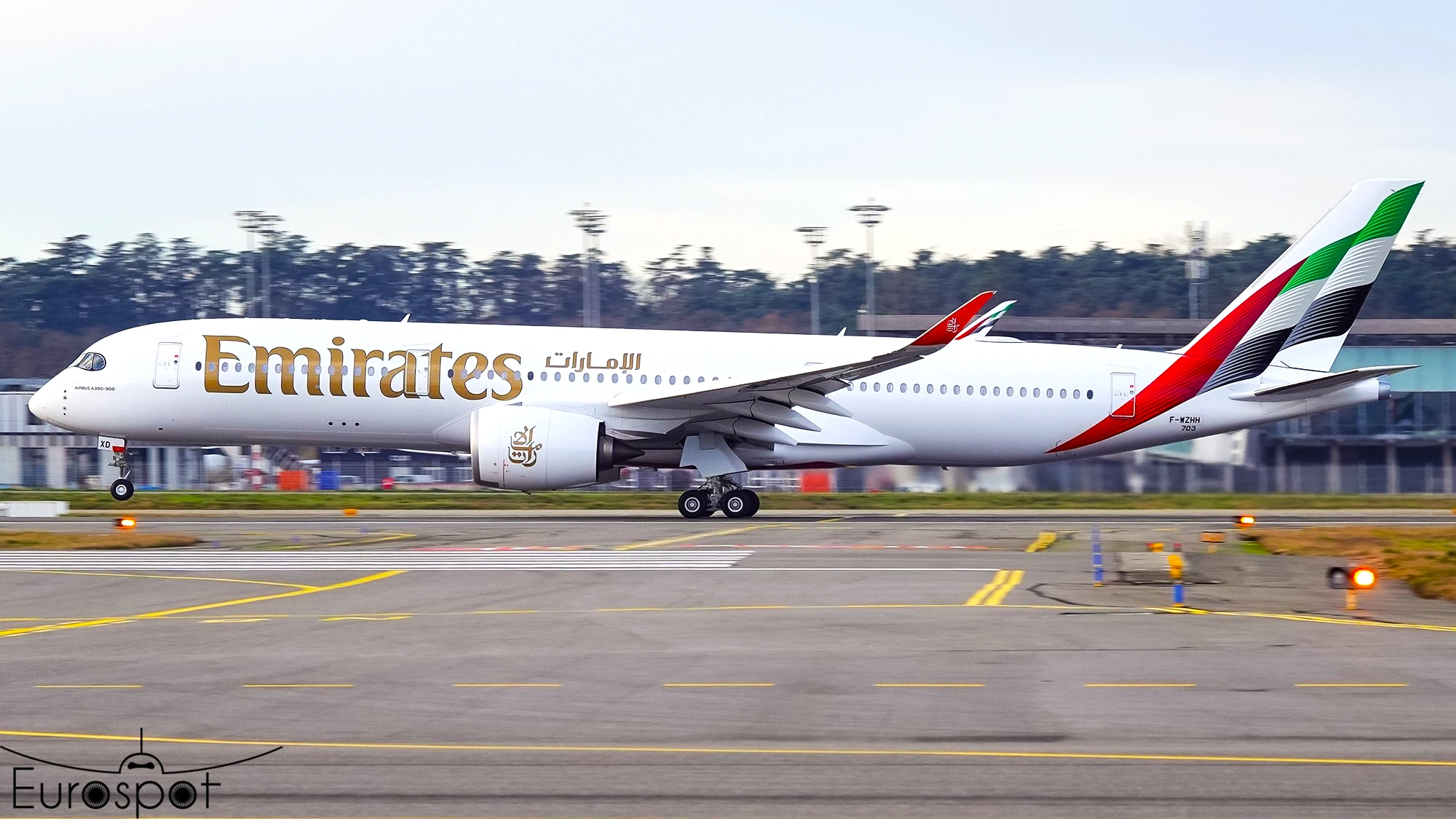
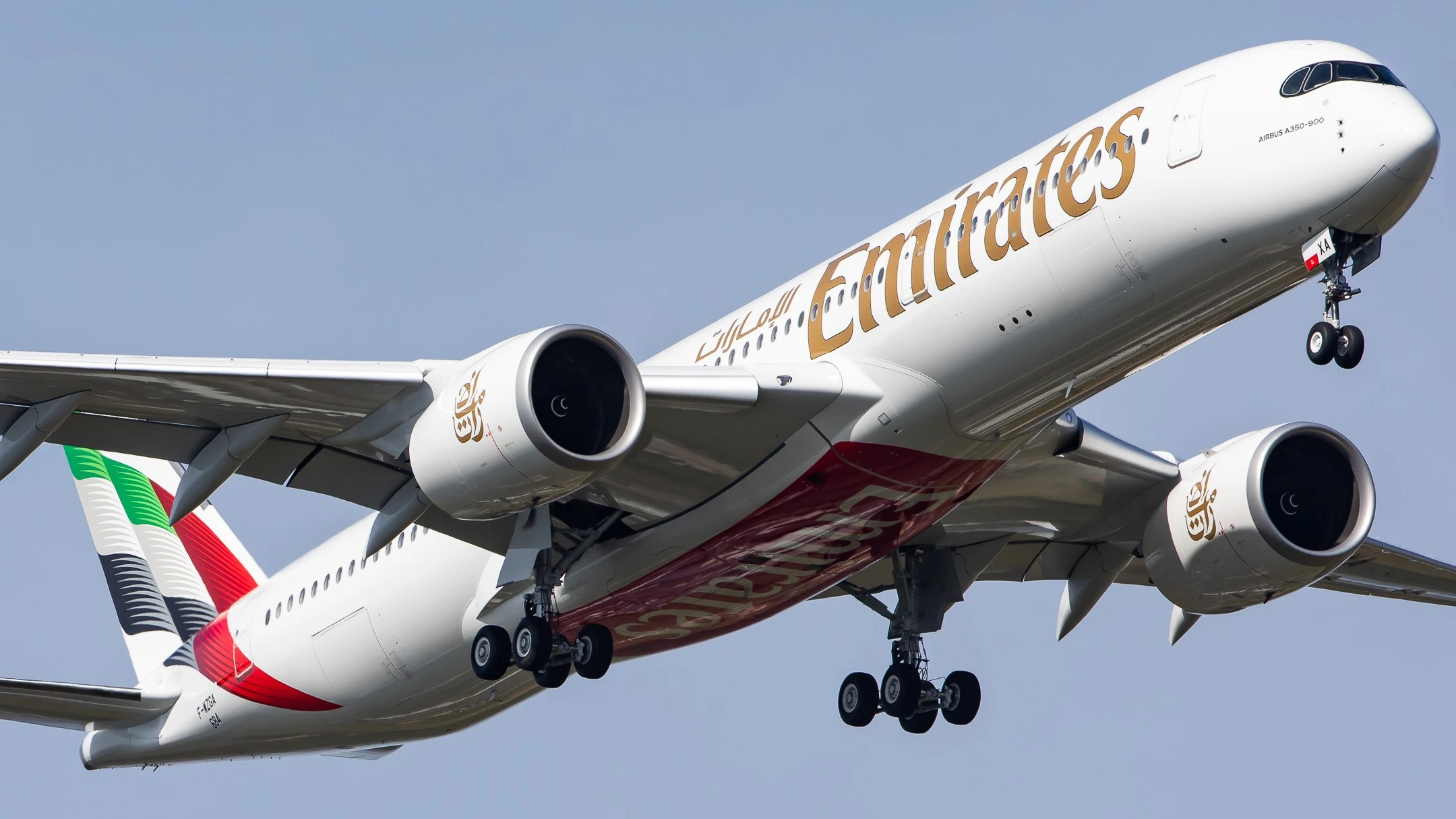
MONTREAL– Emirates (EK) will introduce the Airbus A350 on its route to Montréal–Trudeau International Airport (YUL) beginning 1 February 2026, marking a significant upgrade to its Canadian operations.
The aircraft will replace the existing Boeing 777 on the Montréal–Dubai (DXB) service, bringing the airline’s newest cabin products and advanced onboard technologies to the market. The deployment also signals the arrival of Emirates’ Premium Economy cabin in Canada for the first time.
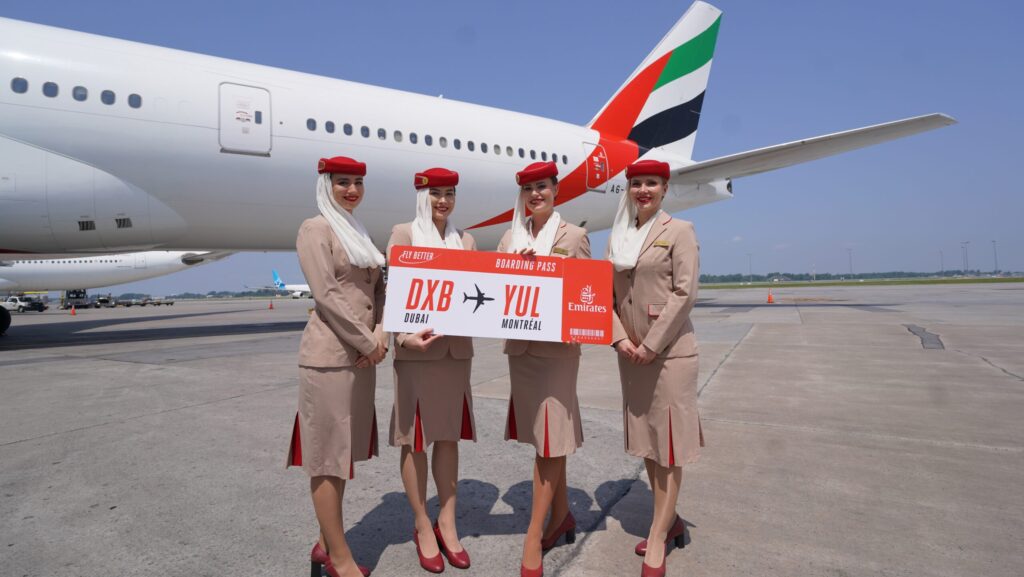
Emirates A350 to Montreal
The airline confirmed that the A350 introduction may occur earlier if deliveries progress ahead of schedule. By placing its latest-generation long-haul aircraft on the Montréal route, Emirates aims to expand passenger choice and enhance comfort across its network.
The new A350 will operate daily as EK243 and EK244, strengthening connectivity for travelers flying between Canada and the Middle East, Africa, and Asia.
- Emirates will operate EK243 from Dubai at 02:45, arriving in Montréal at 07:35.
- The return flight, EK244, departs Montréal at 10:40 and lands in Dubai at 08:00 the next day.
These timings allow convenient onward connections through Dubai, particularly for long-haul markets served by the airline’s extensive global network.
The A350 offers three cabin classes, including 32 Business Class seats in a 1-2-1 layout, 28 Premium Economy seats with additional legroom, and 238 Economy Class seats.
The aircraft introduces Emirates’ newest interiors, redesigned lighting, and advanced cabin technologies that contribute to quieter in-flight conditions and lower fuel burn.
Passengers will also benefit from the carrier’s latest in-flight entertainment system, which includes more than 6,500 channels in multiple languages.
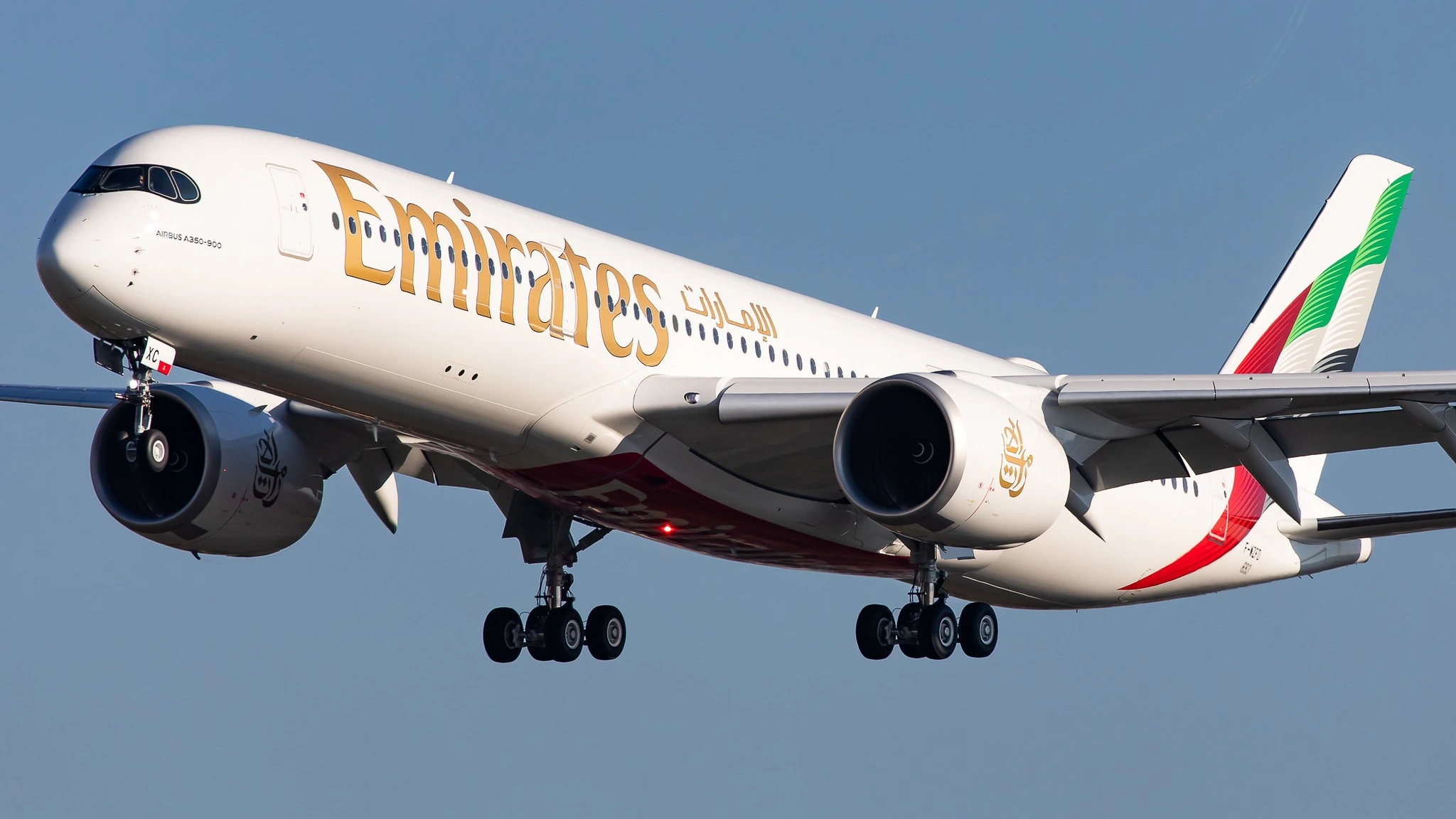
Expanded Canadian Connectivity
Alongside the Montréal upgrade, Emirates continues to operate the Airbus A380 on its Toronto (YYZ) service, ensuring consistent capacity across both Canadian gateways.
Through its partnership with Air Canada, Emirates passengers can reach an additional 37 destinations across Canada and the United States, further expanding the usefulness of the Montréal service.
This cooperation also strengthens bilateral travel flows between Canada and the UAE.
Customers can book itineraries through the Emirates website, the Emirates App, retail outlets, contact centres, or travel agents.
With the introduction of the A350, travelers departing from Montréal will gain access to premium products previously available only on the airline’s flagship routes, improving long-haul travel options across the region.
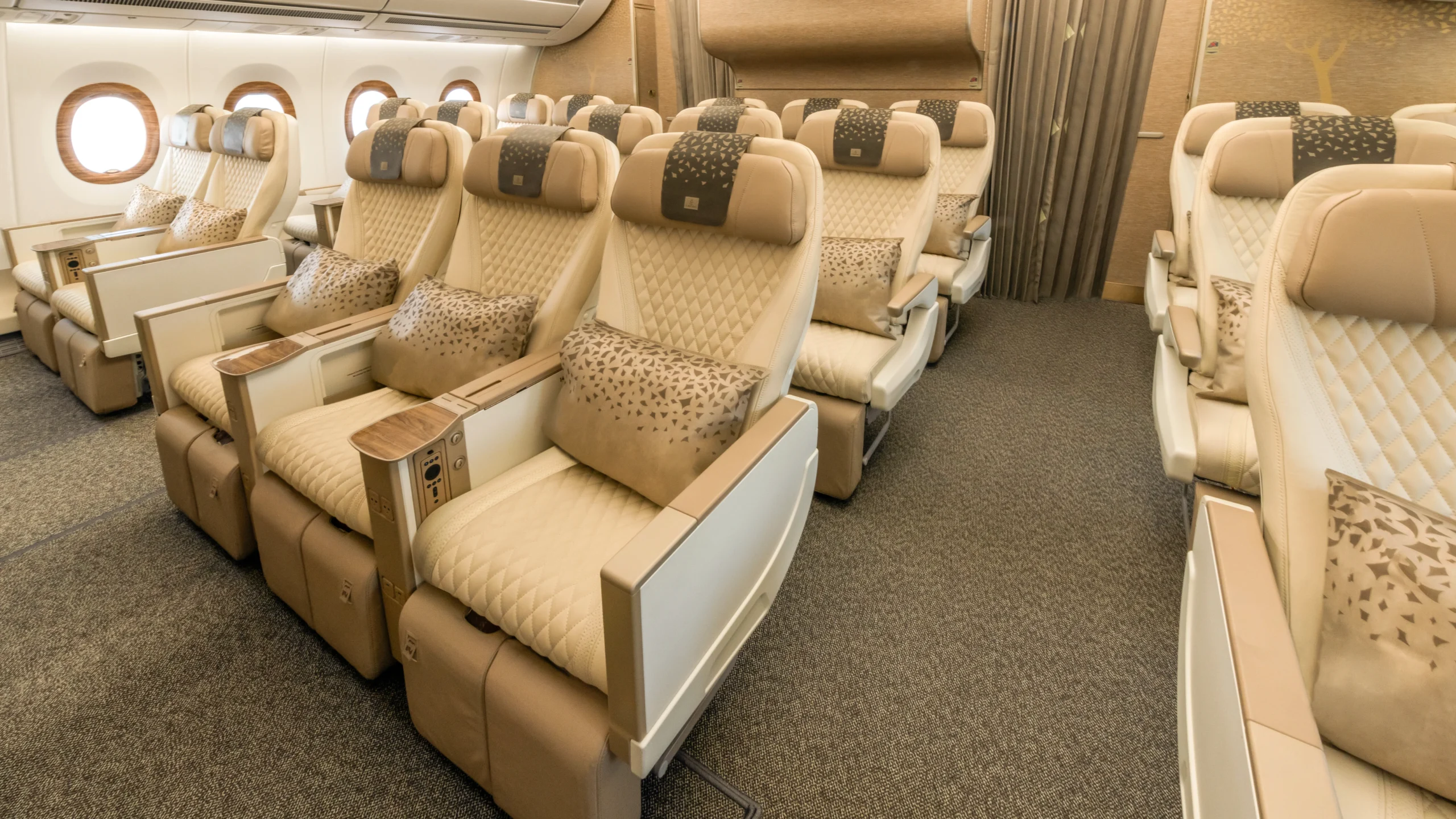
Premium Onboard Experience
Emirates continues to position the A350 as a major part of its next-generation fleet strategy. The aircraft offers improved fuel efficiency and reduced emissions, aligning with broader industry goals to modernize long-haul operations.
Inside the cabin, travelers can expect refined soft products, upgraded meal offerings, and improved sound insulation. These features are designed to support comfort on long sectors such as Montréal–Dubai, one of the airline’s key intercontinental services in North America.
The airline’s decision to deploy the A350 also reflects growing demand for premium travel in and out of Montréal.
With Premium Economy now available in Canada, Emirates anticipates stronger interest from leisure and business travelers seeking mid-tier comfort at competitive fares.
Montreal Travel Guide
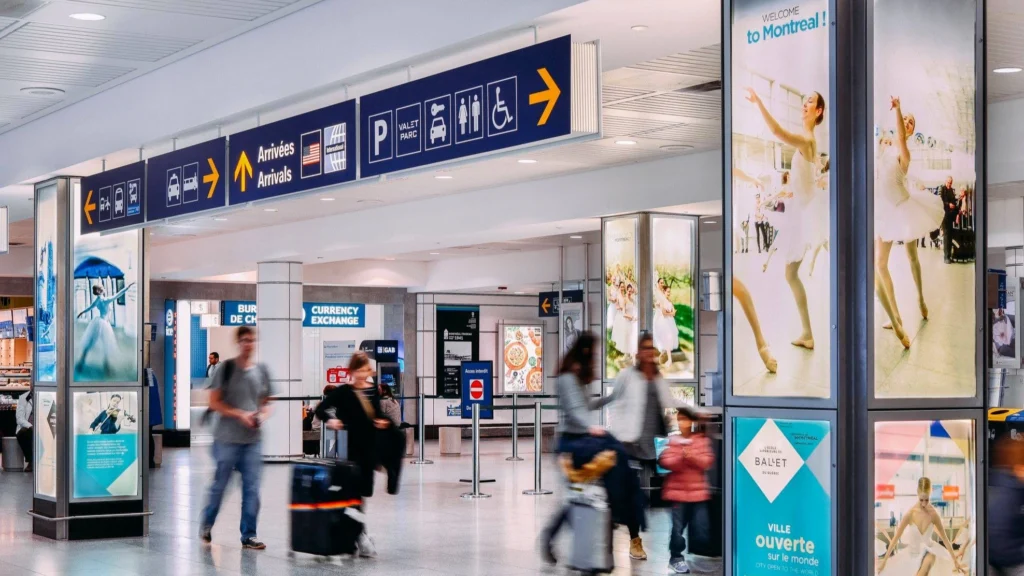
Montreal welcomes visitors through Montréal Trudeau Airport (YUL), offering direct access to the city’s cultural districts. Travellers arriving on major international carriers like Air Canada (AC) or connecting airlines often begin their journey only minutes from the city’s historic core.
The city blends a French identity with global influences, shaped by nearly 80 cultural communities. Its compact layout makes it easy to explore on foot, with distinct neighbourhoods that reveal the story of Montreal’s past and present.
Montreal’s Neighbourhoods and Cultural Landmarks
Montreal is known for its mix of European heritage and North American rhythm. The historic areas along the St. Lawrence River preserve structures from the seventeenth and eighteenth centuries, while the central districts highlight modern life with shopping streets, arts venues, museums and festivals.
Old Montreal
Old Montreal sits beside the St. Lawrence River on the site where the city was founded in 1642. This district keeps its European character with cobblestone streets, preserved architecture, squares and monuments. The Old Port remains a key attraction with a boardwalk connecting piers, museums, cafes, galleries and outdoor activities throughout the year.
Notre-Dame Basilica
The Notre-Dame Basilica stands as a major example of nineteenth-century neo-gothic architecture in Canada. Its interior features detailed woodwork, vivid colours and the historic Casavant organ from 1891. The Aura experience offers a light and music presentation inside the Basilica, providing a different look at the building’s design and artwork.
Rue Saint-Paul
Rue Saint-Paul is the oldest street in Montreal. The preserved nineteenth-century buildings now house galleries, boutiques and restaurants. Its narrow, cobblestone layout reflects the city’s early development and remains one of the most visited streets in Old Montreal.
Place Jacques-Cartier
This square has been a gathering place for centuries and sits at the heart of Old Montreal. It is known for its open-air performers, flower kiosks and historic buildings that now host restaurants and cafes.
Old Port Activities
The Old Port offers river cruises from Jacques-Cartier Pier, science exhibits at the Montreal Science Centre and panoramic rides on La Grande Roue, the tallest Ferris wheel in Canada. Visitors can also try the urban zipline or join jet boat rides through the Lachine Rapids during summer months.
Downtown and Cultural Attractions
Centre-Ville
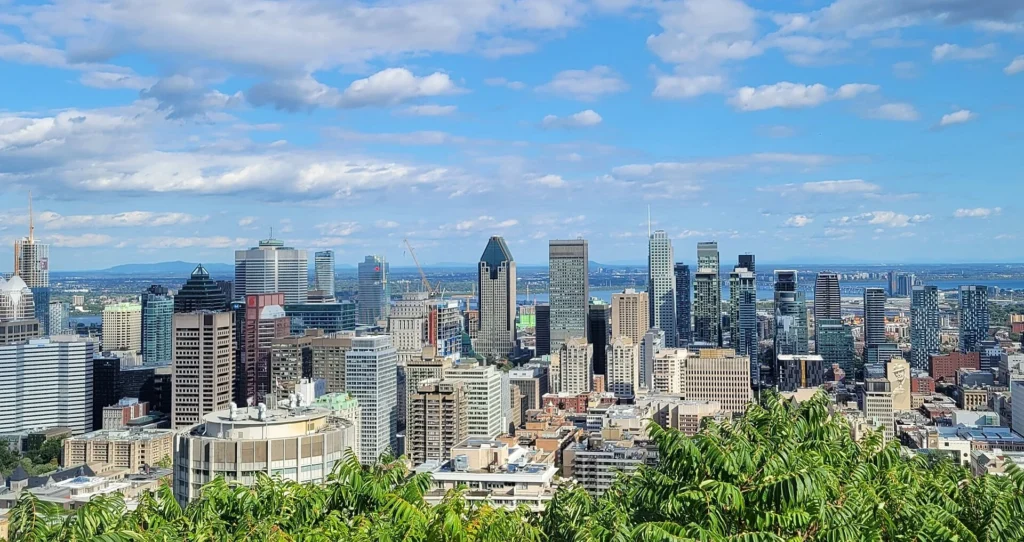
Downtown Montreal rises along the southern slope of Mount Royal. Saint Catherine Street serves as the main commercial avenue, known for shopping, entertainment and restaurants. Skyscrapers and cultural venues define the area’s skyline.
Mary, Queen of the World Cathedral
This nineteenth-century cathedral was inspired by St. Peter’s Basilica in Rome. Its interior features period artwork and architectural details that reflect the growth of the Catholic Church in Montreal.
The Underground City
The underground network covers more than 33 kilometres of tunnels that connect offices, universities, hotels and shopping complexes. It is one of the largest pedestrian networks of its kind and is linked to multiple Metro and commuter stations.
Montreal Museum of Fine Arts
The museum holds more than 35,000 works from a wide range of periods and cultures. Its collection of Canadian and Inuit art is among the most significant in the country.
Creative and Residential Districts
Latin Quarter
Located near the Berri-UQAM Metro station, the Latin Quarter hosts theatres, libraries, academic buildings and arts institutions. It remains a vibrant area with cafes, restaurants and cultural venues.
Plateau-Mont-Royal
The Plateau is known for its colourful houses, outdoor staircases, cafes, bookstores and boutiques. It attracts artists, students and new residents, creating a lively mix of cultures and lifestyles.
Boulevard Saint-Laurent
Commonly called The Main, Boulevard Saint-Laurent separates the eastern and western parts of Montreal. It has long been a multicultural hub with restaurants, bars and shops operated by immigrant communities.
Carré Saint-Louis
This small park features Victorian houses and has long been associated with Quebec poets and artists. It remains one of the city’s most picturesque residential areas.
Parks and Outdoor Spaces
Mount Royal Park
Designed by Frederick Law Olmsted, the park offers forest trails, Beaver Lake, scenic lookouts and open areas used for gatherings. The Kondiaronk Belvedere provides one of the best views of downtown. The weekly Tam-Tams event takes place from May to September near the Sir Georges-Étienne Cartier Monument.
Additional Neighbourhoods and Attractions
The Gay Village
Located east of the Latin Quarter, the Village hosts clubs, bars, theatres and media studios. It is one of the largest LGBTQ+ neighbourhoods in the world.
Saint Joseph’s Oratory
The Oratory sits near Mount Royal Park and welcomes about two million visitors each year. Its architecture, views of the city and peaceful setting make it a major landmark.
Botanical Garden and Insectarium
The Botanical Garden features 22,000 plant species, themed greenhouses and seasonal events. The nearby Insectarium allows visitors to explore the world of insects through engaging exhibits.
Biodome
The Biodome recreates five ecosystems of the Americas. It includes species from tropical forests, coastal regions, maple forests, the Gulf of St. Lawrence and sub-Antarctic islands.
La Ronde
Quebec’s largest amusement park offers rides, shows and seasonal events on île Sainte-Hélène.
Atwater Market
This market near the Lachine Canal is known for its fresh produce, butchers, cheesemongers and ready-to-eat meals. Visitors can walk or cycle along the canal or enjoy drinks aboard the nearby Canal Lounge.
Festivals and Annual Events
Les Franco de Montréal
This festival highlights French-language music and brings performers from around the world.
Grand Prix du Canada
The Formula 1 Grand Prix takes place each June at Circuit Gilles-Villeneuve and attracts global motorsport fans.
L’International des Feux Loto-Québec
This pyrotechnic competition runs from late June to early August with shows launched from La Ronde.
Montreal International Jazz Festival
One of the world’s largest jazz festivals, the event features major performers and free outdoor concerts.
Montréal en Arts
This contemporary arts festival brings artists to St. Catherine Street for exhibitions, workshops and performances.
Osheaga
The festival hosts major international and emerging musicians at Parc Jean-Drapeau.
Just for Laughs
The world’s largest comedy festival presents galas, street shows, film screenings and live performances.
Bottom Line
Emirates’ decision to route the Airbus A350 to Montréal from February 2026 represents a substantial enhancement to the Canada–Dubai link.
The upgrade adds the airline’s newest cabins, introduces Premium Economy to the Canadian market, and strengthens the carrier’s presence in Toronto.
Supported by partnerships and optimized schedules, the move underscores Emirates’ long-term commitment to the Canadian aviation market.
Stay tuned with us. Further, follow us on social media for the latest updates.
Join us on Telegram Group for the Latest Aviation Updates. Subsequently, follow us on Google News
