


ATLANTA- Delta Air Lines (DL) is ending its 2 domestic routes with cuts affecting service through Atlanta (ATL) and Salt Lake City (SLC). The changes remove nonstop links to Santa Barbara (SBA) and Fairbanks (FAI).
The updates, first seen in Cirium schedules and later confirmed by an airline spokesperson, end two routes that did not meet Delta’s long-term performance needs. Delta Air Lines is realigning capacity to match demand more effectively.
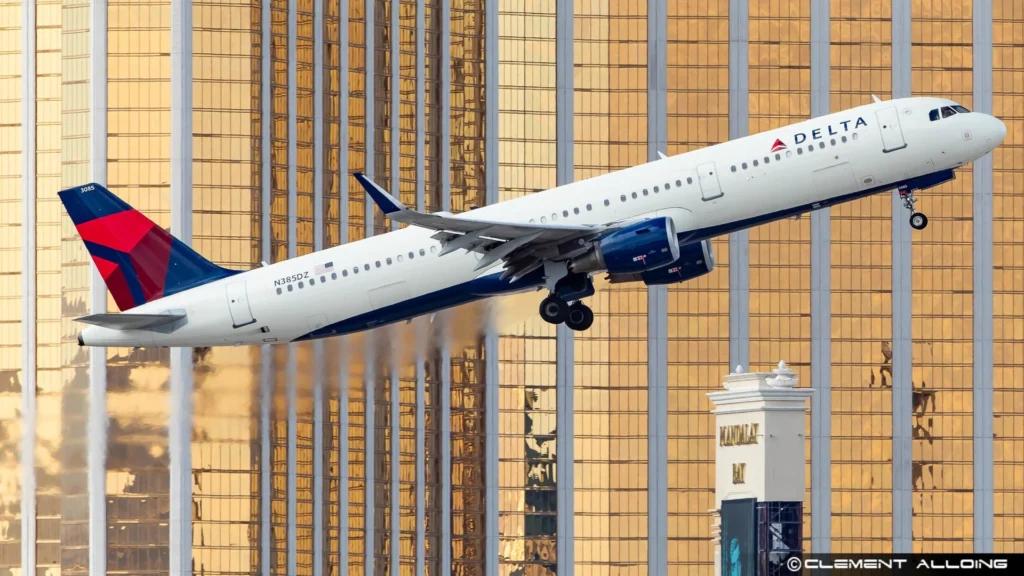
Delta Ends 2 Domestic Routes
Delta’s decision reflects detailed performance reviews across its domestic system. The Salt Lake City (SLC) to Fairbanks (FAI) route operated during the past summer season and was originally scheduled to resume in June 2026.
However, the airline was not satisfied with the route’s performance, and the service is now cancelled entirely.
Reported by The Points Guy, the cut highlights how Delta prioritizes strong and sustainable demand patterns when maintaining seasonal operations.
Travelers heading to Fairbanks (FAI) still have consistent options. Delta offers year-round service from Seattle (SEA) and seasonal service from Minneapolis (MSP), both of which historically generate stronger traffic flows and better operational efficiency.
The Atlanta (ATL) to Santa Barbara (SBA) route, launched in June 2024 as part of a broader leisure-focused expansion, also failed to deliver required connecting traffic.
Although Atlanta is Delta’s largest hub, passengers traveling to Santa Barbara from the western United States would often avoid routing eastbound before flying west again.
Cities like Denver (DEN) or Phoenix (PHX) typically provide more direct and logical connections for those itineraries.
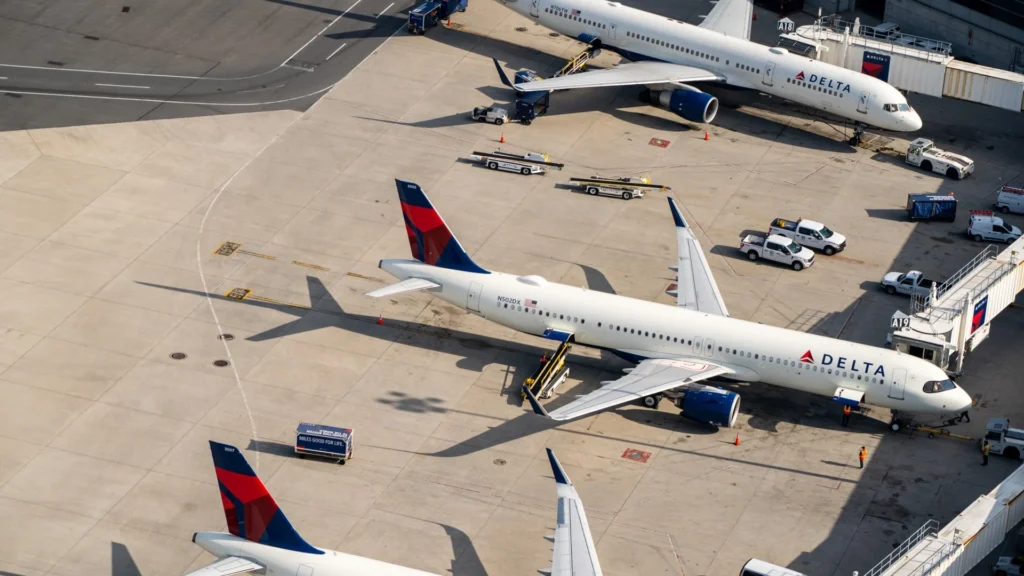
Santa Barbara’s Regional Connectivity
Santa Barbara (SBA) has historically maintained air service primarily through major West Coast cities.
While the end of the Atlanta route removes its longest nonstop link, the airport will continue to see Delta-branded service.
Delta will retain twice-daily flights from Salt Lake City (SLC), operated by SkyWest Airlines under the Delta Connection banner.
These flights preserve regional access, but Santa Barbara will no longer have any mainline Delta aircraft in its operation.
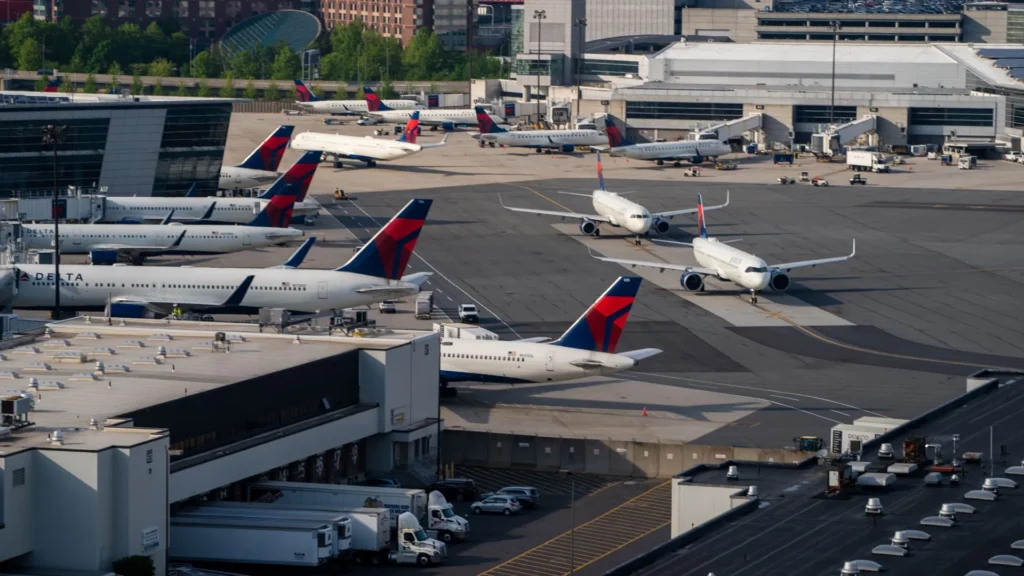
Implications for Travelers and Delta’s Network
These adjustments reflect Delta’s ongoing effort to align aircraft deployment with actual market performance.
Passengers affected by the cancellations will still find reliable service through alternative hubs that match demand patterns more closely.
The airline’s approach supports stability, optimized fleet use, and stronger route economics across its domestic network.
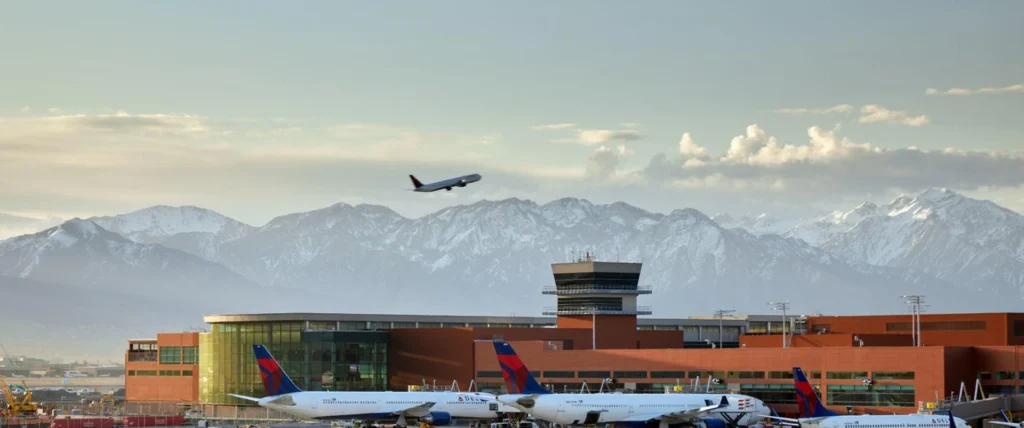
Delta Presence at SLC
Delta Air Lines (DL) continues to expand its presence at Salt Lake City International Airport (SLC), where it operates its largest western hub. The airline’s network growth, facility upgrades, and operational investments position SLC as a key connection point in the Mountain West.
The hub supports a broad mix of domestic and international services, including new long-haul routes that deepen Delta’s global reach. Recent developments highlight the carrier’s focus on training, customer experience, sustainability, and community partnerships across Utah.
Delta’s Expanding Role in Utah’s Primary Gateway
Delta maintains the largest share of flights at SLC, offering up to 255 peak-day departures to 96 destinations. Its presence dates back to 1980 after Western Airlines began service in 1926 and later merged with Delta in 1987. The hub’s long history now supports a diversified network that connects regional markets with global destinations.
New routes shape the next phase of growth. Daily nonstop flights from SLC to Lima (LIM) will operate from December 4, 2025, through January 25, 2026. This service expands Delta’s partnership with LATAM by enabling one-stop connectivity to major South American cities. In June 2025, Delta also launched nonstop flights from SLC to Seoul Incheon (ICN), adding an important link to Asia.
Infrastructure and Customer Experience Investments
Delta’s hub expansion moved forward in 2020 with the opening of the 900 thousand square foot Concourse A. Additional gates debuted in 2023, and the eastern portion of the concourse added 22 more gates in October of that year, bringing the total to 50. The concourse also features a Delta Need Help Center and a wide range of new dining and retail venues.
A lease agreement with Salt Lake City allows Delta to expand its gate count from 55 to 66 by 2027. This agreement provides long-term flexibility for the airline’s operation as traffic continues to grow.
Pilot Training and Operational Support
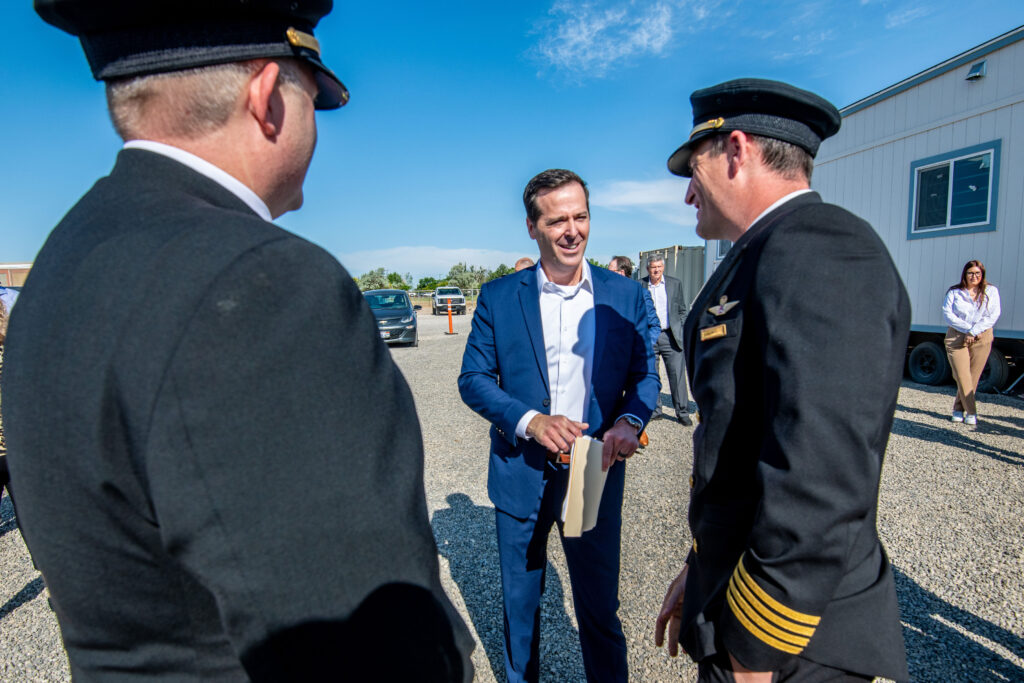
A new pilot training facility broke ground in June 2023 on airport property. Scheduled to open in 2025, the 47 thousand square foot building will support up to 10 simulators and serve as a complement to the main training center in Atlanta.
The initial phase will open with four simulators dedicated to pilot qualification and recurrent training.
Delta Sky Club Development
The Delta Sky Club at Concourse B opened in October 2025 and is the second largest in the network.
The nearly 34 thousand square foot club seats up to 600 guests and includes a wrap-around bar, soundproof phone booths, a food buffet, two beverage stations, a Dirty Soda bar, and a digital immersion wall that features panoramic Utah imagery with ambient sound.
The first SLC Sky Club opened in 2020 with 28 thousand square feet, an open-air Sky Deck overlooking the Wasatch Range, and a central fireplace.
Sustainability Milestones at SLC
Nearly all core ground support equipment at SLC now runs on electric power. About 40 percent of departures use next-generation aircraft such as the A220, A321neo, and A350, which deliver improved fuel efficiency.
Dedicated taxiways support more efficient ground movements, and extensive recycling programs push waste diversion to 95 percent.
Economic and Community Impact
Delta contributes to Utah’s economy through employment, partnerships, and spending. About 4,800 employees live in the state, and small and diverse business partnerships generate an estimated 11.2 million dollars in statewide economic impact. The latest profit-sharing payout in Utah reached 79.3 million dollars.
Community work includes the construction of Delta’s thirty-ninth KABOOM playground and ongoing engagement with educational partners such as Salt Lake Community College and Utah State University.
Delta also maintains sports partnerships with the Utah Jazz, the Utah Mammoth, and the Delta Center.
Delta Presence at ATL
Delta Air Lines (DL) continues to strengthen its operations at Hartsfield-Jackson Atlanta International Airport (ATL). The carrier is building more global connectivity and enhancing the passenger experience at its largest hub.
Delta’s expansion in Atlanta (ATL) reflects strategic growth, new international routes, and long-term investments in technology, sustainability, and airport facilities.
Expanding Reach Through Atlanta Operations
Delta’s activity at Atlanta has grown into one of the most extensive airline hub systems in the world. The airline operates nearly 1,000 peak-day departures to 207 destinations, including 61 international routes. Service at the airport dates back to 1930, when the company operated as Delta Air Service before becoming Delta Air Lines.
Recent network additions include new nonstop flights from Atlanta to Marrakech, Morocco, pending final government approval. The carrier also introduced seasonal service to Accra, Ghana, to accommodate increased winter travel needs.
These routes expand access to Africa while maintaining the airline’s premium onboard offering. Delta’s broader strategy positions Atlanta as a leading gateway between the United States and global markets.
Customer Experience And Technology
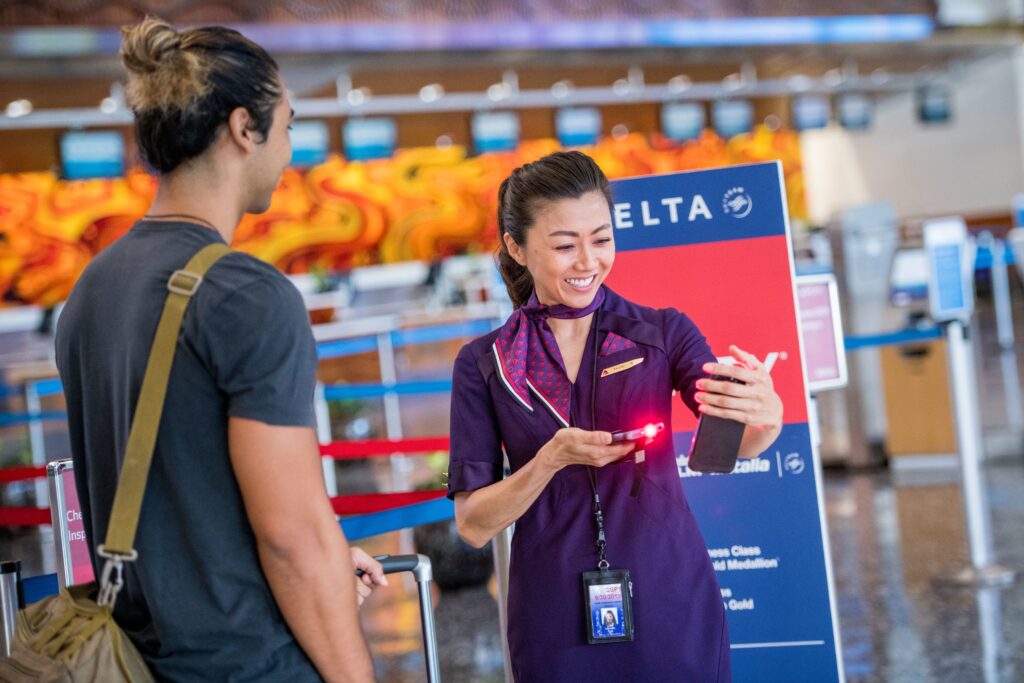
Delta continues to upgrade its Atlanta facilities with a focus on a smoother airport journey. TSA PreCheck Touchless ID, introduced at the airport in 2021, allows eligible travelers to check bags and move through security without presenting a physical ID.
This service is available in both domestic and international terminals and represents a major step in modernizing airport processing.
Investment in lounges is another key focus area. A new 24000 square foot Delta Sky Club opened on Concourse D, offering wide views and additional seating capacity.
Upgrades to existing lounges on Concourses A and C enhance comfort through improved dining, beverages, and a dedicated relaxation space. Across the hub, nine Sky Clubs support consistent service standards for connecting and departing passengers.
Infrastructure And Concourse Improvements
Delta’s expansion of Concourse D supports rising passenger volumes. The updated concourse increases gate capacity and improves flow during peak travel periods. These upgrades also prepare the airport for future operational growth, supporting both domestic and international departures.
Sustainability Initiatives in Atlanta
Environmental programs in Atlanta involve joint efforts from Delta, Airbus, and Plug Power to examine future hydrogen fueling opportunities. The airport’s GreeningATL program is designed to advance energy and waste reduction initiatives across the facility.
Achievements include LEED for Communities certification earned in 2019 and a food recovery system that salvages 30000 pounds of edible food daily.
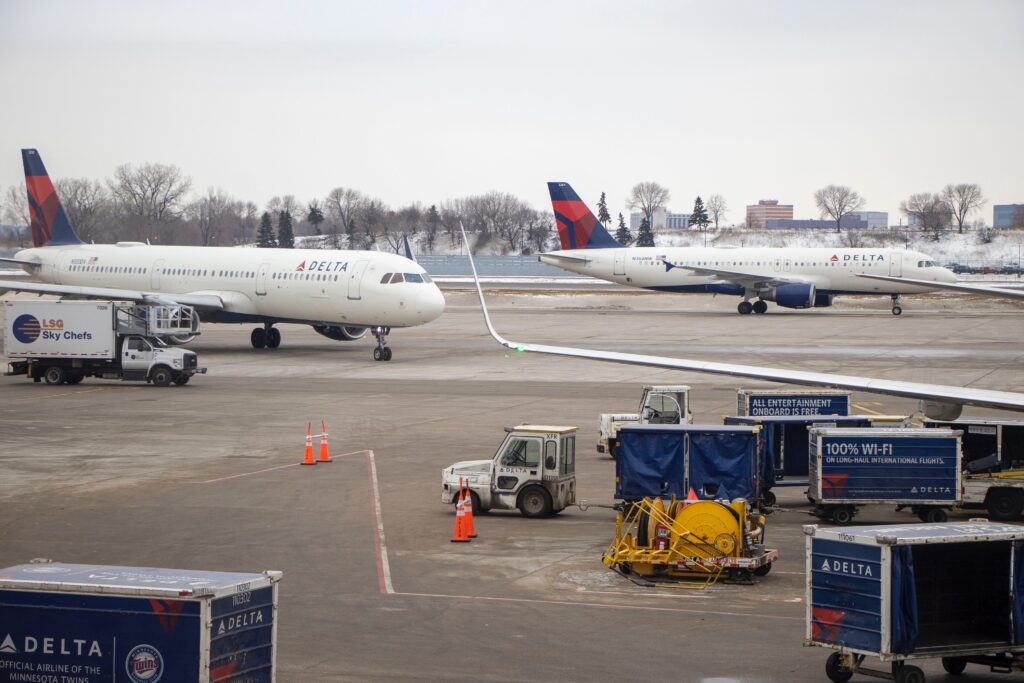
More than 30 percent of core ground support equipment is now electric, and more than 20 percent of departures use newer aircraft types such as the A220, A321neo, and A350, all of which provide better fuel efficiency. Updated landing and taxi procedures further reduce fuel burn.
Economic And Community Impact
Delta’s operations generate major economic value across Georgia. Partnerships with small and diverse businesses create an annual impact of 288.7 million dollars.
Nearly 37000 employees live in the state, and the most recent profit-sharing allocation distributed 593.1 million dollars.
Community involvement centers on volunteer work, education, and local partnerships. A group of more than 130 volunteers helped construct Delta’s 43rd playground in College Park through the KABOOM program.
Delta also supports local technical and aviation education through partnerships with nine colleges and training institutions across Georgia.
Sports And Cultural Partnerships
Delta maintains strong ties with key sports organizations across the state. Partnerships include the Atlanta Braves, Falcons, Hawks, Atlanta United, and events such as the Aflac Kickoff Game, Chick Fil A Peach Bowl, Peachtree Road Race, Georgia Bulldogs, and Georgia Tech athletics. These relationships reinforce the airline’s presence in the community and highlight its commitment to local engagement.
Stay tuned with us. Further, follow us on social media for the latest updates.
Join us on Telegram Group for the Latest Aviation Updates. Subsequently, follow us on Google News
