

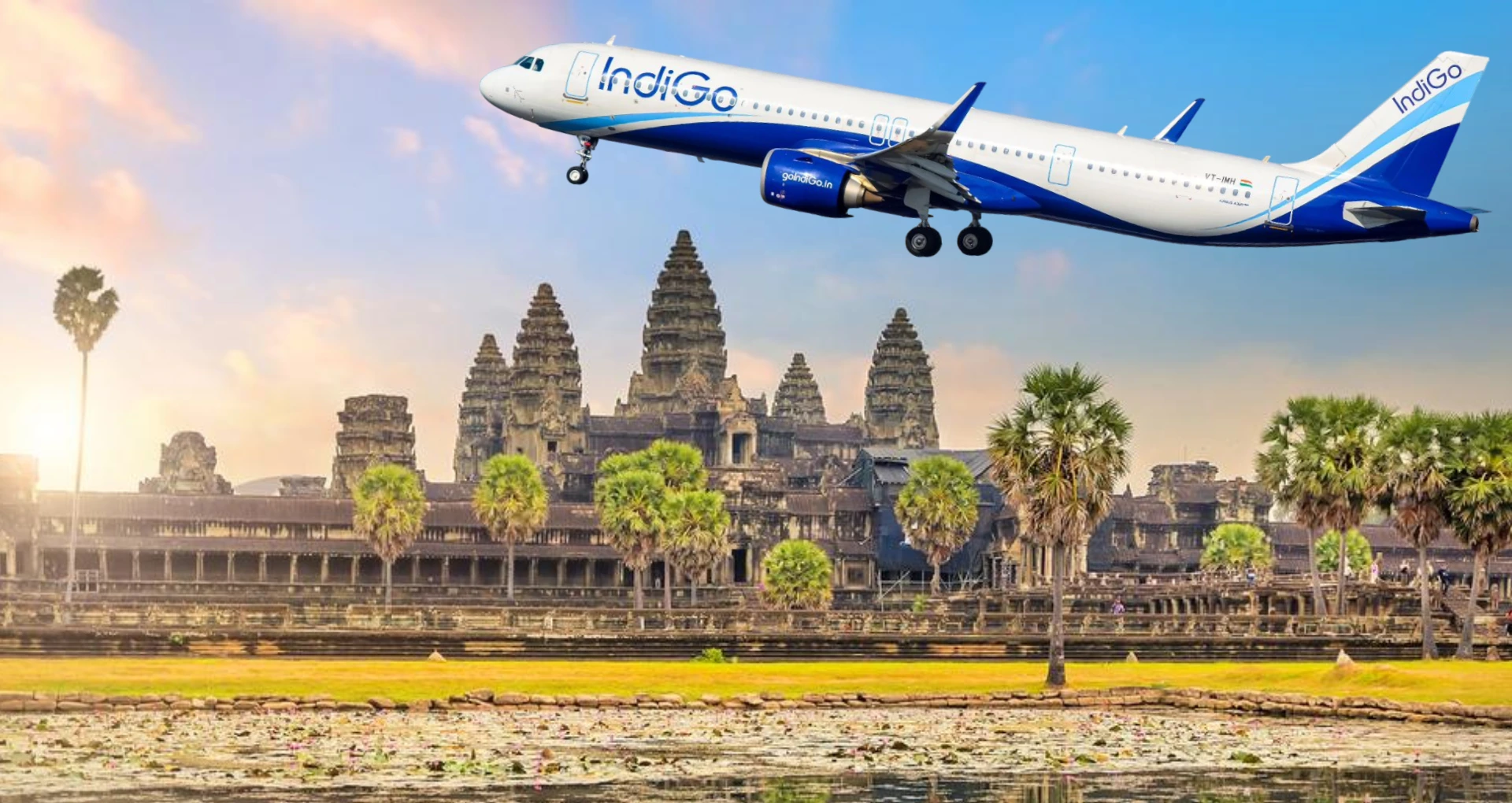
KOLKATA- IndiGo Airlines (6E) has launched direct flights between Kolkata (CCU) and Siem Reap (REP), becoming the first Indian airline to establish a direct air connection with Cambodia. The thrice-weekly service enhances India’s regional connectivity across Southeast Asia.
Operated with the Airbus A320neo, the new route positions Siem Reap as IndiGo’s 46th international and 140th overall destination, reinforcing its expanding ASEAN footprint.
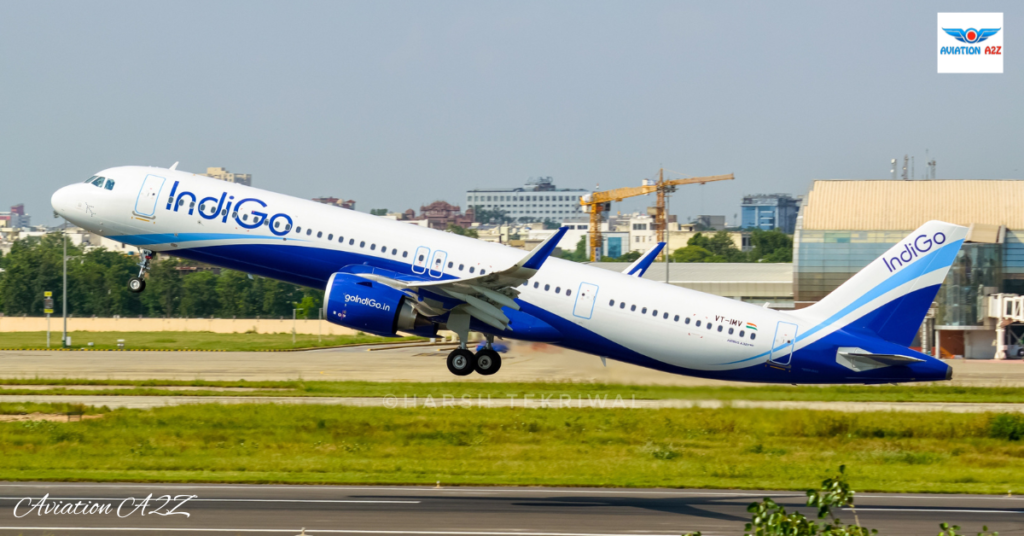
IndiGo Kolkata to Cambodia Flight
The introduction of direct flights between Kolkata and Siem Reap marks a milestone for IndiGo (6E) and for India’s growing aviation links with Southeast Asia. The airline continues to strengthen its international network by adding key routes that connect emerging cultural and economic hubs.
According to IndiGo CEO Pieter Elbers, the new service reflects IndiGo’s commitment to building stronger ties between India and the ASEAN region. He emphasized that the route will support tourism and trade while promoting cultural exchange between the two nations.
We are glad to launch our inaugural flight to Siem Reap, IndiGo’s 46th international destination, that not only expands our network across Southeast Asia but also enhances our global connectivity from our Kolkata hub. This new service is India’s first direct air link to Cambodia operated by an Indian carrier, and we believe it will play a vital role in fostering deeper ties between India and the ASEAN region. As we continue to build bridges across Asia’s dynamic economies and cultural destinations, this new route reflects IndiGo’s commitment to connecting people, cultures, and opportunities.”
Pieter Elbers, Chief Executive Officer at IndiGo
With three weekly departures—on Mondays, Thursdays, and Saturdays—the route provides travelers with convenient access to Cambodia’s cultural capital. Here’s the flight schedule:
- The flight 6E 1655 departs Kolkata at 01:50 and arrives in Siem Reap at 06:20,
- The return flight 6E 1656 leaves Siem Reap at 07:20 and reaches Kolkata at 08:55 (local times).
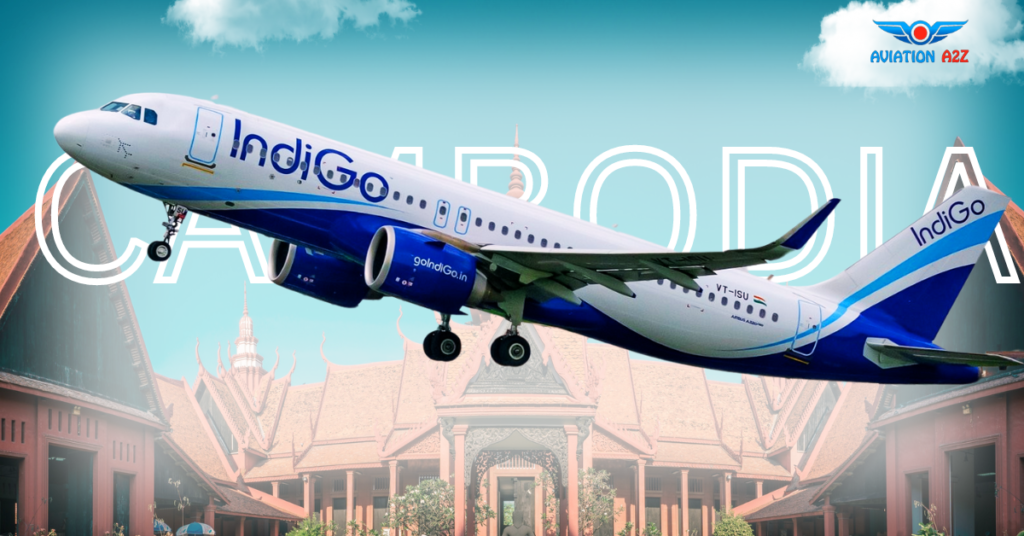
Strengthening Tourism and Cultural Exchange
As the gateway to Angkor Wat, a UNESCO World Heritage site, Siem Reap attracts travelers seeking historical and spiritual experiences. The new connection caters to rising Indian tourism interest in Cambodia, supported by simplified entry procedures through Visa on Arrival and e-Visa options.
This service is expected to boost visitor numbers in both directions, offering Indian tourists a convenient, direct link to Cambodia’s heritage while enabling Cambodian travelers greater access to India’s cultural and economic centers.
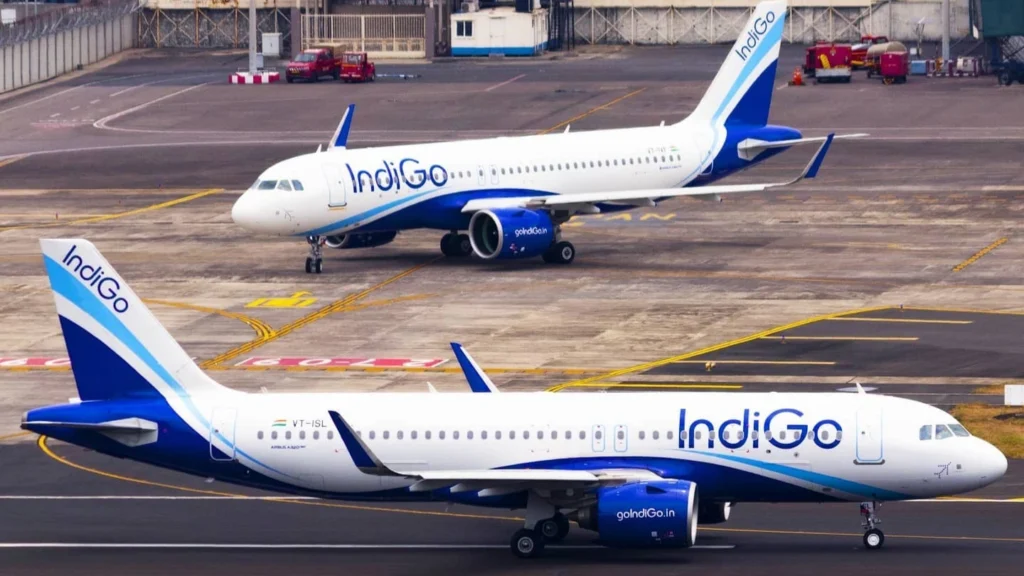
IndiGo’s Growing Global Footprint
IndiGo continues to expand rapidly, operating over 2,200 daily flights with a fleet exceeding 400 aircraft.
The airline connects 90+ domestic and 40+ international destinations, adding 58 aircraft in 2024 and serving over 118 million passengers in FY25.
In 2025, IndiGo received the Skytrax Award for Best Airline in India and South Asia, further cementing its reputation for reliability and service excellence. The addition of Siem Reap underlines its goal to connect people and cultures across Asia with affordable fares and on-time performance.

Delhi to Guangzhou Flight
has launched daily non-stop flights between Delhi (DEL) and Guangzhou (CAN), starting 10 November 2025. The service strengthens air connectivity between India and China, following IndiGo’s earlier resumption of the Kolkata (CCU)–Guangzhou (CAN) route.
The new Delhi–Guangzhou service operates with the Airbus A320neo, enhancing travel options for business and leisure passengers while supporting growing trade and tourism ties between the two countries.
Expanding Air Links Between India and China
IndiGo’s latest international route reinforces its strategic network expansion in Asia. By linking Delhi—India’s busiest aviation hub—with Guangzhou, a key commercial and manufacturing center in southern China, the airline strengthens its role as a bridge between major Asian economies.
This addition brings IndiGo’s international connections from Delhi to 21 destinations, highlighting the capital’s increasing importance as a regional aviation hub.
- The daily schedule offers convenient overnight service, departing Delhi at 21:45 and arriving in Guangzhou at 04:50 the next day.
- The return flight departs Guangzhou at 05:50, reaching Delhi by 10:10 (all times local).
IndiGo’s Chief Executive Officer, Pieter Elbers, stated that the new connection builds on the airline’s earlier success in resuming Kolkata–Guangzhou flights.
He emphasized that the Delhi route will foster economic cooperation, business travel, and cultural exchange, while giving Chinese travelers access to IndiGo’s extensive domestic network covering more than 90 cities across India.

Codeshare with China Southern
Alongside this launch, IndiGo and China Southern Airlines (CZ) have signed a memorandum of understanding (MoU) to establish a codeshare partnership, further deepening cooperation between the two carriers and expanding travel options between both nations.
The partnership is designed to deliver integrated travel itineraries through check-in convenience and smoother transit options for passengers traveling between India and China. Detailed information on the codeshare arrangement will be announced once finalized.
IndiGo’s CEO Pieter Elbers said,
We are happy to join hands with China Southern Airlines as we enhance connectivity between India and China. We recently reinstated our direct daily flights connecting Kolkata with Guangzhou, followed by inaugurating a new direct service between Delhi and Guangzhou. Now with this partnership, our joint customers will get the added convenience of booking seamlessly for travel across various parts of India and China on the joint network of IndiGo and China Southern Airlines.”
IndiGo’s CEO Pieter Elbers
Han Wensheng, President and CEO of China Southern Airlines, added,
China Southern Airlines highly values the development potential of the Indian market. Through cooperation with IndiGo, we will be able to further leverage each other’s strengths, offer a wider range of travel products, and give new momentum to economic, cultural, and aviation exchanges between the two countries.”
Han Wensheng, President and CEO of China Southern Airlines
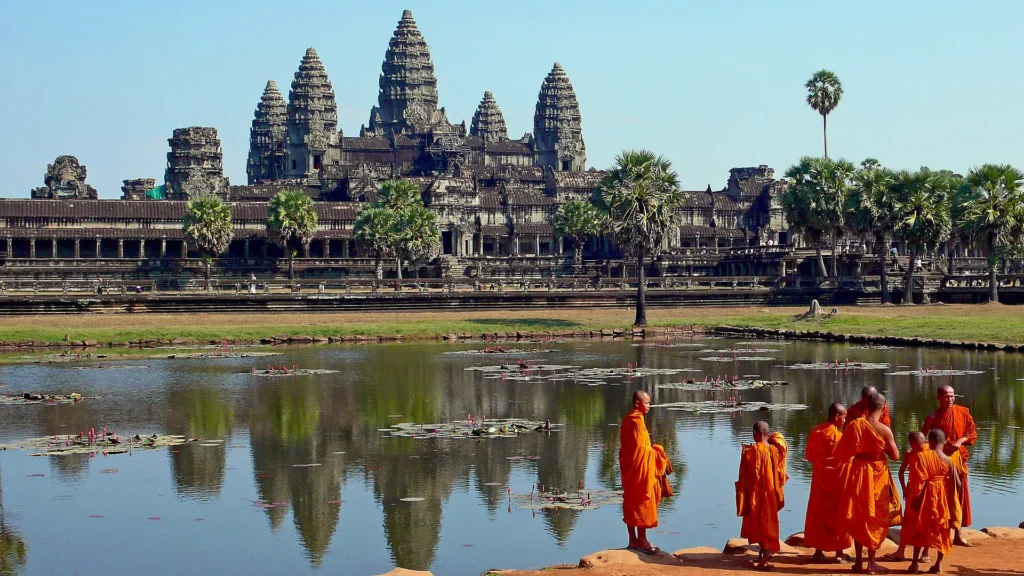
Angkor Wat: Largest Religious Structure in the World
Angkor, in Cambodia’s northern province of Siem Reap (REP), is among Southeast Asia’s most significant archaeological landmarks. Covering nearly 400 square kilometers, the site embodies centuries of Khmer history, artistry, and spiritual devotion.
Home to the iconic Angkor Wat and countless ancient temples, Angkor represents the heart of the Khmer Empire’s cultural and architectural achievements. Today, it remains both a World Heritage site and a living community sustained by tradition and agriculture.
A Legacy of the Khmer Civilization
Angkor was the political and religious center of the Khmer Empire from the 9th to the 14th centuries. Its vast network of temples, hydraulic systems, and roadways reveals the empire’s advanced engineering and urban planning.
Key monuments such as Angkor Wat, Bayon, Preah Khan, and Ta Prohm showcase the sophistication of Khmer architecture, blending spiritual symbolism with structural mastery.
The site’s grandeur reflects a high degree of social organization. Each temple and reservoir was strategically positioned to mirror cosmic harmony, while the intricate carvings immortalized deities, kings, and daily life.
The surrounding “barays” and canals still trace the ancient city’s hydrological genius, emphasizing its self-sufficient and sustainable design.
Cultural and Artistic Influence Across Southeast Asia
Angkor’s artistic achievements shaped the cultural identity of much of Southeast Asia. The Khmer architectural style, while initially influenced by the Indian subcontinent, evolved into a distinct regional form.
Its emphasis on symmetry, bas-reliefs, and sandstone craftsmanship inspired neighboring cultures, creating a shared yet unique aesthetic across the region.
The Angkor complex, representing the pinnacle of Khmer art, fulfills several UNESCO World Heritage criteria, including artistic mastery, cultural influence, and architectural innovation. These elements combined make it a symbol of regional unity and historical continuity.
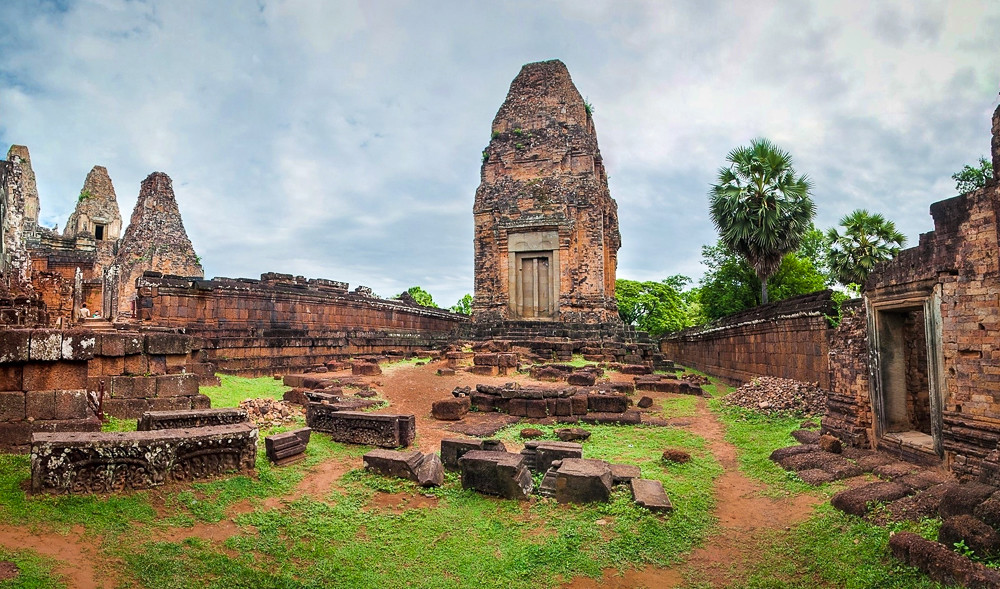
Integrity, Authenticity, and Preservation Efforts
Angkor’s preservation is managed by the APSARA National Authority, established under Cambodian law to protect and oversee the site. Despite pressures from urban expansion and a growing tourism industry, the site’s authenticity remains largely intact.
Restoration efforts led by international bodies such as the École Française d’Extrême-Orient, the Archaeological Survey of India, and the World Monuments Fund have respected the original integrity of the monuments.
Since 1993, the ICC-Angkor (International Coordinating Committee for the Safeguarding and Development of Angkor) has ensured consistency in conservation projects. The park was removed from UNESCO’s List of World Heritage in Danger in 2004, marking a milestone in its sustainable preservation.
Balancing Heritage and Community
Angkor is not just an archaeological site—it’s a living landscape. More than 100,000 residents across 112 villages still inhabit the park, practicing rice cultivation and maintaining traditions that date back centuries.
Cultural rituals, temple ceremonies, and the use of medicinal plants at temples like Preah Khan and Neak Poan illustrate how the site remains woven into daily life.
Projects such as the Angkor Management Plan and the Community Development Participation Project (CDPP), supported by New Zealand, and the Heritage Management Framework with Australia and UNESCO, aim to balance conservation with community welfare.
These initiatives encourage sustainable tourism, enhance local livelihoods, and preserve Angkor’s “living heritage” status.
Future of Sustainable Tourism
Tourism is both an opportunity and a challenge for Angkor. The APSARA National Authority has implemented visitor management systems and public surveys to monitor tourism impacts and guide responsible development.
The goal is clear: preserve Angkor’s physical, spiritual, and emotional essence while allowing visitors to connect meaningfully with its past.
Through coordinated global partnerships and community inclusion, Angkor continues to stand as a testament to human creativity, resilience, and reverence for heritage.
Stay tuned with us. Further, follow us on social media for the latest updates.
Join us on Telegram Group for the Latest Aviation Updates. Subsequently, follow us on Google News
