

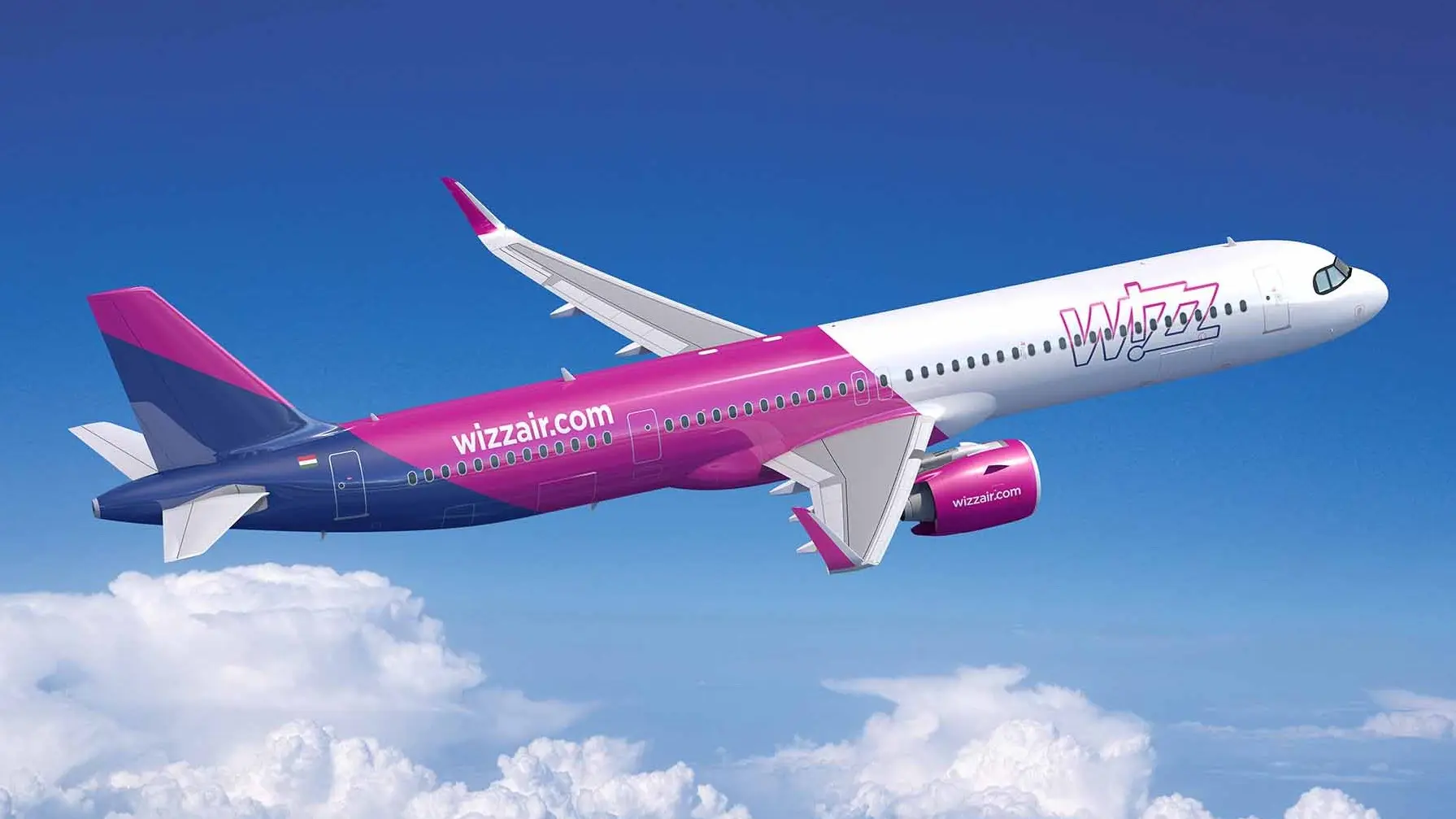
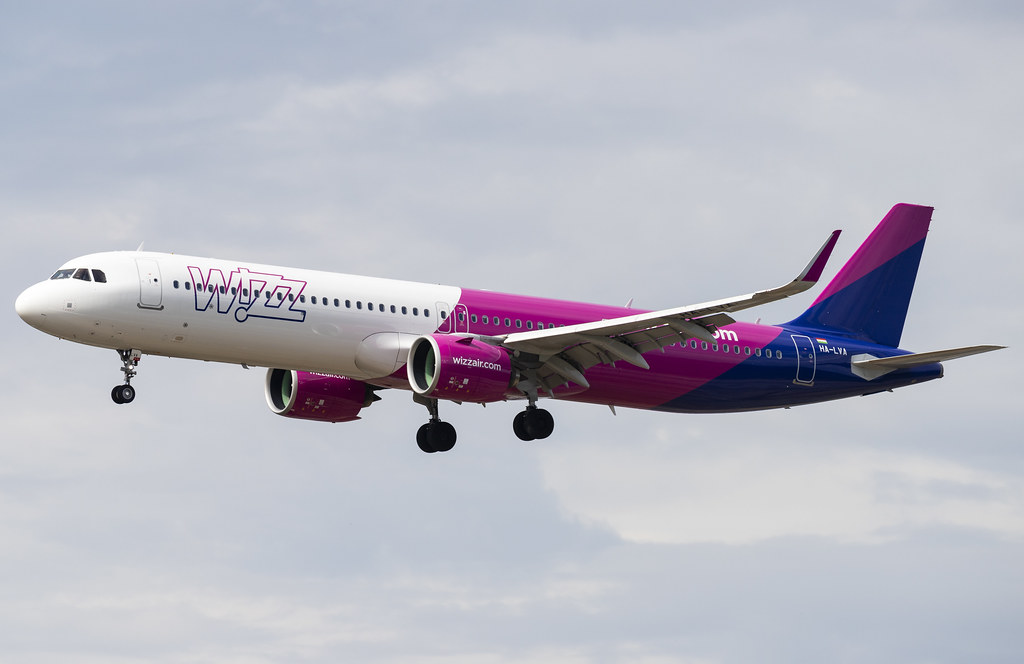
BUDAPEST- Czech investigators revealed that a Wizz Air UK (W9) Airbus A321XLR experienced a 60% increase in descent rate seconds before a hard landing and tail strike at Václav Havel Airport Prague (PRG).
The incident occurred during an instrument landing system approach on runway 24 after a flight from London Gatwick Airport (LGW) on September 11.
No injuries resulted from the event, which damaged the aircraft’s aft fuselage. According to Flight Global, the probe highlights crew experience and approach dynamics as key factors in the occurrence.
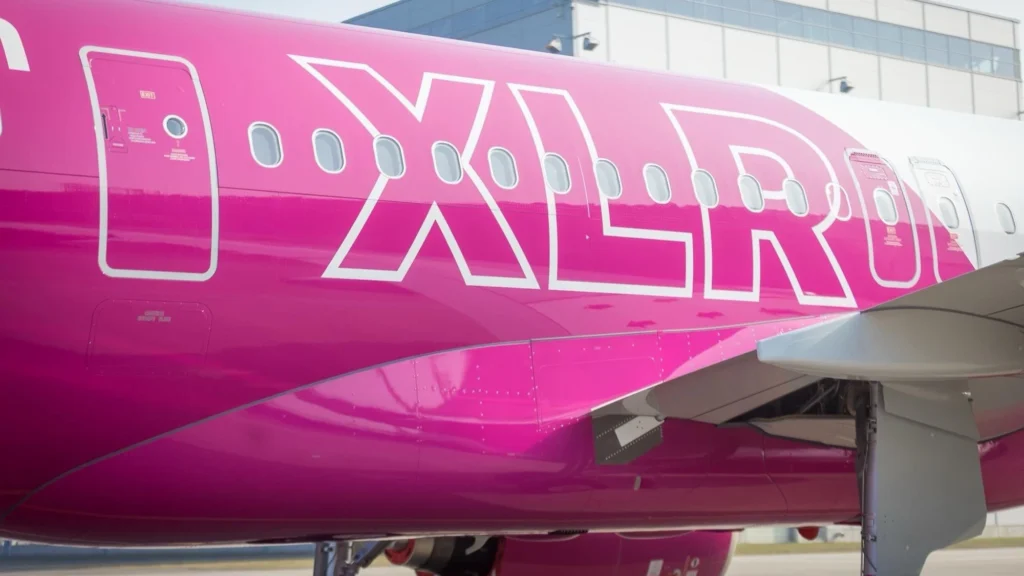
Wizz Air A321XLR Tail-Strike
The Czech safety authority UZPLN analyzed flight data recorder information to pinpoint the sequence of events.
As the aircraft passed from 75 feet to 30 feet above ground level, its vertical speed jumped from 480 feet per minute to 768 feet per minute. This sharp rise set the stage for the unstable touchdown.
Pilots initiated the flare maneuver, which briefly stabilized the jet at 25 feet. However, the main landing gear contacted the runway with a 2.54g vertical acceleration and a 6 degree nose-up pitch.
The radio altimeter then registered a 2-foot rebound, indicating a minor bounce that exacerbated the instability.
Within less than one second, the aircraft’s pitch attitude climbed from 7.7 degrees to 9.7 degrees as spoilers deployed automatically. This rapid nose-up rotation caused the tail to scrape the runway surface, leading to structural compromise in the aft fuselage area.
Post-flight inspections confirmed damage concentrated between frames 64 and 65 on the underside of the fuselage. Engineers grounded the aircraft for repairs, but all 180 passengers and crew members emerged unharmed.
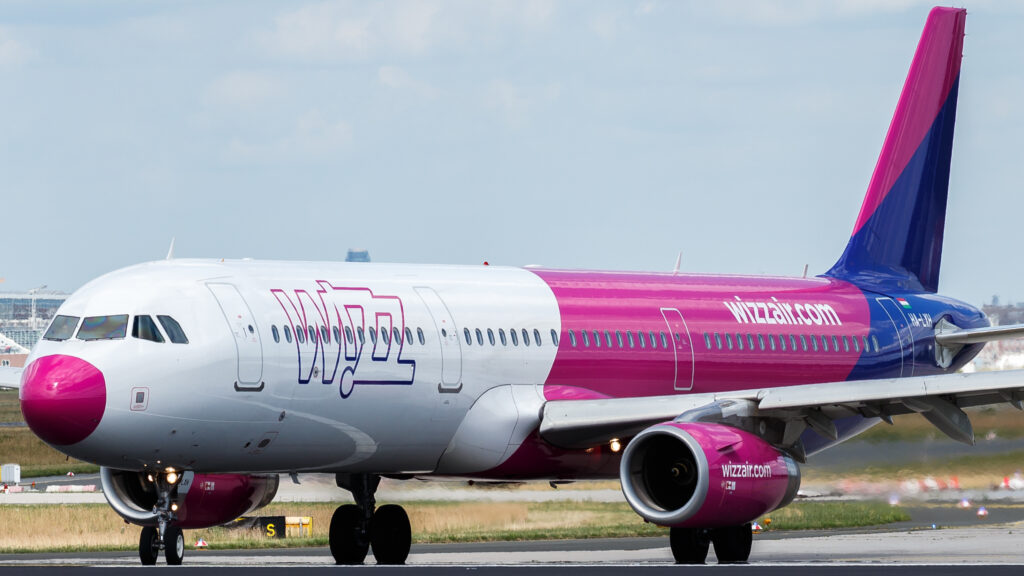
Crew Qualifications and Experience Levels
The first officer served as the pilot flying, accumulating 450 hours on A320 family aircraft, including this as their third supervised session on the type.
The captain, meanwhile, commanded the flight for the first time on the A321XLR variant, though both held valid certifications for the operation.
UZPLN noted no evidence of pilot error in initial findings, emphasizing the role of the aircraft’s advanced fly-by-wire systems in attempting to mitigate the descent.
Training records showed the crew completed recent recurrent sessions on long-range operations, tailored to the Pratt & Whitney geared turbofan engines powering the jet.
This incident marks an early test for the A321XLR in Wizz Air UK’s fleet, which received the aircraft just four months prior.
The model extends the airline’s reach to new routes, but such events underscore the need for refined procedures on extended-range approaches.
Environmental Factors During Approach
Weather at Václav Havel Airport Prague (PRG) remained benign, with clear visibility exceeding 10 kilometers and no precipitation.
Surface winds blew at 10 knots from directions between 150 and 220 degrees, introducing mild variability but falling within operational limits.
The instrument landing system guided the approach without deviations, and ground proximity warning systems activated as designed.
UZPLN’s report attributes the descent anomaly primarily to aerodynamic interactions during the final flare, rather than external gusts or system malfunctions.
Air traffic control recordings confirmed standard clearances, with no tower-reported issues on runway 24 that day. This normal environment isolates the event to onboard dynamics, aiding broader lessons for similar high-bypass twinjets.
Implications for A321XLR Operations
Wizz Air UK integrates the A321XLR to bolster transatlantic and long-haul efficiency, leveraging its 4,700 nautical mile range.
The tail strike prompts enhanced simulator scenarios focusing on bounce recovery and pitch control at low altitudes.
Airbus and Pratt & Whitney support ongoing data reviews to refine software thresholds for descent protection.
Industry wide, such probes reinforce flare technique standardization, particularly for crews transitioning from shorter-range A320s.
UZPLN plans to release a final report by mid-2026, incorporating manufacturer inputs. Wizz Air UK commits to fleet-wide briefings, ensuring safer profiles on routes like London Gatwick (LGW) to Prague.
Stay tuned with us. Further, follow us on social media for the latest updates.
Join us on Telegram Group for the Latest Aviation Updates. Subsequently, follow us on Google News
