


TORONTO- As Canada’s largest airline, Air Canada (AC) continues to play a pivotal role in connecting the country to the rest of the world. With a global network that stretches across six continents, the airline relies heavily on a diverse fleet of narrowbody and widebody aircraft.
In 2025, Air Canada’s fleet strategy balances efficiency, passenger experience, and long-term growth, making it one of the most dynamic fleets in North America.
The Air Canada Fleet 2025 includes a mix of Airbus and Boeing aircraft, along with regional additions and future electric-hybrid planes on order. From the Airbus A220, which has become the backbone of its domestic and transborder routes, to the long-haul Boeing 777 and 787 Dreamliner family, the airline has invested heavily in modern and fuel-efficient aircraft.
The upcoming Airbus A321XLR and Boeing 787-10 orders will further strengthen its position on long-range international markets, while the Heart Aerospace ES-30 electric-hybrid order highlights a commitment to sustainability.
With more than 200 aircraft in service and over 100 on order, Air Canada is reshaping its fleet for the next decade. Below is a detailed breakdown of the Air Canada Fleet 2025, divided into narrowbody and widebody aircraft categories.
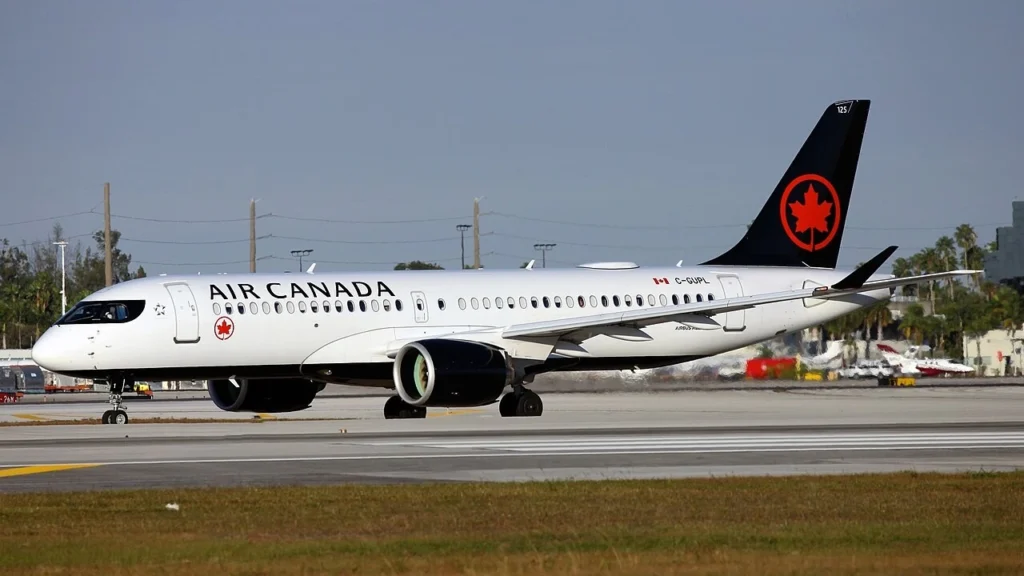
Narrowbody Fleet
Airbus A220-300
The Airbus A220-300 has quickly become a cornerstone of the Air Canada fleet, with 38 aircraft already in service and another 27 on order. Deliveries are expected to continue through 2027, and the airline has exercised options to further expand the type’s presence.
The A220’s fuel efficiency, lower operating costs, and passenger-friendly cabin make it an ideal replacement for aging narrowbody models on short- and medium-haul routes. For Air Canada, the aircraft bridges the gap between regional jets and larger narrowbodies, offering flexibility on transborder and domestic services.
Airbus A320-200
Air Canada still operates 17 Airbus A320-200 aircraft, though these are among the oldest narrowbodies in its fleet. While no new orders exist for the type, a retrofit program is underway for eight aircraft to extend their service life until replacements arrive.
The A320s primarily fly on domestic and short international routes but will gradually be phased out in favor of newer A220s and A321neos.
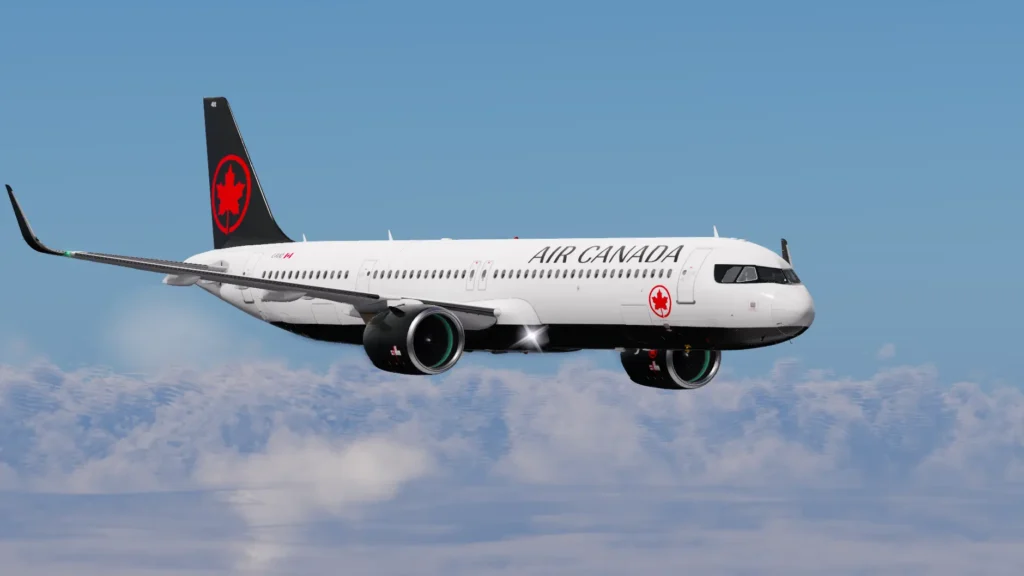
Airbus A321-200
The Airbus A321-200 remains another important narrowbody for Air Canada, with 15 in service. These aircraft are set to undergo cabin retrofits that will increase seating capacity to 196 by the end of 2025, aligning them with the airline’s focus on higher-density operations.
Some additional units transferred from EVA Air have also joined the fleet, bringing slightly different configurations. Despite their age, the A321-200s are likely to remain in service until the new Airbus A321XLR deliveries begin in 2026.
Airbus A321XLR
One of the most anticipated additions to the Air Canada Fleet 2025 is the Airbus A321XLR. While none are in service yet, the airline has 30 on order, with deliveries scheduled from 2026 through 2029. This long-range narrowbody will allow Air Canada to operate thinner transatlantic and South American routes more efficiently than widebodies.
The aircraft will also feature enhanced premium cabins, aligning with Air Canada’s strategy of offering a competitive product in both leisure and business markets.
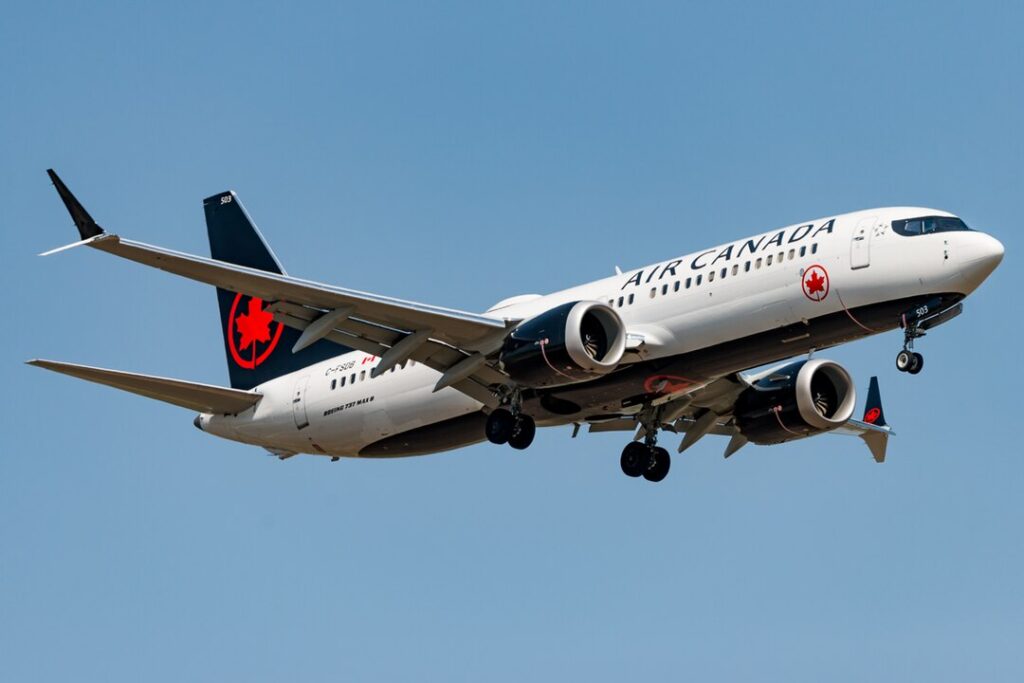
Boeing 737 MAX 8
Air Canada operates 47 Boeing 737 MAX 8s, with an additional five pending delivery. These aircraft are relatively new and represent the airline’s primary narrowbody alongside the A220.
However, all 52 MAX 8s are scheduled to be transferred to Air Canada Rouge by 2028, making them more prominent in the leisure-focused subsidiary’s network. The aircraft are currently deployed across North America, the Caribbean, and select South American routes.
Heart Aerospace ES-30
Looking further ahead, Air Canada has placed an order for 30 Heart Aerospace ES-30 hybrid-electric aircraft, with deliveries starting in 2029. While not yet part of the active Air Canada Fleet 2025, the ES-30 order reflects the airline’s push toward sustainable aviation and regional fleet modernization.
These aircraft will likely serve shorter domestic and regional routes, complementing the A220 and potentially replacing smaller regional jets.
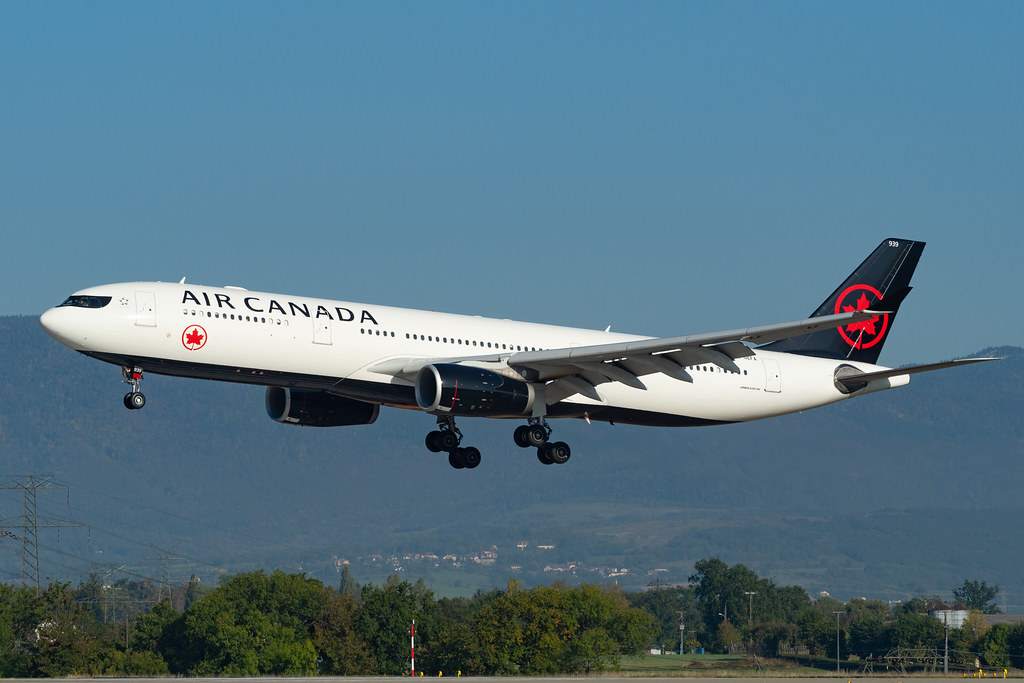
Widebody Fleet
Airbus A330-300
Air Canada operates 20 Airbus A330-300s, which remain a key part of its long-haul operations. These aircraft are used on both transatlantic and select high-capacity North American routes.
Despite their age, the A330s continue to play a vital role thanks to ongoing cabin upgrades and consistent demand for mid-sized widebodies. The type’s flexibility allows Air Canada to deploy it where demand falls between the 787 and 777 families.
Boeing 777-200LR
The Boeing 777-200LR fleet consists of six aircraft, primarily used on ultra-long-haul routes. Known for its range, the 777-200LR allows Air Canada to serve destinations in Asia, the Middle East, and other far-reaching markets.
While fewer in number compared to other widebodies, these aircraft provide unique operational capabilities unmatched by other types in the fleet.
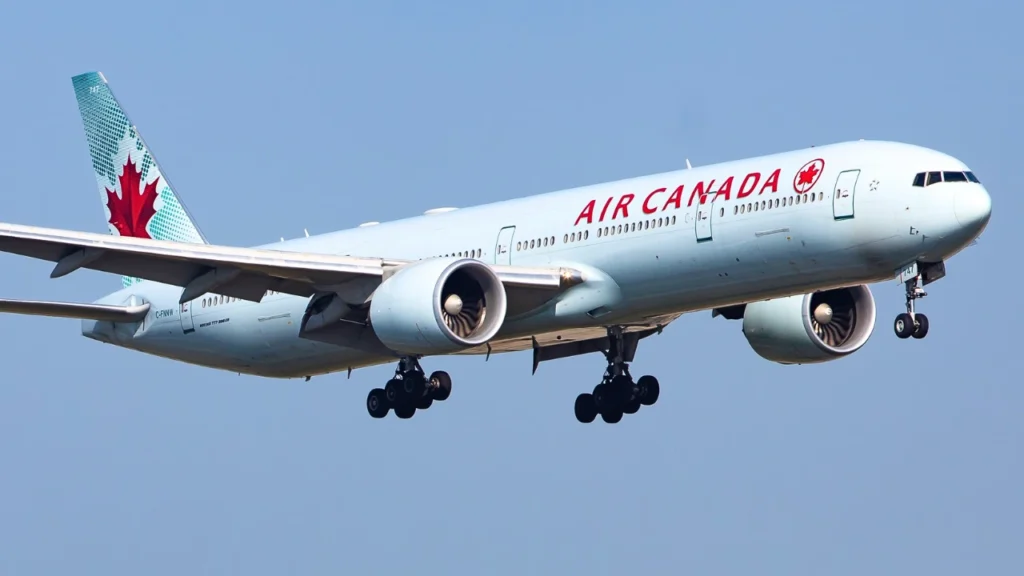
Boeing 777-300ER
Air Canada operates 19 Boeing 777-300ERs, which are among the highest-capacity aircraft in the fleet. With seating for around 400 passengers, these aircraft serve flagship long-haul routes such as Toronto–London, Toronto–Hong Kong, and Vancouver–Sydney.
They are also undergoing retrofits that will introduce Air Canada’s latest premium cabins, ensuring competitiveness in international markets. The 777-300ERs remain the backbone of the airline’s largest international operations.
Boeing 787-8
The Boeing 787-8 makes up a smaller part of the Dreamliner family within Air Canada, with eight aircraft in service. These jets offer a balance of range and efficiency, suitable for long-haul routes with moderate demand.
The 787-8s have helped Air Canada expand to secondary international destinations that would not be viable with larger aircraft.
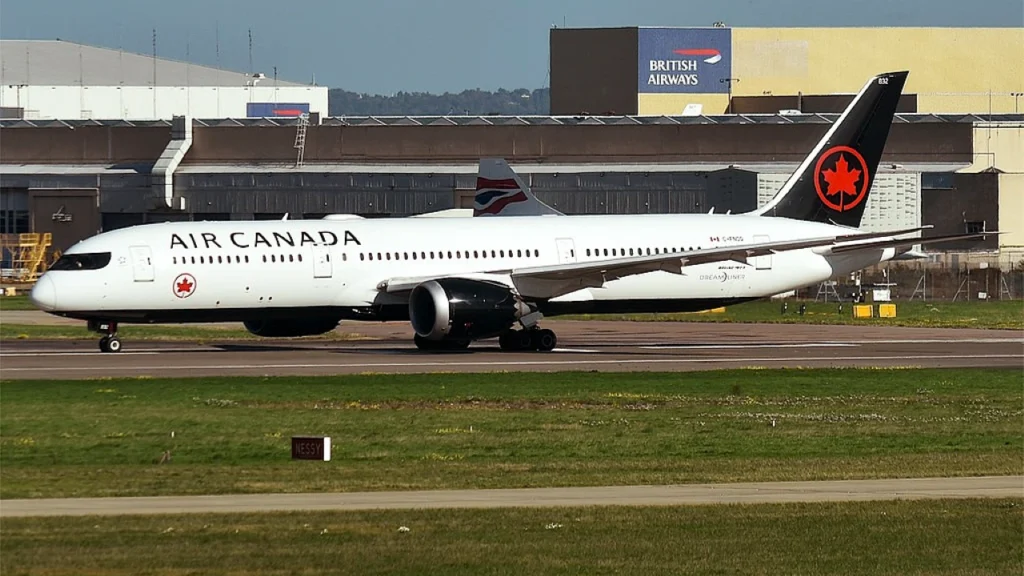
Boeing 787-9
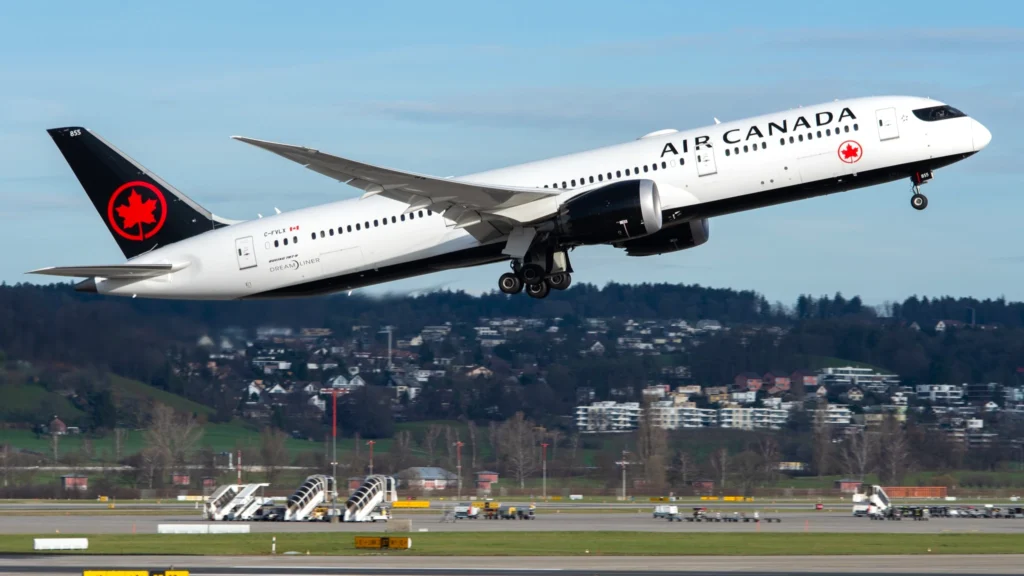
With 32 in service, the Boeing 787-9 is the most numerous widebody in Air Canada’s fleet. These aircraft are central to the airline’s international network, serving major destinations in Europe, Asia, and South America.
Their fuel efficiency, modern interiors, and passenger comfort have made them the airline’s preferred widebody for long-haul operations. The 787-9 continues to form the backbone of Air Canada’s international expansion.
Boeing 787-10
Air Canada has 18 Boeing 787-10s on order, with deliveries expected between 2026 and 2030. This will mark the first time the airline operates the largest Dreamliner variant.
The aircraft will add more seating capacity on high-demand long-haul routes while offering improved fuel efficiency over older models. With 12 additional options, the 787-10 order underscores Air Canada’s commitment to modernizing its long-haul fleet.

Fleet Orders and Future Outlook
Air Canada’s fleet strategy in 2025 reflects both modernization and sustainability. The Airbus A220 continues to replace older narrowbodies, while the upcoming A321XLR will unlock new long-haul narrowbody opportunities.
The Boeing 787-10 order ensures future growth on international markets, while the Heart Aerospace ES-30 signals a forward-looking approach to sustainable regional flying.
Meanwhile, the transfer of all Boeing 737 MAX 8s to Air Canada Rouge by 2028 will reshape the balance between mainline and leisure operations. This move highlights the airline’s strategy of differentiating premium and holiday travel while optimizing fleet use across subsidiaries.
Bottom Line
The Air Canada Fleet 2025 demonstrates a balance of tradition and innovation, with legacy aircraft still in service alongside some of the industry’s most modern jets.
Narrowbodies like the Airbus A220 and Boeing 737 MAX 8 support domestic and transborder connectivity, while the upcoming A321XLR promises new long-range opportunities.
On the widebody side, the Boeing 777 and 787 families form the backbone of international services, complemented by the Airbus A330s on transatlantic and high-demand North American routes.
Looking ahead, Air Canada is positioning itself for a new era of growth and efficiency. The addition of the Boeing 787-10 and Airbus A321XLR will give the airline greater flexibility in matching capacity to demand, while the ES-30 hybrid-electric order showcases a bold commitment to sustainability.
With a total of over 100 aircraft still on order, the Air Canada fleet is set to undergo one of its most significant transformations in decades.
In an increasingly competitive market, fleet modernization will be central to Air Canada’s ability to remain competitive against U.S. and international carriers.
The Air Canada Fleet 2025 reflects not just the airline’s operational needs today but also its vision for the future, a vision that combines efficiency, passenger comfort, and environmental responsibility.
Stay tuned with us. Further, follow us on social media for the latest updates.
Join us on Telegram Group for the Latest Aviation Updates. Subsequently, follow us on Google News.
