

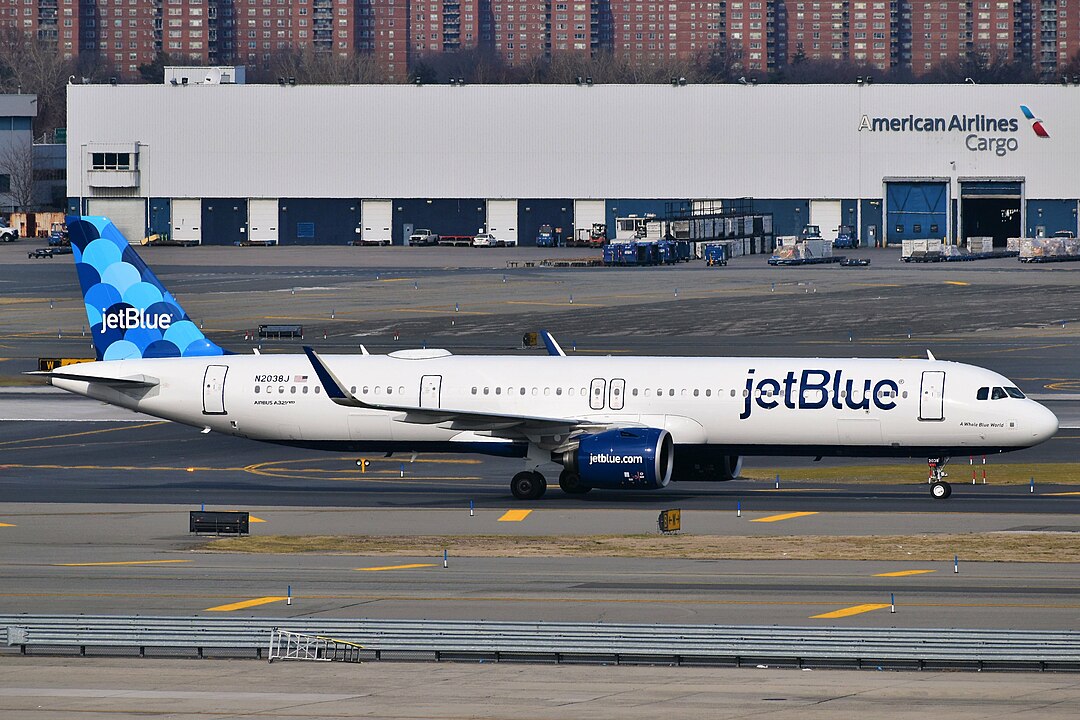
BOSTON- A JetBlue (B6) Airbus A321neo bound for Amsterdam (AMS) declared an emergency shortly after takeoff from Boston Logan International Airport (BOS) due to an engine fire indication.
The aircraft, registered N4077J and operating as flight B631/JBU31, leveled off at 5,000 feet after the warning appeared and requested an immediate return to Boston.
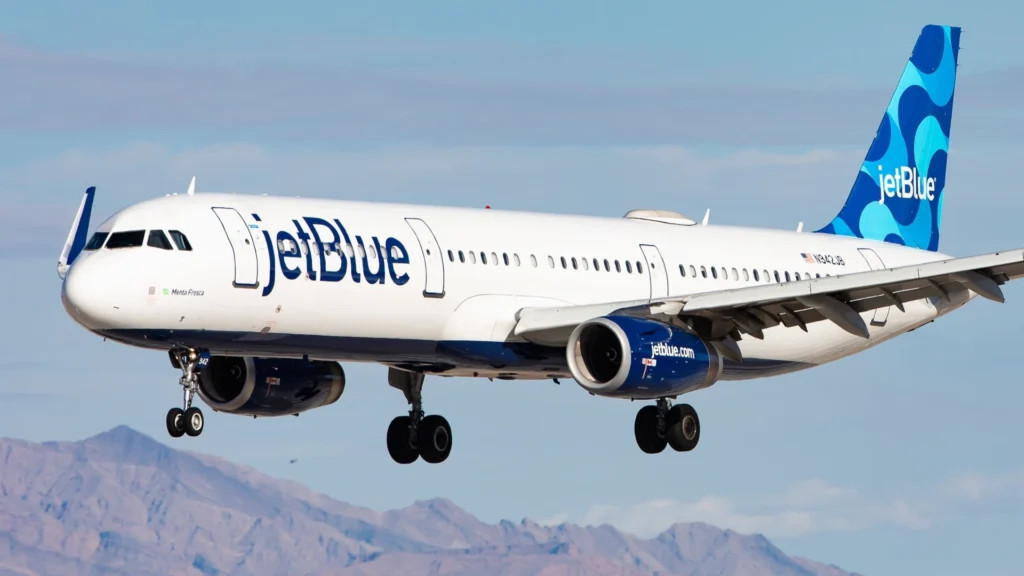
JetBlue A321neo Returns to Boston
The incident occurred during the climb phase of JetBlue flight B631 from Boston (BOS) to Amsterdam Schiphol (AMS).
According to air traffic control communications, the crew reported a right engine (No. 2) fire indication at around 4,500 feet. The pilots promptly declared an emergency and halted their climb at 5,000 feet while performing the engine fire checklist.
Controllers provided vectors for an ILS approach to runway 33L, and emergency services were placed on standby. The flight crew confirmed the aircraft had 132 passengers and crew on board, along with approximately 42,000 pounds of fuel.
Though the crew later confirmed that the fire indication had ceased, they maintained the emergency declaration as a precaution and requested firefighting equipment upon landing.
The Airbus A321neo conducted an overweight landing without further incident. After stopping briefly on the runway for inspection by airport fire crews, the aircraft taxied to the gate under its own power.
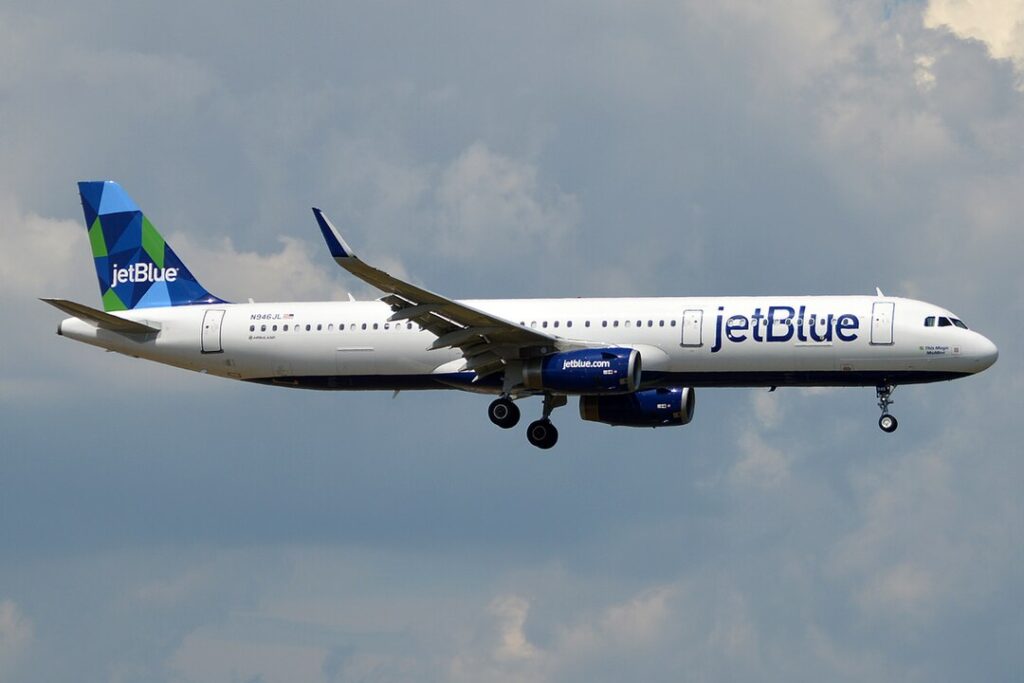
Post-Landing Actions and Aircraft Status
Ground inspections found no active fire or visible damage to the aircraft. JetBlue confirmed that the aircraft remained grounded for maintenance evaluation following the incident.
Data from flight tracking sources indicated that the A321neo, tail number N4077J, was still on the ground more than ten hours after landing.
The Federal Aviation Administration (FAA) will review the event as part of standard post-incident procedures. No injuries were reported among passengers or crew.
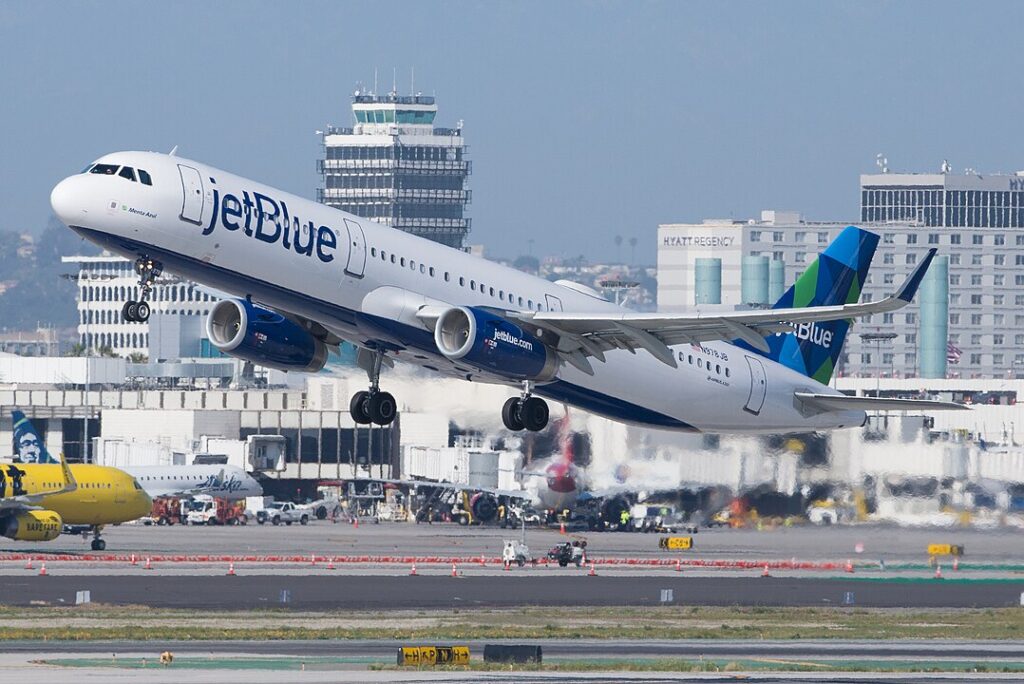
ATC and Pilots Comms
Here’s a detailed transcription of communication between Boston ATC and JetBlue Pilots as flagged by You Can See ATC and recorded by LiveATC.net:
{ts:20}
Pilot: Departure, good evening. JetBlue 31, 2.3 climbing 5,000 on the Celtic.
{ts:25}
ATC: JetBlue 31, climb and maintain 14,000.
Pilot: 14,000, JetBlue 31.
{ts:35}
ATC: JetBlue 31, there’s a line of weather about 60 miles east, running southwest to northeast, about 10 miles in width. When you get a little higher, as you come back around, I’ll probably put you on about a 70 heading to go north of us.
{ts:51}
Pilot: And, uh, tower, JetBlue Departure, JetBlue 31, we’re indicating an engine 2 fire. Uh, running our checklist now, 4,500.
ATC: All right, JetBlue 31, roger. The altitude, climb maintained 5,000. You need to come back to 33 left? Are you declaring an emergency?
Pilot: Affirmative. Declaring an emergency. Affirmative, 33 left at level 5,000, JetBlue 31.
{ts:71}
ATC: JetBlue 31, roger. Turn left heading 150, vectors for ILS 33 left. And, uh, fuel when you’re able after the checklist—fuel on board, souls, and what you need.
Pilot: Okay, turn heading 150 and stand by for information.
{ts:83}
Pilot: JetBlue 31, we have 132 souls on board and 42,000 lbs of fuel.
ATC: Okay, roger. And you want to come right in for 33 left, and you want the equipment?
Pilot: Affirmative, yeah.
{ts:108}
ATC: Okay, roger. You ready to come in now?
Pilot: Stand by. We got the fire out, but just stand by, we’ll call you back in a second.
{ts:114}
ATC: Roger. JetBlue 31, speed’s your discretion. Do you know if you want to go back in yet?
Pilot: Okay, speed is ours. We’re just finishing up the checklist, getting set up for the approach. We’re not showing any further indication, but we still are returning, declaring the emergency.
{ts:134}
ATC: Do you still want the equipment?
Pilot: Affirmative, just in case.
ATC: Yeah, we’re going to be overweight and just with the indications…
ATC: Okay, roger. No problem. Let me know when you’re ready to go.
{ts:148}
ATC: JetBlue 31, turn left heading 060.
Pilot: Left 060, thank you. We can start heading in this time.
{ts:169}
ATC: Okay, roger. JetBlue 31, after you land, the frequency is going to be 3405 for the truck—or actually, it might be 3405 for the tower. I’ll let you know.
{ts:183}
ATC: 3405, JetBlue 31, contact approach 118.25.
Pilot: 118.25, JetBlue 31.
{ts:196}
Pilot: JetBlue 31, heading 060, 5,000.
ATC: JetBlue 31, Boston Approach, heading 350 in a couple of blocks.
ATC: Heading 350 to join, JetBlue 31.
ATC: JetBlue 31, 4,000, clear 33 left.
Pilot: 4,000, cleared 33 left, JetBlue 31.
{ts:227}
ATC: JetBlue 31, maintain 170 on the glide.
Pilot: JetBlue 31.
{ts:241}
ATC: JetBlue 31, Boston Tower, 134.05.
{ts:256}
Pilot: Boston, JetBlue 31, over COHAS.
Tower: JetBlue 31, Boston Tower, Logan. Emergency services are on frequency. Wind 280 at 17 gust 27. Runway 33 left, cleared to land.
{ts:264}
Pilot: Heavy 350, 1 mile final, and the brake is dead, and we’re not moving. If you guys want to come, approach; there are no fire indications.
{ts:306}
ATC: Are you good with the light configuration, or do you want me to turn things on or off?
Pilot: I don’t care.
ATC: Roger. JetBlue 31, about to start.
{ts:324}
ATC: JetBlue 31, vehicle is going to follow you. Taxi down runway 33 left, center left on Tango.
Pilot: Down 33 left on Tango, JetBlue 31.
Bottom Line
ATC recordings captured the professional coordination between the flight crew and Boston controllers. The pilots kept communication clear, reporting the fire warning, fuel levels, and passenger count promptly.
Even after confirming that the fire warning light had extinguished, they adhered to established safety protocol, opting for a cautious return.
This approach ensured a controlled situation with no escalation, demonstrating adherence to both JetBlue’s operational standards and FAA emergency procedures.
