

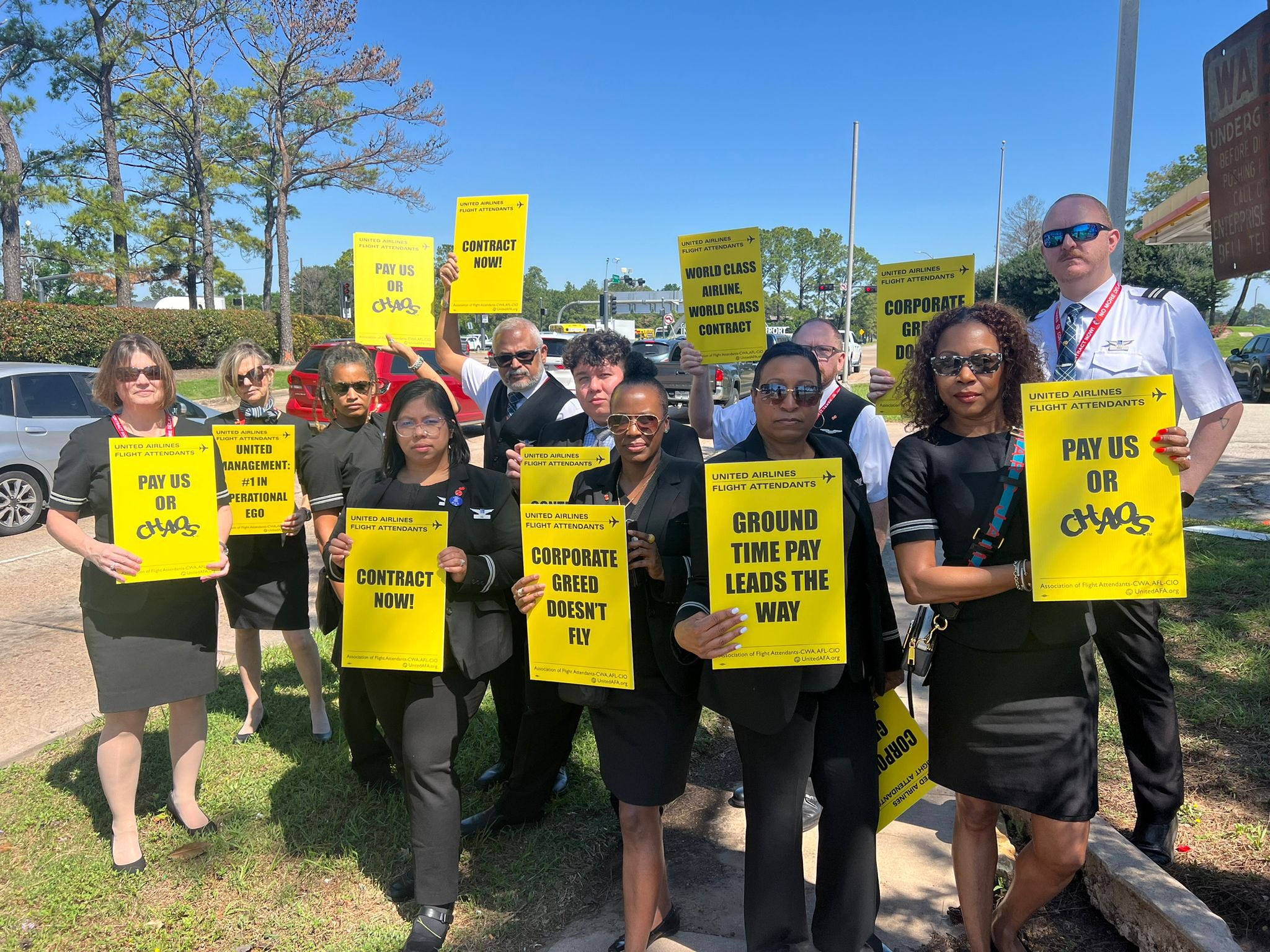
CHICAGO- Union leaders representing flight attendants at United Airlines (UA) have returned to the bargaining table with the airline after a majority of members rejected a proposed labor agreement in July 2025.
The latest discussions mark the first formal negotiations between the two sides since 71% of flight attendants voted down the previous tentative deal. Talks were held over three days last week, with both parties signaling a willingness to keep discussions going.
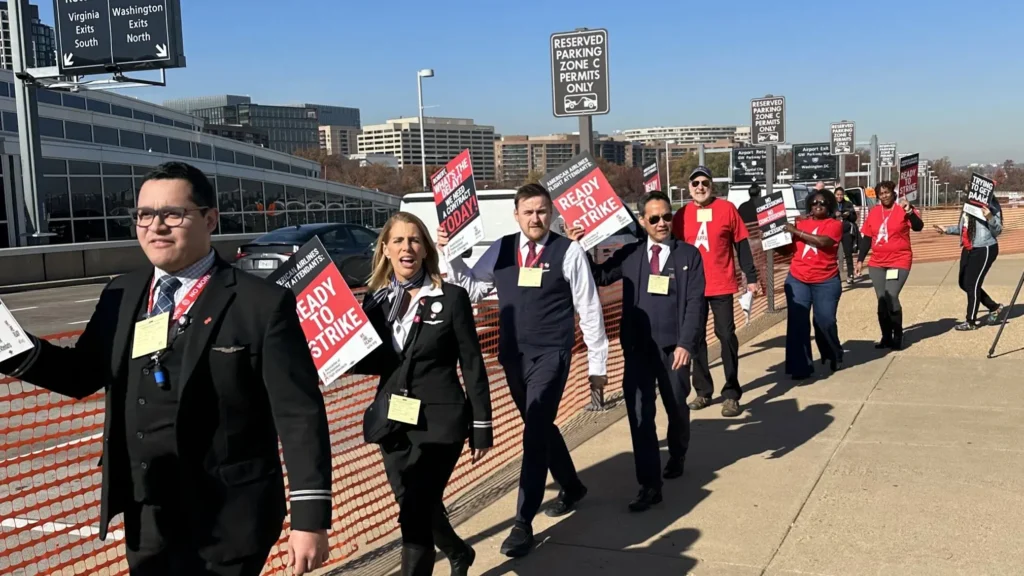
United Attendants Resume Contract Talks
The Association of Flight Attendants-CWA (AFA-CWA) had initially urged its members to accept the first tentative agreement, calling it the best outcome possible given current economic and political conditions.
Union officials warned that reopening talks would not necessarily secure a better deal and could simply reshuffle existing contract terms rather than improve total compensation.
Despite that caution, most flight attendants pushed for stronger terms, prompting the union to identify specific areas of dissatisfaction. Reported by PYOK, the latest round of talks focused on issues such as pay structure, working conditions, and rest provisions.
The AFA-CWA later confirmed that the initial bargaining session was “productive,” although it cautioned that “tough bargaining” lies ahead.
United Airlines, meanwhile, has shown reluctance to expand the total economic value of the agreement, suggesting future negotiations may focus on redistributing existing funds within the contract rather than increasing overall costs.
Key Issues on the Table
The union outlined eight core priorities for the renewed talks:
- Pay for waiting on the ground between flights
- Reduced overnight “red-eye” flying
- No more layover notifications
- Additional rest time on long-haul routes
- Clearer contract compliance guarantees
- Fairer treatment for reserve flight attendants
- Improved layover hotel standards
- Better healthcare and retirement benefits
These points reflect long-standing concerns about compensation and working conditions that flight attendants argue have not kept pace with the demands of the job.
The Debate Over Ground Duty Pay
A major sticking point in previous negotiations was the union’s call for “ground duty pay”, which would compensate flight attendants for all hours spent at work — not just when the aircraft doors close and pushback begins.
However, the first tentative agreement replaced that proposal with “boarding pay”, covering the time from passenger boarding to departure. The compromise failed to address unpaid hours between flights, known in the industry as “sit rigs.”
The union is now advocating for partial pay during longer ground waits, aiming to discourage scheduling practices that leave crews idle for extended periods without compensation.
Layover Hotel Standards
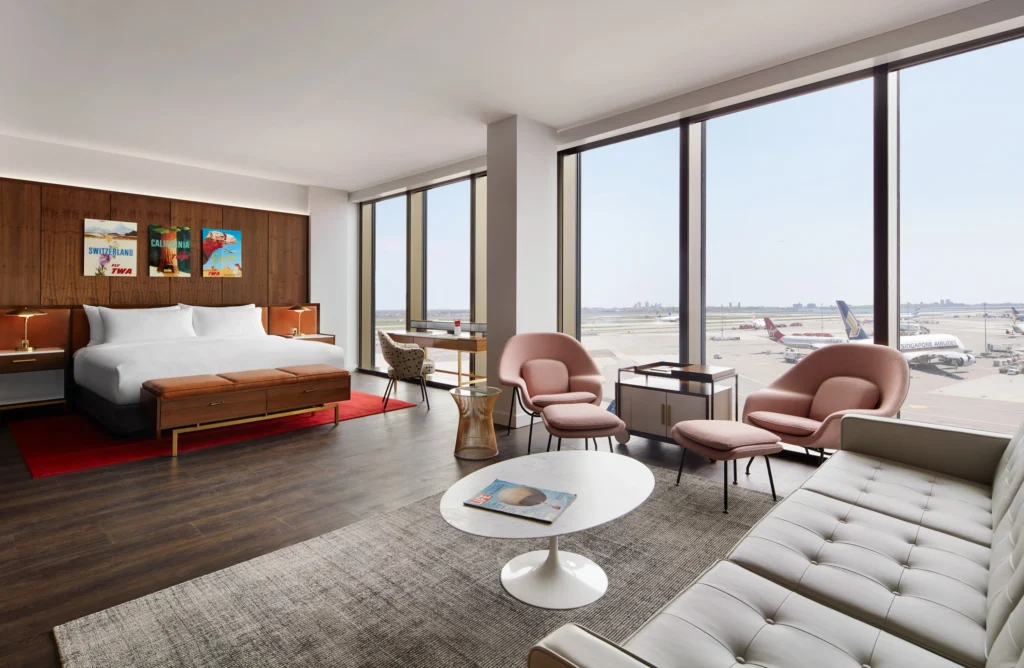
Flight attendants also criticized the first tentative agreement’s changes to layover hotel language.
The revised clause replaced a requirement for “business class” hotels with the vague standard of accommodations in “tenetable condition,” which many feared would open the door to budget lodging.
The union now seeks to restore the business-class standard, push for downtown hotel locations, and align more closely with pilot accommodations where possible. These adjustments are viewed as critical to maintaining rest quality and safety standards during layovers.
Federal Mediation and Government Shutdown
Negotiations between United Airlines and the AFA-CWA typically involve federal mediators. With the ongoing U.S. government shutdown, mediators have been temporarily furloughed, raising concerns about potential delays.
Nonetheless, the union managed to proceed with talks despite the shutdown, with the next bargaining session scheduled for early December.
Whether the lack of government mediation will affect progress remains uncertain, but both sides appear intent on continuing dialogue toward a final agreement.
Stay tuned with us. Further, follow us on social media for the latest updates.
Join us on Telegram Group for the Latest Aviation Updates. Subsequently, follow us on Google News
