

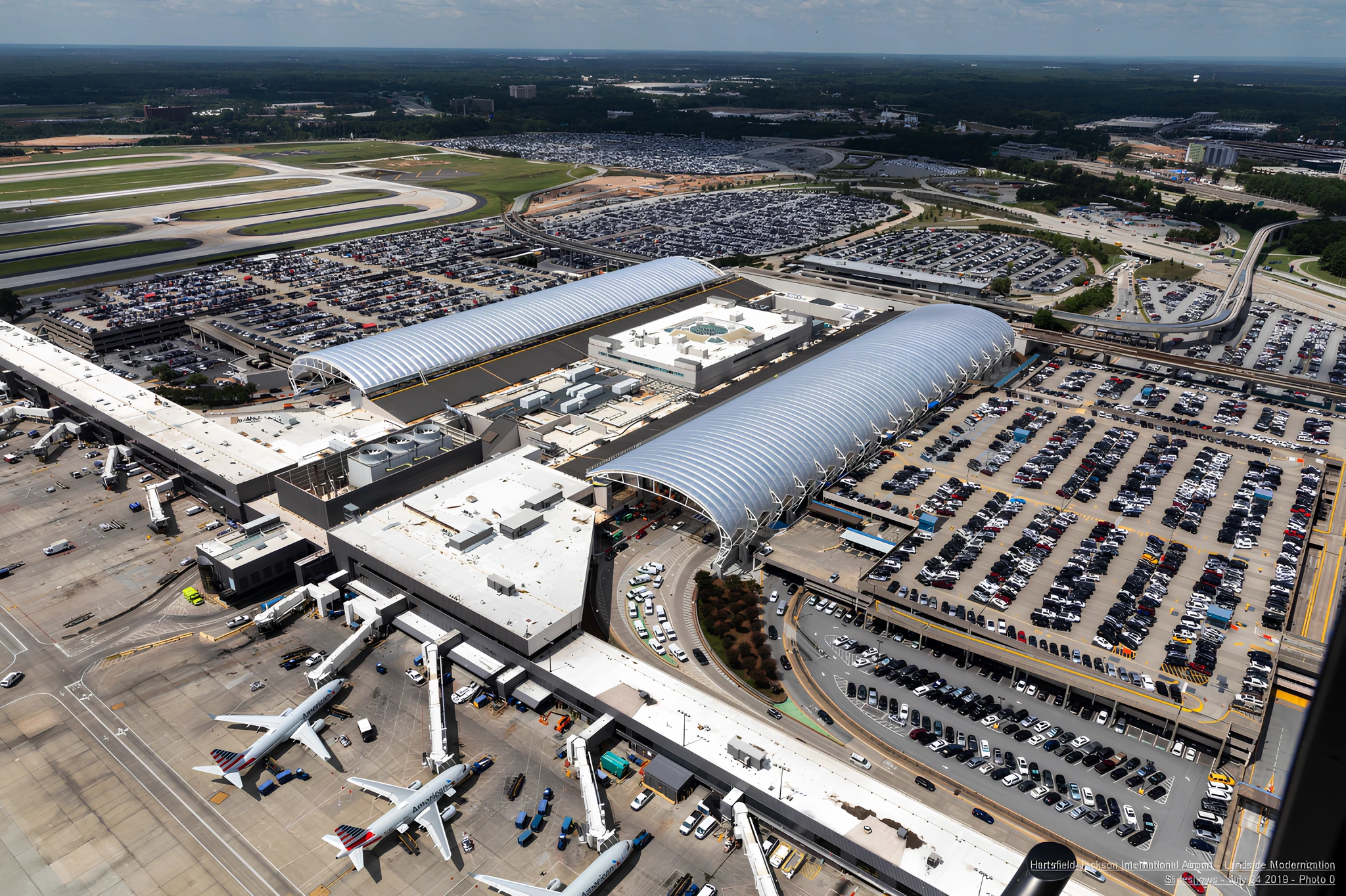
North America remains one of the world’s busiest aviation regions. In 2025, the continent’s top airports continue to play a central role in connecting millions of travelers across the U.S., Canada, and beyond.
From Chicago to San Francisco, these airports are not just transit points—they are hubs of commerce, tourism, and economic growth.
This year’s ranking highlights both traditional giants and emerging leaders, showing how airlines and airports have adapted to evolving travel demand while maintaining high levels of connectivity.
The Big Three Dominance
Chicago O’Hare International Airport (ORD), Atlanta Hartsfield-Jackson International Airport (ATL), and Dallas/Fort Worth International Airport (DFW) once again top the list in North America.
O’Hare maintains its number one position, with United Airlines operating nearly half of all flights.
Its central location in the Midwest makes it a natural hub for cross-country travel, linking passengers between the East Coast, West Coast, and the central U.S. O’Hare’s extensive network also ensures strong international connectivity, although domestic flights remain its backbone.
Atlanta’s Hartsfield-Jackson ranks second. Known as one of the world’s busiest airports by passenger traffic, ATL combines high efficiency with frequent scheduling, making it a key connector for both business and leisure travelers.
Dallas/Fort Worth rounds out the top three. With American Airlines operating 85% of flights, DFW serves as a critical hub for domestic routes in the South and Midwest.
Its sprawling terminals and multiple runways allow it to handle heavy passenger volumes while maintaining relatively smooth operations.

East Coast Connectivity
New York’s airports—JFK and Newark (EWR)—dominate the East Coast’s connectivity rankings. Delta’s 35% share at JFK ensures it remains a major gateway to domestic and international destinations.
United’s 70% share at EWR highlights its strength in connecting the U.S. Northeast with other regions.
Miami International Airport (MIA) also plays a vital role, particularly for Latin American and Caribbean routes. American Airlines operates two-thirds of its flights here, making it one of the airline’s strongest domestic and international hubs.
MIA’s strategic location provides efficient connections for both leisure travelers heading to resort destinations and business passengers traveling between the U.S. and Latin America.
West Coast Hubs
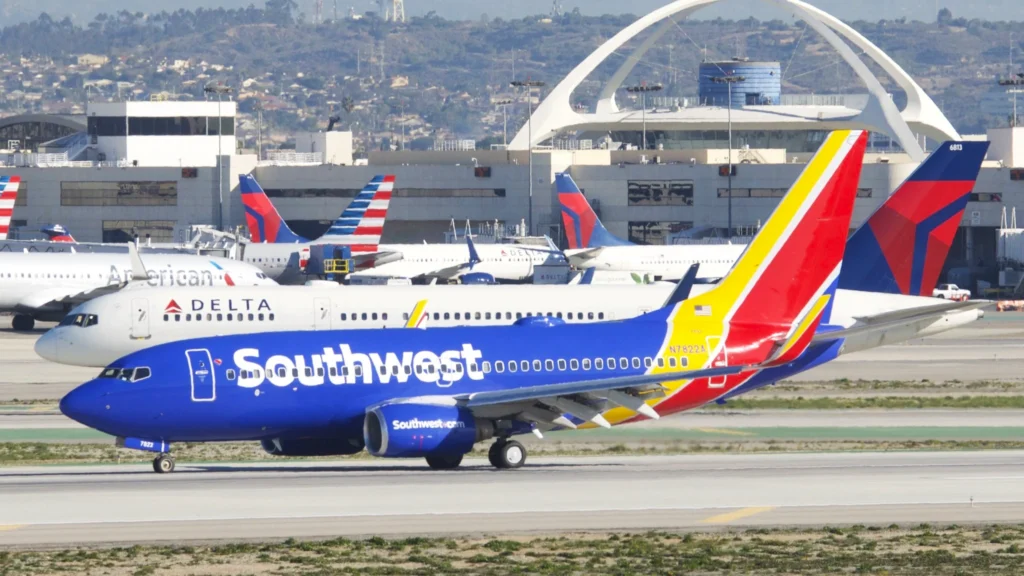
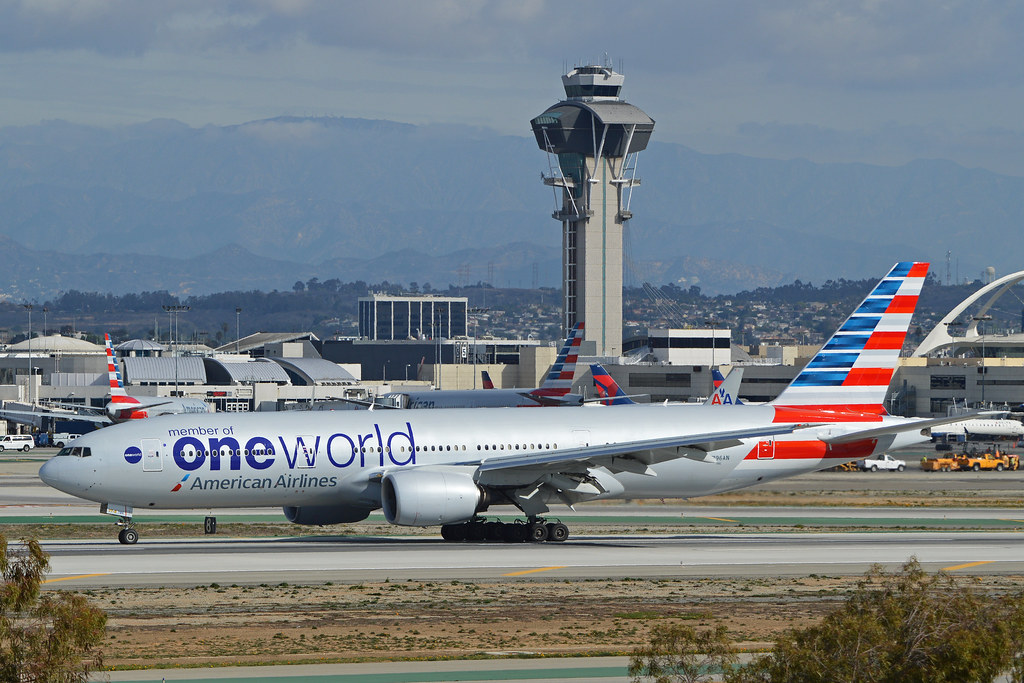
On the West Coast, Los Angeles International Airport (LAX) and San Francisco International Airport (SFO) anchor regional connectivity. LAX, dominated by Delta Air Lines, serves as a crucial gateway to the Pacific and international destinations.
While its 20% share of flights is lower than some other hubs, LAX’s sheer volume of operations ensures it remains a critical link in the domestic network.
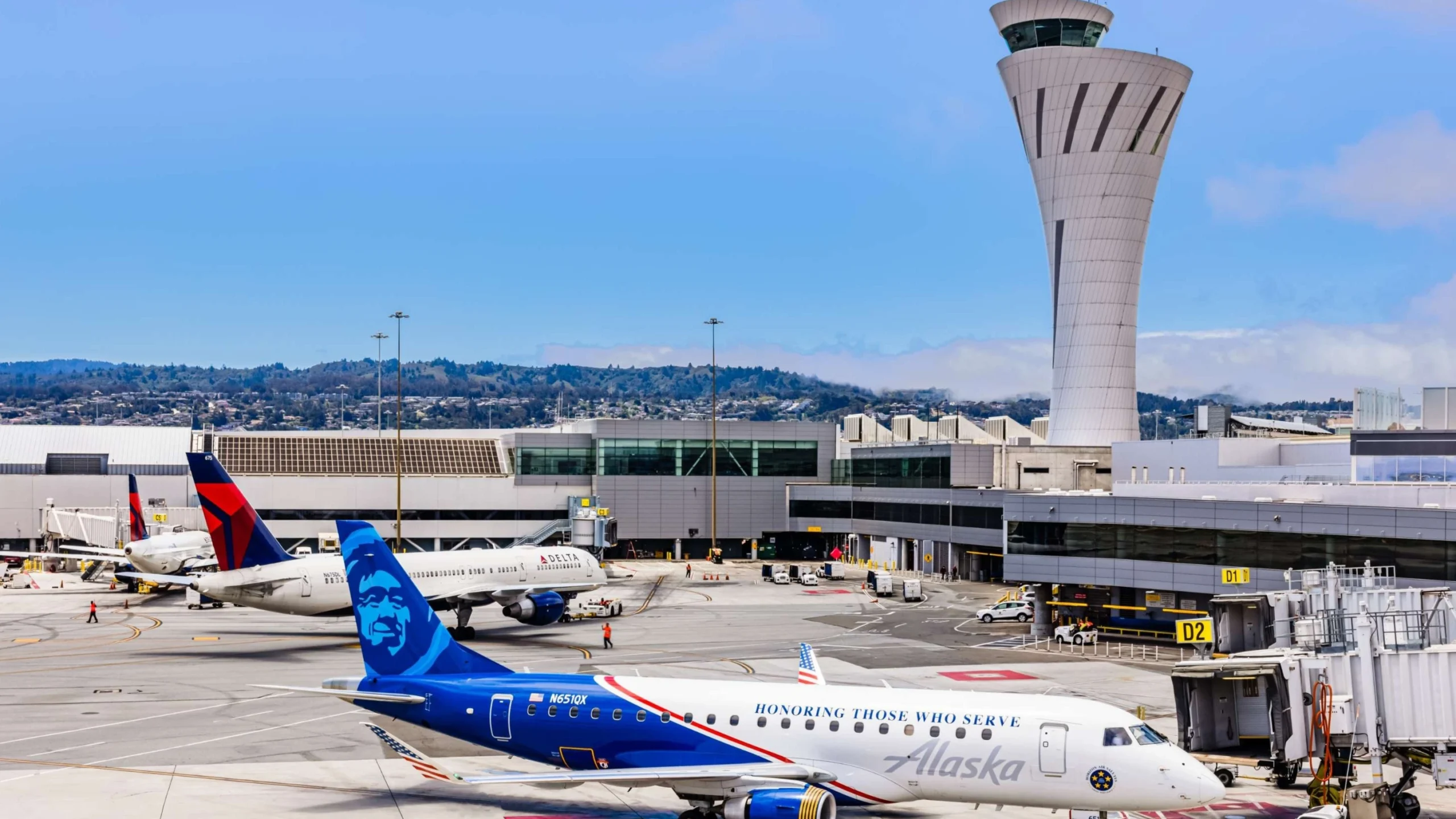
San Francisco International Airport, controlled largely by United Airlines (51% of flights), continues to serve as a hub for both technology-related travel and transcontinental flights.
SFO’s role in linking the West Coast to both the East Coast and Asia makes it one of the most strategically important airports in North America.

Central Hubs
Houston George Bush Intercontinental Airport (IAH) is another major center for United Airlines, which operates 80% of the flights. Its geographic location makes it ideal for connecting passengers between the southern United States, Mexico, and Latin America.
Toronto Pearson International Airport (YYZ) stands out as the only Canadian airport in the top ten, with Air Canada handling 51% of flights.
YYZ serves as the primary gateway to Canada for both domestic and international travel. Its efficient layout and strategic location near major business and industrial centers make it a critical hub for North American connectivity.

Patterns and Observations
Several patterns emerge from the 2025 ranking. Some of these are the following:
- Airline Concentration – Many of these top airports are heavily dominated by one airline. For example, American Airlines operates nearly all flights at DFW and MIA, while United Airlines controls ORD, EWR, and IAH. This concentration allows airlines to offer efficient connections and scheduling, but also means passengers have fewer carrier choices at these hubs.
- Geographic Spread – The top ten airports cover the Midwest, South, East Coast, and West Coast, showing that North America’s air network is widely distributed. Chicago, Dallas, and Atlanta act as central nodes, while LAX, SFO, and MIA anchor the coasts.
- International Gateway Function – While this ranking focuses on domestic connectivity, almost all these airports also serve as gateways for international travel. JFK, LAX, MIA, and YYZ all handle high volumes of international passengers, underscoring their dual roles in connecting both domestic and global networks.
- Market Dominance – Delta, American, and United continue to dominate U.S. domestic travel. Their hub-and-spoke networks allow them to maintain efficiency while connecting smaller cities to major hubs.
Another notable trend is the concentration of airline power at these hubs, which directly shapes connectivity and travel patterns. Airports like DFW, ATL, and ORD are dominated by a single carrier.
Additionally, geographic distribution ensures that the network spans the Midwest, East Coast, South, and West Coast, balancing passenger flow across the continent.
This combination of airline dominance and regional spread keeps North America’s air travel network resilient and highly adaptable.

Top 10 Most Connected Airports in North America (2025)
| Rank | Airport | Country | Dominant Carrier | Share of Flights |
|---|---|---|---|---|
| 1 | Chicago O’Hare (ORD) | USA | United Airlines | 49% |
| 2 | Atlanta Hartsfield-Jackson (ATL) | USA | Delta Air Lines | 79% |
| 3 | Dallas/Fort Worth (DFW) | USA | American Airlines | 85% |
| 4 | New York JFK (JFK) | USA | Delta Air Lines | 35% |
| 5 | Houston George Bush Intercontinental (IAH) | USA | United Airlines | 80% |
| 6 | Miami International (MIA) | USA | American Airlines | 66% |
| 7 | Los Angeles International (LAX) | USA | Delta Air Lines | 20% |
| 8 | Toronto Pearson (YYZ) | Canada | Air Canada | 51% |
| 9 | Newark Liberty International (EWR) | USA | United Airlines | 70% |
| 10 | San Francisco International (SFO) | USA | United Airlines | 51% |
Bottom Line
The 2025 ranking of North America’s most connected airports reinforces the dominance of major carriers like United, Delta, and American. These hubs not only support the flow of millions of domestic travelers but also connect the continent to global destinations.
Airports like Chicago O’Hare, Atlanta, and Dallas/Fort Worth continue to anchor the network, while coastal hubs such as LAX, SFO, and JFK serve both domestic and international markets.
As domestic travel continues to rebound and grow, these airports will remain central to the region’s connectivity, supporting economic activity, tourism, and global commerce.
Stay tuned with us. Further, follow us on social media for the latest updates.
Join us on Telegram Group for the Latest Aviation Updates. Subsequently, follow us on Google News
