

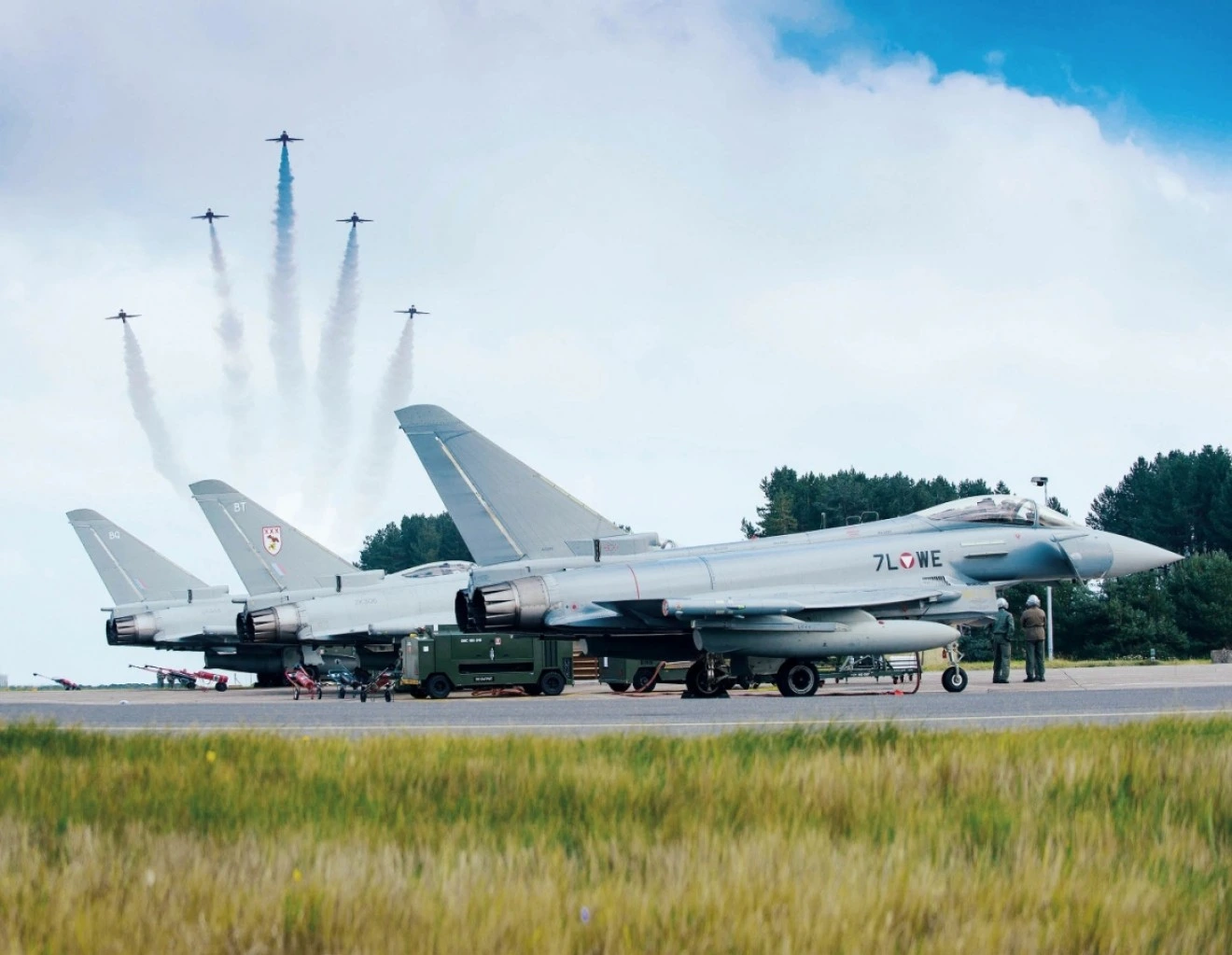
Turkey has finalized a £5.4 billion ($7.2 billion) agreement with the United Kingdom for the purchase of 20 Eurofighter Typhoon jets. The deal, confirmed on October 27 by UK-based BAE Systems, strengthens Turkey’s air defense capabilities and supports the British aerospace sector.
BAE Systems will supply major airframe components and oversee final assembly of the twin-engine Typhoon fighters, extending production at its Warton facility into the 2030s. Once operational, the Turkish Air Force will become the 10th global operator of the Eurofighter platform.
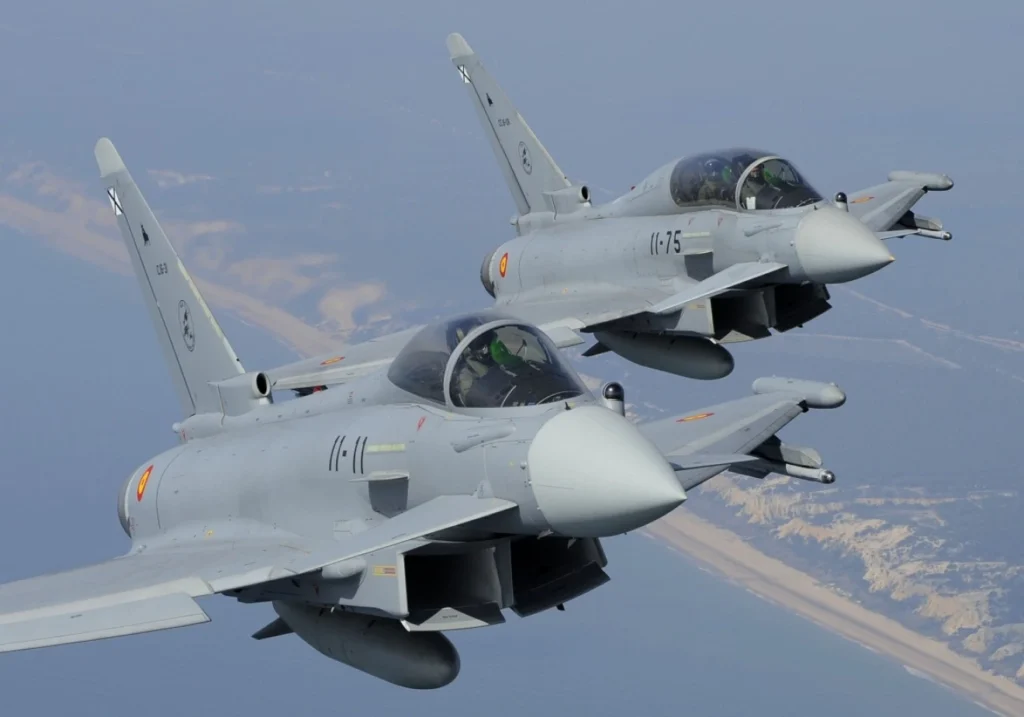
Turkey Buys 20 Eurofighter Typhoon
The Eurofighter Typhoon acquisition reinforces strategic cooperation between two NATO allies while ensuring continuity for Britain’s defense manufacturing base. This marks the largest fighter jet export contract signed by the UK in nearly two decades.
BAE Systems’ chief executive, Charles Woodburn, described Turkey’s procurement as a new phase in bilateral defense relations and a vital step in sustaining sovereign industrial skills across the UK.
Facilities in Warton, Samlesbury, Edinburgh, and Bristol all contribute to the Eurofighter program, employing roughly 20,000 personnel across the country.
The order follows concerns raised by the Unite union earlier this year after Typhoon production for the Royal Air Force (RAF) concluded. Union leaders warned that the Warton assembly line had “ground to a halt” and urged the government to secure new contracts to protect jobs and maintain expertise.
The Turkish purchase effectively prevents potential closures and ensures ongoing activity at several BAE sites.
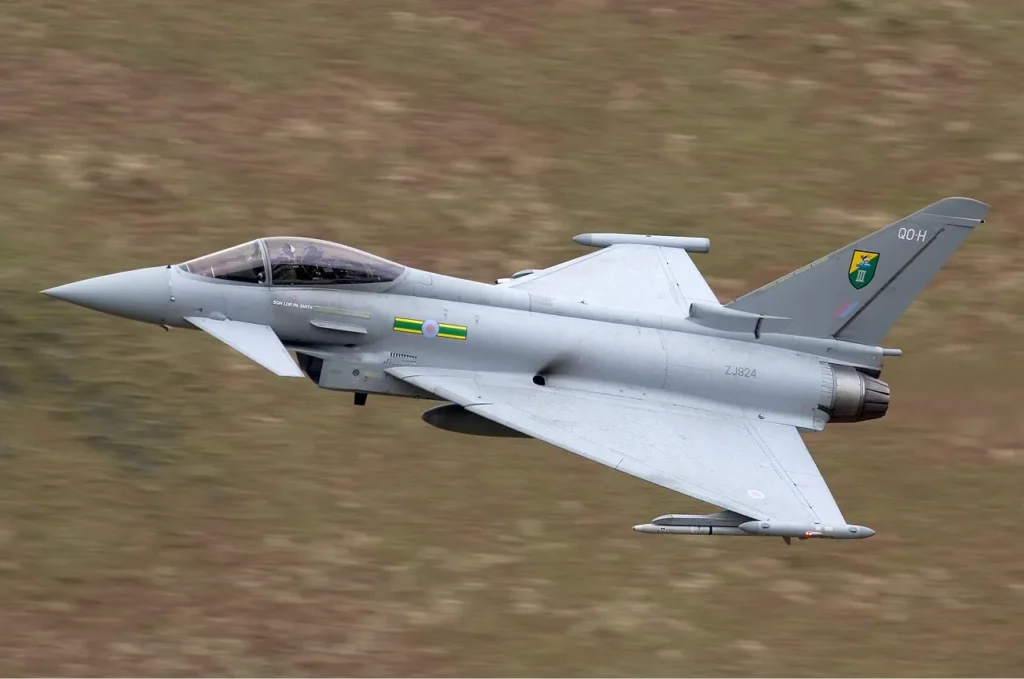
Industrial Continuity and Economic Impact
The Turkish Typhoon deal provides stability for the UK’s aerospace supply chain at a critical juncture. It bridges the gap between the completion of existing Eurofighter orders and the upcoming Global Combat Air Programme (GCAP)—a sixth-generation fighter initiative involving Japan, Italy, and the UK, expected to enter service around 2035.
BAE Systems holds a 37.5% stake in the Eurofighter consortium, responsible for design, production, and export operations. The same share applies to its involvement in MBDA, the European munitions manufacturer supplying the weapons package for Turkey’s jets.
For the UK government, the order represents a major industrial win. Officials describe the agreement as “the biggest fighter jet deal in almost 20 years,” one that preserves thousands of high-skill jobs and sustains the country’s defense ecosystem well into the next decade.
Future Outlook and Export Potential
While the UK has no confirmed plans to acquire additional Typhoons, the nation continues to promote exports of the platform. Negotiations are ongoing with Saudi Arabia (RUH) for an additional 54 aircraft to supplement its existing fleet of 72.
Elsewhere in Europe, Airbus has launched an initiative to replace Portugal’s (LIS) aging F-16A/B fleet with Eurofighters. The move follows Lisbon’s stated reluctance to procure the US-made F-35 due to political and strategic concerns.
The Eurofighter consortium anticipates total new orders of up to 100 aircraft, including Turkey’s confirmed purchase and pending discussions with Middle Eastern and European customers.
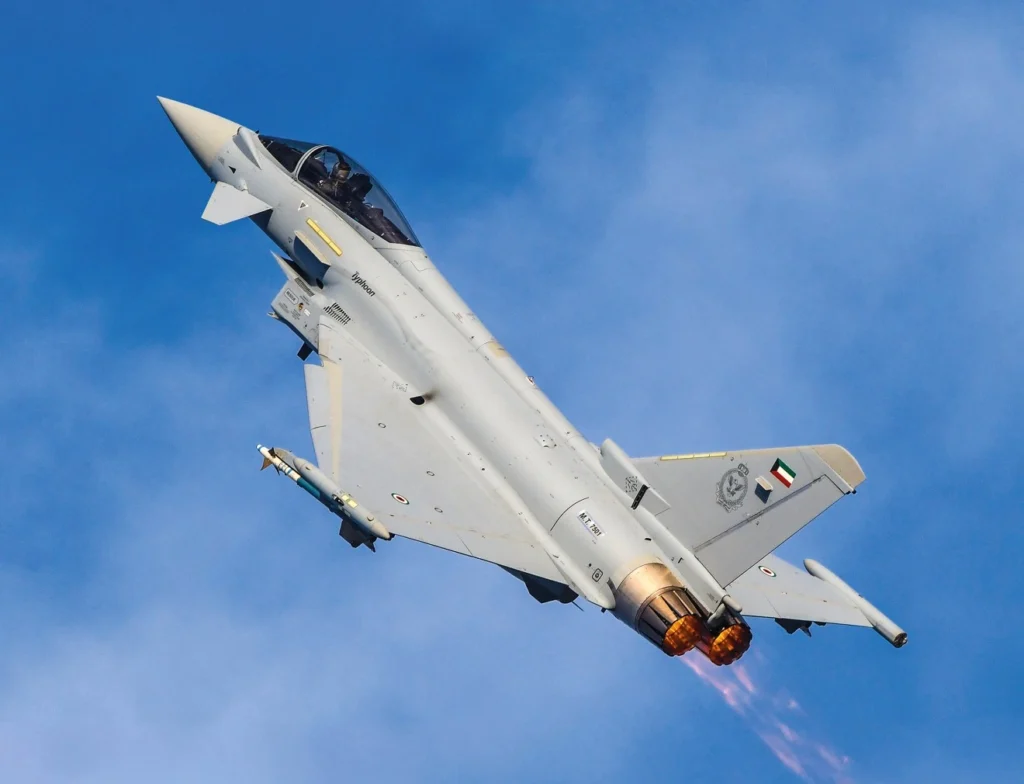
About the Most Advanced Swing-Role Combat Aircraft
The Eurofighter Typhoon is Europe’s leading twin-engine, multirole combat aircraft developed by a consortium of Airbus, BAE Systems, and Leonardo. Designed to perform a wide range of missions, it combines agility, speed, and advanced systems to dominate both air-to-air and air-to-surface operations.
Stationed across major European air bases, including RAF Coningsby and Grosseto Air Base, the Typhoon represents the peak of European defense engineering, balancing stealth, power, and precision in one aircraft.
Engineering Versatility and Combat Power
The Eurofighter Typhoon’s design revolves around flexibility. It operates as a true swing-role fighter, capable of switching between air combat and ground attack within the same mission. This versatility is achieved through a combination of high processing power, advanced avionics, and seamless integration of missile and bomb guidance systems.
Its airframe combines a proven canard-delta configuration with stealth features and lightweight composite materials. Only about 15% of the structure is metallic, reducing its radar cross-section while maintaining strength and agility. These materials make the aircraft 30% lighter than comparable fighters, enhancing range, maneuverability, and fuel efficiency.
The result is an aircraft that delivers unmatched performance across multiple combat scenarios—from close dogfights to long-range intercepts.
Airframe and Design Efficiency
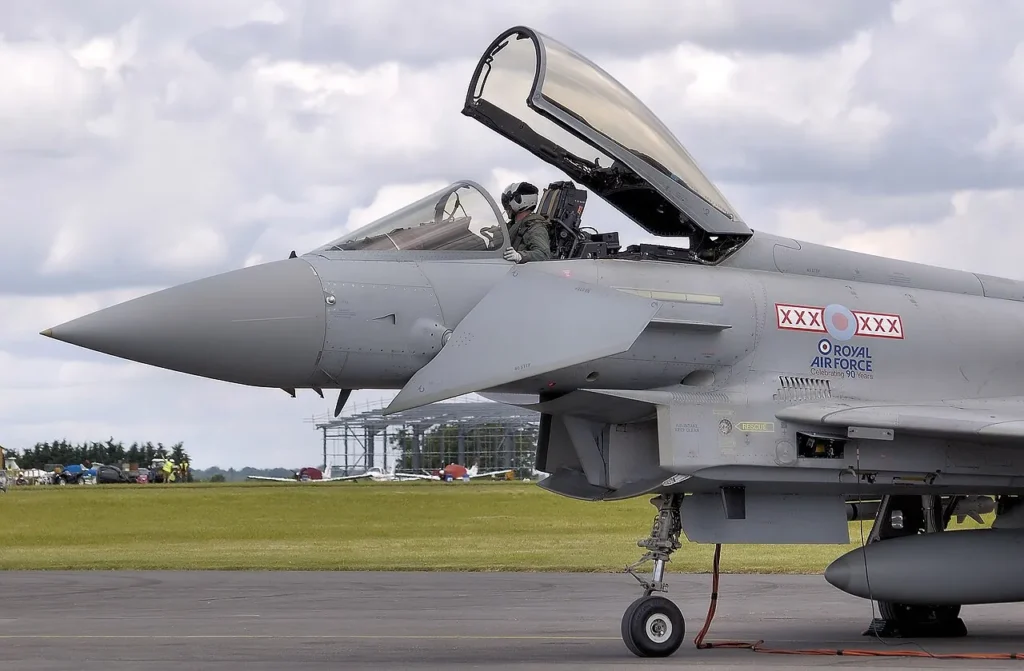
From the beginning, pilots were directly involved in the Typhoon’s design, leading to a deliberately unstable airframe that enhances agility.
The instability, managed by advanced fly-by-wire controls, allows the aircraft to perform sharp turns and high-G maneuvers that outclass most competitors.
The use of composite materials not only strengthens the airframe but also contributes to its low radar visibility. This combination of stealth and agility allows the Typhoon to maintain an advantage in both offensive and defensive operations.
Weapons and Combat Systems
The Eurofighter Typhoon can carry a diverse range of weapons for air-to-air and air-to-ground missions. From short-range missiles like the AIM-9 Sidewinder to long-range precision munitions, it provides extensive coverage across combat zones.
Its weapons system architecture supports simultaneous missile updates and bomb guidance, allowing pilots to manage multiple targets effectively. This makes the Typhoon one of the few aircraft capable of engaging threats across varying distances in a single mission.
Performance and Operational Capability
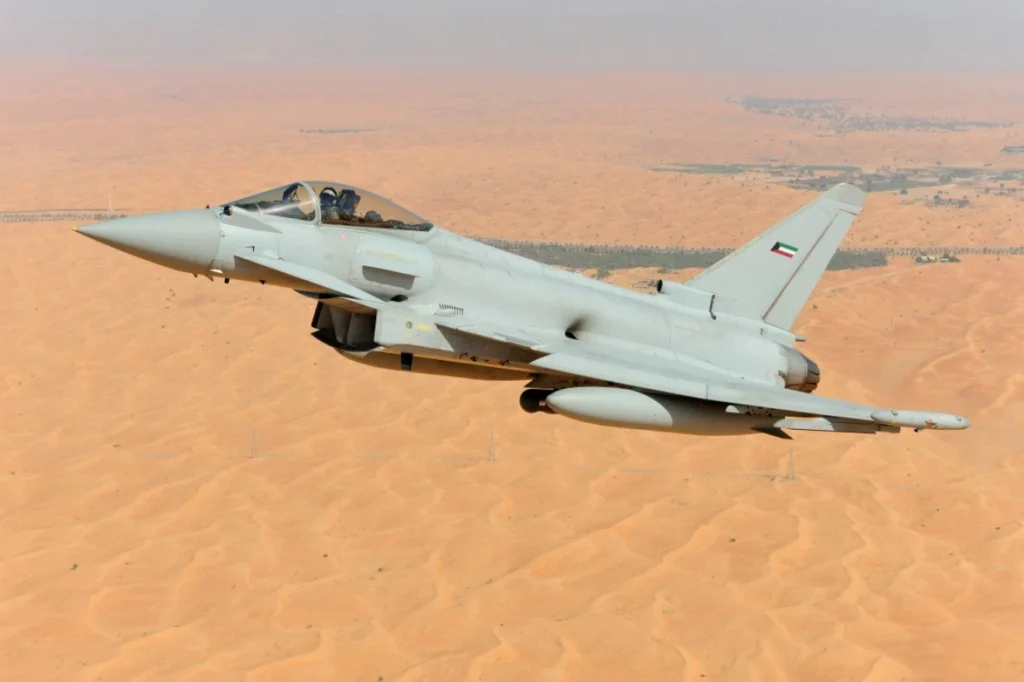
The Typhoon’s twin Eurojet EJ200 engines produce a combined 180 kN of thrust with afterburners—90 kN each—giving it an exceptional thrust-to-weight ratio. It can accelerate from standstill to take-off in under eight seconds.
- Max speed at altitude: Mach 2.0 (2,495 km/h)
- Max speed at sea level: Mach 1.25 (1,530 km/h)
This raw power, paired with aerodynamic refinement, ensures the aircraft maintains speed and stability under high stress and altitude variation.
Fuel System and Range Efficiency
The Typhoon’s intelligent, computer-controlled fuel system links tanks across its fuselage and wings.
Flexible couplings maintain center-of-gravity balance and ensure consistent pressure through relief valves. This design extends the aircraft’s operational range while maintaining flight stability, a critical factor during long or multi-role missions.
Precision in Motion
Every aspect of the Eurofighter Typhoon was engineered for precision. Its ability to perform subsonic maneuvers with finesse and sustain supersonic speeds efficiently underscores its dual capability: to engage in close-range combat and dominate long-range encounters.
By combining pilot-focused design, intelligent systems, and unmatched power, the Eurofighter Typhoon continues to define the standard for multirole fighter aircraft globally.
Stay tuned with us. Further, follow us on social media for the latest updates.
Join us on Telegram Group for the Latest Aviation Updates. Subsequently, follow us on Google News
