

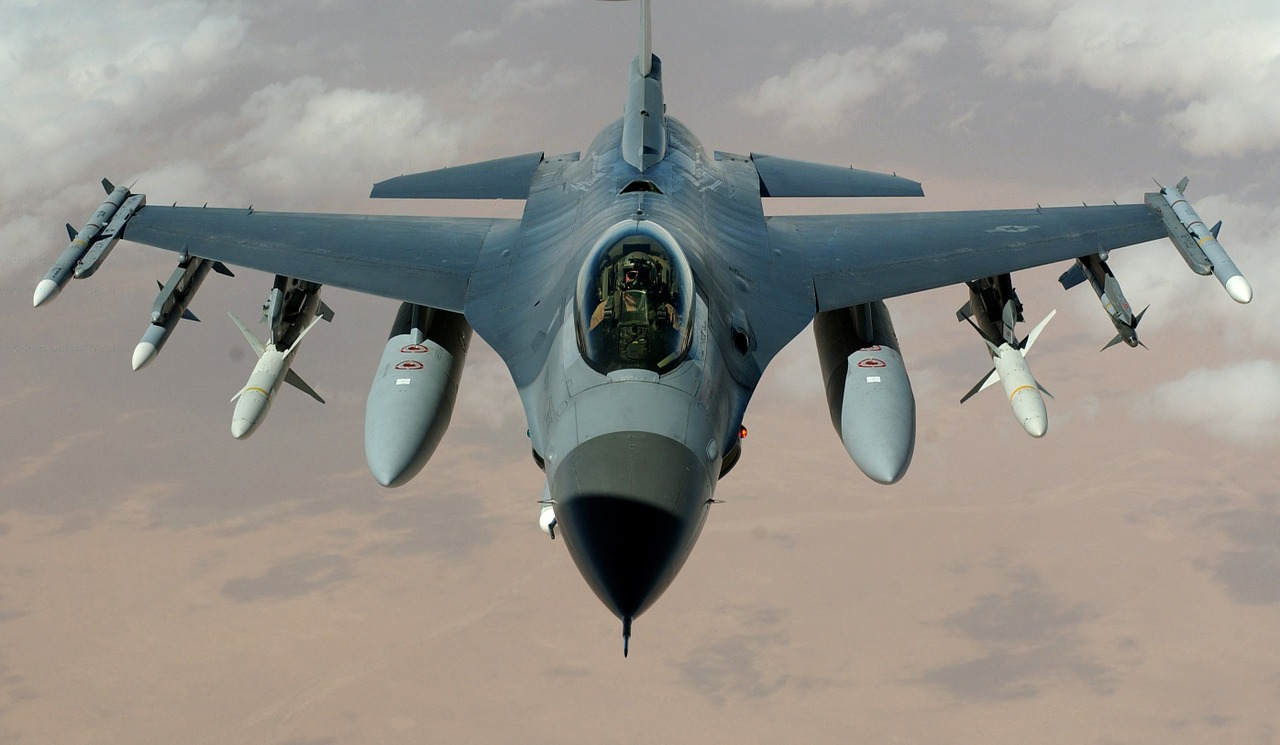
WASHINGTON- The US Air Force has reached a major milestone in military aviation after successfully flying a modified F-16 Fighting Falcon under the control of artificial intelligence during flight tests at Eglin Air Force Base (VPS), Florida.
The autonomous flight was carried out with a safety pilot onboard, marking the program’s transition from ground-based validation to real-world airborne operations.
The achievement is part of the Viper Experimentation and Next-generation Operations Model (VENOM) program, which aims to accelerate the use of trusted AI in future combat aircraft.
Conducted by the U.S. Air Force in partnership with the Defense Advanced Research Projects Agency (DARPA), the latest tests are expected to support future autonomous combat missions and manned-unmanned teaming concepts.
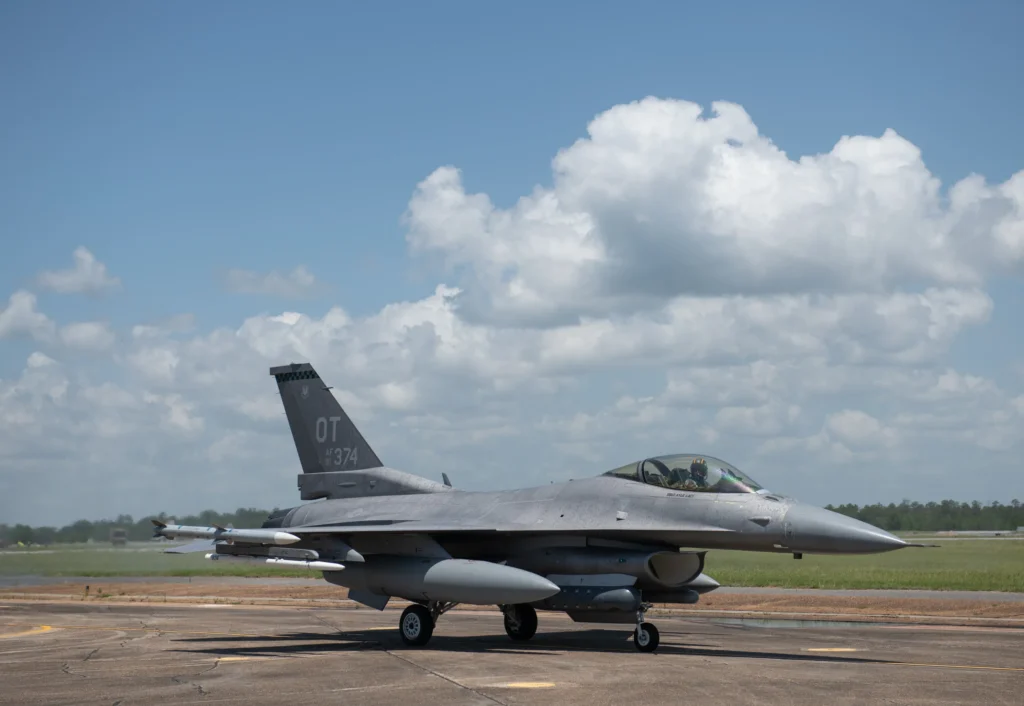
US Air Force F-16 VENOM Flight Tests
The U.S. Air Force announced that the modified F-16 successfully completed autonomous flight testing after months of aircraft upgrades, software integration, and safety verification.
During the trials, the onboard AI agent assumed control of the fighter for portions of the mission while a qualified pilot remained in the cockpit to monitor operations and intervene if required.
Before reaching this stage, engineers carried out extensive ground testing that included engine runs, avionics checks, software validation, and thousands of hours of simulation.
Initial piloted flights in June 2026 confirmed that the aircraft modifications performed safely before autonomous operations began in July, Defense News reported.
Unlike a standard F-16, the VENOM aircraft features advanced computing systems, additional sensors, flight instrumentation, and specialized software designed to host AI agents.
These upgrades allow the fighter to function as an airborne test platform for evaluating increasingly sophisticated autonomous capabilities under operational conditions.
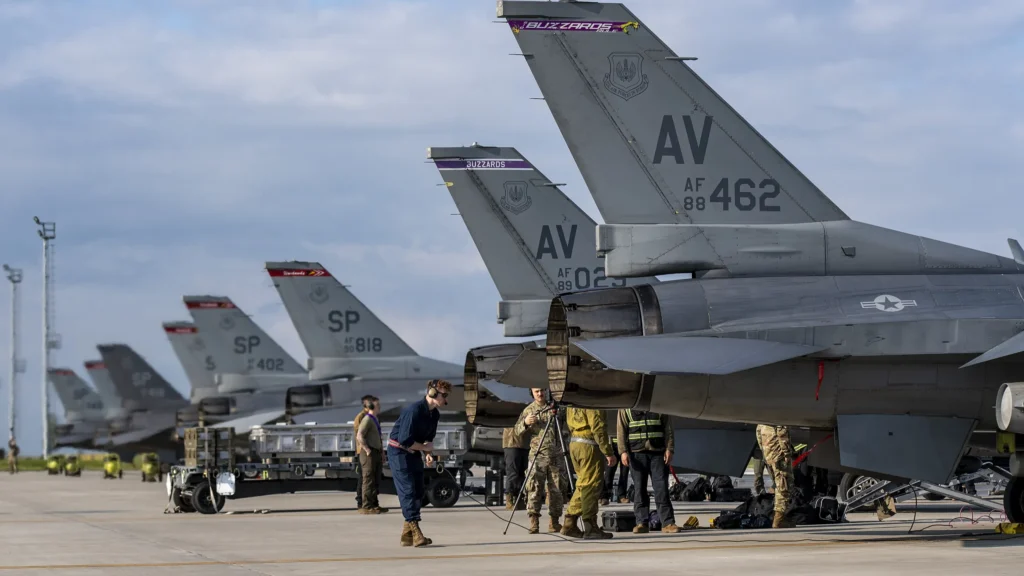
AI Combat Future
The VENOM initiative builds on DARPA’s Air Combat Evolution (ACE) program, which demonstrated that AI could safely perform advanced aerial maneuvers while cooperating with human operators.
The modified aircraft will also support DARPA’s Artificial Intelligence Reinforcements (AIR) program, helping researchers develop adaptive AI systems for future combat missions.
Officials view the program as an important step toward integrating artificial intelligence into next-generation air combat. Rather than replacing fighter pilots, the technology is intended to assist them by handling selected flight tasks, processing battlefield information rapidly, and supporting faster tactical decisions.
The F-16 remains an ideal platform for this research because of its proven fly-by-wire flight controls, high maneuverability, and mature mission systems. Its well-understood performance allows engineers to focus on AI development instead of validating an entirely new aircraft design.

Future Air Warfare
The technologies validated through VENOM are expected to play a central role in the U.S. Air Force’s Collaborative Combat Aircraft (CCA) program.
Future AI-enabled aircraft could operate alongside crewed fighters, carrying out reconnaissance, electronic warfare, strike missions, communications relay, or decoy operations while remaining under human supervision.
Autonomous aircraft could also undertake high-risk missions inside heavily defended airspace, reducing danger to pilots while maintaining operational effectiveness.
At the same time, AI systems may help shorten decision cycles by rapidly analyzing sensor data, adapting to changing threats, and coordinating with other aircraft in real time.
As testing progresses toward more complex autonomous missions and multi-aircraft coordination, the VENOM program is laying the foundation for the next generation of AI-enabled combat aviation.
The successful autonomous F-16 flights demonstrate that trusted artificial intelligence is moving closer to becoming an operational capability for future U.S. Air Force airpower.
Stay tuned with us. Further, follow us on social media for the latest updates.
Join us on Telegram Group for the Latest Aviation Updates. Subsequently, follow us on Google News
