

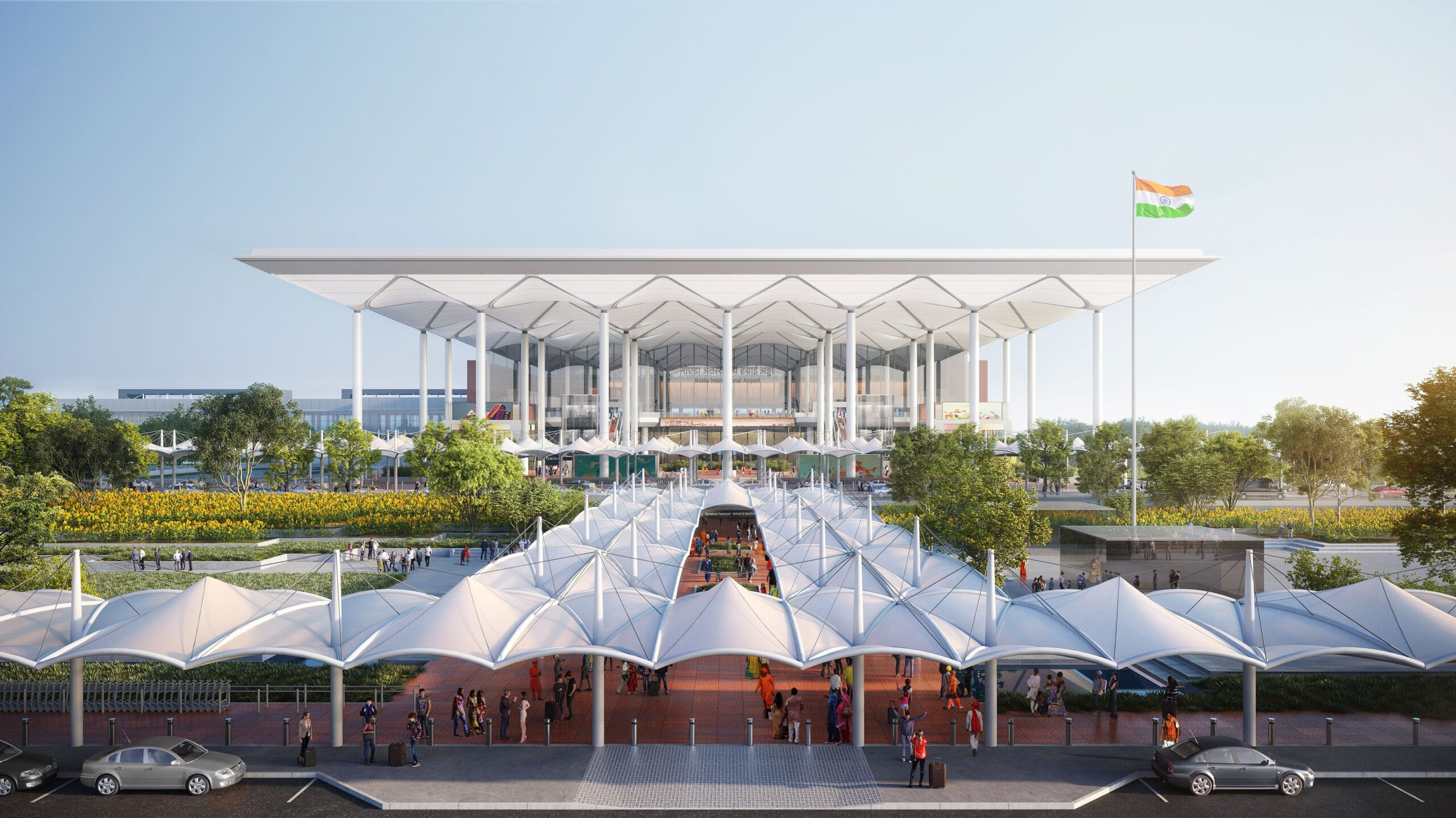
NOIDA- The Uttar Pradesh government has approved the Rehabilitation and Resettlement (RR) scheme for Phases 3 and 4 of the Noida International Airport (DXN), deemed as Asia’s largest airport project in Jewar. The plan, sanctioned days after Chief Minister Yogi Adityanath’s site inspection, allows the acquisition of 1,857 hectares across 14 villages, directly impacting nearly 16,000 families.
Officials revised the number of affected families to 15,920 from the earlier 17,945 after incorporating public feedback and finalizing the draft scheme. The approval marks a major step in expanding one of India’s most ambitious airport projects.

Noida Airport Expansion Plan
Under the approved scheme, families displaced by the Noida International Airport (DXN) expansion will be relocated only after they are allotted new residential plots and housing construction is complete.
Landowners are set to receive compensation of Rs 4,300 per square meter, reflecting a 40% increase over previous rates.
Authorities have identified 438 hectares across six villages — Mangroli, Neemka Shahjahanpur, Alavalpur, Sadullapur, Ahmadpur Chauroli, and Jewar Banger — for setting up new resettlement colonies.
The process will begin with social impact assessments followed by public notifications. Officials estimate that the complete rehabilitation process will take around two years.
Infrastructure Expansion and Project Scale
The expansion of Noida International Airport is designed to position it among India’s largest greenfield aviation hubs.
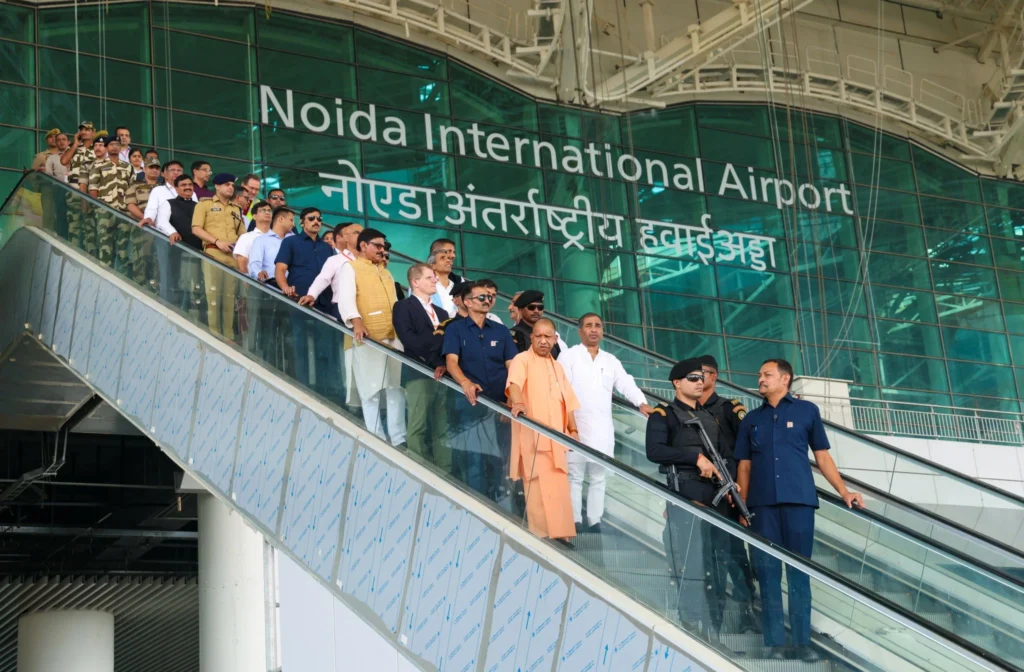
During his recent review, Chief Minister Adityanath assessed the progress of the domestic terminal, security systems, and traffic management arrangements, both on-site and from aerial inspections.
Officials briefed him on technical readiness, including the terminal building, runway testing, and a check flight under DGCA supervision.
While the Union Civil Aviation Minister had earlier announced an October 30 inauguration, operational launch is now expected by mid-December, with inauguration preparations to finish by November 15.
Airport Capacity and Future Phases
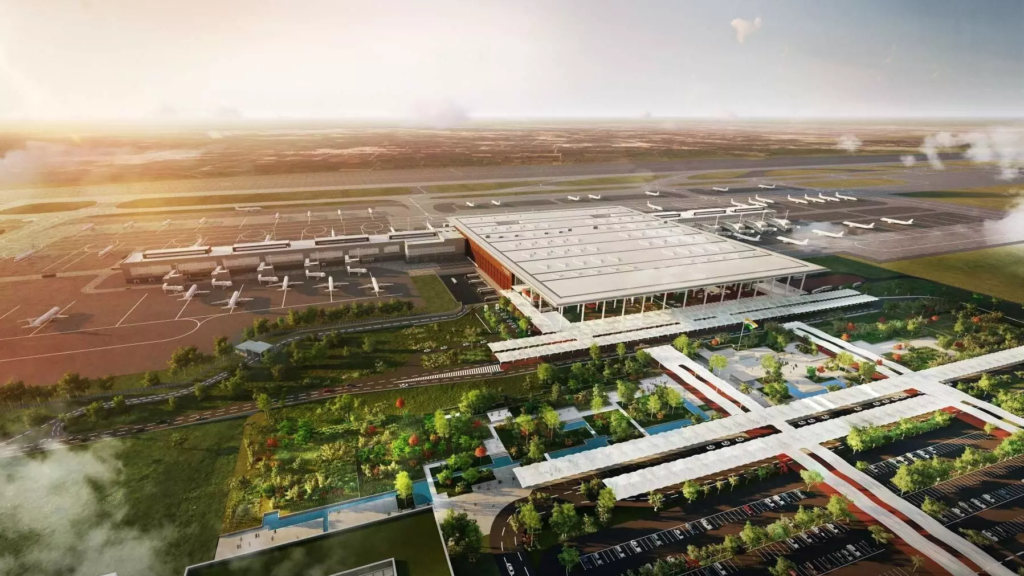
Once fully operational, Noida International Airport (DXN) will span 11,750 acres, include five runways, and manage up to 300 million passengers annually. The first phase will handle 12 million passengers with 150 daily flights.
So far, 6,700 acres have been acquired, and another 5,100 acres will follow for the upcoming phases. The total land acquisition cost is estimated at Rs 5,000 crore, while construction costs are projected at around Rs 7,000 crore.
The airport’s development is expected to significantly reduce congestion at Indira Gandhi International Airport (DEL) in Delhi and boost regional connectivity across northern India.
Connectivity to 10 Cities in First Phase
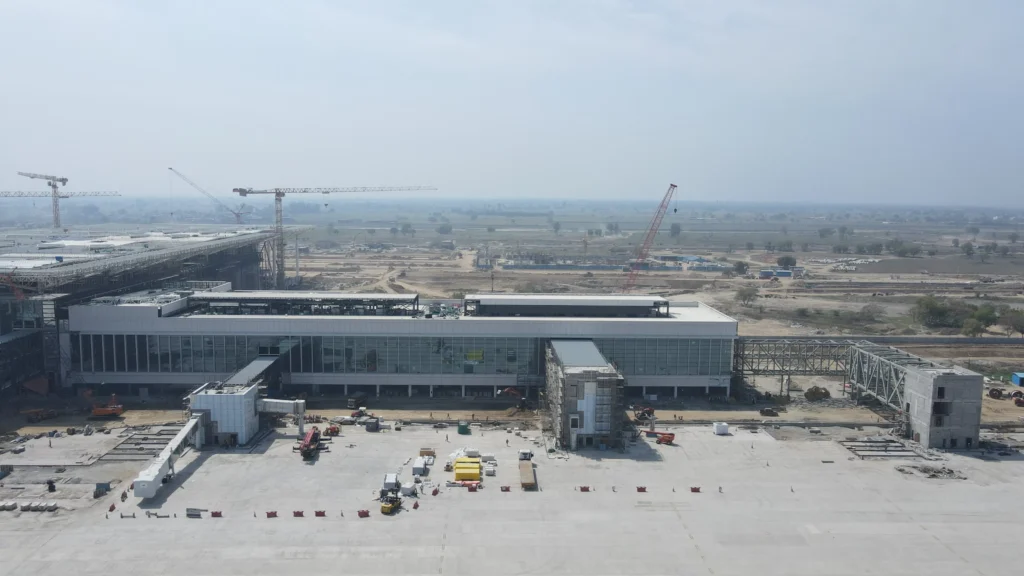
The Noida International Airport (DXN) is nearing its inauguration, set to become one of India’s most advanced aviation hubs. Located in Jewar, the project is expected to begin operations by late November or early December, marking a major milestone for western Uttar Pradesh.
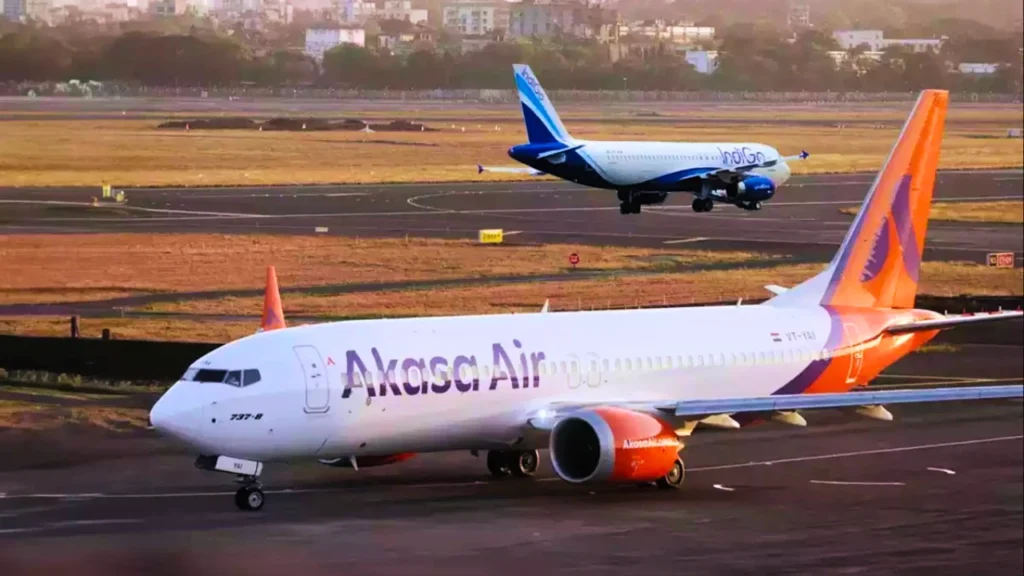
Developed by Yamuna International Airport Private Limited (YIAPL), the airport will start with domestic flights to 10 key Indian cities. Airlines such as IndiGo (6E) and Akasa Air (QP) are set to make DXN their operational base, with Air India (AI) and SpiceJet (SG) likely to join later.
The first phase of Noida International Airport’s operations will connect passengers to Varanasi (VNS), Lucknow (LKO), Ahmedabad (AMD), Mumbai (BOM), Bengaluru (BLR), Hyderabad (HYD), Jaipur (JAI), Chennai (MAA), Patna (PAT), and Srinagar (SXR).
Over 150 domestic flights are expected to operate daily, offering convenient travel options for Delhi-NCR and western Uttar Pradesh residents.
The airport’s strategic location near the Yamuna Expressway positions it as a strong alternative to Delhi’s Indira Gandhi International Airport (DEL), reducing congestion and improving accessibility for travelers across northern India.
IndiGo and Akasa Air Establish Operational Hubs
IndiGo (6E) and Akasa Air (QP) have signed agreements to use DXN as a primary base, including aircraft parking and maintenance facilities. Their presence is expected to significantly boost passenger traffic in the initial months.
This move will also help the airlines optimize their Delhi-NCR operations by distributing flight loads between IGI and Noida airports. Both carriers plan to offer frequent connections to key metro and Tier-2 cities, making DXN a vital domestic gateway from day one.
Cargo and International Expansion in Phase 2
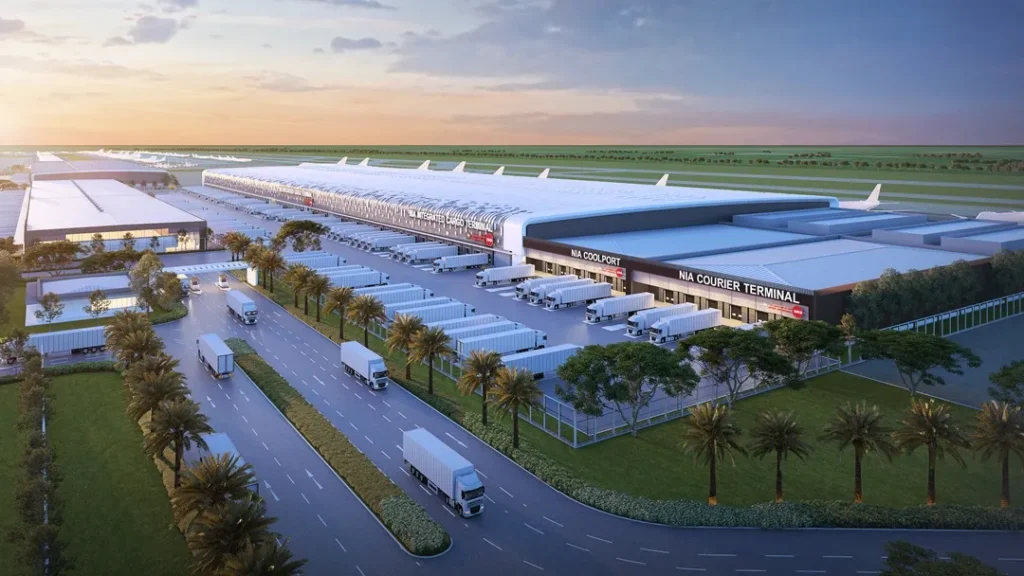
International services will begin in the second phase once domestic operations stabilize. Meanwhile, cargo operations will commence from the first day, focusing on Middle Eastern destinations.
The cargo terminal will benefit farmers across Etah, Etawah, Mathura, Agra, Aligarh, Meerut, and Muzaffarnagar by enabling faster exports of perishable goods like fruits and vegetables.
This direct air link to international markets is expected to open new income opportunities and strengthen the agricultural supply chain in western Uttar Pradesh.
Chief Minister Yogi Adityanath continues to monitor project progress closely, emphasizing timely completion and readiness for DGCA licensing before launch. Once regulatory clearances are secured, ticket sales will begin for the first wave of domestic routes.
The opening of Noida International Airport will redefine regional air connectivity, create thousands of direct and indirect jobs, and attract new business and tourism opportunities.
With planned future expansions, DXN is set to become a major aviation hub linking northern India with domestic and global destinations.
Stay tuned with us. Further, follow us on social media for the latest updates.
Join us on Telegram Group for the Latest Aviation Updates. Subsequently, follow us on Google News
