

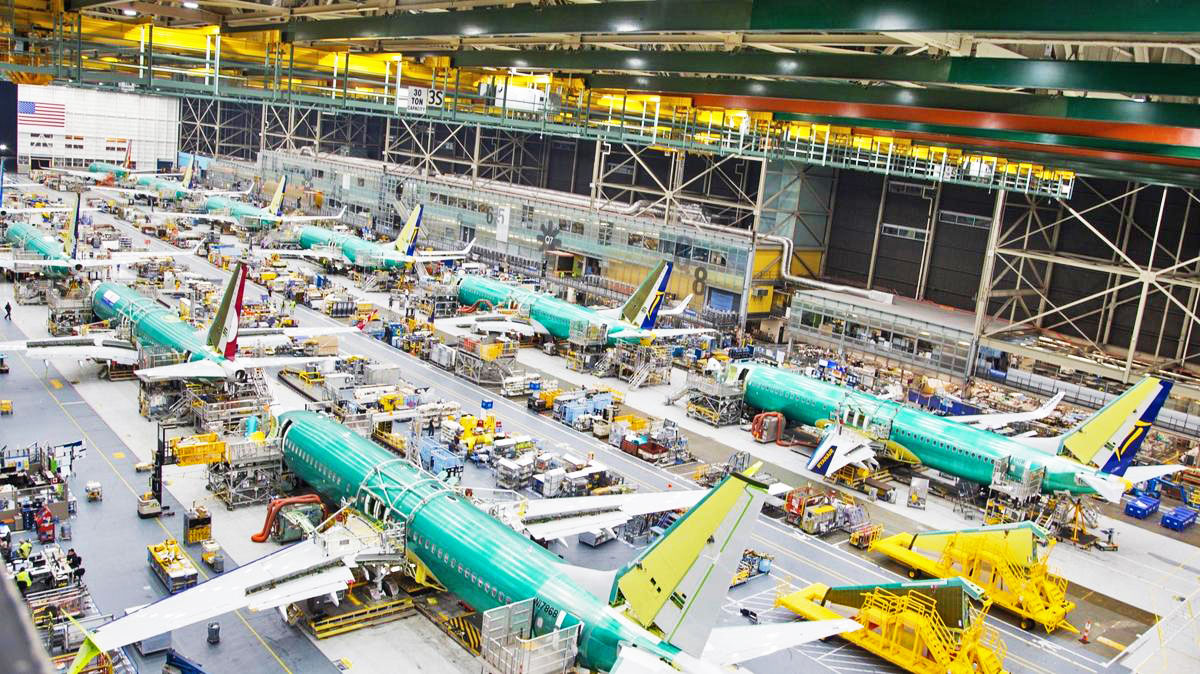
SEATTLE- American Aerospace Giant Boeing has received approval from the Federal Aviation Administration (FAA) to increase production of its 737 MAX aircraft to 42 units per month, marking an important milestone nearly two years after regulators imposed output limits.
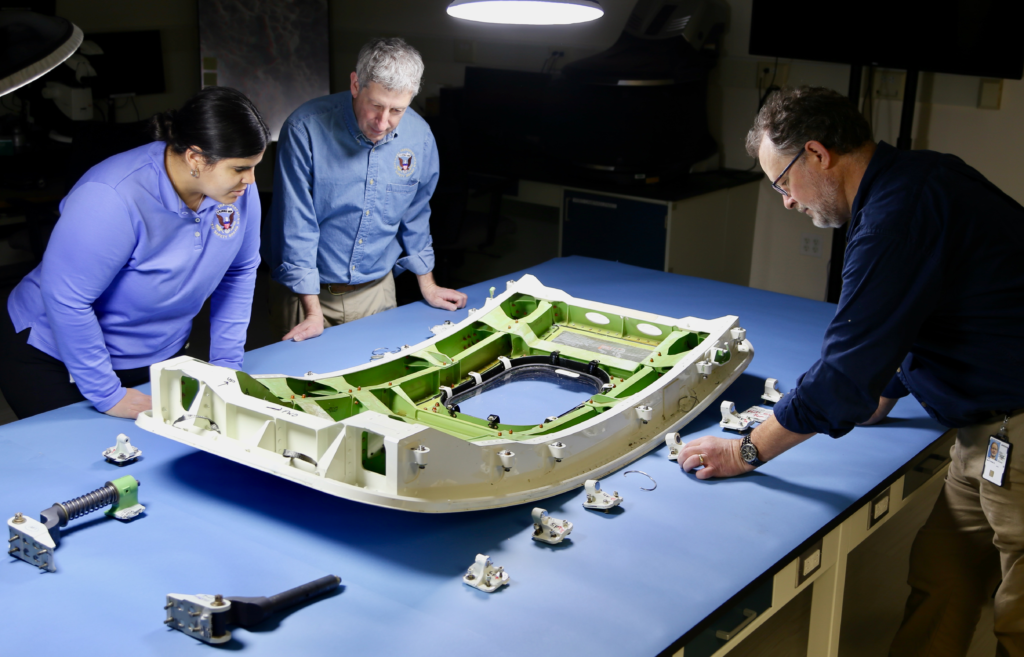
The move comes after the FAA restricted Boeing’s production in January 2024, following a midair incident involving an Alaska Airlines (AS) 737 MAX 9 that experienced a door plug failure shortly after takeoff from Portland International Airport (PDX).
FAA Clears Boeing 737 MAX Production Increase
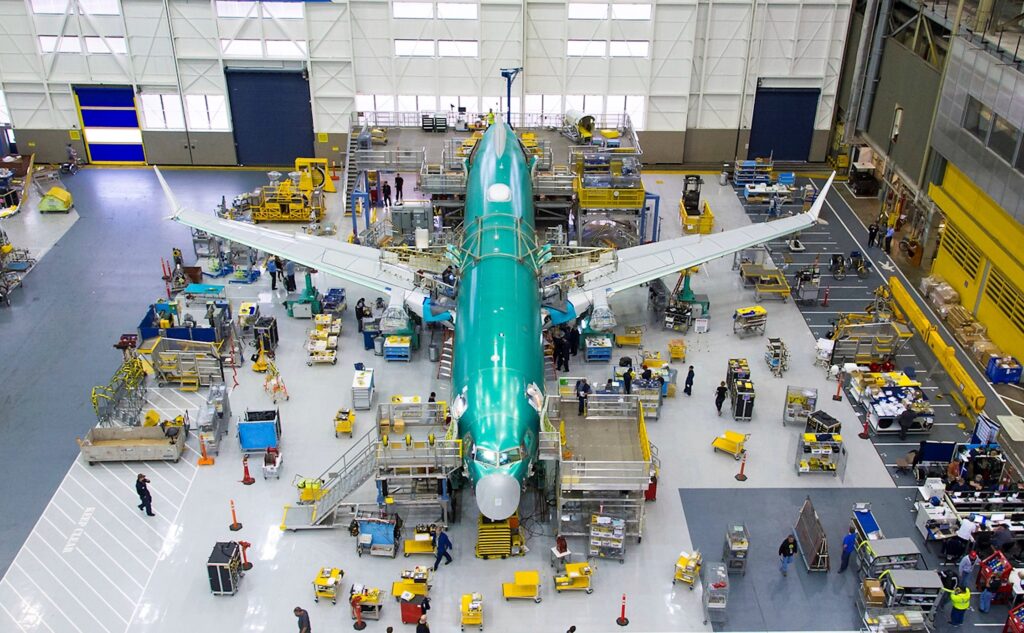
The FAA’s decision allows Boeing to gradually raise its 737 MAX production rate from 38 to 42 aircraft per month. This approval follows extensive safety inspections and audits across Boeing’s assembly lines to verify manufacturing standards and quality control.
The regulator emphasized that oversight will continue even as Boeing ramps up production. FAA inspectors reviewed every stage of Boeing’s assembly process before approving, ensuring that any production increase would maintain strict safety compliance.
Boeing expressed appreciation for the FAA’s review, stating that safety and quality remain its top priorities. The manufacturer said it will now work closely with its global supply chain to meet the higher production target.
For Boeing, increasing output is essential to financial recovery. Aircraft manufacturers typically receive most payments upon delivery, making production volume a key revenue driver.
CEO Kelly Ortberg, who took over leadership to stabilize the company, previously indicated plans to gradually lift production to 47 aircraft per month as supply chain balance improves.
The FAA’s recent actions also signal renewed confidence in Boeing’s compliance systems. Last month, the agency allowed the company to resume certifying some aircraft internally—a responsibility that had been solely under FAA control since the 737 MAX grounding.
Challenges Behind and Ahead
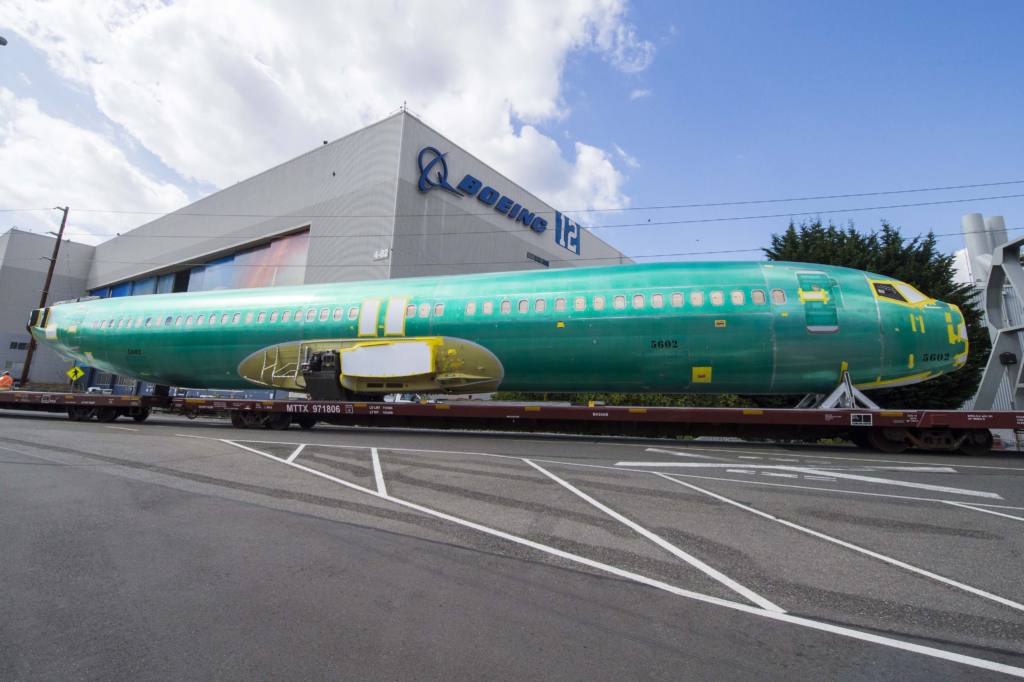
The 737 MAX program faced major setbacks following two fatal crashes in 2018 and 2019, which resulted in a global grounding that lasted nearly two years.
Production disruptions continued through the pandemic, supply shortages, and a labor strike at Boeing’s Seattle-area facilities.
Boeing has not recorded an annual profit since 2018, but it is steadily increasing its deliveries. The company expects 2025 output levels to reach their highest since before the grounding, signaling cautious optimism within the aerospace sector.
Boeing will report its quarterly financial results on October 29, which are expected to reflect the impact of the production rate change.
About Boeing and FAA
The Federal Aviation Administration (FAA), part of the U.S. Department of Transportation, oversees all aspects of civil aviation across the United States.
Based in Washington, D.C. (DCA), the agency ensures the safety, efficiency, and regulation of the national airspace system.
The FAA manages everything from air traffic control operations to the certification of aircraft, airports, and airmen. It also plays a crucial role in promoting new aviation technologies and regulating commercial space transportation.
The Backbone of U.S. Air Safety
The FAA operates as the central authority for maintaining and regulating civil aviation safety within the United States. Its mission extends beyond oversight—it ensures that every component of the aviation ecosystem operates under uniform safety standards.
Working alongside international partners like the European Union Aviation Safety Agency (EASA), the FAA helps set the global benchmark for aviation safety and certification.
The agency’s core functions include regulating air traffic operations, certifying aircraft and crew, and enforcing air safety standards. The FAA also advances air traffic control systems and supports technological innovation to keep the U.S. airspace efficient and secure.
Primary Responsibilities
The FAA performs several essential functions that shape U.S. aviation:
- Safety Regulation: Issues and enforces safety regulations for aircraft manufacturing, maintenance, and operation. Certifies airmen, aircraft, and airports to ensure compliance.
- Airspace and Air Traffic Management: Operates airport control towers, air route traffic control centers, and flight service stations to maintain safe airspace use.
- Air Navigation Facilities: Develops, installs, and maintains radar systems, communication networks, and navigation aids that support national and international air operations.
- Civil Aviation Abroad: Promotes aviation safety globally, certifies foreign repair facilities, negotiates airworthiness agreements, and participates in international aviation forums.
- Commercial Space Transportation: Regulates the U.S. commercial space launch industry, including licensing for private space payloads and launch facilities.
- Research and Development: Conducts technical research on air navigation, safety systems, environmental impacts, and aeromedical advancements.
About Boeing
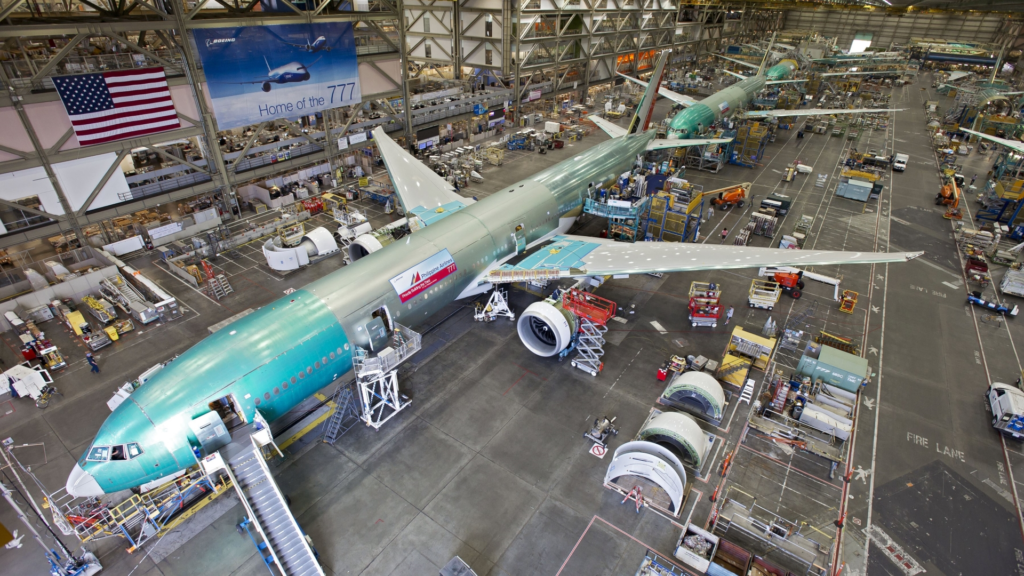
Headquartered in Arlington, Virginia, it is one of the world’s largest aerospace companies and the leading exporter in the United States. The company designs, manufactures, and services commercial airplanes, defense systems, and space technologies for customers in over 150 countries.
Employing more than 170,000 people worldwide, Boeing combines engineering expertise, global supply chains, and advanced research to shape the future of air travel, defense, and space exploration. Its commitment to safety, quality, and integrity remains central to every aspect of its business.
Boeing’s structure is built around three core divisions: Commercial Airplanes, Defense, Space & Security (BDS), and Global Services. These units are supported by cross-functional teams focusing on engineering, technology development, manufacturing systems, safety, and productivity improvement.
The company’s worldwide operations span more than 65 countries, supported by one of the most diverse and skilled workforces in the aerospace industry.
Boeing also partners with hundreds of thousands of supplier employees across its global network, contributing significantly to economic growth and innovation in aviation.
Commercial Airplanes
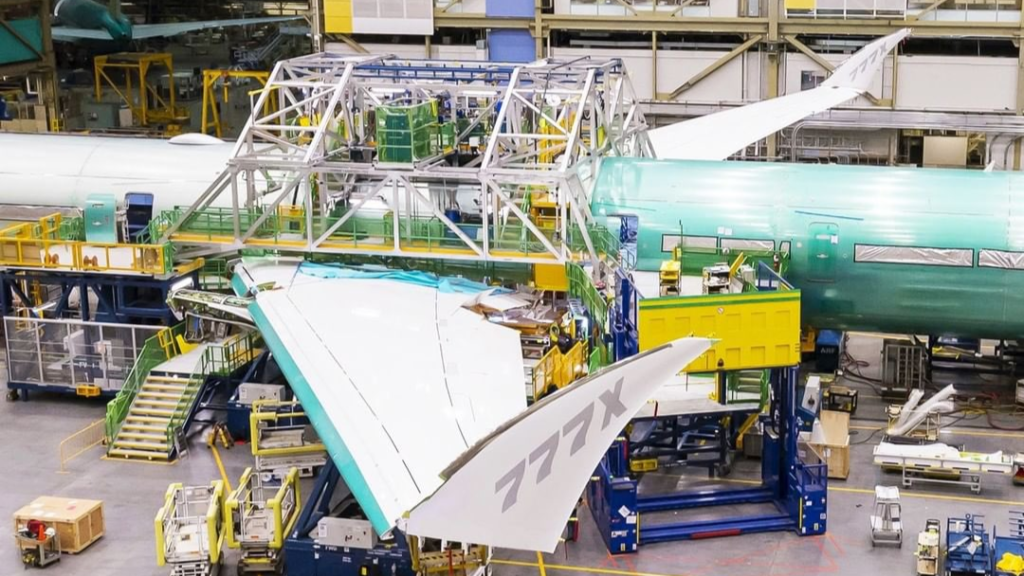
Boeing has led the commercial jetliner market for decades, producing aircraft that form the backbone of global aviation. Its current lineup includes the 737, 767, 777, and 787 Dreamliner families, alongside the Boeing Business Jet series for private and corporate clients.
New developments like the 737 MAX and 777X showcase Boeing’s focus on efficiency, sustainability, and performance. Today, more than 10,000 Boeing-built jetliners are in active service, representing nearly half of the world’s commercial fleet.
The company also dominates the cargo market—about 90 percent of global air freight moves on Boeing aircraft, which Airbus wants to challenge with its new A350F.
Defense, Space & Security
The Defense, Space & Security (BDS) division provides advanced solutions for governments and defense organizations worldwide. Its portfolio includes the KC-46 Pegasus aerial refueling tanker, derived from the 767 platform; the AH-64 Apache helicopter; the 702 satellite series; and the CST-100 Starliner spacecraft for human spaceflight.
BDS also develops autonomous systems like the Echo Voyager and invests heavily in next-generation technologies. Its mission—to connect, protect, explore, and inspire the world through aerospace innovation—drives ongoing research and development across military and space domains.
Boeing Global Services
Boeing Global Services (BGS) provides integrated support for commercial and defense platforms, offering maintenance, digital solutions, supply chain management, and pilot training. Serving mixed fleets from multiple manufacturers, BGS ensures aircraft remain mission-ready and operationally efficient.
Its data-driven approach enables customers to optimize fleet performance and reduce lifecycle costs. Through global partnerships and around-the-clock support, BGS strengthens Boeing’s role as a full-spectrum aerospace service provider.
Stay tuned with us. Further, follow us on social media for the latest updates.
Join us on Telegram Group for the Latest Aviation Updates. Subsequently, follow us on Google News
