

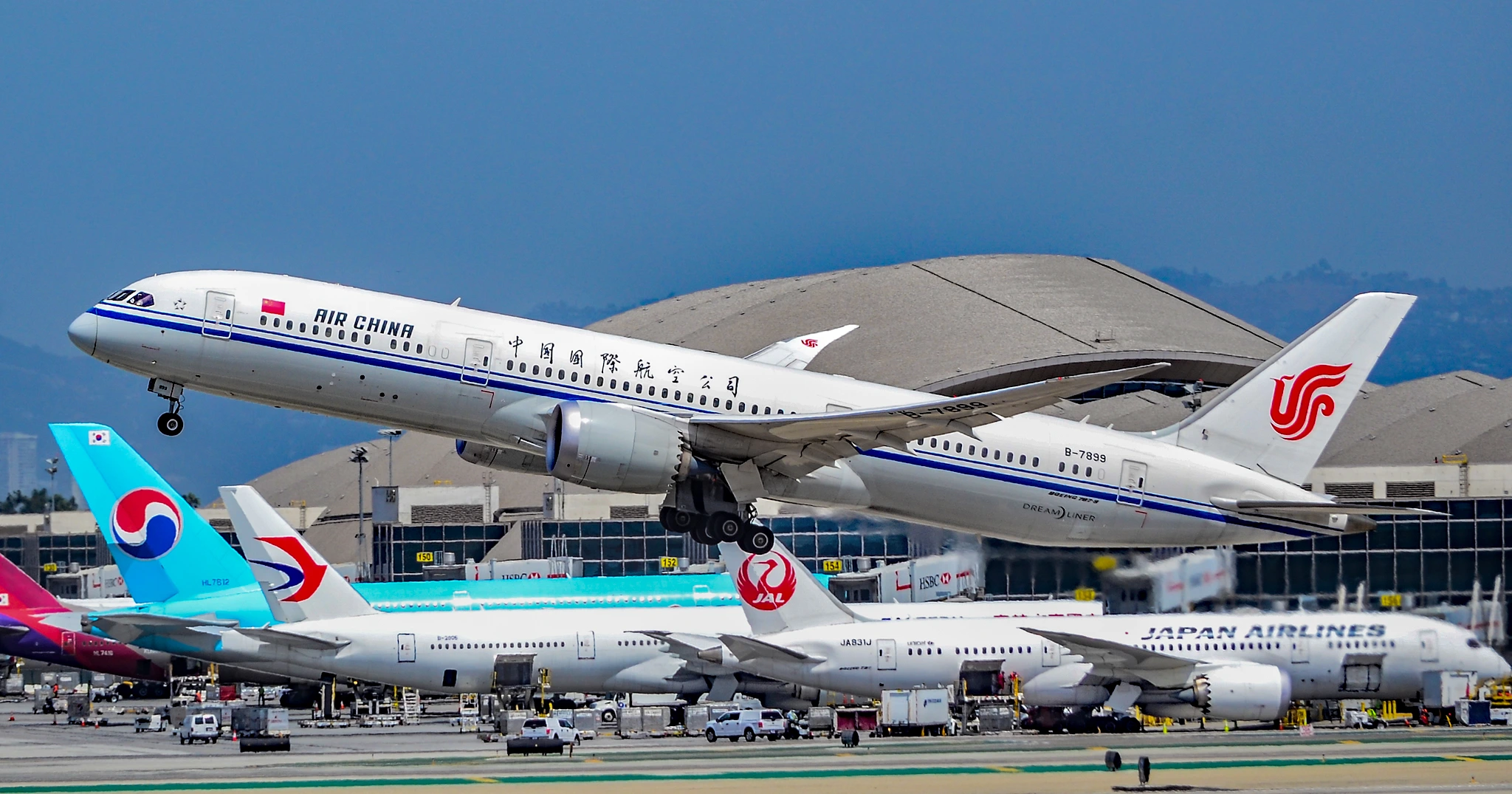
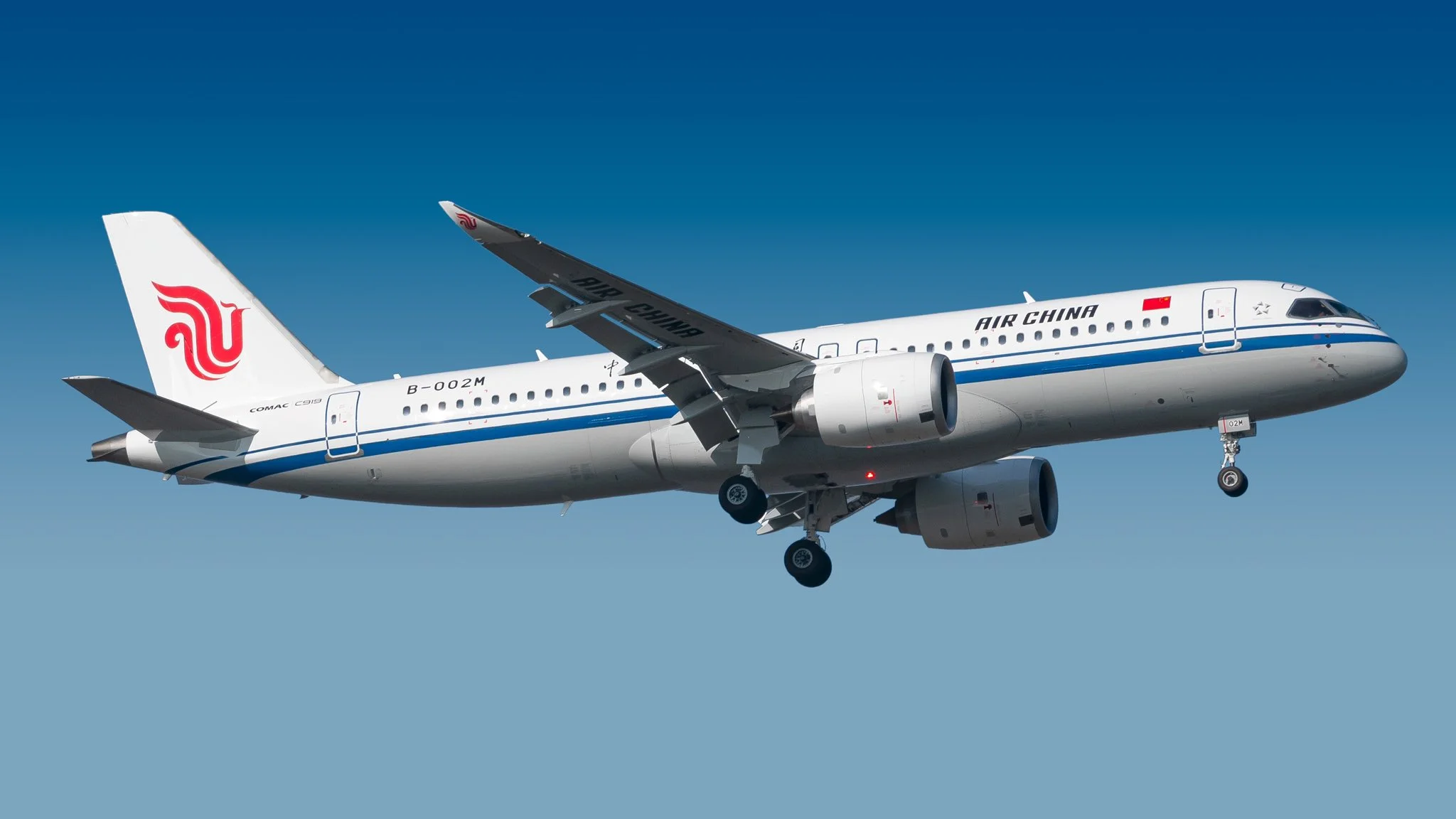
As China approaches its National Day Golden Week, the aviation industry is entering one of the busiest periods on the calendar. Airlines, including Air China (CA), China Eastern (MU), and China Southern (CZ), are adjusting schedules and deploying resources to meet rising demands.
Running from 29 September to 10 October, Golden Week has long been a bellwether for China’s travel trends. Cirium SRS Analyzer data highlights how shifts in capacity allocation, destination preferences, and airport roles are shaping the next phase of Chinese aviation.
Voluminous Domestic Flight Capacity
Domestic routes continue to dominate the market, accounting for more than 90% of total scheduled seat capacity during Golden Week 2025. This marks a notable rise from 87.7% in 2019, reflecting sustained demand for internal tourism and regional mobility.
Airlines are maintaining a strong domestic focus, aided by improved intercity connectivity, high-frequency short-haul routes, and airport infrastructure upgrades. China’s robust domestic network enables travelers to choose between business, leisure, and family travel options across all provinces.
Despite international travel growth, domestic capacity grew 4% year-on-year from 2024, reflecting consistent expansion. For airlines, domestic flights remain the most predictable and reliable segment, supporting cash flow and fleet utilization.
Stronger International Seat Capacity
While domestic travel forms the backbone of Golden Week traffic, international seat capacity is expanding at a faster pace.
From 2024 to 2025, international capacity rose by approximately 10%, more than double the growth rate of domestic flights. This trend signals a strengthening interest in outbound travel.
This surge reflects rising consumer confidence, improved visa processes in some countries, and increased airline frequency on select routes.
While the international market has not yet returned to 2019 volumes, the recovery trajectory is clear and focused.
Travel demand has become more regionalized, with short and medium-haul destinations proving more attractive than long-haul options, particularly due to geopolitical tensions and economic uncertainty.

China’s Top 5 International Markets by Seat Capacity
| Rank | Country/Region | YoY Capacity Change (%) | Share of Intl Seats (%) |
|---|---|---|---|
| 1 | Japan | +17.6% | ~18.5% |
| 2 | South Korea | +9.3% (est.) | ~12.4% |
| 3 | Hong Kong SAR | +5.1% (est.) | ~8.3% |
| 4 | Thailand | -48% (vs. 2019) | ~6.1% |
| 5 | Singapore | +7.3% | ~4.7% |
The five most in-demand countries/regions — Japan, South Korea, Hong Kong SAR, Thailand, and Singapore — now account for 50% of China’s international seat capacity.
Japan remains the leading destination, boasting a 17.6% increase in capacity compared to the previous year. Japan’s proximity, cultural familiarity, and eased visa requirements continue to make it highly attractive.
South Korea follows as the second-most popular destination. Its strong tourism promotion, shopping appeal, and short flight times support high-frequency demand, especially from eastern Chinese cities.
Southeast Asia is seeing mixed results. Thailand, previously the number one destination in 2019, has now dropped to fourth place. Its seat capacity has halved compared to its 2019 peak, likely influenced by economic shifts, safety concerns, or competitive alternatives in the region.
In contrast, Vietnam has recorded an impressive growth of over 53% since 2024, rapidly climbing the rankings. Malaysia and Singapore also show strong performance with 12.6% and 7.3% growth, respectively, suggesting Southeast Asia still holds appeal but is redistributing demand.
Notably, the United States, which ranked sixth in 2019, has fallen out of the top ten altogether. Rising ticket costs, visa hurdles, and diplomatic concerns may have contributed to this shift.
Southeast Asia Market Changes
| Country | Capacity Trend | Growth/Decline Notes |
|---|---|---|
| Vietnam | +53% since 2024 | Fastest-growing SE Asia market |
| Malaysia | +12.6% | Steady year-on-year growth |
| Singapore | +7.3% | Strong recovery and stable demand |
| Thailand | −50% since 2019 | Seat capacity halved from peak |
China’s Primary International Hub
Shanghai Pudong International Airport (PVG) continues to hold its position as China’s leading international hub. It has recorded a 10.4% year-on-year increase in international seat capacity, reaffirming its strategic importance for both passengers and airline operations.
Beijing Capital (PEK) and Guangzhou Baiyun (CAN) follow as secondary gateways, offering both intercontinental and regional connections. While these hubs support diversified operations, PVG dominates China’s outbound traffic footprint.
Seven of the ten busiest international routes during Golden Week 2025 originate from PVG. The most heavily trafficked is PVG–Osaka Kansai (KIX), which has surged by 35% compared to 2019, making it the top international route.
PVG–Tokyo Narita (NRT) also shows strong momentum, increasing 14% from pre-COVID levels. These routes highlight Japan’s consistent appeal and the strategic significance of East Asia in China’s outbound travel map.
Secondary Destinations Gain Prominence
Beyond the top hubs and routes, emerging city pairs are gaining attention. Hanoi (HAN) and Ho Chi Minh City (SGN) have rapidly climbed the ranks.
In 2019, they sat at positions 35 and 25 respectively; now, they occupy 11th and 13th place, driven by increased leisure travel and expanding airline partnerships.
The growth of these secondary destinations reflects shifting travel behaviours, including interest in less crowded cities, adventure tourism, and cost-effective international travel options.
Implications for Chinese Airlines
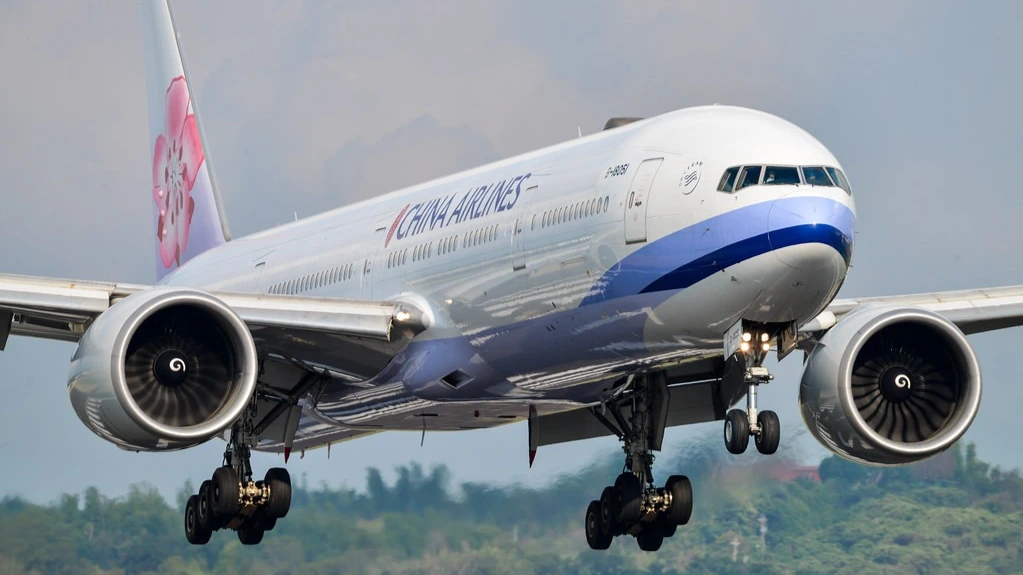
Airlines are increasing wide-body usage on key international routes and reallocating narrow-body aircraft to meet short-haul demand across Southeast Asia and East Asia.
Infrastructure planning at airports like PVG and PEK is critical. These hubs must accommodate fluctuating demand, support rapid turnaround times, and ensure efficient passenger processing, especially as transfer traffic grows.
Stakeholders should also watch bilateral agreements, slot allocations, and regional diplomacy. Policy decisions in 2025 and beyond will heavily influence which destinations rise or fall during future Golden Weeks.
Bottom Line
While domestic routes remain the dominant force in overall seat capacity, the accelerating growth in international travel — particularly to Japan, South Korea, and emerging Southeast Asian destinations — reflects a recalibrated outbound demand landscape.
The rise of hubs like Shanghai Pudong (PVG) and shifts in key destination rankings underscore the importance of data-led planning, market agility, and infrastructure readiness.
As Golden Week 2025 shows, China’s skies are not only busy — they’re becoming more strategically complex.
Stay tuned with us. Further, follow us on social media for the latest updates.
Join us on Telegram Group for the Latest Aviation Updates. Subsequently, follow us on Google News
