

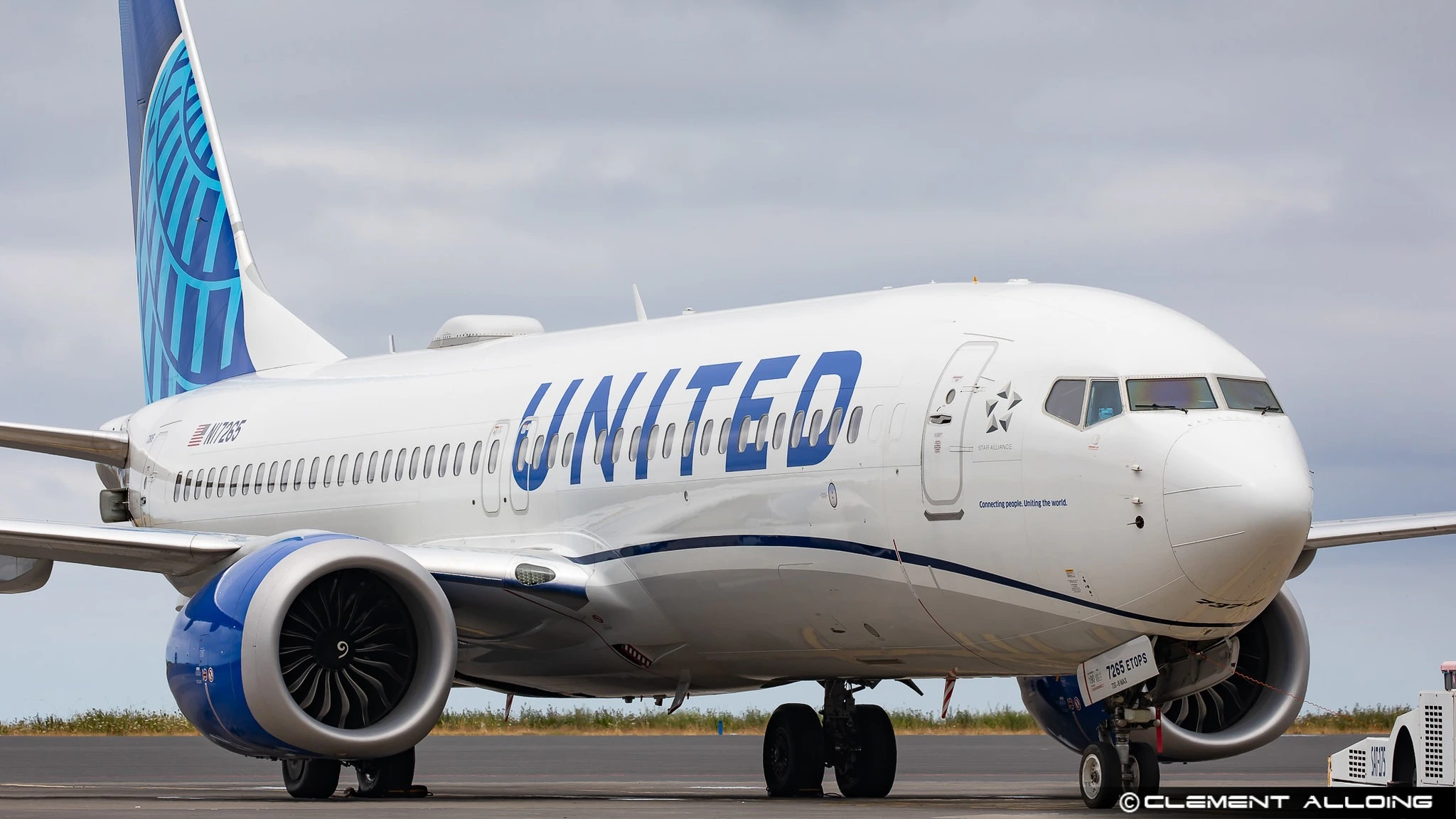
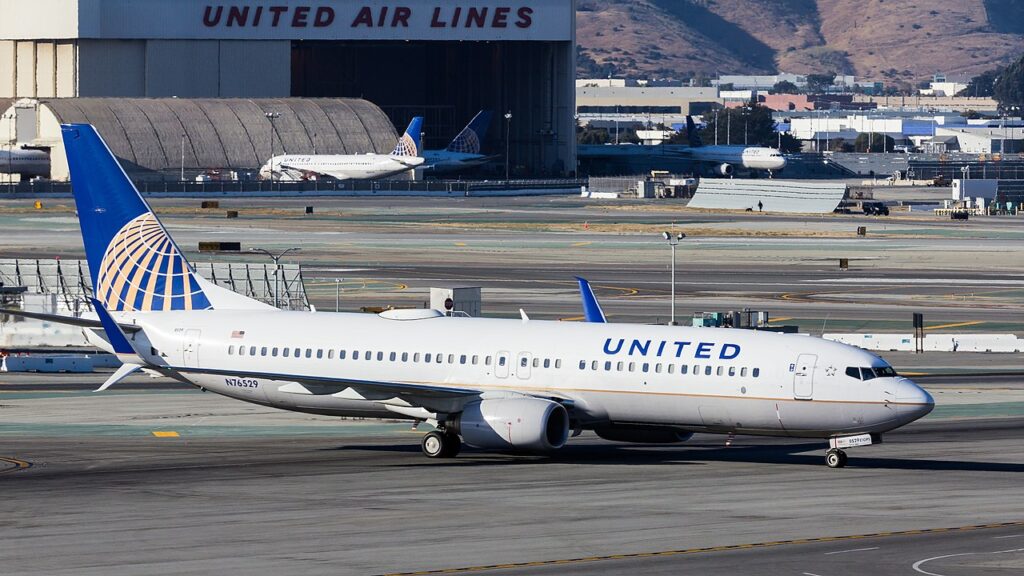
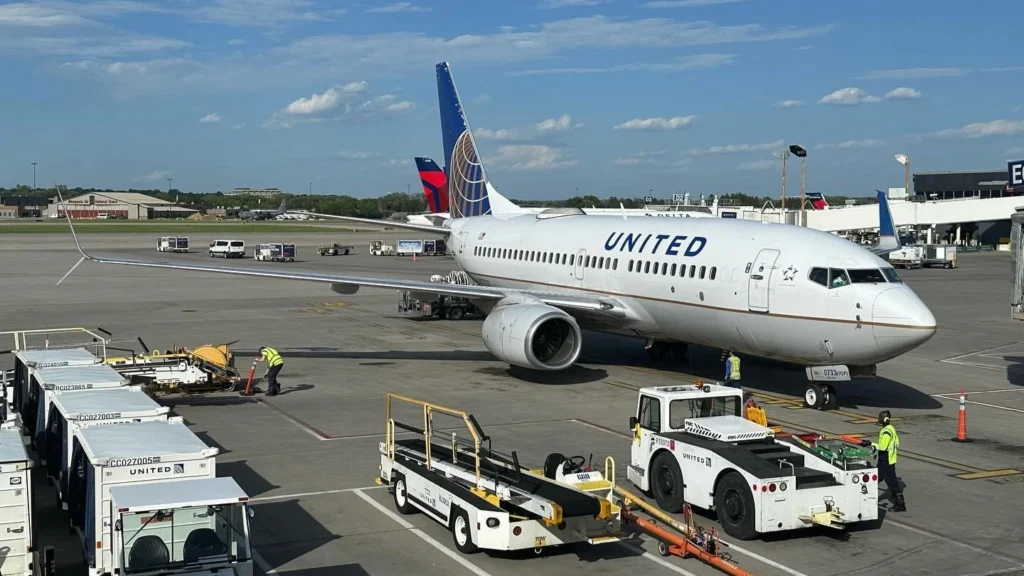
CHICAGO- A passenger on United Airlines (UA) flight UA788 from Indianapolis (IND) to Houston (IAH) attempted to open an aircraft door during taxiing after landing on Sunday evening around 6:30 PM. The attempt failed, but he activated the emergency slide on the Boeing 737-800.
Houston police detained the passenger following a medical evaluation at a hospital, while other passengers were transported to the terminal by bus. This incident highlights safety protocols on grounded aircraft.
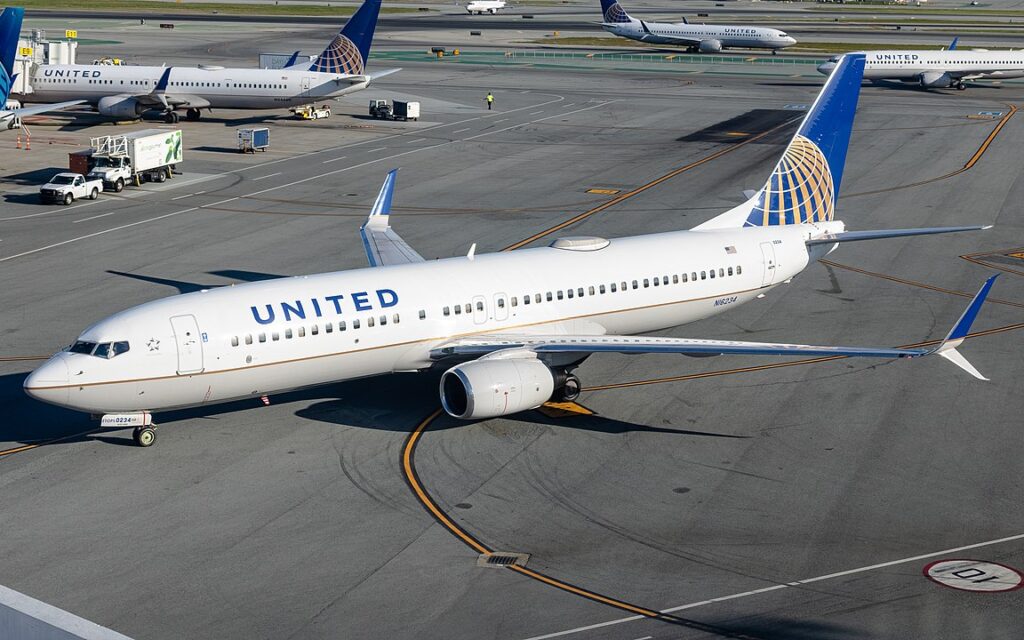
United Airlines Flight Emergency Slide
United Airlines (UA) flight 788 landed safely at Houston’s George Bush Intercontinental Airport (IAH) from Indianapolis International Airport (IND)
During taxiing, a disruptive passenger tried to open one of the plane’s doors, which remained shut due to design features but triggered the armed emergency slide to deploy.
The aircraft, a Boeing 737-800, experienced no structural issues from the event. Local law enforcement met the plane at the gate, conducted a medical check on the individual, and took them into custody.
Remaining passengers deplaned via bus to reach the terminal without further disruption.
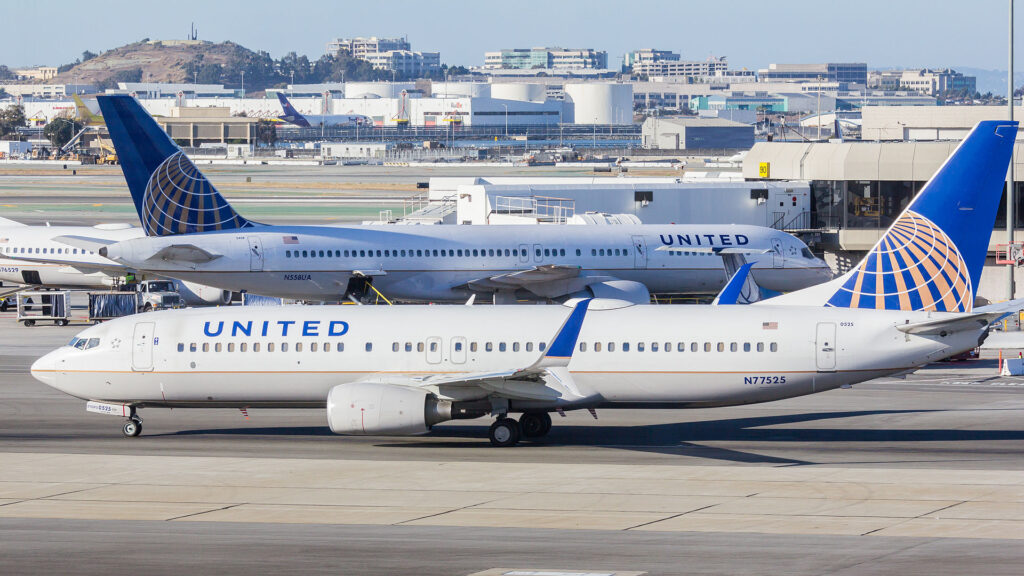
Technical Aspects of Door and Slide Mechanisms
Airline doors stay secure mid-flight due to cabin pressure differentials exceeding 2 pounds per square inch, making opening impossible. On the ground during landing and taxiing, this differential drops near zero, allowing doors to open if armed.
Boeing 737 models permit a maximum differential of 0.125 psi at takeoff and landing, removing any pressure lock post-touchdown.
Arming slides occurs from pushback to landing and disarms at the gate; opening an armed door during taxi deploys the slide automatically.
This design prevents accidental openings but creates hazards on active taxiways, including evacuation risks.
According to View from the Wing, FAA operations bulletins and Airbus notices emphasize proper arming timing to avoid inadvertent deployments.
Financial and Operational Impacts
Emergency slide deployments incur significant costs for airlines. Basic repair and repacking average $12,000, with additional testing, inspections, and component replacements adding $5,000 to $20,000.
Flight delays from such incidents can cost $10,000 to $30,000 for two to four hours of downtime.
These expenses stem from mandatory safety checks and slide reinstallation, disrupting schedules and requiring ground crew intervention.
Similar Past Events
Similar occurrences have been documented across multiple carriers. A Delta Air Lines (DL) flight once lost an emergency slide mid-flight near New York (JFK), and another Delta 767 experienced a slide explosion after diversion to Salt Lake City (SLC).
In 2019, a Delta slide detached and landed in a residential area near Boston (BOS).
In another notable case, an Asiana Airlines (OZ) passenger opened an exit door just 800 feet before landing possible only because the pressure differential was minimal at that phase of descent.
These incidents underscore both the sensitivity of aircraft safety systems and the importance of passenger compliance post-landing.
Passenger Motivation
Authorities have not disclosed the motive behind the United passenger’s actions. While it caused no lasting damage, the act disrupted operations and raised questions about passenger behavior after landing.
Aviation experts note that such incidents can be both dangerous and costly, emphasizing the need for vigilance and adherence to safety protocols at all times.
Stay tuned with us. Further, follow us on social media for the latest updates.
Join us on Telegram Group for the Latest Aviation Updates. Subsequently, follow us on Google News
