

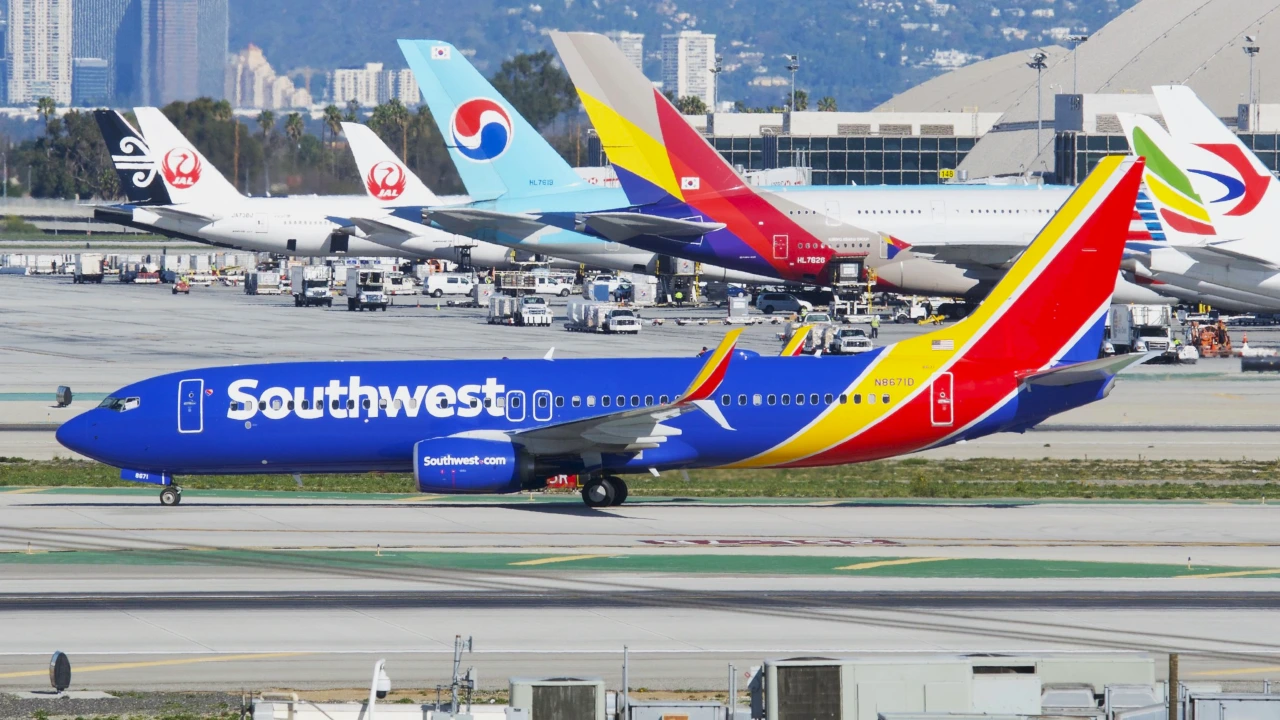
DALLAS- A pilot reportedly associated with Southwest Airlines (WN) has questioned the Federal Aviation Administration’s (FAA) November 13 nationwide ground stop after claiming that his flight from Cancún International Airport (CUN) to Phoenix Sky Harbor International Airport (PHX) experienced no communications problems.
The pilot has described the disruption as a government operation designed to create fear and control people. However, his successful flight does not establish that the wider air traffic control network was functioning normally during the incident.
Southwest Pilot’s Uninterrupted Flight Does Not Disprove FAA Network Failure
A video circulating on social media shows a pilot identified online as Mike McHugh discussing the nationwide flight disruption. The video was posted through the account @mike4flight.
Standing in a parking garage and wearing an aviation uniform, McHugh says he completed his flight from Cancún to Phoenix without experiencing communication problems. He also lists several air traffic control facilities with which he reportedly communicated during the journey.
Based on his experience, he questions the FAA’s decision to restrict aircraft departures across the United States.
In the video, he describes the incident as a “big farce” and suggests that the disruption was deliberately designed to create fear and chaos.
He states that the situation was intended to disrupt because, in his view, the government uses such incidents to gain control over people.
However, he does not provide evidence supporting the allegation that government officials deliberately caused the communications failure. He also does not identify a specific objective that the government would have achieved through the disruption.
A successful flight alone cannot establish that the entire air traffic control network was operating normally. His experience only demonstrates that the communication facilities and frequencies used during his particular flight remained available, View from the Wing reported.
Why Aircraft Already in the Air Were Allowed to Land
One of the central arguments behind the pilot’s criticism is that aircraft continued flying while the FAA stopped departures across the country.
However, these two operational decisions are not contradictory.
When the communications problems emerged, thousands of aircraft were already flying through US airspace. Stopping aircraft already airborne would have created additional operational challenges.
Instead, the FAA could prioritize landing aircraft already in the system while limiting the introduction of new traffic.
Each arriving aircraft eventually leaves the controlled airspace and reduces the workload for air traffic controllers. Every new departure, meanwhile, adds another aircraft requiring clearances, separation, radar monitoring and coordination between different control facilities.
Controllers must also coordinate aircraft handoffs between sectors and maintain safe separation throughout their journeys.
Allowing existing flights to land while restricting new departures therefore reduced the number of aircraft requiring additional instructions during an unstable operating situation.
The distinction is important because the FAA did not require every radio frequency to become unavailable before taking precautionary action.
Some communication systems could continue working while other facilities experienced unreliable radar information or interruptions in data transmission.
A pilot communicating successfully with one controller does not establish that radar feeds, telecommunications links and coordination systems across the national network were functioning reliably.
Consequently, the pilot’s uninterrupted journey does not invalidate the FAA’s decision to restrict departures.
FAA Ground Stop Disrupted More Than 14,000 Flights
The FAA issued its nationwide ground stop on Friday, November 13, 2026, at approximately 3:54 p.m. Eastern Time.
The restriction was lifted at approximately 8:15 p.m. Eastern Time, following more than four hours of disruption.
The Department of Transportation (DOT) said approximately 3,500 aircraft were already airborne when the incident occurred. Air traffic controllers and pilots coordinated the safe arrival of those aircraft while the FAA worked to restore the affected systems.
The disruption continued after the ground stop was lifted because airlines had to reposition aircraft, relocate crews, and reorganize their flight schedules.
According to ABC News, more than 14,000 flights were canceled across Friday and Saturday as airlines struggled to restore normal operations.
The incident affected passengers across the country, leaving travelers stranded at airports and disrupting domestic and international connections.
The FAA’s decision was therefore not based on the claim that every communication facility had completely stopped working. The primary concern was the reliability of the information required to manage aircraft safely.
Aging FAA Telecommunications Network Triggered the Disruption
US Transportation Secretary Sean Duffy initially attributed the disruption to overloaded telecommunications switches and routers within the country’s aging air traffic control infrastructure.
The FAA Telecommunications Infrastructure (FTI), operated by L3Harris, provides the communications network connecting air traffic control facilities.
The network carries voice communications and operational data between facilities. These connections support the transmission of information used by controllers to communicate with pilots and monitor aircraft movements.
On November 14, Duffy provided a more detailed explanation of the suspected failure.
He said L3Harris was conducting routine maintenance at a remote FAA facility to replace aging copper telecommunications lines with fiber-optic connections.
During the transition from traditional Time Division Multiplexing (TDM) technology to Internet Protocol (IP) communications, a router began sending excessive connection requests into the wider network.
According to Duffy, the router generated more than 1,000 connection attempts every four to five seconds.
This activity overloaded other routers and created inconsistencies in communications with aircraft and radar feeds at multiple air traffic control facilities.
Reuters reported that the disruption affected 17 of the FAA’s 22 Air Route Traffic Control Centers.
The FAA’s preliminary investigation also identified aging Cisco 600-series routers as part of the affected infrastructure. FAA Administrator Bryan Bedford said the agency was replacing approximately 2,000 Cisco 600 routers with newer Juniper equipment.
However, officials have not established the final technical cause of the incident.
L3Harris Router Installation Under Investigation
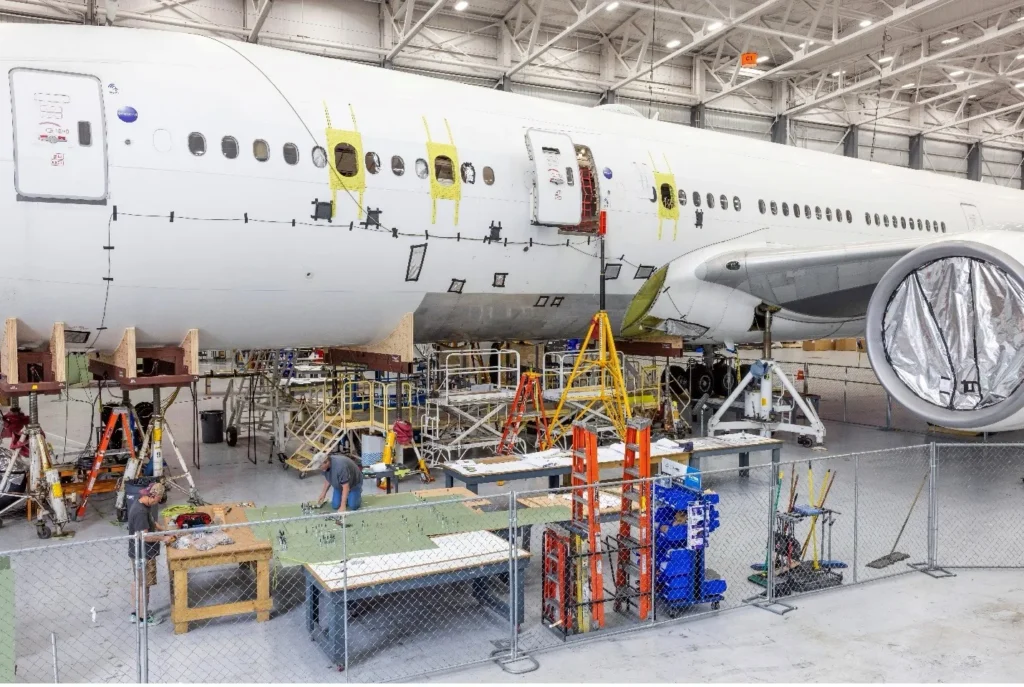
The investigation has focused on maintenance work performed at El Dorado, Arkansas, and a separate facility in Amarillo, Texas.
In an interview on November 15, Duffy confirmed that the FAA and L3Harris were examining routers associated with both locations.
The Arkansas facility was undergoing a copper-to-fiber telecommunications upgrade. However, officials are also investigating why equipment at the Amarillo facility, where work had reportedly been completed several weeks earlier, experienced related problems.
Duffy said both routers were being examined at an L3Harris laboratory in Florida. The FAA was assisting with the investigation, while the Federal Bureau of Investigation (FBI) was also providing support.
Investigators are examining whether the incident resulted from an installation mistake, user error or defective equipment.
The precise cause remains undetermined.
Duffy and Bedford have said there is no evidence that a cyberattack or artificial intelligence system caused the disruption.
The FAA has also taken action to prevent the suspected routers from continuing to broadcast problematic data while technicians investigate the equipment.

Duffy and Mullin Offered Different Initial Explanations
The initial explanation of the communications failure also raised questions about the relationship between older FAA infrastructure and ongoing technology upgrades.
During the November 13 briefing, Homeland Security Secretary Markwayne Mullin suggested that new security patches, equipment, and technology may have overwhelmed the older telecommunications network.
Duffy, however, emphasized that the newer IP switches had not failed and attributed the disruption to problems involving legacy equipment.
The subsequent explanation focused on the router installation and the transition from copper telecommunications lines to fiber.
Bedford also clarified that the specific work involved in the incident was part of routine maintenance on the existing telecommunications network, rather than the separate $12.5 billion FAA modernization programme.
The distinction matters because replacing aging technology requires careful integration with systems that must remain operational throughout the transition.
A new component can introduce operational risks if it sends unexpected data into older equipment or interacts incorrectly with existing network infrastructure.
The incident highlights the need for proper testing, contractor oversight, network monitoring and contingency procedures before new equipment enters service.
Sean Duffy Seeks $50 Billion for FAA Modernization
Following the disruption, Duffy renewed his call for additional congressional funding to modernize the US air traffic control system.
The Transportation Secretary asked Congress for approximately $50 billion in additional funding for air traffic control and airport infrastructure improvements.
The administration had already secured $12.5 billion for modernization efforts, which Duffy described as an initial portion of the broader programme.
He argued that the existing allocation would not cover the complete replacement of the country’s aging air traffic control infrastructure.
However, the latest disruption also raises questions about how the FAA manages its existing projects, contractors and technology transitions.
The FAA must demonstrate that additional funding will translate into reliable infrastructure, effective project management and measurable improvements.
The agency also needs clear implementation deadlines, independent testing, contractor accountability and contingency arrangements that prevent maintenance work from disrupting nationwide operations.
Bedford’s clarification that the November 13 incident involved routine maintenance outside the separate $12.5 billion modernization programme makes this distinction particularly important.
The failure was not simply a case of outdated equipment suddenly stopping. It involved a network transition that reportedly affected communications across multiple air traffic control centres.
The investigation into the L3Harris equipment should establish exactly how the failure occurred and whether existing testing and operational procedures were sufficient.
For now, the available evidence points to a telecommunications and equipment failure rather than a deliberate government operation. The pilot’s successful flight from Cancún to Phoenix does not provide evidence to support his allegation or disprove the technical problems reported by the FAA.
Stay tuned with us. Further, follow us on social media for the latest updates.
Join us on Telegram Group for the Latest Aviation Updates. Subsequently, follow us on Google News
