

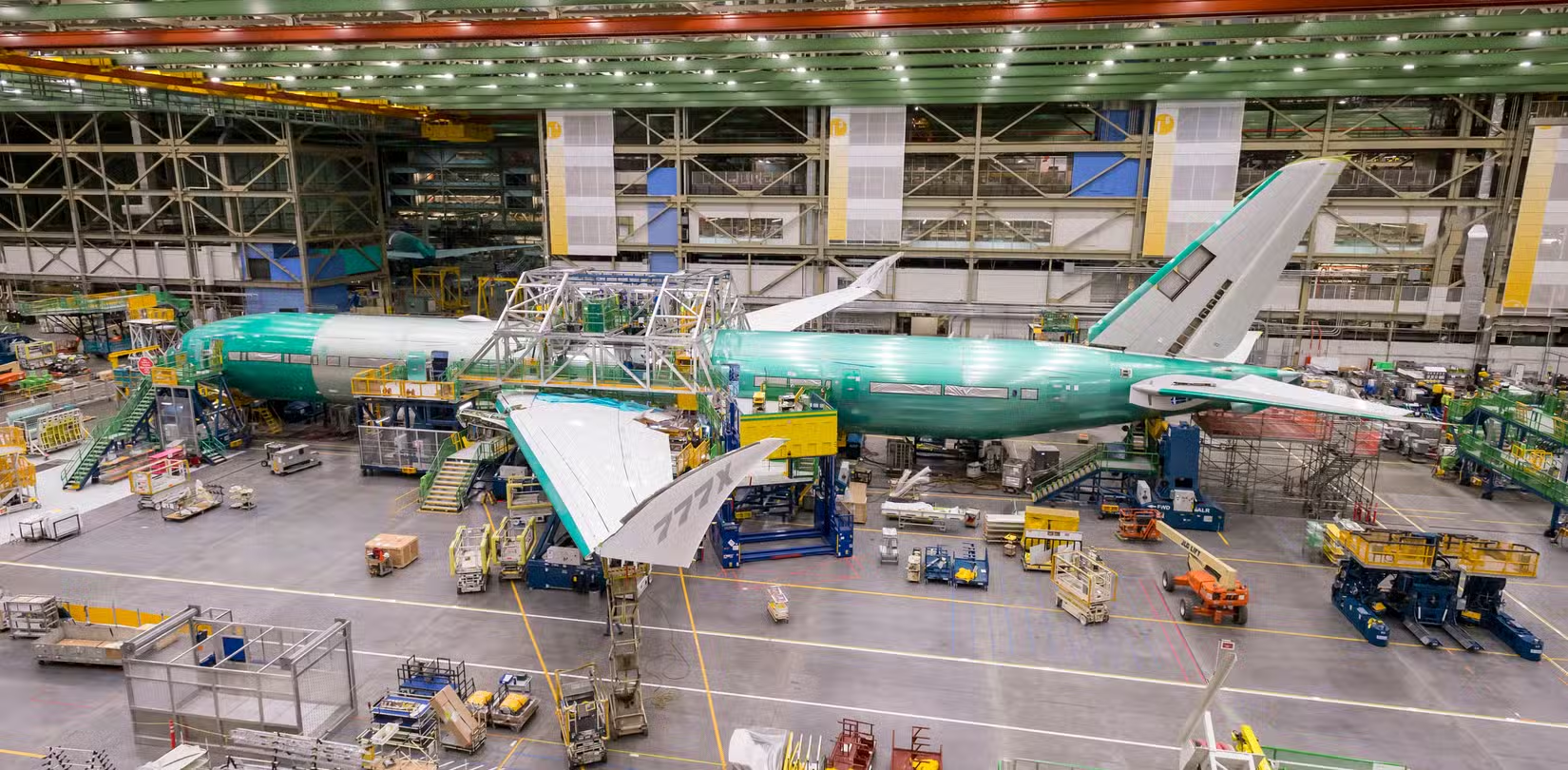
TENNESSEE— Boeing has used Frontier, the world’s first exascale supercomputer, to advance aircraft aerodynamic research and shorten the time required to analyse complex wing designs. The project, conducted in collaboration with the US Department of Energy’s Oak Ridge National Laboratory, demonstrates how high-performance computing could improve aircraft development.
The research allows Boeing engineers to examine complicated airflow patterns, turbulence and ice accumulation around aircraft wings with greater accuracy. Frontier delivered results in days rather than months and helped researchers predict lift coefficients within 1% for the configurations examined, potentially giving aircraft designers more opportunities to refine aerodynamic performance before physical testing.
Boeing Uses Exascale Computing
Located at Oak Ridge National Laboratory in Tennessee, Frontier can deliver peak computing performance of two exaflops, equivalent to approximately two quintillion calculations per second.
It became the first supercomputer to reach the exascale milestone, providing the computing capacity needed for highly detailed scientific simulations.
Boeing aerodynamics engineers Adam Clark and Konrad Goc accessed the system through the Department of Energy’s INCITE Leadership Computing programme.
They worked with ORNL computing specialists to improve the resolution and speed of computational fluid dynamics (CFD) simulations.
CFD allows engineers to reproduce how air moves around aircraft surfaces by dividing a model into millions of computational cells.
These calculations help researchers understand pressure, temperature, and airflow changes, although accurately modelling turbulence requires enormous computing resources.
One particular challenge involves the boundary layer, the thin layer of air directly surrounding an aircraft’s surface. Airflow can remain smooth, known as laminar flow, or become turbulent, creating irregular movements that influence lift, drag and fuel consumption.
Frontier enabled the Boeing team to investigate these changing conditions at a level of detail that conventional industrial computing systems would struggle to achieve within practical development timelines.
Testing Aircraft Turbulence And Ice Accumulation
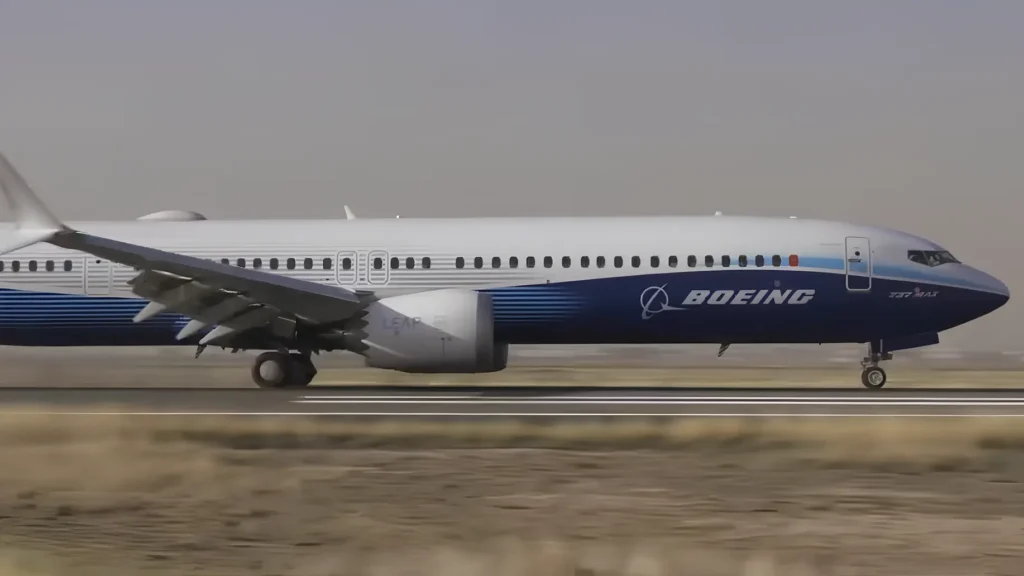
The research concentrated on high-lift aerodynamics, which becomes particularly important during takeoff and landing. At these stages, deployed flaps and other movable wing components create complex airflow interactions that engineers must understand to improve aircraft performance.
Boeing also investigated how ice accumulation affects wing aerodynamics. Different ice shapes, sizes, and surface textures can disturb airflow and change the amount of lift and drag generated by a wing.
The simulations examined how wing temperature influences airflow and how surface heating affects the transition between laminar and turbulent conditions. These findings could also support the evaluation of aircraft anti-icing technologies.
The research helped explain certain wind tunnel results that engineers had previously struggled to understand.
Boeing clarified that its aircraft are already certified to operate safely in the relevant icing conditions, with the project intended to improve scientific understanding rather than address an identified safety deficiency.
Faster Aircraft Development Through Advanced Computing
One of the most important outcomes was the reduction in simulation time. According to Goc, calculations that would typically require months on an industrial-scale computing system produced results within days using Frontier.
The researchers also predicted the coefficient of lift, which measures the lift generated by an aircraft wing, to within 1% for the configurations studied. This level of accuracy could help engineers assess design alternatives more efficiently before moving to physical experiments.
Boeing estimates that reducing cruise drag by 1% can lower aircraft fuel consumption by approximately 0.75%. Although the Frontier research did not demonstrate this fuel saving directly, the figure highlights why even small aerodynamic improvements matter to airlines.
The company does not intend to replace wind tunnel testing with computer simulations. Instead, the technology provides another way to investigate aerodynamic behaviour that conventional physical experiments cannot always explain.
The research also used a widely studied high-lift aerodynamic model, allowing other aerospace researchers to build on the findings, AGN reported.
While Boeing has not identified a specific future aircraft programme that will incorporate the results, the project represents another step towards faster, more detailed and efficient aircraft development.
Stay tuned with us. Further, follow us on social media for the latest updates.
Join us on Telegram Group for the Latest Aviation Updates. Subsequently, follow us on Google News
