


MUMBAI- Gulf Air and Saudia have opposed Adani Airport Holdings’ proposal to reduce flight capacity at Mumbai’s Chhatrapati Shivaji Maharaj International Airport (BOM) and shift several international services to Navi Mumbai International Airport (NMI), escalating a dispute over historical flight slots and airport redevelopment. The airlines have questioned the airport operator’s authority to change their existing allocations and warned that the decision could affect aviation relations between India and Gulf countries.
The disagreement concerns plans by Mumbai International Airport Limited (MIAL), operated by Adani Airport Holdings in partnership with the Airports Authority of India (AAI), to reduce Mumbai airport’s annual passenger capacity by five million from the Summer 2027 schedule. Navi Mumbai International Airport, located approximately 50 kilometres from the existing airport, has been proposed as an alternative for affected international operations.
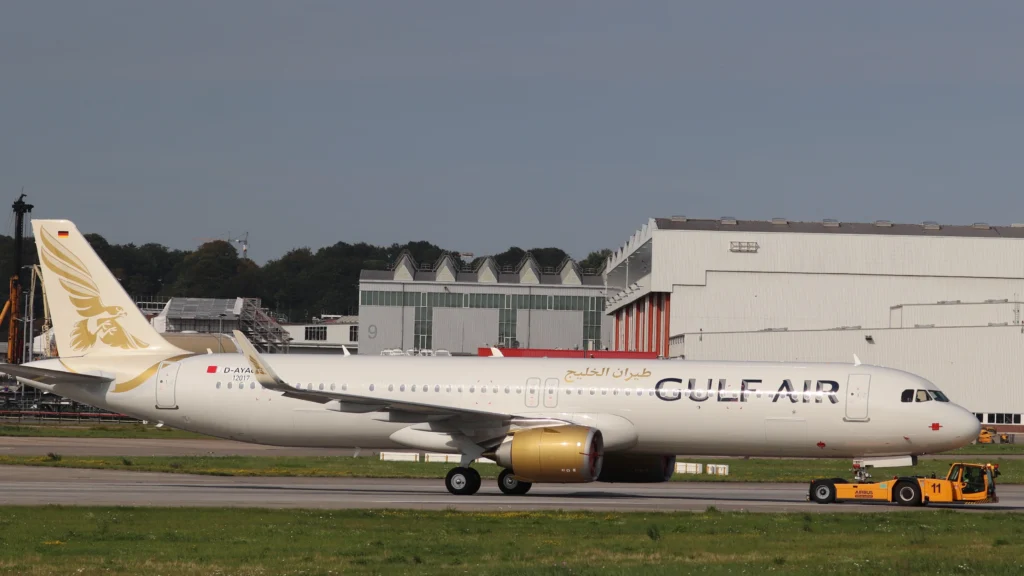
Gulf Airlines Challenge
Gulf Air and Saudia have challenged the proposed changes, arguing that MIAL cannot unilaterally withdraw its established flight slots because of its redevelopment plans.
Both carriers have raised concerns about the decision-making process, transparency, and the absence of satisfactory consultation with affected airlines.
Gulf Air, which operates two daily flights from Mumbai, has warned that the proposal could effectively force its entire international operation out of Terminal 2 at Chhatrapati Shivaji Maharaj International Airport.
The airline has requested documentation showing whether the Ministry of Civil Aviation (MoCA) approved the capacity reduction, alongside an explanation of the criteria used to determine which airlines would lose their existing slots.
The Bahrain-based carrier has also indicated that it could escalate the dispute to India’s Ministry of Civil Aviation, the Directorate General of Civil Aviation (DGCA), Bahrain’s Civil Aviation Affairs and the International Air Transport Association (IATA).
It has further raised the possibility of reciprocal measures under bilateral air service agreements, potentially affecting Indian airlines operating in Bahrain.
Saudia has separately questioned the proposed slot reductions, particularly their potential impact on passenger movements between India and Saudi Arabia.

Hajj Operations At Risk
Saudia has highlighted the importance of Mumbai as a departure point for Indian Muslim pilgrims travelling to Saudi Arabia for Hajj and Umrah. The airline warned that changes to its Mumbai operations could affect pilgrimage travel, particularly if the relocation coincides with the annual Hajj season.
According to the Haj Committee of India’s guidelines, charter flights for the 2027 Hajj season are scheduled between April 8 and May 9.
India’s proposed pilgrimage quota stands at 175,025 passengers, while Mumbai handled more than 26,000 pilgrims in 2026, accounting for nearly 15% of the national total.
The concern extends beyond Hajj because Umrah takes place throughout the year. Any disruption to established flight schedules could complicate travel arrangements for passengers heading to the Kingdom of Saudi Arabia.

Mumbai Airport Capacity Cut
MIAL plans to reduce Mumbai airport’s annual handling capacity by five million passengers from the Summer 2027 schedule, beginning in April, citing infrastructure redevelopment and operational constraints.
The airport operator has proposed moving services serving 14 international destinations to Navi Mumbai as part of its wider plan to redistribute traffic.
The proposed transition involves 12 airlines, 11 of which are based in the Gulf and West Asia. Adani Airport Holdings has also been encouraging airlines to move some international operations to the new airport as redevelopment work progresses at Mumbai, Hindustan Times reported.
However, the dispute extends beyond Gulf Air and Saudia, with foreign carriers raising concerns about historical slot entitlements and the relocation process.
If the disagreement remains unresolved, affected airlines could seek intervention from their respective governments, potentially creating reciprocal challenges for Indian carriers operating in those markets.
The outcome will be important for Mumbai’s two-airport development strategy, as authorities and airlines attempt to balance infrastructure upgrades with existing international connectivity.
Stay tuned with us. Further, follow us on social media for the latest updates.
Join us on Telegram Group for the Latest Aviation Updates. Subsequently, follow us on Google News
