


ARLINGTON- The Boeing 777-9, described as the world’s largest twin-engine jet, has landed at Keflavík International Airport (KEF), Iceland, for the first time.
The aircraft departed Boeing Field (BFI), and its arrival in Iceland marked the 10th country visited during the ongoing test campaign.
According to reports published on November 5, 2026, the team made the stop during the preceding week as part of preparations for the aircraft’s planned first delivery in 2027.

Iceland Adds New Stage to 777-9 Flight Testing
The Iceland visit forms part of a comprehensive flight-test programme designed to demonstrate the 777-9’s safety, reliability and performance. The team’s primary focus at Keflavík was evaluating the aircraft in crosswind conditions.
A crosswind occurs when wind blows across an aircraft’s direction of travel or across the runway. During takeoff and landing, aircraft must maintain directional control and predictable handling despite the sideways wind component.
Testing under these conditions helps establish how an aircraft responds when wind direction differs from the runway heading.
Crosswind evaluations are an important part of aircraft certification. The FAA’s Advisory Circular AC 25-7D provides flight-test guidance for demonstrating crosswind capability and satisfactory aircraft handling.
These requirements provide the regulatory context for such evaluations, although the Iceland report does not disclose individual test manoeuvres, wind speeds or specific results.
The Iceland stop represents one part of the wider development programme. It does not indicate that certification is complete, as the aircraft must still satisfy the remaining testing and regulatory requirements before commercial operations.
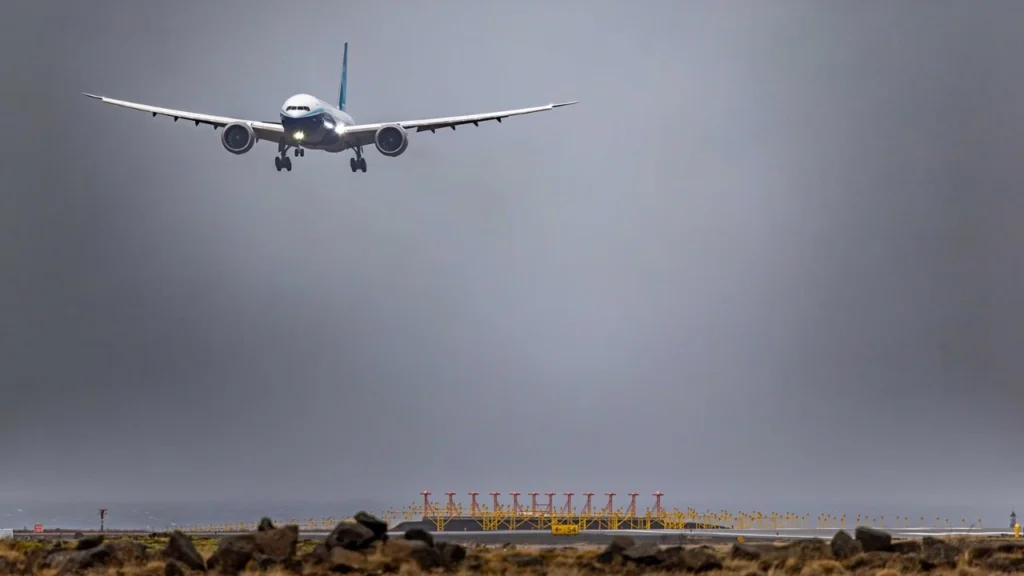
777-9 Flight from Seattle to Iceland
The flight-test team’s journey from Seattle to Keflavík also provided an opportunity to witness the northern lights.
The original photographs document several moments from the journey. One image shows the 777-9 departing Boeing Field before its flight to Iceland. Another captures the aurora visible to the crew during the journey.
Additional photographs show the aircraft at Keflavík International Airport, providing a closer look at its first visit to Iceland.
The images offer a behind-the-scenes view of the international flight-test operation and the people supporting the programme.
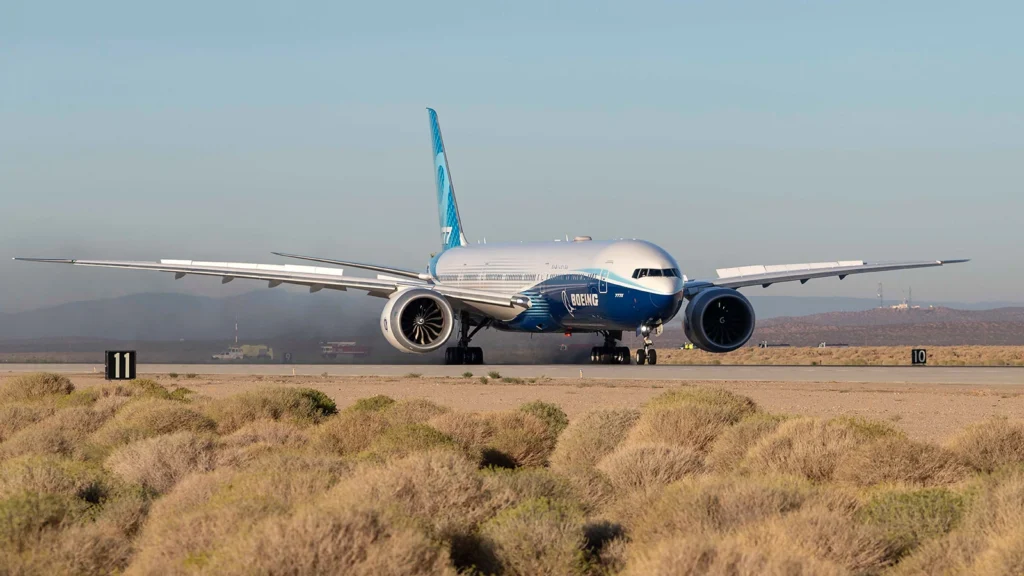
777-9 Flight-Test Fleet Exceeds 1,800 Flights
The 777-9 flight-test fleet has completed more than 1,800 flights and accumulated over 5,100 flight hours, according to the November 2026 update.
These figures represent the combined activity of the flight-test fleet, not just the aircraft that travelled to Iceland. The accumulated flights and hours demonstrate the scale of the ongoing evaluation programme.
Flight testing allows engineering teams to assess aircraft performance, handling and system reliability under different operating conditions. The information collected during these evaluations supports the certification process and helps demonstrate compliance with applicable aviation requirements.
The Iceland visit adds crosswind testing to the programme’s international activities as the team continues its wider evaluation work.
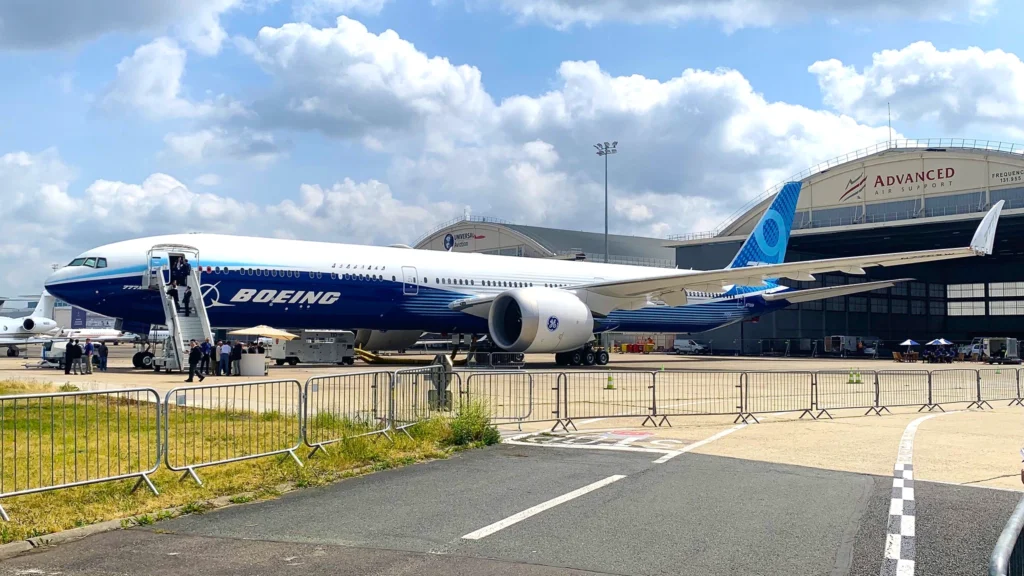
777X Offers Better Fuel Efficiency
The 777-9 is part of the wider Boeing 777X aircraft family, which aims to improve efficiency in the large widebody aircraft segment.
According to the manufacturer’s published figures, the 777-9 offers 20 percent better fuel efficiency than the airplanes it replaces. This improvement is an important feature for airlines seeking to reduce fuel consumption and operating costs on long-distance routes.
The fuel-efficiency figure represents the manufacturer’s comparison with the aircraft the 777-9 is designed to replace. It should not be interpreted as a claim that the aircraft uses 20 percent less fuel than every competing twin-engine aircraft.
The 777X programme has also secured substantial customer interest. Airlines worldwide have placed orders for more than 660 777X aircraft.
Importantly, this order figure covers the entire 777X family, not exclusively the 777-9 variant. It reflects demand for the wider aircraft programme as the manufacturer works towards completing certification and beginning deliveries.

First 777-9 Delivery Planned for 2027
The 777-9’s first delivery remains planned for 2027. Reaching this milestone depends on completing the required flight-testing activities and obtaining the necessary regulatory approvals.
The international flight-test campaign supports this objective by allowing engineering teams to evaluate the aircraft across different conditions and operating environments.
The Iceland visit adds another milestone to that effort. With more than 1,800 flights and 5,100 flight hours recorded across the test fleet, the programme continues to progress through its extensive evaluation activities.
The first landing at Keflavík International Airport therefore marks more than an international visit. It provides another opportunity to assess the aircraft’s handling characteristics as it moves towards its planned entry into commercial service.
Stay tuned with us. Further, follow us on social media for the latest updates.
Join us on Telegram Group for the Latest Aviation Updates. Subsequently, follow us on Google News
