

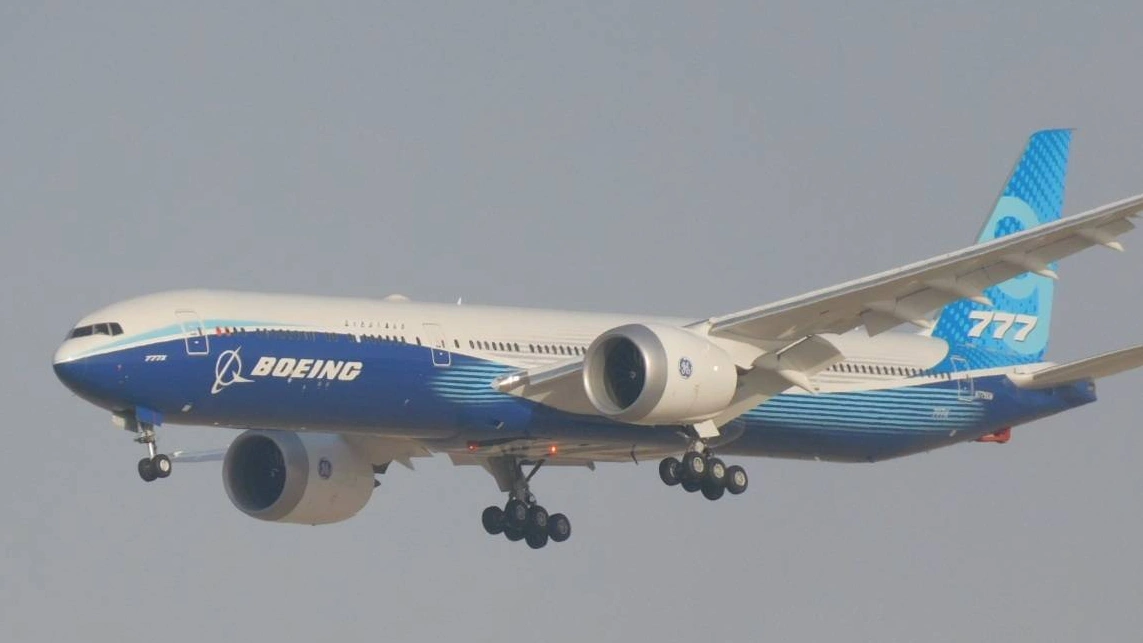
EVERETT- The Boeing 777X is designed to reshape the long-haul passenger experience through a wider cabin, larger windows, adaptable ceiling architecture and advanced lighting. Developed by Boeing, the new widebody family combines features associated with the Boeing 787 Dreamliner with new interior design options, giving airlines greater control over cabin layouts and passenger comfort.
The 777-9, the larger passenger variant, is expected to accommodate approximately 375 to 450 passengers in a typical two-class configuration, depending on the airline’s layout. Although certification delays have pushed the program’s entry into service to 2027, its cabin architecture offers a preview of how airlines could redesign premium and economy spaces on future long-haul aircraft.

Boeing 777X’s Wider Cabin Design
Boeing has redesigned the 777X cabin around its Sky Interior philosophy, which integrates lighting, overhead storage, sidewalls and ceiling treatments into a coordinated design.
Advanced sidewall construction creates a cabin width of approximately 235 inches, compared with 231 inches on the Boeing 777-300ER, providing airlines with additional flexibility when arranging seats and aisles.
One of the most noticeable changes is the removal of central overhead bins in selected premium-cabin configurations.
This creates a higher, more open ceiling and gives business-class and first-class sections a more spacious appearance, although the final arrangement will depend on each airline’s specification.
The aircraft also features customizable ceiling panels, sidewalls and storage-bin designs. Airlines can select different treatments for different cabin zones, allowing premium cabins and economy sections to maintain distinct identities while transitioning smoothly into one another.
Larger Windows, Better Comfort Aboard 777X
The 777X introduces larger windows positioned higher on the fuselage, improving outside visibility for passengers across different seating positions.
Boeing has highlighted windows that are more than 15% larger than those on competing aircraft, while its broader cabin design aims to increase natural light and improve the perception of space.
Electronically dimmable windows are another important feature. The technology uses an electrochromic layer that changes tint when an electrical charge passes through it, reducing glare without requiring conventional pull-down shades.
Gentex, the supplier of the technology, says its latest generation can block more than 99.999% of visible light and darken twice as quickly as earlier versions. However, dimmable windows are optional equipment, so the exact installation will depend on the aircraft’s configuration.
Passenger comfort extends beyond the windows. Boeing’s design includes a target cabin altitude of 6,000 feet, improved humidity and enhanced air filtration, helping reduce some of the discomfort associated with long-haul travel. LED lighting and larger overhead bins further support the cabin’s emphasis on comfort and practicality.
Customization and Delays
The 777X’s modular interior gives airlines more choices without requiring them to develop every cabin component independently.
Carriers can adapt the cabin to their brand, passenger mix and premium-service strategy, potentially creating more distinctive products across business, first and economy class.
However, the design’s commercial impact depends on the aircraft entering service. Boeing’s second-quarter 2026 results said the 777X had received approval to begin certification flight testing under Type Inspection Authorization 4B, while the company continued to anticipate its first delivery in 2027.
The program’s extended timeline means passengers must wait longer to experience the cabin on scheduled commercial flights.
When the 777X eventually enters airline service, its significance will extend beyond individual features, Simple Flying flagged.
Its combination of additional cabin width, customizable architecture, larger windows and improved environmental systems could give airlines more ways to differentiate long-haul products while making passenger comfort a central part of widebody design.
Stay tuned with us. Further, follow us on social media for the latest updates.
Join us on Telegram Group for the Latest Aviation Updates. Subsequently, follow us on Google News
