

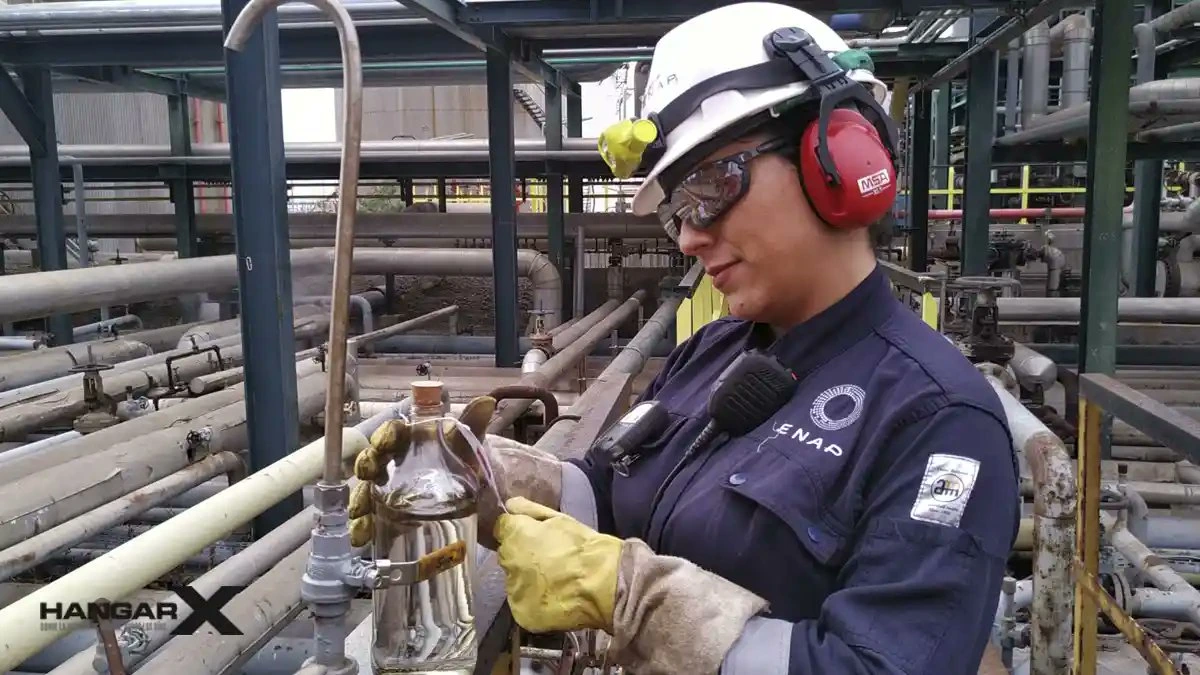
CONCÓN – Chile has taken its first major step towards domestic sustainable aviation fuel (SAF) production after state-owned energy company Empresa Nacional del Petróleo (Enap) successfully manufactured 300,000 litres of aviation fuel using recycled cooking oil. The experimental production took place at the Aconcagua Refinery in Concón, in the Valparaíso region, marking the country’s first successful SAF production.
The fuel, known locally as kerojet and comparable to conventional Jet A-1, was manufactured through a co-processing method that incorporates used cooking oil into existing refinery operations. According to Enap, the initial batch could supply between 75 and 100 flights between Santiago (SCL) and Concepción (CCP), demonstrating the potential of locally produced renewable aviation fuel.

Used Cooking Oil Processing Technology Advances
Enap produced the SAF by introducing used cooking oil (UCO), collected from food businesses and other sources, into existing refining units.
Rather than building a dedicated production facility, the company used its established infrastructure to incorporate renewable feedstock into the conventional fuel production process.
The resulting product underwent laboratory testing in the United States by SGS, an international inspection and testing company. The analysis confirmed that the fuel meets the international standards and technical specifications required for sustainable aviation fuel.
The achievement also builds on Enap’s previous experience with renewable fuels. In 2024, the Aconcagua Refinery processed approximately 350,000 litres of used cooking oil collected from restaurants and fast-food outlets to produce renewable diesel.
That earlier trial provided a technological foundation for the company’s latest aviation fuel experiment.
SAF Cuts Carbon Emissions Significantly
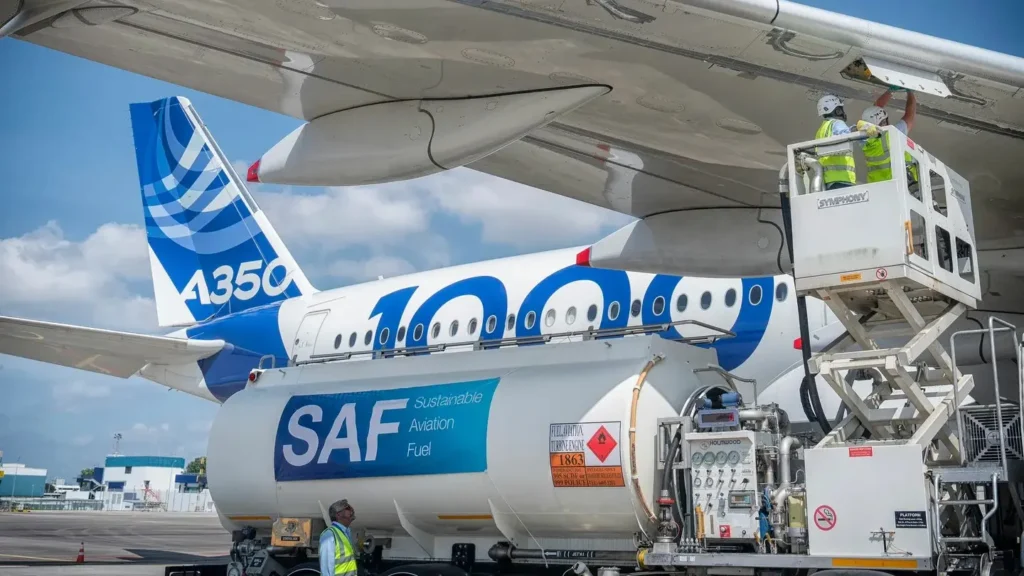
Enap estimates that its newly produced SAF can reduce carbon dioxide equivalent (CO2e) emissions by approximately 80% across its lifecycle compared with conventional aviation fuel.
The reduction accounts for emissions throughout the fuel’s lifecycle rather than only those generated during aircraft operations.
The fuel also offers an operational advantage because it is designed as a drop-in alternative. Airlines can use compatible SAF without modifying aircraft engines or airport infrastructure, allowing the aviation industry to incorporate lower-carbon fuel options through existing systems.
Chile’s progress comes as other countries in South America explore domestic SAF production. Brazil’s Petrobras began its first commercial deliveries of co-processed SAF in December 2025, supplying 3,000 cubic metres to aviation fuel distributors serving Rio de Janeiro’s Galeão International Airport.

Chile’s SAF Roadmap Sets Future Targets
Chile has outlined its longer-term ambitions through the SAF Roadmap 2050, developed under the Vuelo Limpio programme with support from the country’s aviation and energy authorities.
An International Civil Aviation Organization (ICAO) feasibility study identified the potential for Chile to produce approximately 1.8 million cubic metres of SAF annually by 2050.
However, Enap stressed that the latest 300,000-litre batch was experimental and does not represent the start of continuous commercial production.
Future development will depend on market conditions, regulatory frameworks, the availability of renewable feedstock and overall economic viability.
Enap chief executive Julio Friedmann described the achievement as an important technical step, building on the company’s renewable diesel production in January 2025, Aviaci Online reported.
He said the experience leaves the company better prepared to participate when Chile’s SAF market reaches a greater level of development.
Stay tuned with us. Further, follow us on social media for the latest updates.
Join us on Telegram Group for the Latest Aviation Updates. Subsequently, follow us on Google News
