

QUEBEC- Bombardier has signed a Memorandum of Understanding (MoU) with BAE Systems to explore collaboration on future combat air programs.
The agreement was announced on October 28, 2026, 3 months after Canada joined the Global Combat Air Program (GCAP) as an observer. On the same day, German Chancellor Friedrich Merz said in Tokyo (TYO) that Germany is weighing whether to join the program.
Bombardier Seeks Larger Defense Role With BAE Systems
British aerospace and defence company BAE Systems and Canadian aircraft manufacturer Bombardier have established a framework to explore industrial and technological cooperation in Canada’s future combat-air sector.
The October 28 agreement brings together BAE Systems’ experience in combat aircraft development, systems integration and defence manufacturing with Bombardier’s expertise in aircraft engineering, production and special-mission platforms.
Bombardier has an established business in business aviation and an expanding defence division that converts its aircraft platforms into specialised military and government aircraft.
The partnership could help the Canadian company expand its role beyond supplying aircraft platforms and supporting special-mission operations.
Under the MoU, the companies will explore several potential areas of cooperation, including:
- Aircraft and mission-system design.
- Systems integration and engineering.
- Digital engineering and digital thread technologies.
- Research and development.
- Advanced manufacturing and industrialisation.
- Workforce and supply-chain development.
- Long-term product support, maintenance and sustainment.
- Security and lifecycle management.
Both companies want to identify opportunities that can strengthen Canada’s domestic aerospace industry while supporting future defence requirements and international markets.
Stephen McCullough, Bombardier’s Executive Vice President of Engineering, Product Development and Bombardier Defense, highlighted the company’s experience in designing, manufacturing and supporting advanced aircraft.
He said the agreement creates a framework for combining the companies’ capabilities to develop expertise for major future defence programmes.
He also emphasised the potential to strengthen Canadian industrial capacity, create high-value employment and support long-term aerospace development.
Simon Barnes, Group Managing Director of BAE Systems’ Air Sector, highlighted the partnership’s potential contribution to Canada’s Defence Industrial Strategy.
He emphasised the importance of building industrial capabilities throughout an aircraft’s lifecycle, including early-stage design, digital development, systems integration, manufacturing and in-service support.
However, the MoU does not announce a specific aircraft development contract, financial commitment, production arrangement or confirmed industrial workshare. It establishes a framework for exploring possible cooperation rather than guaranteeing a particular defence project.
Canada Joins GCAP as an Observer
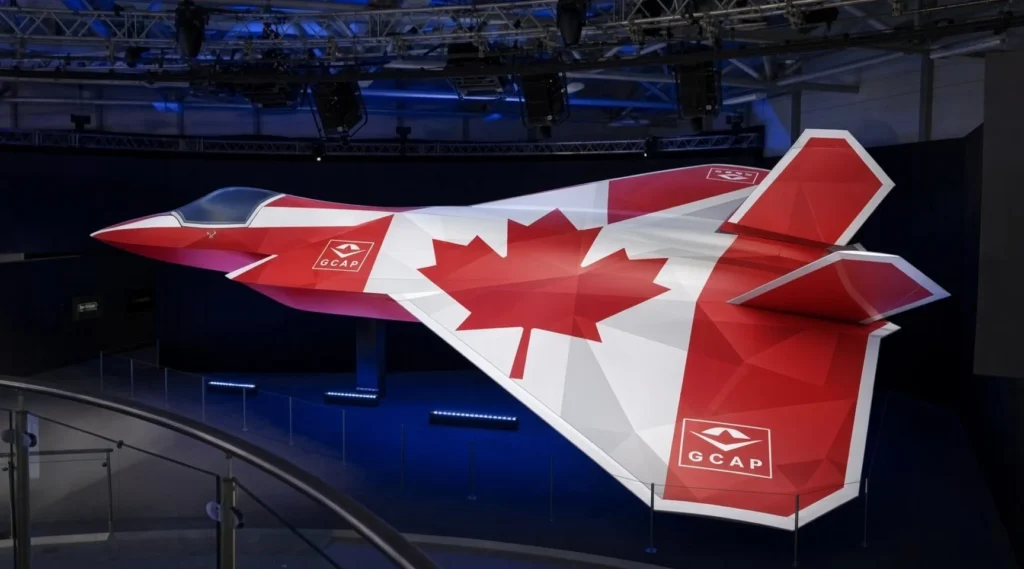
The agreement follows Canada’s decision to become the first observer nation in the Global Combat Air Programme.
On July 21, 2026, the United Kingdom, Italy and Japan formally welcomed Canada as an observer during a meeting in London attended by the defence ministers of all four countries.
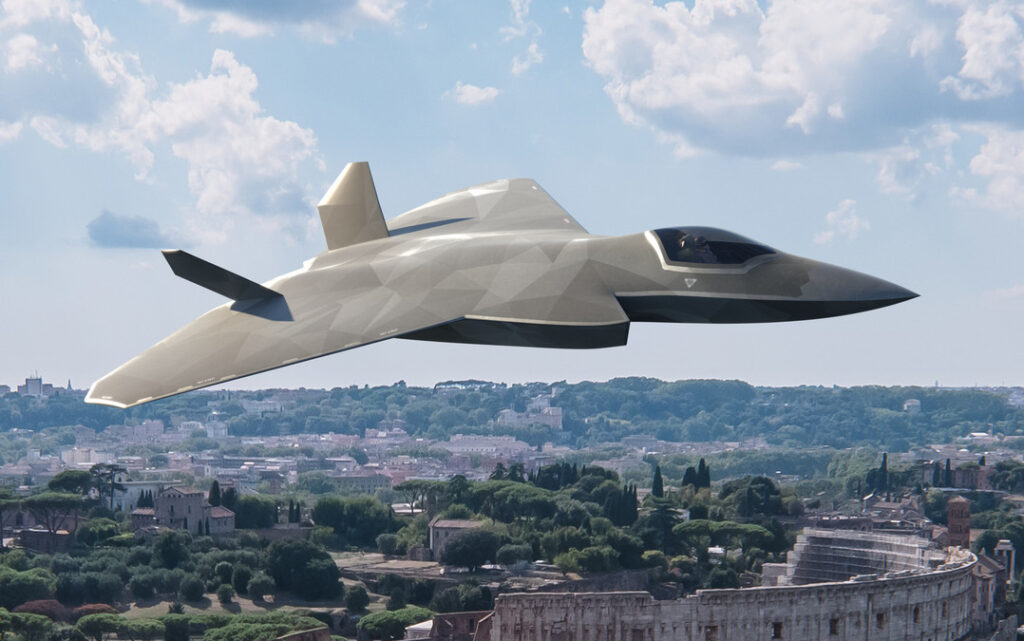
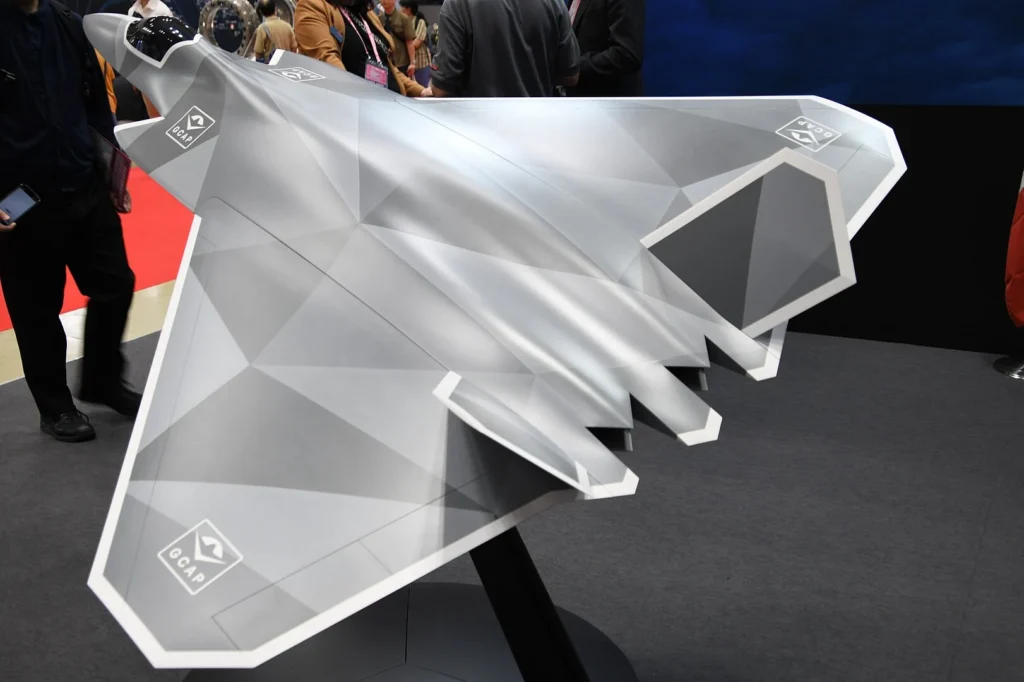
GCAP is a multinational programme established by the United Kingdom, Italy and Japan in 2022. Its primary objective is to develop a next-generation combat aircraft, commonly described as a sixth-generation fighter, with the aircraft expected to enter service in 2035.
The three founding countries are developing the aircraft to meet their future defence requirements while maintaining their technological and industrial capabilities.
Canada’s observer status provides structured access to information about the programme’s capabilities, governance, industrial framework, security requirements and long-term delivery plans.
The UK government described Canada’s participation as an opportunity to gain direct insight into GCAP, including industrial collaboration and future programme development. It also stated that the arrangement could pave the way for discussions about Canada’s future participation and contribution.
However, observer status does not give Canada the same position as the three founding countries.
Canada does not have a decision-making role in the programme, and its participation does not automatically establish a financial commitment, aircraft purchase or guaranteed industrial workshare.
The arrangement instead gives Ottawa an opportunity to assess the aircraft’s development, technologies and industrial requirements before deciding whether deeper participation would serve its defence interests.
It also allows Canadian officials and industry representatives to understand potential cooperation opportunities without immediately assuming the responsibilities of a full programme partner.

GCAP’s Industrial Structure Create Opportunities
Bombardier’s agreement with BAE Systems is significant because BAE is one of the principal industrial partners responsible for delivering GCAP.
The programme brings together three national industrial leaders:
- BAE Systems: The United Kingdom’s lead combat-air industrial partner.
- Leonardo: Italy’s principal industrial partner.
- Mitsubishi Heavy Industries: Japan’s lead combat-air industrial partner.
These companies serve as national lead systems integrators and provide the expertise, infrastructure and industrial capabilities required to develop the next-generation combat aircraft.
In June 2025, the 3 national industrial partners established Edgewing, an international joint venture responsible for the aircraft’s design and development. Edgewing was established by BAE Systems, Leonardo and Japan Aircraft Industrial Enhancement Co. Ltd.
The company will serve as the aircraft’s design authority throughout its operational lifetime, with responsibilities extending beyond initial development and production.
This structure gives the existing partners central responsibilities for the aircraft’s development, but the wider programme also depends on an industrial supply chain involving specialist suppliers, manufacturers and technology companies.
Companies outside the 3 national lead industrial groups could potentially pursue opportunities through commercial subcontracting arrangements and supplier agreements.
These opportunities could include components, engineering support, digital development, advanced manufacturing, systems integration and long-term maintenance.
However, such opportunities would depend on specific technical requirements, security clearances, procurement decisions and agreements with the relevant industrial partners.
This creates a possible route for Bombardier to participate in GCAP-related industrial work without Canada first becoming a full programme member.
The new MoU with BAE Systems could help Bombardier establish the commercial and technical relationships needed to explore these opportunities.
Nevertheless, neither company has confirmed that Bombardier will receive a GCAP contract or participate in the fighter’s core design and development.
Agreement Is Not Limited to GCAP Fighter
An important detail in the companies’ announcements is their use of the phrase “future combat air programmes” in the plural.
Neither BAE Systems nor Bombardier has explicitly restricted the MoU to GCAP or confirmed that the agreement represents Canada’s industrial entry into the sixth-generation fighter programme.
The wording leaves room for cooperation across several future combat-air initiatives, including autonomous aircraft, uncrewed systems and other advanced defence technologies.
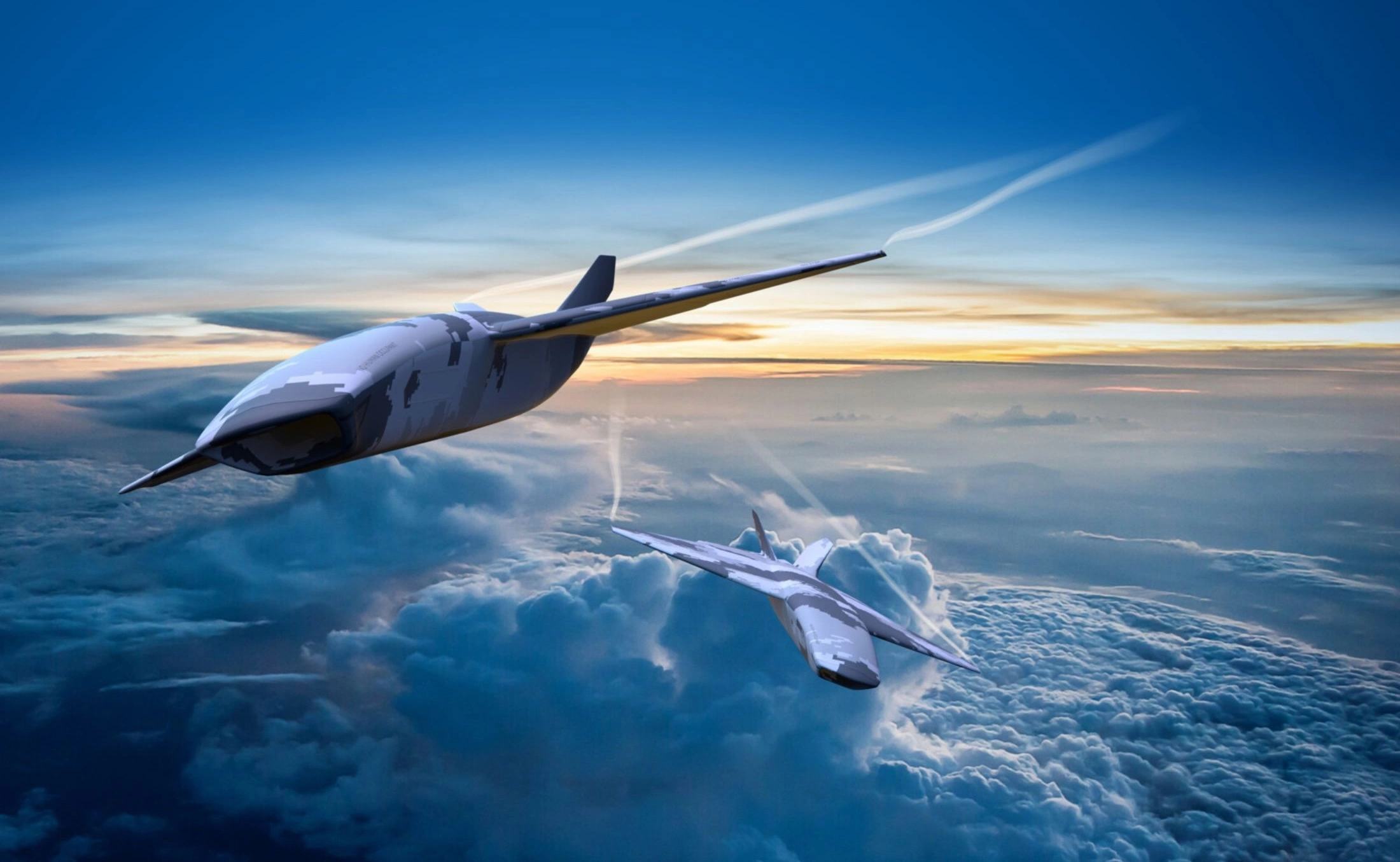
One potential area of interest is Brontanax, an autonomous Collaborative Combat Aircraft (CCA) developed by BAE Systems through its FalconWorks division.
BAE Systems unveiled Brontanax at the Farnborough International Airshow in July 2026. The aircraft is designed to operate alongside existing and future crewed combat aircraft, providing additional operational capabilities while reducing the risks faced by human pilots.
Brontanax is intended to support 2 principal mission areas:
- Electronic warfare: The aircraft is designed to support electronic warfare operations against airborne and ground-based threats.
- Precision strike: Its intended capabilities include precision attacks against targets in the air and on the ground.
The uncrewed aircraft uses an open and modular architecture to support changes in its systems and mission capabilities as operational requirements evolve.
It is also designed around manned-unmanned teaming (MUMT), in which a crewed aircraft or a remote mission commander directs uncrewed platforms during operations.
BAE Systems has stated that a prototype is expected to fly in 2027. The company is preparing the aircraft for ground-based testing before flight testing begins.
Brontanax could therefore represent another possible area of technological interest for a future relationship between Bombardier and BAE Systems.
However, neither company has identified the aircraft as a specific workstream under the October 28 MoU. Any involvement by Bombardier would require a separate commercial and technical arrangement.

Bombardier’s GlobalEye Opportunity
The BAE Systems partnership is not the only development that could expand Bombardier’s involvement in Canada’s defence industry.
The company already supplies aircraft platforms for specialised military applications. Its Global 6500 business jet, for example, provides the foundation for Saab’s GlobalEye Airborne Early Warning and Control (AEW&C) aircraft.
GlobalEye combines the aircraft platform with advanced radar, passive sensors and mission systems to detect, track and identify potential threats across multiple domains.
The system is designed to provide military commanders with real-time information and improve situational awareness over large geographical areas.
On May 27, 2026, Canada identified Saab as its preferred supplier for a future AEW&C capability for the Royal Canadian Air Force (RCAF).
On September 25, 2026, Saab signed a non-binding term-sheet agreement with Canada’s Defence Investment Agency. The agreement established the framework for detailed negotiations towards the potential acquisition of six GlobalEye aircraft, including associated systems, training and support.
The arrangement is not a final procurement contract. It establishes the basis for further negotiations covering the aircraft configuration, industrial participation, capability development and programme execution.
The Canadian government has also identified potential opportunities for Saab and Bombardier to cooperate in support of domestic production and the country’s defence industrial objectives.
Such cooperation could create skilled employment, expand local manufacturing capabilities and allow Canadian suppliers to participate in international aerospace supply chains.
The proposed arrangement also creates the possibility of Canadian involvement in the production and support of GlobalEye aircraft for export markets.
However, the exact manufacturing responsibilities and any potential licensed-production arrangement involving Bombardier have not been confirmed as a completed agreement.
The distinction is important because the GlobalEye initiative and the new BAE Systems MoU are separate developments. Both could nevertheless contribute to Bombardier’s broader expansion into defence aerospace.

Germany Considers Joining Sixth-Generation GCAP
While Canada has established an observer relationship with GCAP, Germany is exploring a potentially deeper role in the sixth-generation fighter programme.
On October 28, 2026, German Chancellor Friedrich Merz raised the possibility of Germany joining GCAP during his visit to Tokyo, where he met Japanese Prime Minister Sanae Takaichi.
Merz said Germany was examining its available options and that the German and Japanese defence ministers would hold discussions about possible participation.
Takaichi did not specifically mention GCAP during the joint press conference. However, she expressed support for defence industrial cooperation in areas where Japanese and German capabilities complement each other.
The discussions are particularly important because Germany recently abandoned the core fighter-aircraft development component of the Future Combat Air System (FCAS), which it had been pursuing with France and Spain.
The FCAS programme was launched in 2017 to develop a next-generation European combat-air system. Its planned capabilities included a new crewed fighter, uncrewed aircraft, advanced sensors and a connected combat network.
However, the programme faced prolonged disagreements between the industrial partners.
Airbus represented German and Spanish industrial interests, while Dassault Aviation represented France. The companies struggled to resolve disagreements involving project leadership, aircraft design, intellectual property and the division of industrial responsibilities.
On June 8, 2026, Germany and France agreed to abandon the core joint fighter development effort after failing to resolve the industrial disputes.
The decision did not necessarily end every part of FCAS. Other elements, including the wider combat-cloud and connected-system ambitions, could continue through a separate industrial structure.
Germany has since examined alternative approaches to developing its future combat-air capabilities.
Two of the main possibilities are joining the existing UK-led GCAP programme or developing a new partnership with Sweden and Spain.

German Defence Prefer Partnership With Sweden and Spain
Germany’s interest in GCAP does not mean that Berlin has decided to join the programme.
An internal German Defence Ministry assessment reportedly recommended establishing a new fighter-aircraft partnership with Sweden and Spain instead of joining the existing UK-led programme.
The assessment, reported by Politico in October 2026, described a new German-Swedish-Spanish partnership as the more advantageous and promising option.
One of its major concerns involved Germany’s ability to secure meaningful industrial influence within GCAP.
The assessment reportedly referred to previous experiences with BAE Systems during the Eurofighter programme, which involved the United Kingdom, Germany, Spain and Italy.
It raised concerns about British industrial dominance and alleged that BAE Systems had prioritised export interests over the development interests of German and Italian partners.
According to the reported assessment, this history could make another partnership involving significant British industrial control difficult to reconcile with Germany’s expectations of an equal industrial relationship.
The assessment also highlighted differences in operational requirements.
GCAP is widely viewed as having a strong maritime operational emphasis, reflecting the requirements of countries such as the United Kingdom and Japan.
Germany, by contrast, needs a future aircraft suited to continental European defence requirements and operations within its regional security environment.
This difference could affect aircraft design priorities, operational specifications and industrial responsibilities.
A partnership with Sweden and Spain might offer Germany greater influence over the aircraft’s architecture and development because the countries would begin negotiations from a more comparable industrial position.
However, the internal assessment does not represent a final German government decision. Defence Minister Boris Pistorius has not formally endorsed its recommendation.
The Eurasian Times has previously examined the industrial difficulties associated with Germany entering GCAP at an advanced stage, particularly the potential disagreements over technology sharing, industrial influence and programme timelines.

Airbus Could Be an Important Factor in GCAP’s Expansion
Germany’s possible participation also raises questions about Airbus’s future relationship with the existing GCAP industrial partners.
Airbus represents a major part of Germany’s aerospace and defence industry and is interested in maintaining a substantial role in the development of Europe’s next-generation combat aircraft.
Following the breakdown of the FCAS fighter arrangement, Airbus has continued examining alternative industrial partnerships with European companies and governments.
In October 2026, reports emerged that Airbus executives were expected to meet BAE Systems representatives to discuss potential cooperation involving GCAP.
The discussions reportedly reflect Airbus’s interest in understanding whether it could secure a meaningful role in the programme.
However, cooperation would require agreement on industrial responsibilities, production sharing, technology access and intellectual property.
BAE Systems already occupies a central position within the existing GCAP industrial structure. Leonardo and Mitsubishi Heavy Industries also have established responsibilities under the three-country partnership.
Bringing Airbus into the programme could therefore require adjustments to existing industrial arrangements.
The possibility is not necessarily limited to the crewed fighter. Wider cooperation could involve digital combat systems, autonomous aircraft, uncrewed platforms and other technologies that support future air operations.
Nevertheless, no formal agreement has confirmed Airbus’s participation in GCAP, and Germany continues to evaluate its alternatives.
Stay tuned with us. Further, follow us on social media for the latest updates.
Join us on Telegram Group for the Latest Aviation Updates. Subsequently, follow us on Google News
