


CHICAGO- United Airlines (UA) CEO Scott Kirby says people overstate how much airlines earn from credit cards because they forget that award travel costs money. He also told airline CEOs to cancel flights they defend as “strategic,” including flights tied to card sales.
The argument comes as United pressures American Airlines (AA) at Chicago O’Hare International Airport (ORD), a major credit card spend market. It also sits alongside Kirby’s earlier statements that United’s network growth helps the airline win card customers.
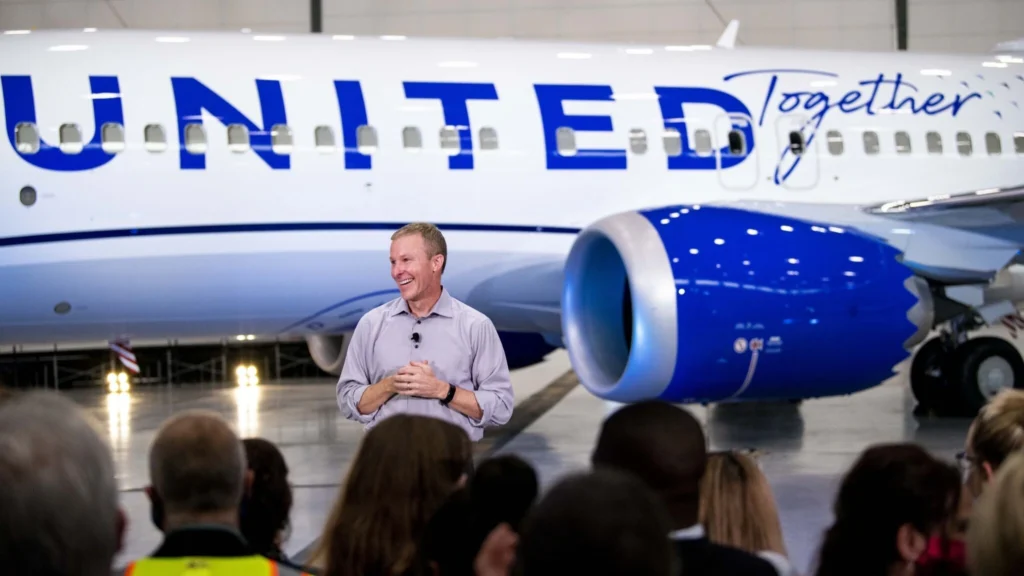
Kirby Frames Credit Card Profits and Strategic Flying
United CEO Scott Kirby made the comments in a Cheeky Pint interview with John Collison and Ben Thompson. His advice to a new airline CEO is to start with the route network. When someone calls a money-losing flight strategic, he says:
If you hear the word strategic flying, you don’t need to know what hub it is, you don’t need to know what route it is, you should cancel it.
United’s own buildup at O’Hare, which the FAA blocked, was strategic flying meant to shift gate allocation away from American. When asked what excuses executives offer for such flying, Kirby named corporate customers and credit cards: “If we’re not big in this city, then we just won’t get the credit card”
He then argued that people overstate the card business:
They can see the amount of revenue that we get, and they say, “Oh, almost all your net profit is coming from credit cards.” Well, yeah, but there’s a cost. We carry over 50,000 people a day. 50,000 people today will fly free on United Airlines by using their credit card miles. Nobody counts the cost.


What United Discloses About MileagePlus
Kirby added, “All that we disclose is the revenue.” United’s own disclosures show more than that. When airlines borrowed against their frequent flyer programs during the pandemic, investors got a much closer look at the businesses meant to repay the debt.
United’s June 15, 2020 MileagePlus investor presentation reported more than 100 million members and about $5.3 billion in cash flow from miles sales in 2019, roughly 12% of United’s revenue.
Third parties, including credit card spending, accounted for 71% of that cash flow. United’s own purchases of miles accounted for the other 29%.
The same presentation showed costs. The MileagePlus income statement listed revenue, net of redemptions, of $1.94 billion for 2019, against $110 million in operating expenses before depreciation and amortization.
That left $1.8 billion in EBITDA, a 34% margin on cash flow from sales and about 26% of United’s adjusted EBITDAR. Net cash flow from operations was about $2.3 billion, equal to about 44% of cash flow from sales.
The presentation also showed how redemption costs work. In its illustrative example, MileagePlus buys an award seat from United at $0.01 per mile, or $150 for a 15,000-mile award.
The gap between gross revenue and profit still matters. Some people may treat MileagePlus revenue as profit, while an award passenger can displace someone who would have paid cash.
Revenue recognized from award redemptions may also not capture every internal cost. Even so, “Nobody counts the cost” does not hold, because United discloses those costs.
The rest of the article stays as published in my last version, including the View from the Wing credit on Parker’s allocation method. The figures above are all from 2019 and the June 2020 deck, so the section shows that United has disclosed these costs, not what MileagePlus earns today.
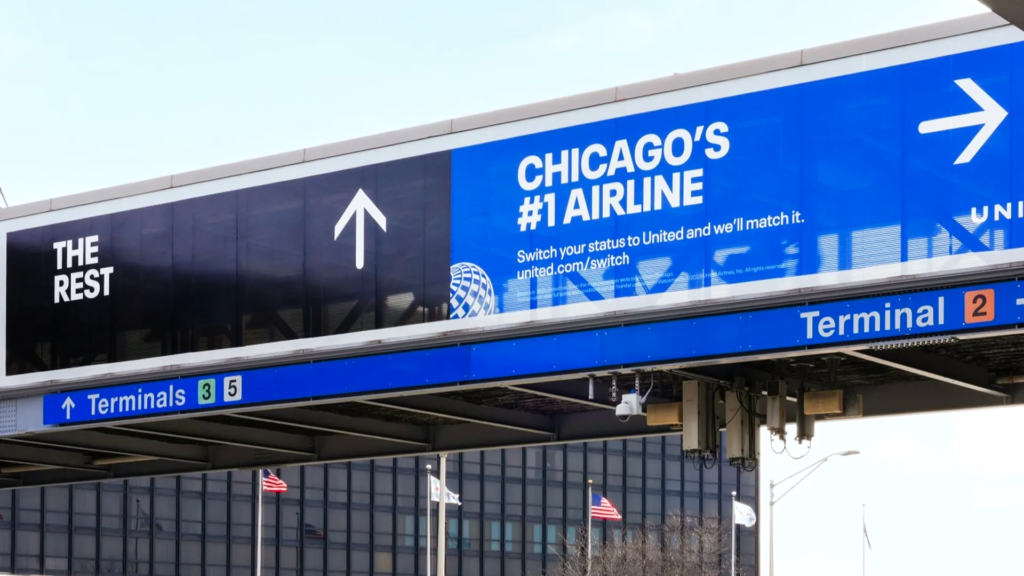
Kirby’s Earlier Case for Network Growth
Kirby has made the network argument himself. In October 2017, he explained that rebuilding United’s hubs and improving connections would help sell credit cards.
A more useful schedule for someone in a smaller city makes that person more likely to fly United, join MileagePlus, and get the card. Without that network, the card is less attractive.
He repeated the point in January 2018, arguing that growth in a market would bring more card signups and more money from Chase. That argument drew criticism for treating the relationship as too automatic.
Customers can choose bank points or cash back, and the value of the miles matters. Even so, an airline’s relevance to a customer’s travel affects its ability to sell that customer a card.
How Airlines Assign Card Revenue to Routes
View from the Wing previously covered how former American Airlines CEO Doug Parker described allocating card revenue to routes, which is based on where customers redeem their miles. That method can distort route results.
A flight to Hawaii should be paid for seats filled by passengers redeeming miles. But consider a Chicago customer who gets an American card because American offers the flights needed for work all year.
The customer puts household spending on that card, then redeems the miles for Hawaii. The Hawaii flight delivers the award, while the Chicago schedule acquired the cardholder and generated the spending.
Assigning all bank revenue to the redemption makes Hawaii look better and Chicago look worse.
Cutting Chicago flights has consequences. The customer may move business travel, and eventually card spending, to United. The cut flights looked weaker only because they did not receive the card revenue they helped create. The traveler may also keep miles for a while and still redeem the balance on Hawaii flights.
Kirby’s $1.5 Billion Chicago Loss Estimate
In the interview, Kirby estimated that American will lose roughly $1.5 billion in Chicago this year. A fully allocated loss that includes corporate overhead is not the amount American would save by leaving the market.
American Chief Financial Officer Devon May explained in March that Chicago covers its direct operating costs, aircraft ownership, and hub-specific expenses. The loss appears only after overhead is allocated.
Shrinking Chicago does not remove those corporate costs, since they are reassigned to the remaining hubs. A plane could earn more elsewhere, so an opportunity cost decision remains.
American would also give up card business by becoming less useful to Chicago customers, along with connecting traffic and corporate business elsewhere in its network.
American already became less relevant in New York and Los Angeles. It has a chance to rebuild in Los Angeles as gates return after construction over the next couple of years.
Starlink and Same Loss Leader Logic
Kirby’s Starlink strategy also depends on looking beyond the revenue from a single transaction. United is making Starlink free for MileagePlus members.
The wifi gives travelers a reason to enroll, gives United a customer it can market to, and creates a prospect for Chase cards. Counting only wifi access revenue would miss the business United is trying to build.
Kirby describes using Starlink to get passengers to try United, then keeping them through the rest of the airline’s product and technology. He names the card explicitly:
We’re going to get customers to switch their loyalty to United. Get our credit card, switch their loyalty to United.
Why Rivals Are Chasing Card Revenue
Credit cards generate significant revenue for major US airlines, and that revenue carries high margins.
Downplaying it may discourage competitors from chasing the same money by competing against United.
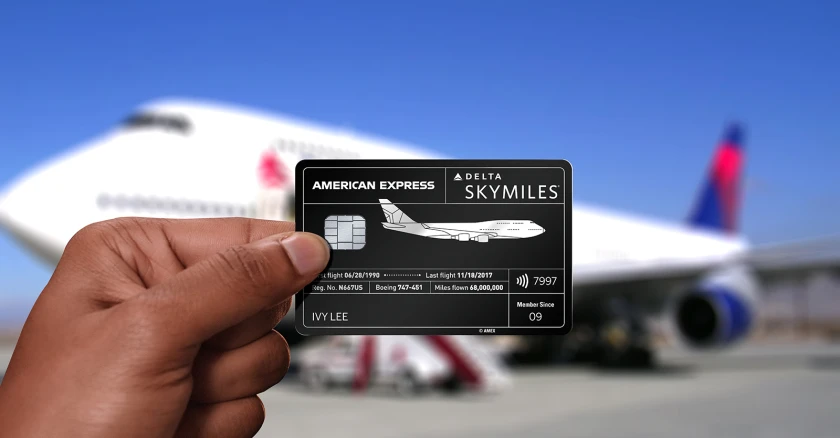
Delta Air Lines has said a major reason for building up flying in Austin is the market’s potential for its American Express card. American has ambitions to grow its Citi relationship to $10 billion.
Stay tuned with us. Further, follow us on social media for the latest updates.
Join us on Telegram Group for the Latest Aviation Updates. Subsequently, follow us on Google News
