

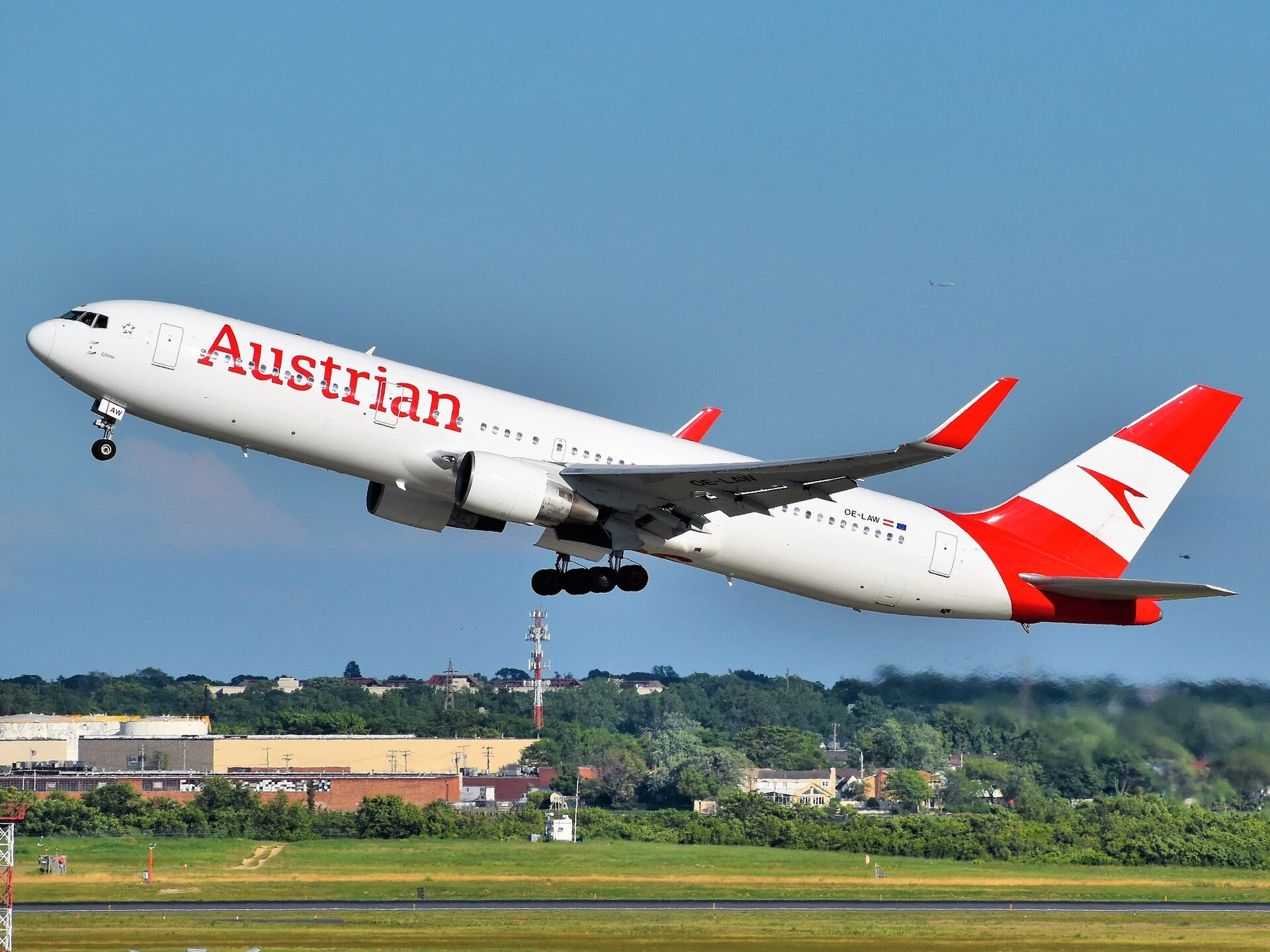
VIENNA- Austrian Airlines (OS) will mark the end of its 38-year Boeing 767 history with a special “Bussi & Baba” farewell flight from Vienna (VIE) on December 1, 2026. The event will celebrate the aircraft’s long service with the Austrian flag carrier and its predecessor, Lauda Air.
The sold-out farewell flight, operating as OS1067, will take passengers on a special round trip over Austria. Captain Michael Umgeher, Austrian Airlines’ long-haul fleet manager, is scheduled to command the aircraft as the airline prepares to retire its remaining Boeing 767-300ERs.
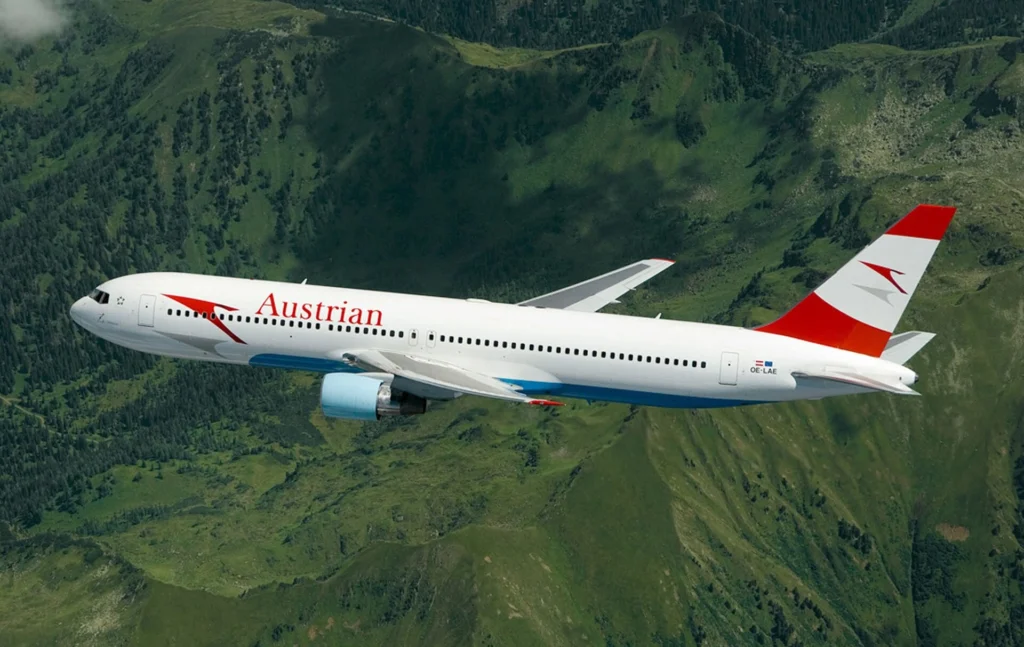
Austrian Airlines Prepares a Special Boeing 767 Farewell Flight
“Bussi & Baba” is a warm and informal Austrian farewell expression, particularly popular in Vienna. The airline has chosen the phrase to mark the departure of an aircraft that has played a major role in Austrian aviation for nearly four decades.
The special flight will operate on December 1 under flight number OS1067, departing from Vienna Airport at approximately 4:00 p.m. and returning around 6:00 p.m. The two-hour experience will take place over Austria rather than serving a conventional commercial destination.
According to Austrian Airlines, the event will include a specially designed onboard service and several activities dedicated to the Boeing 767. The airline has planned a maximum capacity of 211 passengers, with tickets originally advertised from €767 per person.
The farewell flight has attracted considerable interest from aviation enthusiasts, former employees, pilots and technicians. The event has sold out, reflecting the significance of the Boeing 767’s retirement from the Austrian fleet, AeroTelegraph reported.
Captain Michael Umgeher’s 23-Year Boeing 767 Journey
Captain Michael Umgeher has spent 23 years flying the Boeing 767, first as a co-pilot at Lauda Air and later as a captain and instructor at Austrian Airlines.
He has accumulated approximately 14,000 flight hours on the Boeing 767 during his career, contributing to his extensive experience with the aircraft. His total flying experience stands at approximately 18,000 hours.
Umgeher returned to Austria in March 1997 after spending two years in the United States, where he completed his pilot training and worked as a flight instructor. He joined Lauda Air in 1999, initially flying the Bombardier Canadair Regional Jet before moving to the Boeing 767.
Between 1999 and 2001, he worked as a first officer before moving to short-haul captain duties. He returned to the Boeing 767 flight deck as a captain at the end of 2003.
His responsibilities expanded over the following years. In 2016, he became a Boeing 767 flight instructor. Shortly before the COVID-19 pandemic, he took on the role of 767 Fleet Captain before becoming chief flight instructor. In 2025, he assumed responsibility for Austrian Airlines’ entire long-haul fleet.
The First Boeing 767 Retirement Was Emotional
Umgeher has already experienced the emotional side of the aircraft’s retirement process.
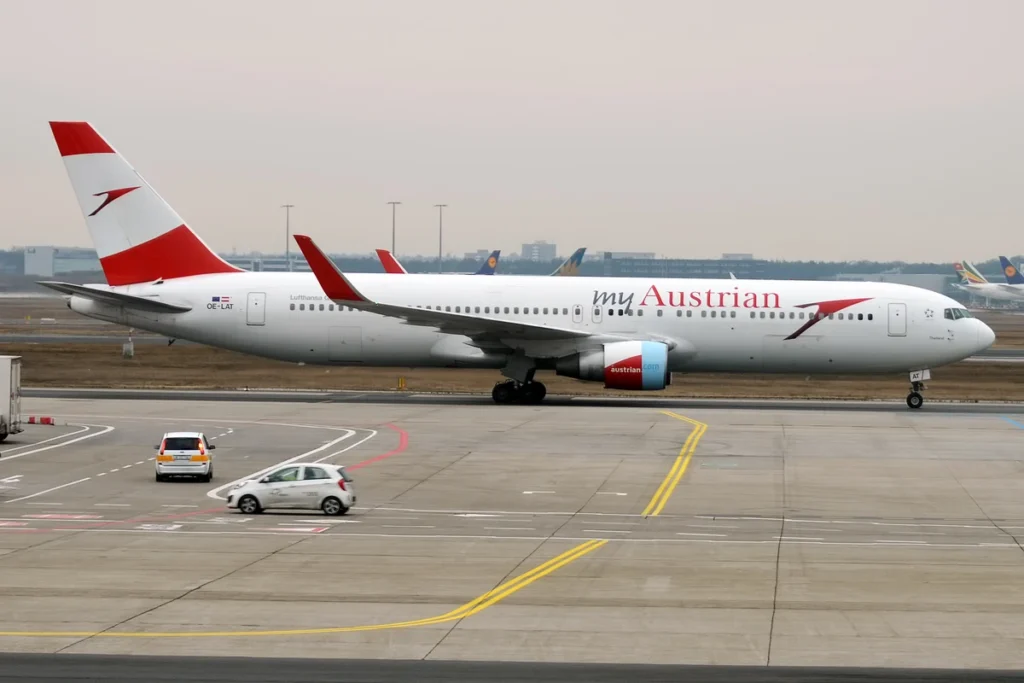
In 2021, he piloted the first of the final group of six Boeing 767s to leave Austrian Airlines for storage and aircraft dismantling in the United States. The aircraft was registered OE-LAT.
He recalled that the departure affected the flight crew despite the aircraft type still having several years of service ahead. He also described the difficulty of sending an aircraft to the desert when its technical condition and cabin remained in good shape.
For Umgeher, the final retirement represents the end of 38 years of Austrian aviation history. The aircraft also carries personal memories for pilots, cabin crew members, engineers and passengers who experienced its operation.
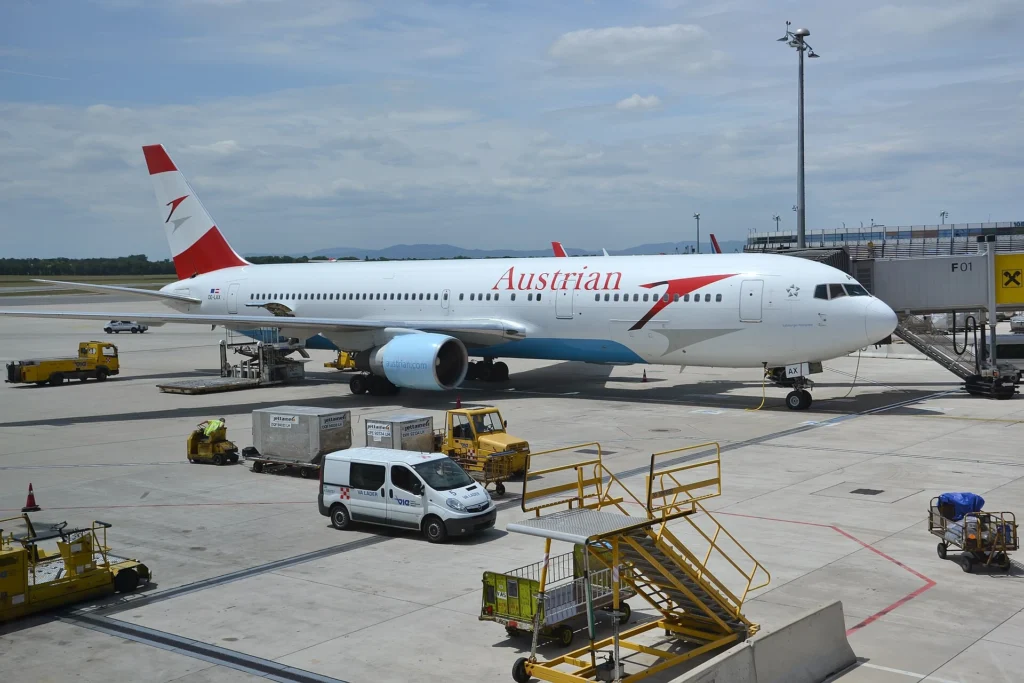
Boeing 767 Connected Austria With Long-Haul Destinations
During his time at Lauda Air and Austrian Airlines, Umgeher operated the Boeing 767 on a wide range of international routes.
The aircraft served destinations across Australia, Hong Kong and Bangkok. It also operated flights to several Caribbean islands and the Seychelles, often involving multi-day stopovers for flight crews.
Other notable destinations included Kathmandu, where the aircraft operated approaches that demanded careful handling from pilots. Lauda Air also used the Boeing 767 for flights to Brazil via Zurich on behalf of a Swiss travel company.
The aircraft’s operation was not limited to long-haul international services. Lauda Air also deployed the Boeing 767 on charter flights from Vienna and Innsbruck to destinations in the Canary Islands, Egypt and Greece.
Umgeher said the variety of routes gave young pilots an opportunity to gain experience across different operating environments and destinations.
A More Demanding Aircraft to Fly
The Boeing 767 offered a different flying experience compared with modern long-haul aircraft.
According to Umgeher, the aircraft provided considerably less computer assistance in its flight controls. Its hydraulic control surfaces and manual trimming requirements placed greater responsibility on pilots.
The aircraft required more manual flying and concentration, particularly during demanding phases of flight. However, its relatively straightforward systems also made it easier for experienced pilots to understand its operating characteristics.
He considered the Boeing 767 one of the more demanding aircraft in Austrian Airlines’ current and recent long-haul fleet, despite its logical cockpit design.

Why Austrian Airlines Chose Boeing Over Airbus
Austrian Airlines’ Boeing 767 operation became more important after its acquisition of Lauda Air.
The two airlines had different long-haul fleets. Austrian Airlines operated Airbus A330 and A340 aircraft, while Lauda Air brought Boeing 767 and 777 aircraft into the combined operation.
When Austrian Airlines considered standardising its long-haul fleet, the company ultimately favoured Boeing aircraft.
Umgeher explained that the Boeing 767 offered a reliable platform with an efficient operating range. Its size also made it suitable for developing new long-haul routes without introducing the capacity of a larger aircraft.
The Airbus A340, meanwhile, had four engines and higher fuel consumption. This made the aircraft less attractive from an operating-cost perspective.
The Boeing 767 subsequently received additional efficiency improvements. Around 2012, Austrian Airlines equipped the aircraft with fuel-saving winglets, which reduced fuel consumption by almost five per cent.
However, the improvements could not indefinitely extend the aircraft’s commercial lifespan. By 2026, the remaining Boeing 767s had reached an average age of approximately 25 years.
Umgeher explained that keeping the aircraft in service would require substantial maintenance investment. The airline therefore decided that continued operation was no longer economically viable.

Final Boeing 767 Aircraft to Leave for Arizona
Austrian Airlines has sold its final three Boeing 767-300ER aircraft to US-based Cobra Aviation Services LLC for parts recovery. The aircraft involved are registered OE-LAE, OE-LAY and OE-LAZ.
The first aircraft, OE-LAZ, completed its final commercial passenger flight in September 2026 before being transferred to Arizona in October. The other two aircraft will complete their final passenger operations before leaving Austria.
The remaining Boeing 767s, OE-LAE and OE-LAY, are scheduled to alternate on Austrian Airlines’ Vienna-Washington DC route until December 1.
OE-LAY is expected to operate the final scheduled passenger service and the special farewell flight. The airline’s long-haul fleet manager is also scheduled to command the final fan flight.
The targeted dates for transferring the remaining aircraft to Arizona are December 8 and December 15. Cobra Aviation Services will dismantle the aircraft and recover their usable components rather than continue operating them as passenger jets.
The sale marks the final stage of Austrian Airlines’ Boeing 767 retirement programme after nine aircraft served the airline and its predecessor over 38 years.
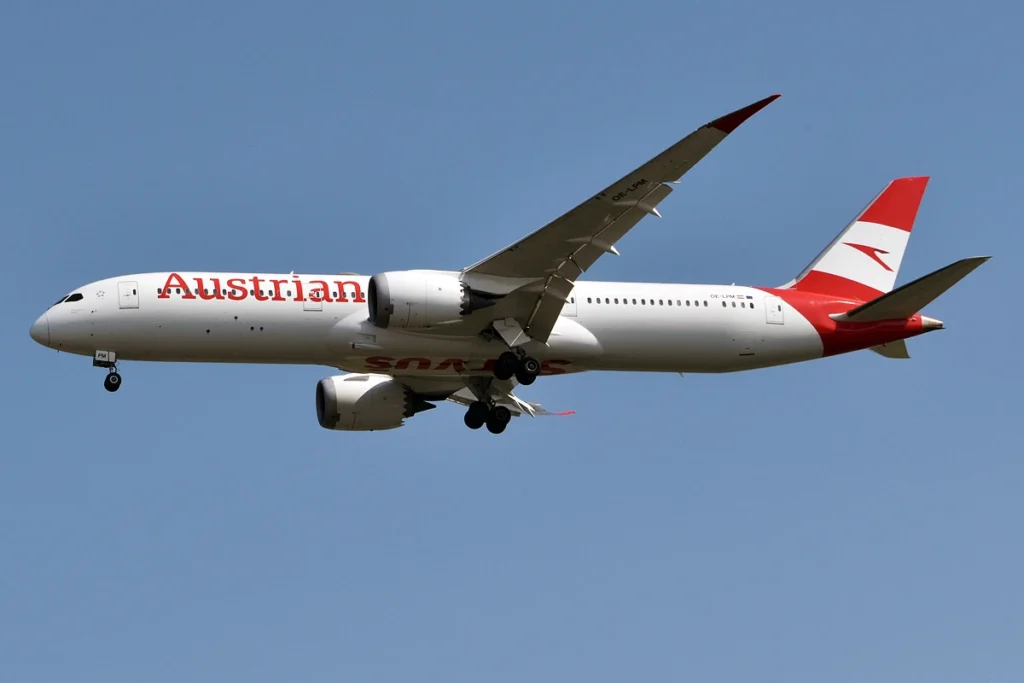
Austrian Airlines Transitions to Boeing 787-9
The retirement of the Boeing 767 forms part of Austrian Airlines’ wider long-haul fleet modernisation programme.
The airline is introducing the Boeing 787-9 Dreamliner to replace its older widebody aircraft. It expects to have seven Boeing 787s in service by summer 2027, following the planned arrival of its fifth aircraft later in 2026.
Austrian Airlines also operates six Boeing 777-200ER aircraft. These are expected to be replaced by Boeing 787-9s by 2029, further standardising the airline’s long-haul fleet.
The transition has also affected the airline’s Boeing 767 cockpit crews. As pilots complete conversion training for the Boeing 787, the number of pilots qualified on the older aircraft continues to decline.
Umgeher said approximately 30 pilots remained qualified on the Boeing 767 at the time of his October 2026 interview. The number was expected to fall to around 13 by the end of that month.
The fleet manager will also begin his own Boeing 787-9 conversion training on January 11, 2027. His training programme will include approximately four weeks of theoretical instruction, four weeks of flight simulator training at Vienna Airport and another four to six weeks of supervised flying.
Although he is looking forward to operating the Dreamliner, the transition will mark a significant change after more than two decades on the Boeing 767.
The December 1 farewell flight will therefore close an important chapter not only for Austrian Airlines but also for the pilots and technicians who have worked with the aircraft throughout its Austrian history.
Stay tuned with us. Further, follow us on social media for the latest updates.
Join us on Telegram Group for the Latest Aviation Updates. Subsequently, follow us on Google News
