

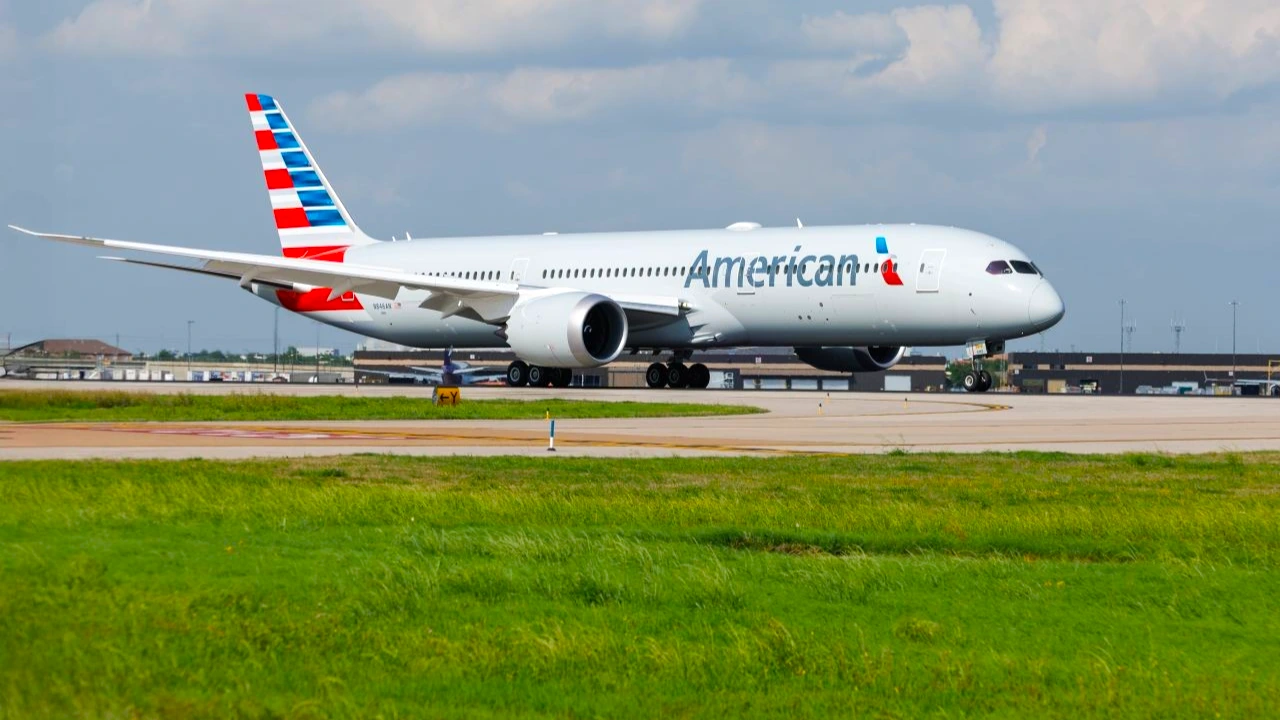
CHICAGO- An American Airlines (AA) Boeing 787 arriving from Barcelona experienced a tire blowout after landing at Chicago O’Hare International Airport (ORD), prompting a federal investigation into a reported brake problem. The aircraft, operating as Flight 41, had 234 passengers and 11 crew members on board when the incident occurred.
The aircraft completed its landing before the tire failure, and passengers subsequently left the plane and boarded buses to reach the terminal. A radio transmission captured by air traffic control indicated that the flight crew had identified a possible problem with the aircraft’s right brake and requested assistance reaching the gate.

American Airlines Reports Brake Problem
The crew’s radio communication could provide investigators with an important lead as they examine the sequence of events.
According to the transmission, a pilot reported that the right brake might be dragging and asked ground personnel to follow the aircraft to the gate.
The communication suggests that the crew was aware of a potential braking issue around the time of the landing. However, investigators will need to establish whether the reported brake condition directly caused the tire to fail and determine the precise sequence of events.
Passengers described a forceful impact as the aircraft touched down. One passenger, John Abbate, recalled hearing a loud bang and experiencing a rough landing before the captain informed those on board that tires had blown out.
The incident did not prevent the aircraft from completing its landing, but the tire damage required passengers to be transported to the terminal by bus rather than leaving the aircraft through the usual gate arrangement.
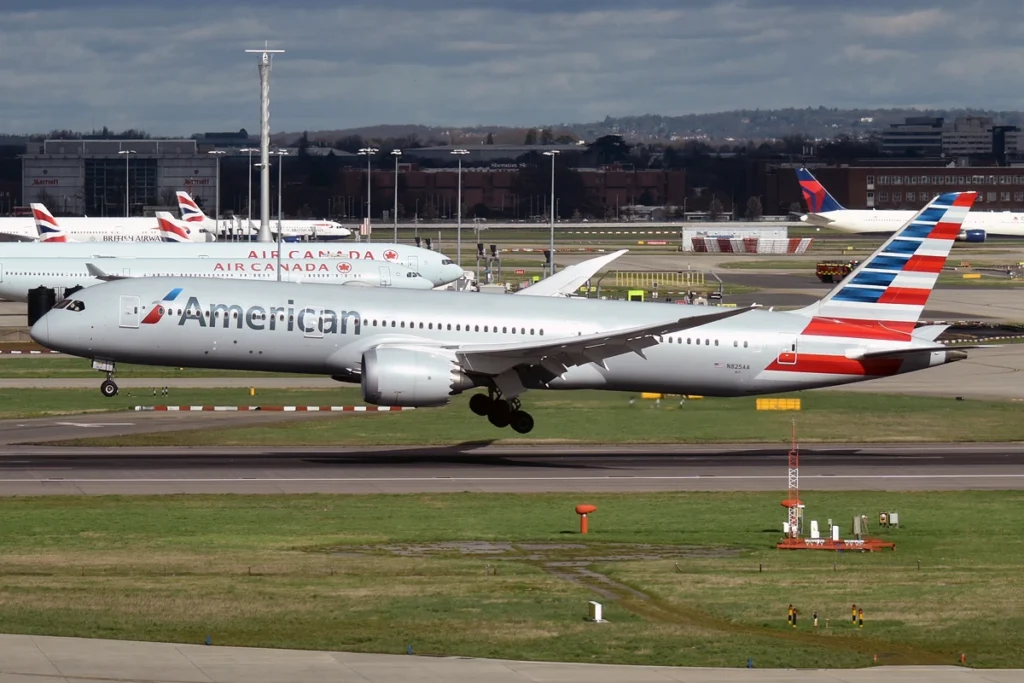
FAA Investigates AA’s Tire Blowout
Erik Baker, a professor of aviation and transportation at Lewis University, said a locked wheel or brake could cause a tire to blow out.
He explained that the crew’s reported brake indication and communication with air traffic control could help investigators understand what happened.
A dragging or locked brake can generate excessive heat and place additional stress on a tire, although the precise cause of the failure in this incident has not been established.
Investigators will need to examine the aircraft’s braking system, damaged tire, and relevant operational records before drawing conclusions.
American Airlines confirmed that the aircraft had been removed from service for inspection. The inspection will help determine the extent of the damage and whether the reported brake issue contributed to the tire blowout.
The incident highlights the importance of examining both mechanical evidence and crew communications when investigating aircraft tire failures. A tire blowout after touchdown does not, by itself, establish that a landing was unsafe or that a particular component caused the failure.

A History of Tire Incidents at O’Hare
The latest incident follows several other tire-related events involving aircraft at O’Hare earlier in the year. On August 26, an American Airlines flight scheduled to depart for Charlotte experienced two blown tires while taxiing, delaying its departure.
Other tire-related incidents were reported on August 17, involving two aircraft, and on August 13. In August, the Chicago Department of Aviation said it was working with the FAA to determine the causes of the reported events, ABC Chicago reported.
Despite the number of incidents attracting attention, Baker noted that tire failures are not unusual in commercial aviation.
The high volume of aircraft movements at a major airport such as O’Hare means that tire-related problems can occur across a large number of landings and departures,
The FAA investigation into Flight 41 will establish the cause of the reported brake problem and subsequent tire blowout. Until investigators complete their work, the relationship between the brake indication and the tire damage remains unconfirmed.
Stay tuned with us. Further, follow us on social media for the latest updates.
Join us on Telegram Group for the Latest Aviation Updates. Subsequently, follow us on Google News
