


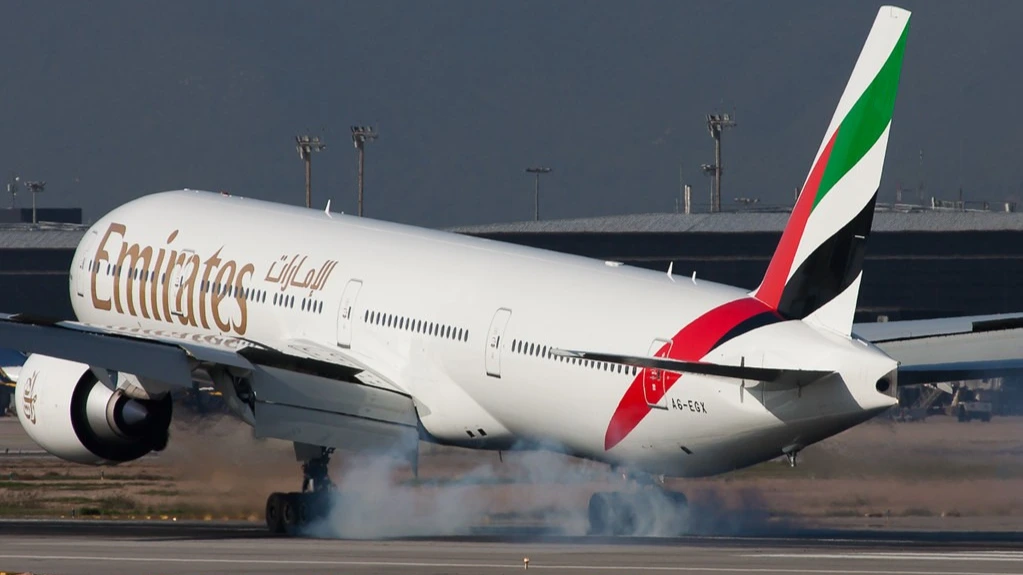
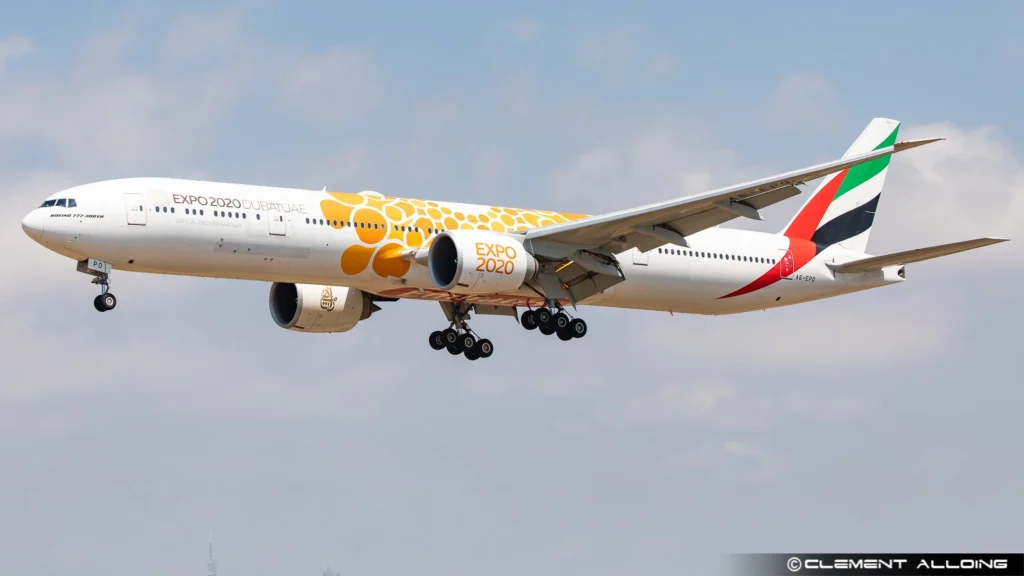
DUBAI- Emirates (EK) flight EK517 from Dubai International Airport (DXB) to Indira Gandhi International Airport (DEL) suffered a bird strike while arriving in Delhi on Saturday, October 17, 2026. The incident delayed the aircraft’s return service to Dubai while it underwent necessary repairs.
Emirates said hotel accommodation was being arranged for affected passengers. The return flight from Delhi (DEL) to Dubai (DXB), scheduled for Saturday afternoon, is now expected to depart at 7:00 am local time on Sunday, October 18.
Bird Strike Delays Emirates EK517 at Delhi Airport
Emirates confirmed that its flight EK517 encountered a bird strike while arriving at Delhi Airport on October 17. The aircraft required repairs before it could operate the return journey to Dubai.
The disruption affected passengers scheduled to travel from Delhi to Dubai on Saturday. The flight was originally scheduled to depart at 4:25 pm local time, but the bird strike forced the airline to delay the service while technical checks and repairs took place.
The revised departure time of 7:00 am on October 18 represents a delay of approximately 14 hours and 35 minutes from the original scheduled departure.
Emirates said it was arranging hotel accommodation for affected passengers during the extended wait. The arrangements were intended to assist travellers while the aircraft remained unavailable for the return journey.
In its statement, the airline said, “Hotel accommodation is being arranged for affected passengers. The flight is now expected to depart at 07:00 Delhi local time on 18 October.”
Emirates also apologised for the inconvenience and reiterated its commitment to passenger and crew safety.
“The safety of our passengers and crew is of the utmost importance and will not be compromised,” the airline added.
The airline did not publicly specify the full extent of the aircraft damage in the reported statement. Media coverage of the incident included visuals of ground personnel examining the aircraft at Delhi Airport. The aircraft must undergo the necessary maintenance checks before returning to service.
What Is a Bird Strike?
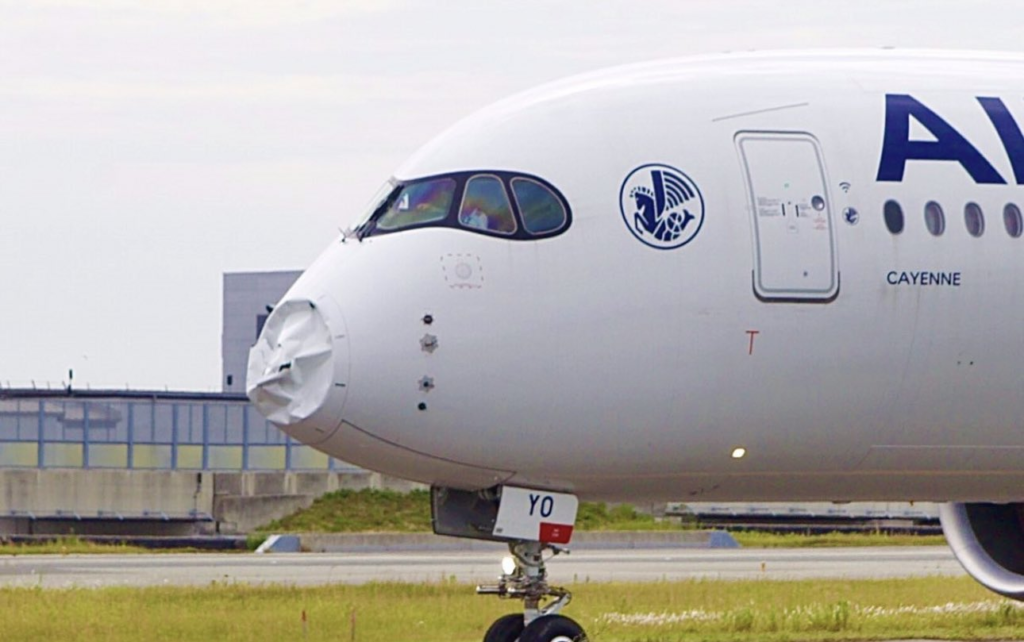
A bird strike occurs when a bird collides with an aircraft during takeoff, climb, descent, or landing. The impact can affect different parts of an aircraft, including the nose, windshield, wings, fuselage, and engines.
The severity depends on factors such as the bird’s size, the speed of the aircraft, and the location of the impact. Some strikes cause little damage, while others can require extensive inspections and repairs.
Birds entering an engine can damage fan blades and other internal components. In serious cases, the damage can reduce engine performance or force pilots to shut down an engine and return to the departure airport.
A bird strike does not automatically require an emergency landing. Flight crews assess the situation, follow established procedures, and determine whether the aircraft can continue safely or must return to an airport.
Bird activity around airports remains an operational concern, particularly during takeoff and landing, when aircraft operate at lower altitudes. Airports and airlines use wildlife-management measures and aircraft inspections to help reduce the associated risks.
Similar Incident
Iberia A321XLR Suffers Serious Bird Strike
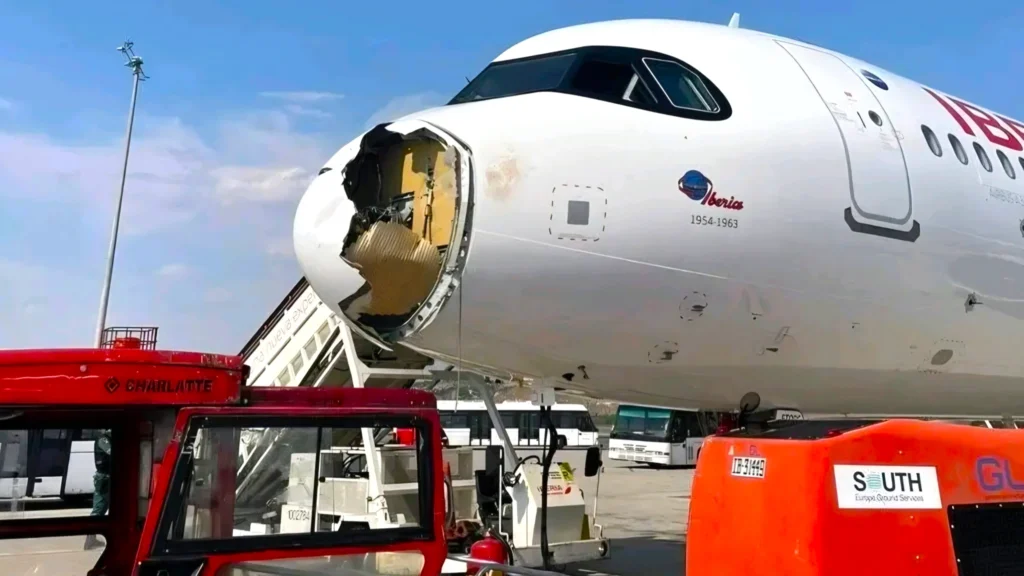
A more serious bird strike involving Iberia (IB) flight IB579 occurred shortly after takeoff from Adolfo Suárez Madrid-Barajas Airport (MAD) on August 3, 2025.
The Airbus A321XLR, registered as EC-OOJ, was operating a flight from Madrid to Paris-Orly Airport (ORY) when it struck a large vulture during its initial climb. The impact damaged the aircraft’s nose radome, while bird and aircraft debris entered the left engine.
According to preliminary information published by France’s Bureau of Enquiry and Analysis for Civil Aviation Safety (BEA), the collision occurred at an altitude of approximately 6,400 feet. The left engine suffered severe damage, and white smoke filled the aircraft’s interior.
The flight crew declared a MAYDAY emergency and returned to Madrid-Barajas Airport. The aircraft landed safely, and no occupants were reported injured.
The damaged radome was a prominent feature of the incident. This structure protects the aircraft’s weather radar, which helps flight crews detect weather systems and plan routes around hazardous conditions.
Unlike a strike that causes limited external damage, the Iberia incident affected both the forward section of the aircraft and its left engine. It demonstrated how a bird strike can develop into a serious aviation incident when debris enters an engine.
The case also highlights why flight crews and maintenance teams must assess the aircraft carefully after a collision. The extent of the damage, rather than the bird strike alone, determines the inspections and repairs required before an aircraft can safely return to service.
Delta Air Lines A320 Lands Safely After Bird Strike
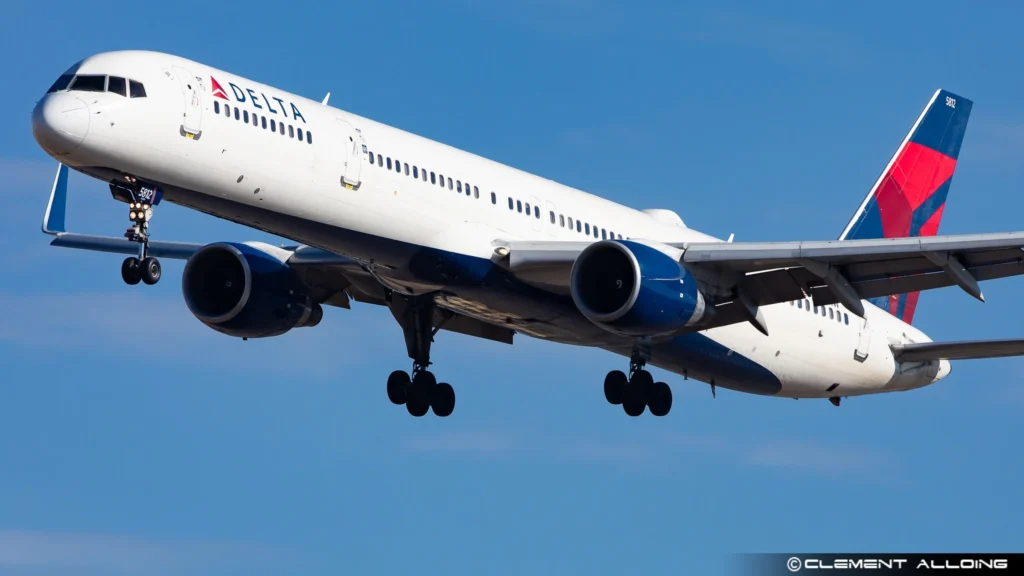
Another incident involved Delta Air Lines (DL) flight DL1279 from Tampa International Airport (TPA) to Raleigh-Durham International Airport (RDU) on January 29, 2025.
The flight was operated by an Airbus A320 registered as N327NW and powered by CFM56-5A engines. Flight-tracking data cited in initial reports showed that the aircraft departed Tampa at 8:45 pm UTC. The crew reported a bird strike during the approach to Raleigh-Durham.
The pilots continued the approach, and the aircraft landed safely at 10:10 pm UTC on Runway 23R/5L. The aircraft then taxied to the terminal, where passengers and crew disembarked.
Delta’s technical operations team inspected the aircraft after landing. The inspection found no significant damage, allowing the aircraft to resume its scheduled operations.
The A320 subsequently continued from Raleigh-Durham to Orlando International Airport (MCO). The incident therefore resulted in a precautionary inspection but did not lead to the aircraft being withdrawn from service for major repairs.
The Delta incident illustrates how bird strikes can have different operational outcomes. While some aircraft require only inspections before continuing their schedules, others sustain damage that results in lengthy delays or emergency returns.
Aircraft Safety Takes Priority Over Schedule Recovery
The Emirates EK517 incident demonstrates how an aircraft damage report can disrupt airline operations even when the initial incident occurs during arrival rather than departure.
The delay affected passengers travelling between Delhi and Dubai, with hotel accommodation being arranged and the return flight rescheduled for the following morning. The airline’s stated priority remained passenger and crew safety while the aircraft underwent repairs.
The Iberia and Delta cases show why airlines must assess each bird strike individually. Some incidents involve limited damage, while others can affect critical aircraft structures or engines.
For Emirates passengers, the revised departure time remained an estimate announced by the airline on October 17. Travellers affected by the disruption should follow the airline’s latest flight-status updates and contact Emirates regarding accommodation and onward travel arrangements.
Stay tuned with us. Further, follow us on social media for the latest updates.
Join us on Telegram Group for the Latest Aviation Updates. Subsequently, follow us on Google News
