

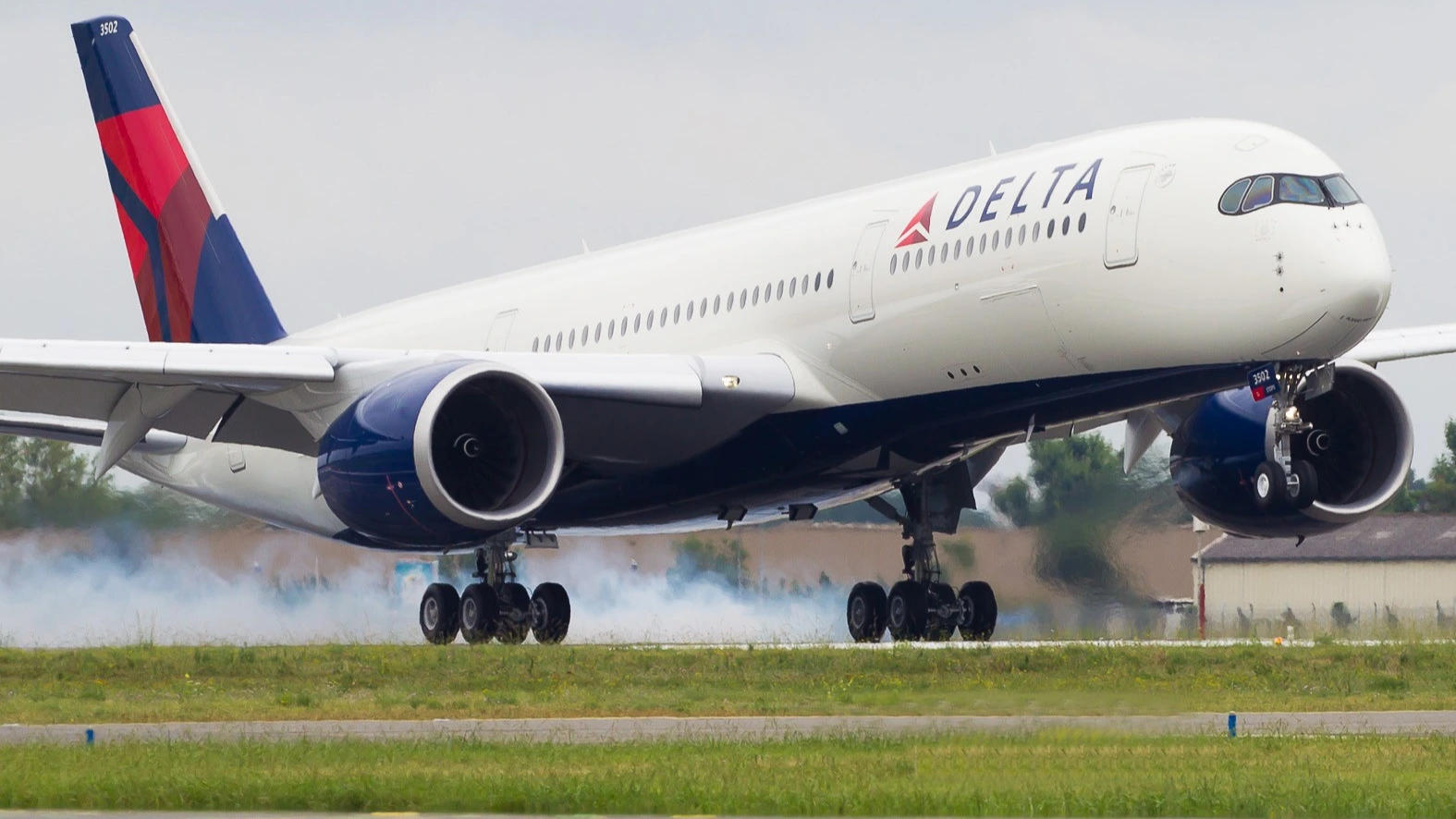
ATLANTA- Delta Air Lines (DL) could deploy its incoming Airbus A350-1000 aircraft on nonstop flights from Atlanta International Airport (ATL) and Detroit Airport (DTW) to Seoul Incheon International Airport (ICN). The proposed aircraft assignments remain unconfirmed.
Delta expects its first A350-1000 deliveries in early 2027. The aircraft could strengthen its long-haul network through greater capacity, improved fuel efficiency, and a new premium cabin, with Seoul emerging as a potential early destination.
Why Seoul Could Be a Key Destination for Delta’s A350-1000
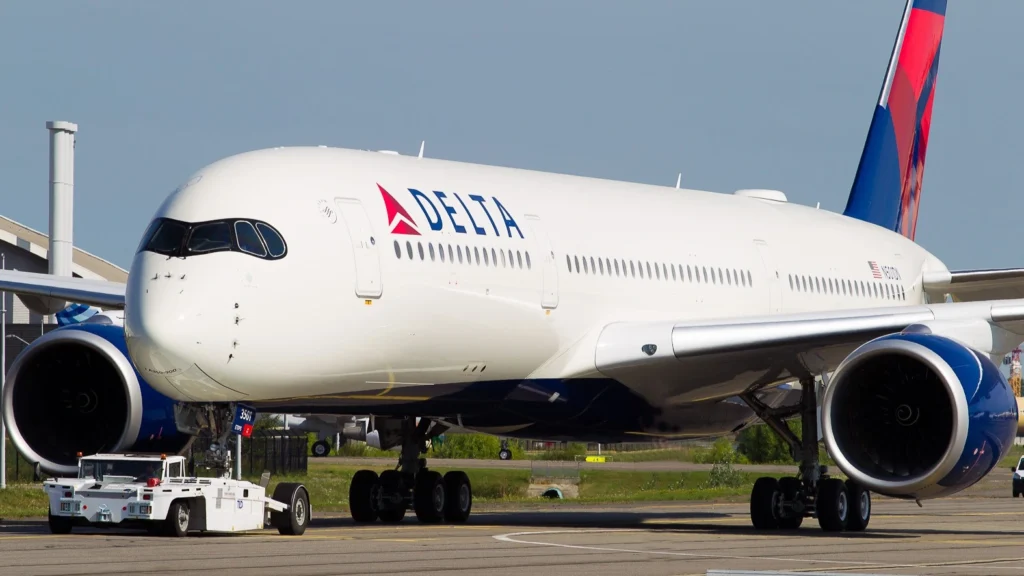
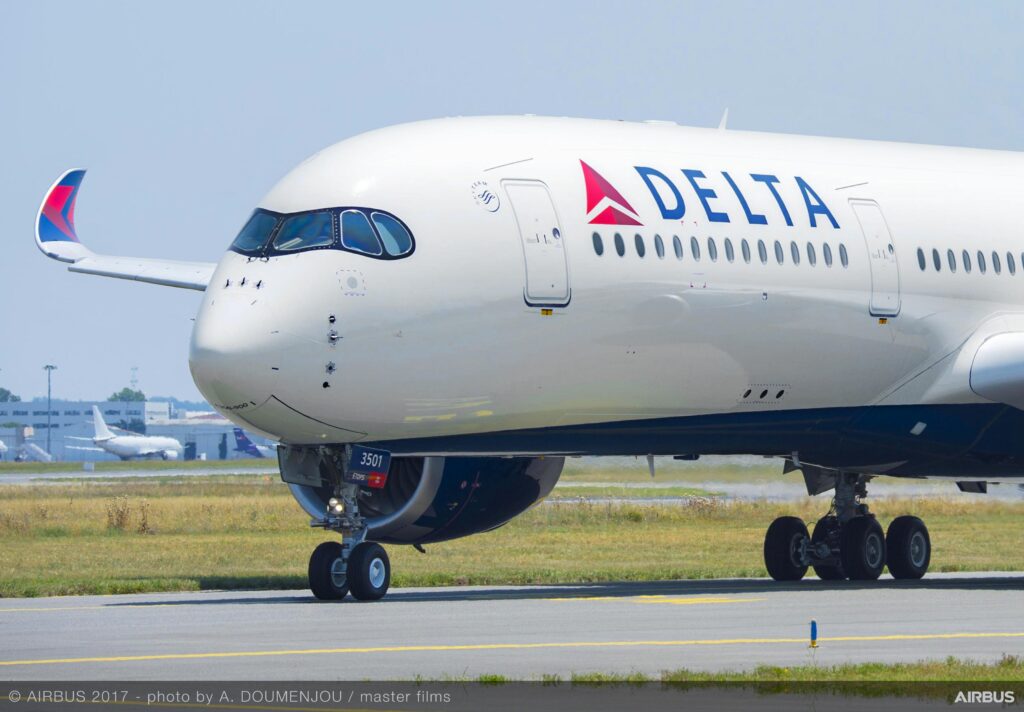
Delta Air Lines is preparing to introduce the Airbus A350-1000 as part of its long-term fleet renewal and international expansion strategy.
The aircraft will become the largest type in Delta’s fleet and introduce a next-generation Delta One business-class suite designed for long-haul travel.
Reporting by Simple Flying attributed the potential Atlanta and Detroit deployments to aviation commentator JonNYC, who raised the possibility on X.
The publication said it had contacted Delta for comment but had not received a response from an airline spokesperson at the time. Delta has not confirmed that either route will receive the A350-1000 first.
Atlanta and Detroit are established Delta hubs with nonstop services to Seoul. Deploying the A350-1000 on these routes would therefore represent a potential aircraft upgrade rather than the launch of entirely new nonstop connections.
Atlanta serves as Delta’s global headquarters and one of its largest operating hubs. Its extensive domestic network provides connections for passengers traveling from across the United States to South Korea and other international destinations.
Detroit also plays an important role in Delta’s transpacific network. Its geographical position and connecting traffic support travel between North America and East Asia.
Introducing the larger A350-1000 on either route could increase available seats per departure and improve the onboard experience. The aircraft’s final deployment will depend on Delta’s fleet allocation, delivery schedule, and route-planning decisions.
Korean Air Partnership Supports Seoul Connection
Seoul Incheon International Airport is a major gateway for connecting traffic between North America and the Asia-Pacific region.
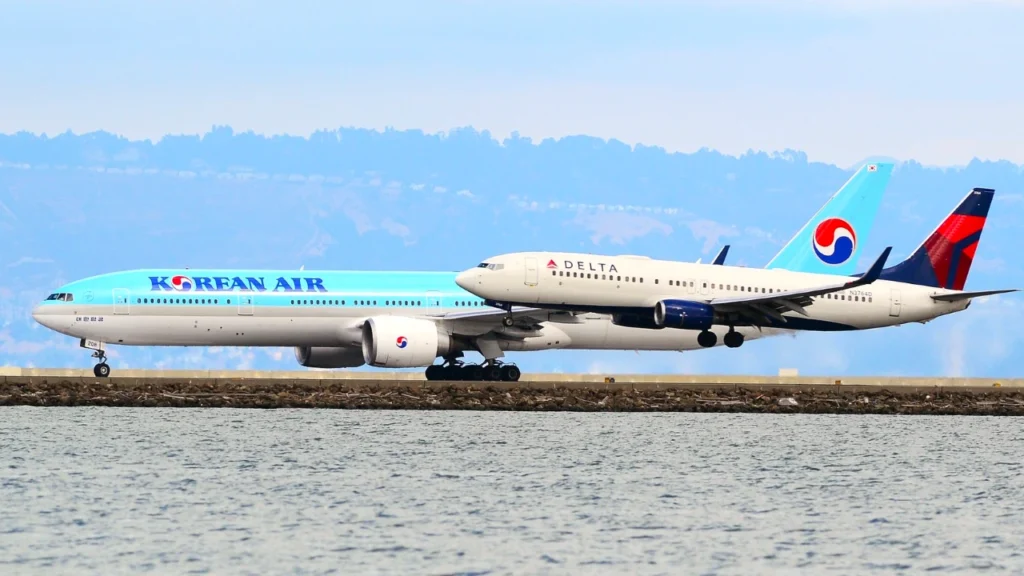
Delta and Korean Air (KE) operate a transpacific joint venture that combines their networks and gives passengers more options for travel beyond their respective hubs.
Delta’s published network information describes a partnership linking approximately 290 destinations in the Americas with 80 destinations in Asia.
The airlines have also reported carrying more than 2,000 passengers daily to destinations across Asia through their Seoul-centered operations.
Both airlines operate from Terminal 2 at Incheon. Their shared terminal location supports international connections and helps coordinate passenger transfers and related airport services.
These existing connections give Delta a commercial reason to consider Seoul for additional long-haul capacity. The route can serve passengers traveling to South Korea as well as those connecting onward to other Asian markets.
Delta Has 20 Airbus A350-1000s on Order
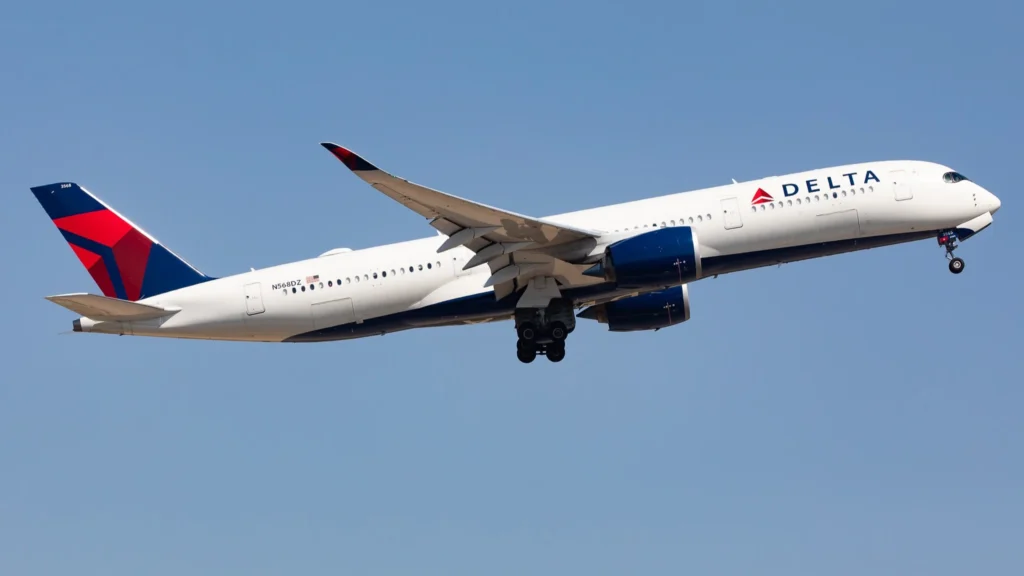
Delta placed a firm order for 20 Airbus A350-1000 aircraft in January 2024, with options to acquire up to 20 additional aircraft. Its current published plan calls for deliveries to begin in early 2027.
The initial aircraft will support Delta’s international fleet modernization strategy. If the airline exercises its options, its A350-1000 fleet could eventually grow to 40 aircraft, providing further capacity for long-haul expansion.
The arrival of the A350-1000 will also mark an important change in Delta’s fleet. The aircraft will become the airline’s largest type since it retired its Boeing 747 fleet in 2017.
Powered by Rolls-Royce Trent XWB-97 engines, the A350-1000 is designed for demanding long-haul operations. Delta plans to use it on international routes where its range, capacity, and cabin features can support the airline’s commercial priorities.
Replacing Older Boeing 767-300ER
The A350-1000 is part of Delta’s broader plan to modernize its widebody fleet and replace older, less efficient Boeing 767-300ER aircraft on selected long-haul services.
The larger Airbus aircraft will also allow Delta to increase capacity on some routes, a process known as upgauging. This means an airline can offer more seats on a flight without necessarily increasing the number of daily departures.
Fleet replacement involves more than passenger capacity. Newer aircraft can reduce fuel consumption per seat, lower operating costs, and improve performance on long international sectors. Actual savings will depend on the route, passenger load, aircraft configuration, and operating conditions.
Fuel Efficiency and Long-Haul Range
Delta’s A350-1000 fact sheet cites more than 20% lower fuel burn per available seat mile compared with the aircraft being retired.
Airbus separately advertises fuel-burn and carbon-emissions reductions of up to 25% against previous-generation aircraft. These figures use different comparison bases and should not be treated as identical measurements.
The A350-1000 also offers a published maximum range of up to 9,100 nautical miles, or approximately 16,850 kilometers.
This capability supports long-haul services between distant markets, although the aircraft’s practical range depends on its configuration, payload, and operating conditions.
For Delta, this combination of range and efficiency could support existing routes to Asia and provide flexibility when evaluating other international markets. The aircraft’s specifications make it suitable for long-distance flying, but they do not confirm which destinations Delta will select.
New Delta One Suites
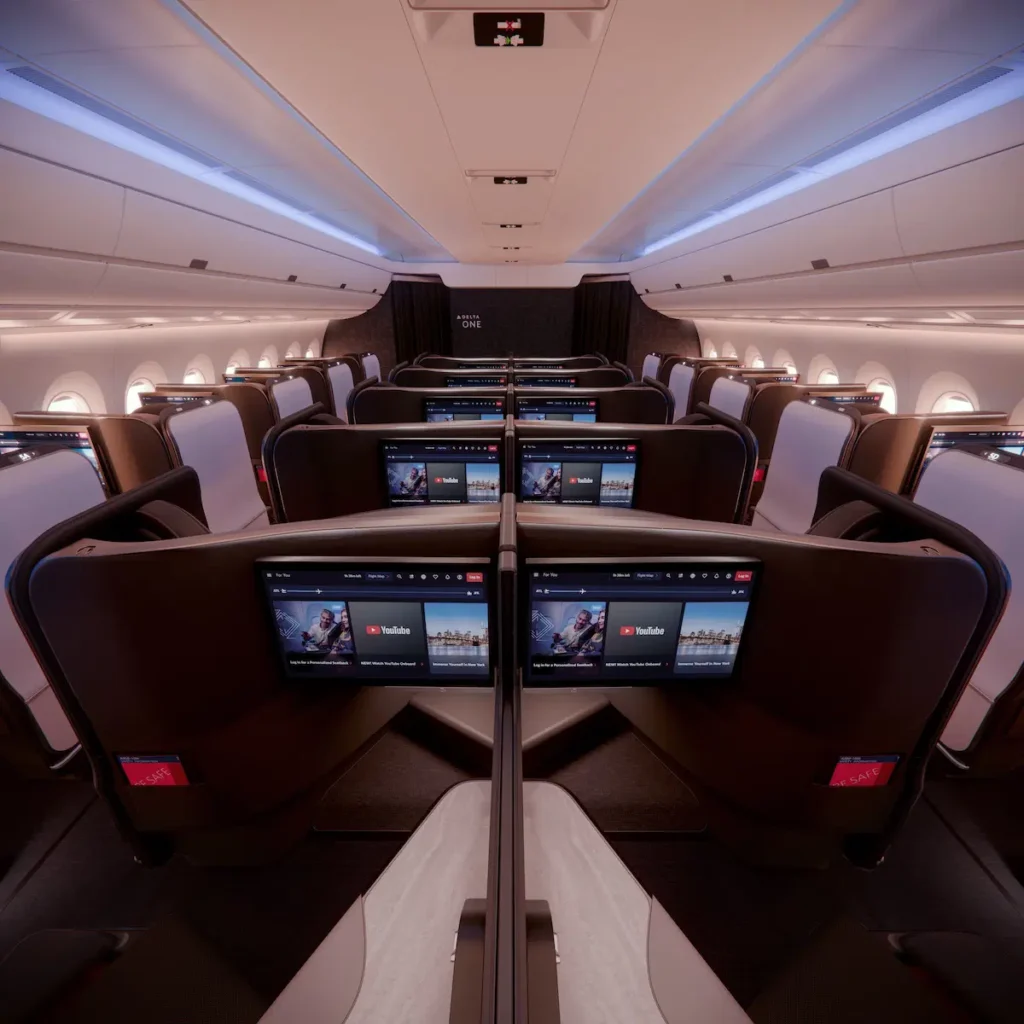
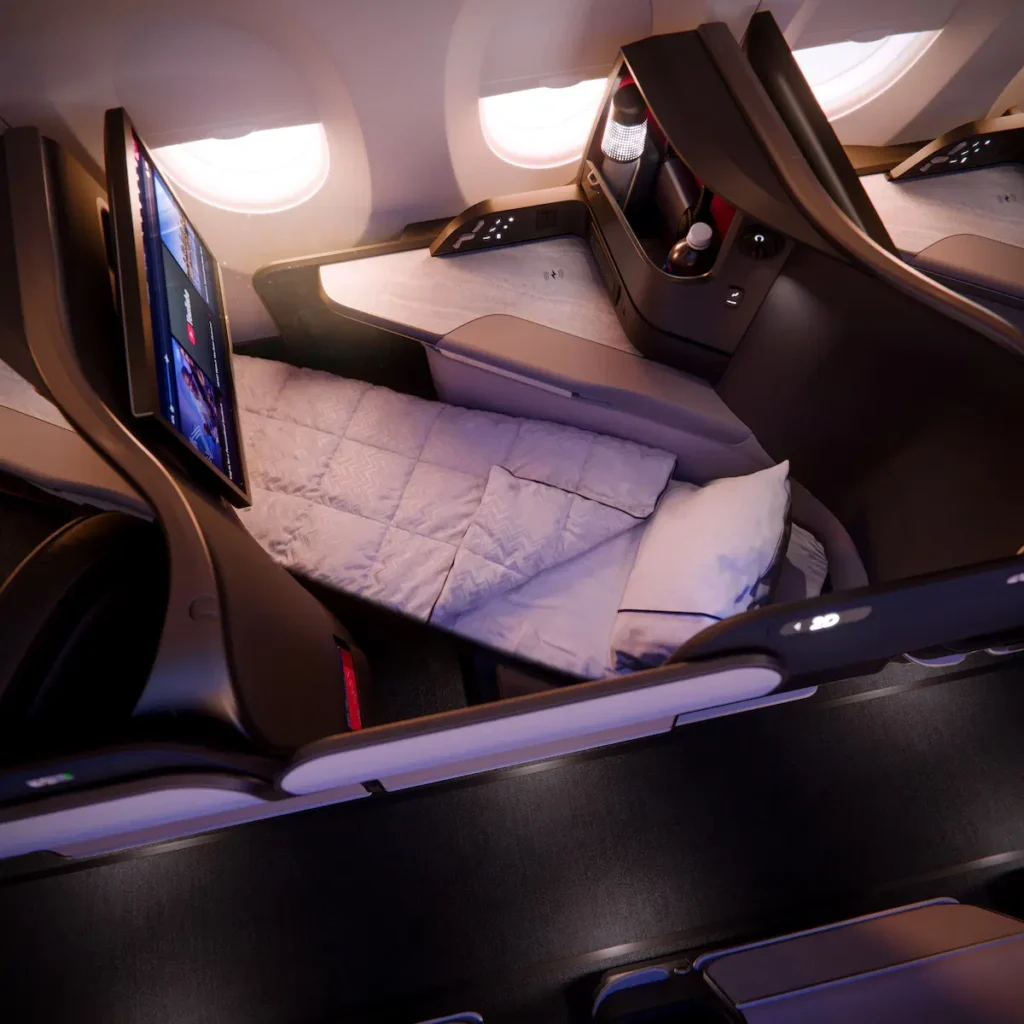
The A350-1000 will introduce Delta’s next-generation Delta One business-class suites. The redesigned cabin reflects the airline’s focus on premium travel and will feature sliding privacy doors, upgraded seating, and larger seatback entertainment screens.
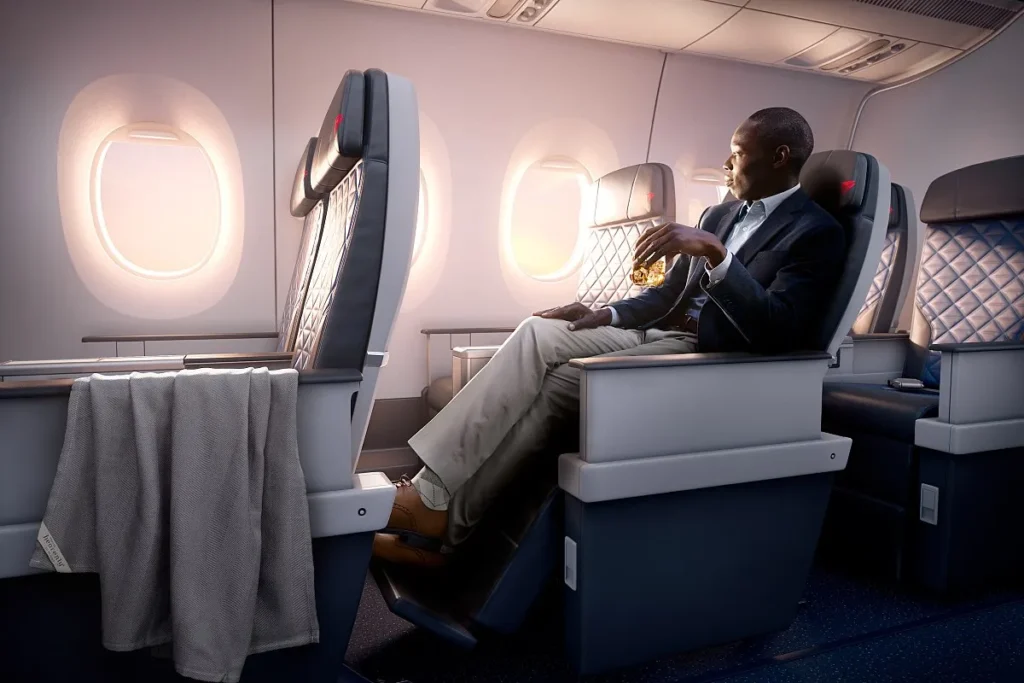
Delta has stated that the aircraft will have a premium-seat mix of approximately 50%. Its cabin will also include Delta Premium Select, Delta Comfort, and Delta Main, offering passengers several seating and service options.
Each Delta One suite on the A350-1000 will feature a 24-inch 4K QLED seatback screen, the largest screen Delta has announced for its aircraft. The suite also includes a lie-flat bed with more than 6.5 feet of sleeping space, a pillow-top cushion, memory foam, and additional storage.
Sliding privacy doors allow passengers to create a more private personal space. The center suites also feature a sliding partition that companions can leave open when traveling together or close for greater privacy.
The cabin updates extend beyond business class. Delta plans to equip every cabin with larger seatback screens, Bluetooth connectivity, USB-C ports, universal power outlets, and memory foam cushions. The aircraft will also offer fast, free in-flight Wi-Fi.
These features are intended to improve comfort and connectivity throughout long-haul flights. If the A350-1000 enters service on Atlanta or Detroit routes to Seoul, passengers could experience Delta’s newest cabin design on those services.
Could Singapore and Other Asian Destinations Follow?
Delta’s fleet expansion could create opportunities beyond its existing Seoul services. As additional A350-1000 aircraft arrive, the airline could allocate them to established Asia-Pacific routes or use them to support new long-haul markets.
The original report identified Singapore as a potential future destination for the A350-1000. Separately, Delta executives have since confirmed plans for the airline to return to Singapore, with industry reporting identifying Seattle as the likely US departure hub. However, the aircraft assignment and launch schedule should not be treated as confirmed without an official schedule announcement.
The aircraft’s long range and premium-focused cabin could support services to destinations in Asia, Africa, India, and the Middle East. Actual route decisions will depend on passenger demand, competition, connecting traffic, and the availability of newly delivered aircraft.
Delta is therefore expected to have greater flexibility as its A350-1000 fleet grows, but the delivery of new aircraft does not automatically mean that every potential route will launch.
Delta Could Begin A350-1000 Flights to Seoul
Delta’s published delivery plan points to early 2027 for the first A350-1000 aircraft. However, the delivery date alone does not establish when the aircraft will enter commercial service or which route it will operate first.
Three details remain important for travelers and aviation observers:
- Route assignment: Delta has not confirmed that Atlanta to Seoul or Detroit to Seoul will be among the first A350-1000 services.
- Launch schedule: No verified inaugural date or operating frequency has been established for either proposed deployment.
- Fleet expansion: The airline’s initial commitment covers 20 aircraft, while options for another 20 provide potential for future growth.
Until Delta releases a confirmed operating schedule, the Seoul deployment remains a reported possibility. Travelers should check the aircraft type listed for their specific flight because airlines can change equipment assignments.
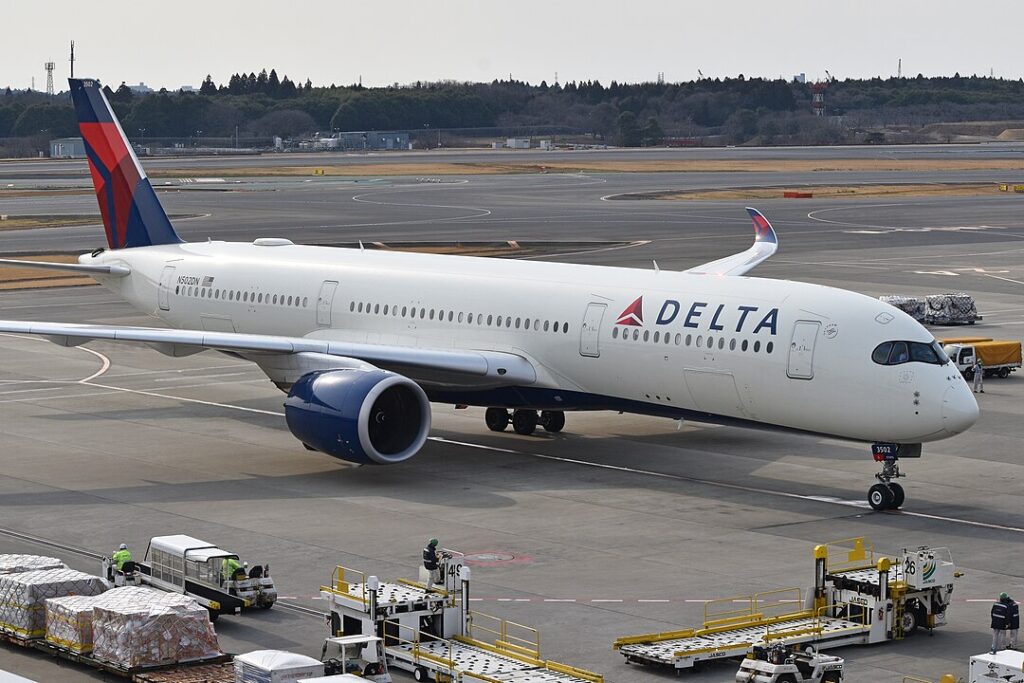
A350-1000 for Delta’s International Network
The Airbus A350-1000 offers Delta a combination of long-haul range, improved fuel efficiency, greater capacity, and a substantially updated premium cabin.
Atlanta and Detroit are plausible candidates for its introduction on Seoul services because both already connect the United States with Incheon and benefit from the airline’s partnership with Korean Air.
The first aircraft are expected in early 2027, but Delta has not confirmed the proposed route assignments. Any decision to deploy the A350-1000 to Seoul or expand its use to other Asian destinations will depend on the airline’s official fleet and network plans.
Stay tuned with us. Further, follow us on social media for the latest updates.
Join us on Telegram Group for the Latest Aviation Updates. Subsequently, follow us on Google News
