

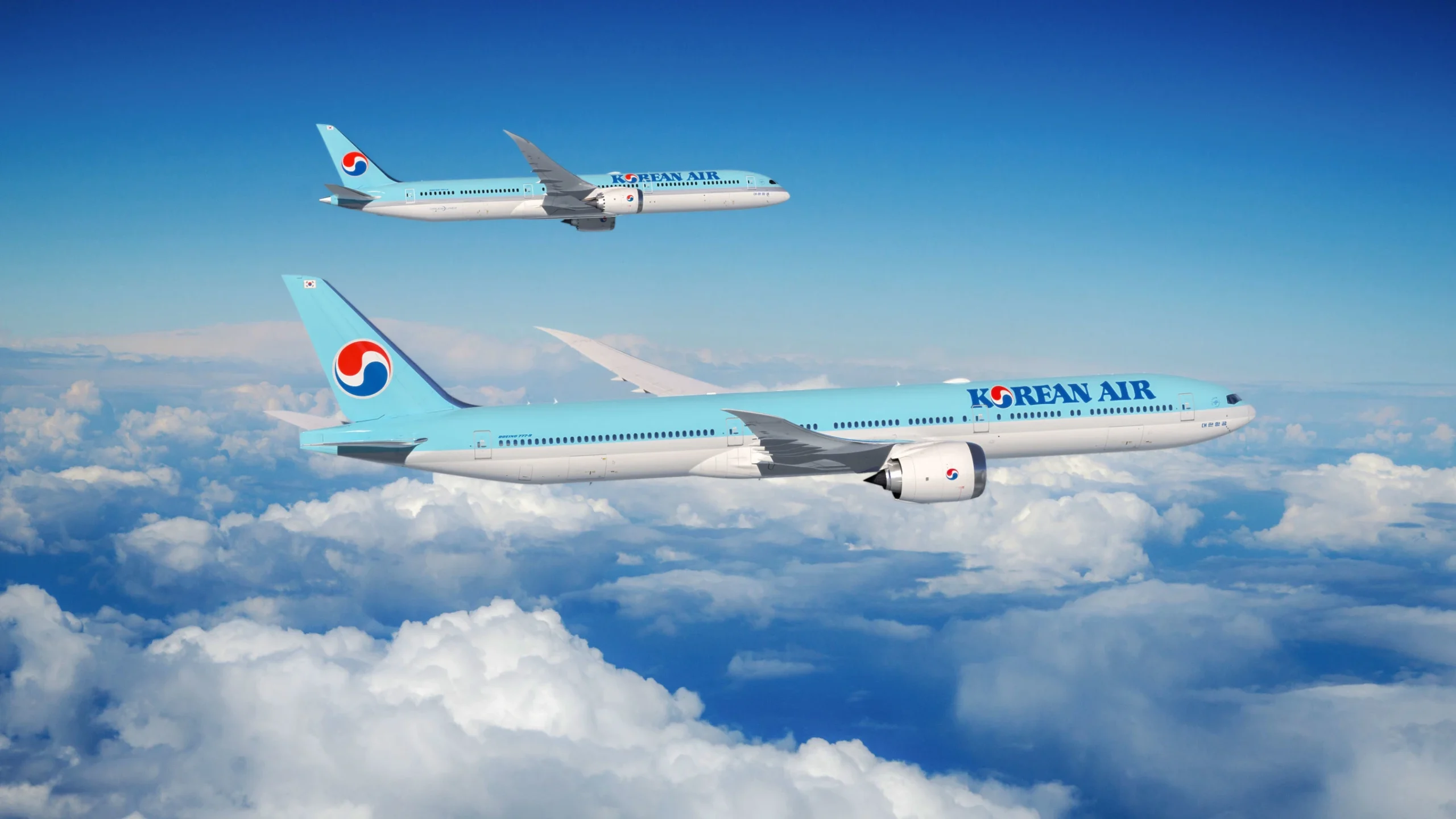
SEOUL- Korean Air (KE) has finalized its largest aircraft order in history, signing for 103 Boeing aircraft worth $44.6 billion. The deal includes the Boeing 777-9, 787-10, 737 MAX 10 and 777-8 Freighter as the airline prepares for a major fleet transformation.
The order will significantly expand Korean Air’s widebody and narrowbody fleets as the carrier integrates Asiana Airlines (OZ) and prepares for future growth from Seoul Incheon International Airport (ICN).
Korean Air Finalizes Major Boeing Fleet Expansion
Korean Air has officially signed for 103 Boeing aircraft, completing a commitment first announced as an intent to order in August 2025.
The agreement consists of 95 passenger aircraft and eight freighters. The passenger aircraft include 20 Boeing 777-9s, 25 Boeing 787-10 Dreamliners and 50 Boeing 737 MAX 10s.
Boeing said the agreement represents its largest-ever widebody commitment from an Asian airline. The deal was formally announced in Seoul on September 16, 2026, and is valued at $44.6 billion based on Boeing’s announced figures.
The order follows bilateral trade negotiations between the United States and the Republic of Korea. For Korean Air, the agreement provides a large pipeline of new-generation aircraft at a time when its fleet strategy is being reshaped by the integration of Asiana Airlines.
The new aircraft will support fleet renewal, additional capacity and the replacement of older aircraft. Korean Air Chairman and CEO Walter Cho said the next-generation aircraft are central to the carrier’s fleet modernization strategy, with improvements in fuel efficiency and the passenger experience.
95 Passenger Aircraft Cover Multiple Market Segments
The largest part of the agreement is the 95-aircraft passenger order.
| Aircraft | New Orders | Primary Role |
|---|---|---|
| Boeing 777-9 | 20 | Long-haul flagship |
| Boeing 787-10 | 25 | Medium and long-haul capacity |
| Boeing 737 MAX 10 | 50 | Narrowbody international network |
| Total Passenger Aircraft | 95 |
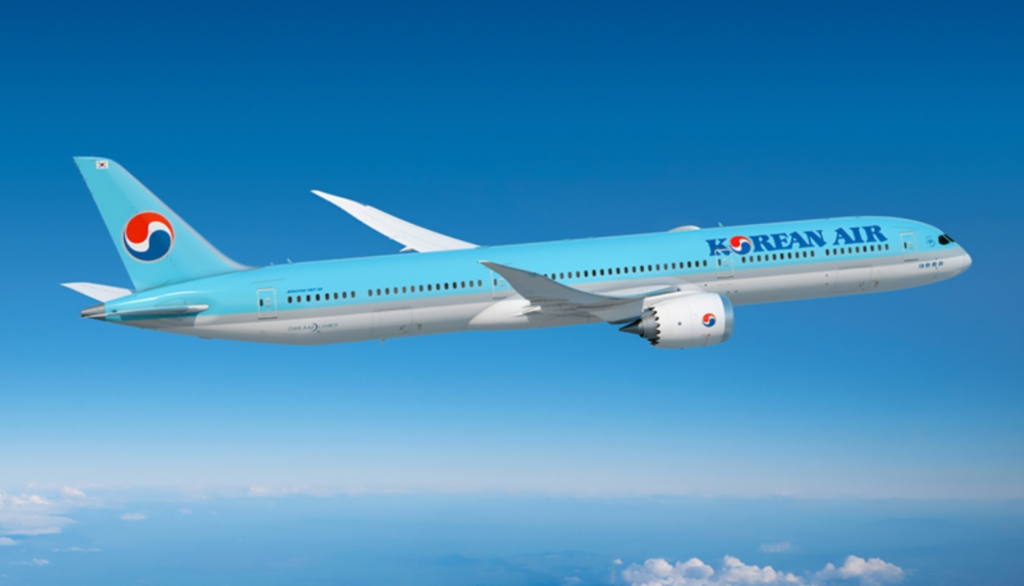
The 20 Boeing 777-9 aircraft will become an important part of Korean Air’s future long-haul fleet. The order will increase the airline’s total 777-9 order book to 40 aircraft.
The 777-9 is designed to combine high passenger capacity with improved fuel efficiency compared with earlier-generation large widebody aircraft. Its introduction will give Korean Air another modern aircraft option for high-demand long-haul routes.
The aircraft’s entry into service remains dependent on certification and delivery timelines. Boeing has been targeting certification of the 777-9 as it progresses through the 777X program.
Korean Air is also ordering 25 Boeing 787-10 aircraft. The 787-10 provides a different capacity and range profile from the larger 777-9, making it suitable for routes where the airline needs additional capacity without deploying its largest aircraft.
The 787-10 will complement Korean Air’s existing Dreamliner operation and provide additional flexibility across its network.
50 Boeing 737 MAX 10s Will Expand the Narrowbody Fleet
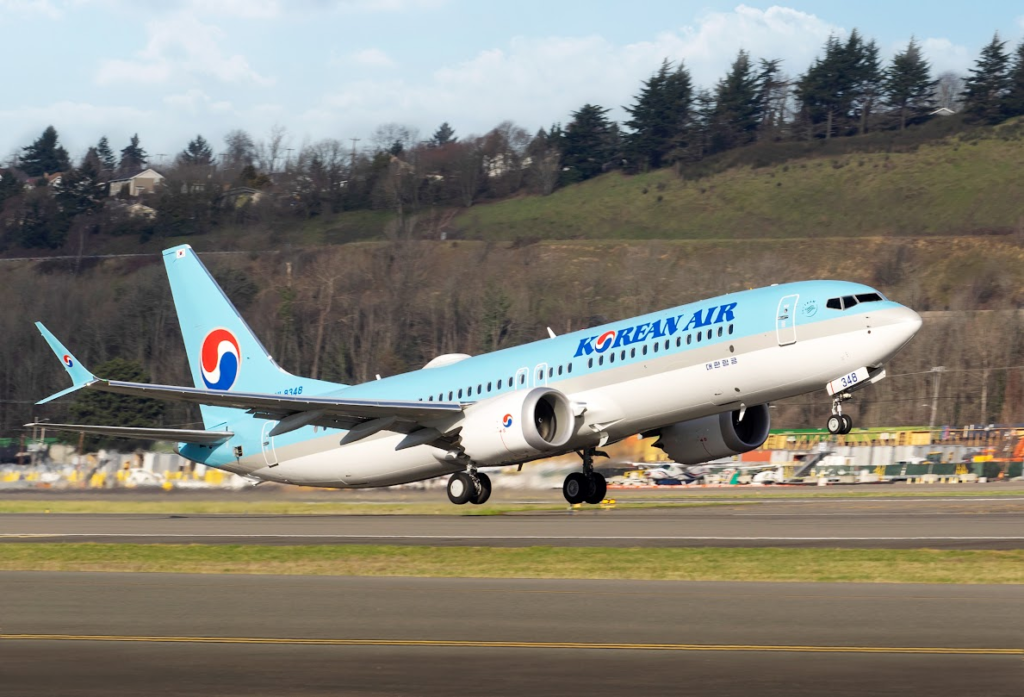
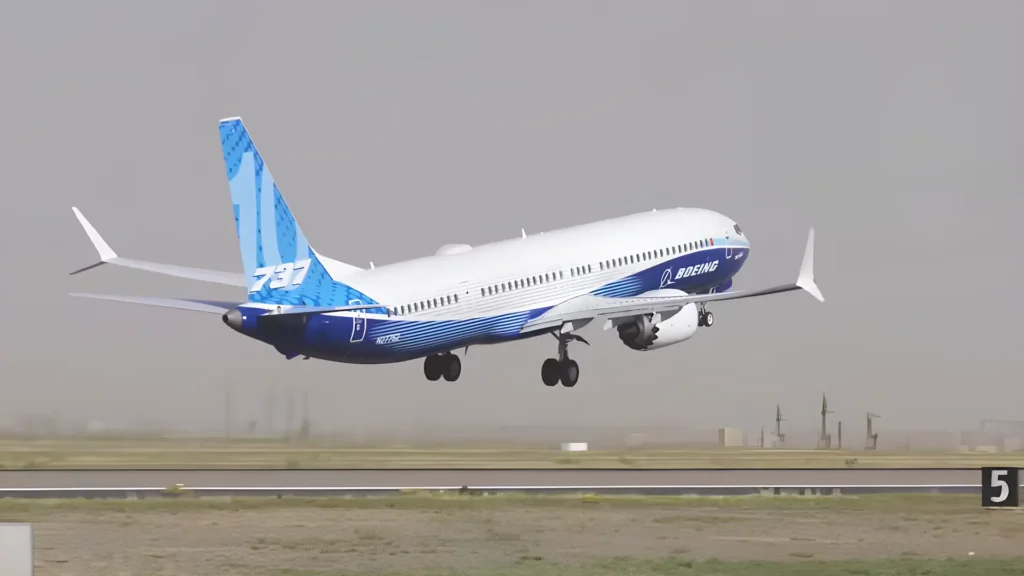
The largest individual aircraft component of the passenger order is the 50 Boeing 737 MAX 10s.
Korean Air currently operates Boeing 737-family aircraft, including the 737-800, 737-900, 737-900ER and 737 MAX 8. The incoming MAX 10s will therefore build on an existing Boeing narrowbody fleet.
The 737 MAX family offers improved fuel efficiency compared with previous-generation 737 aircraft. For Korean Air, the MAX 10 will provide additional capacity for international and regional routes where a widebody aircraft is not required.
The new narrowbody aircraft are also relevant to the airline’s wider fleet integration plans. As Korean Air combines operations with Asiana Airlines, the carrier will have to manage aircraft deployment across a larger network.
The MAX 10 order gives Korean Air additional aircraft capacity while gradually moving its narrowbody fleet toward newer-generation technology.
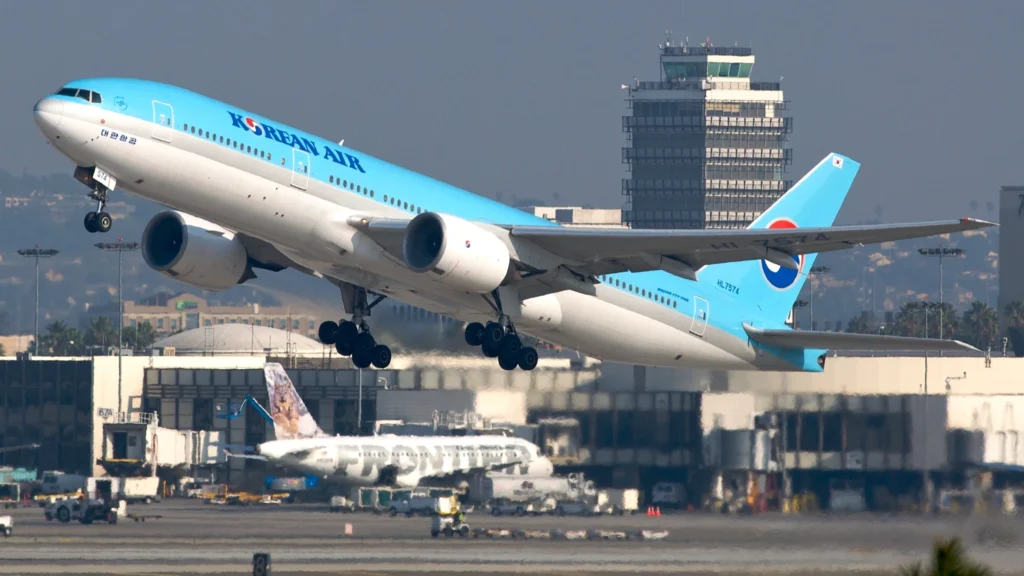
Eight Boeing 777-8 Freighters Expand Cargo Capacity
Korean Air’s agreement also includes eight Boeing 777-8 Freighters.
The aircraft will add a new generation of freighters to the airline’s cargo operation, which currently includes Boeing 777Fs and Boeing 747 freighters.
Korean Air operates 12 Boeing 777F aircraft, while its cargo fleet also includes Boeing 747-400F and 747-8F aircraft. The 777-8F is designed to provide high payload capability and long-range cargo performance while improving operating economics compared with older freighter types.
According to Boeing’s published specifications, the 777-8F is designed to carry an additional 11 tonnes of structural payload compared with the 777F at a 5,000-nautical-mile range.
The new freighters will therefore provide Korean Air with additional capacity while supporting the gradual modernization of its cargo fleet.
The cargo order is particularly relevant as Korean Air integrates Asiana’s cargo operations. Combining the two carriers’ cargo networks will create a larger operation that requires additional capacity and efficient aircraft to serve international freight markets.
Korean Air has also ordered seven Airbus A350F freighters. That means its future cargo fleet will include both Boeing and Airbus next-generation freighter aircraft, despite the carrier’s current cargo fleet being heavily centered on Boeing aircraft.

New Aircraft Will Gradually Replace Older Widebodies
The arrival of the new Boeing aircraft will also accelerate the long-term renewal of Korean Air’s widebody fleet.
Korean Air has already reduced its Boeing 747 passenger fleet substantially. The airline now has four Boeing 747-400s and 11 Boeing 747-8s, according to the fleet information cited in the source material.
Korean Air announced in 2021 that it intended to retire its remaining 747 aircraft by 2031. The timing aligns with the planned introduction of newer widebody aircraft, including the 777X.
The Boeing 747 has played an important role in Korean Air’s long-haul operation for decades. However, newer twin-engine widebody aircraft can provide the capacity and range needed on many routes while offering improved fuel efficiency.
The Boeing 777-9 will eventually take on some of the roles currently associated with the largest aircraft in the Korean Air fleet.
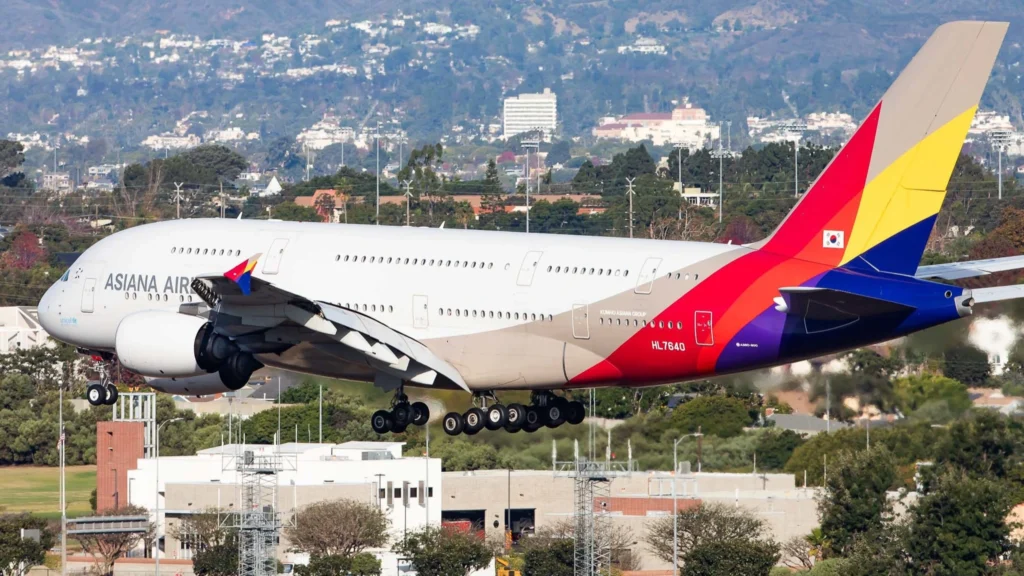
Korean Air and Asiana Both Operate Airbus A380s
Korean Air’s fleet transformation also involves its Airbus A380 operation.
The airline currently has five A380s in its fleet after retiring five examples over the past five years. The aircraft remain associated with high-demand routes where the large capacity of the A380 can be used effectively.
Asiana Airlines also operates Airbus A380 aircraft, with six examples listed in the fleet information cited in the source material.
The future of the combined A380 fleet will be an important part of the broader integration process. Korean Air has previously used the type on major international markets, including Seoul to Los Angeles.
The carrier has also pushed back plans for more rapid A380 retirements, with the aircraft expected to remain part of its operation into the 2030s rather than being removed earlier.
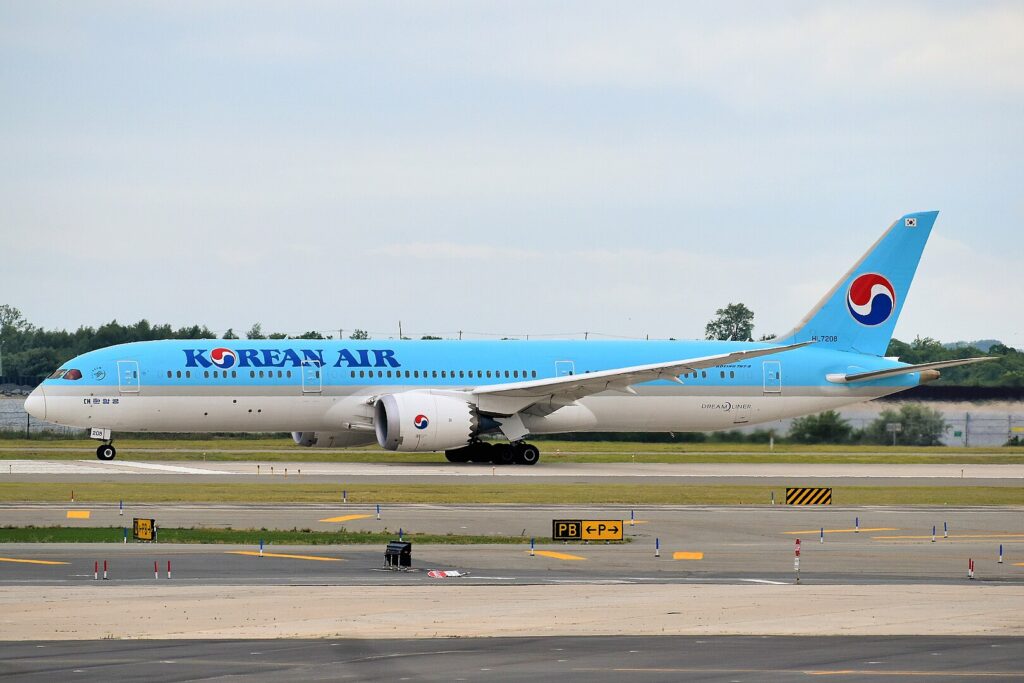
Fleet Transformation Comes With Asiana Integration
The 103-aircraft Boeing order extends beyond simple fleet replacement.
Korean Air is building a larger combined airline following its merger with Asiana Airlines. The integration brings together two major South Korean carriers with overlapping passenger and cargo networks.
The new aircraft will give the combined operation additional capacity while allowing Korean Air to gradually replace older aircraft.
The order also creates a mix of aircraft designed for different missions. The 777-9 will provide large long-haul capacity, the 787-10 will cover markets requiring a smaller widebody, and the 737 MAX 10 will support regional and international routes.
The 777-8F aircraft will strengthen the cargo operation as Korean Air works to combine the freight networks of the two airlines.
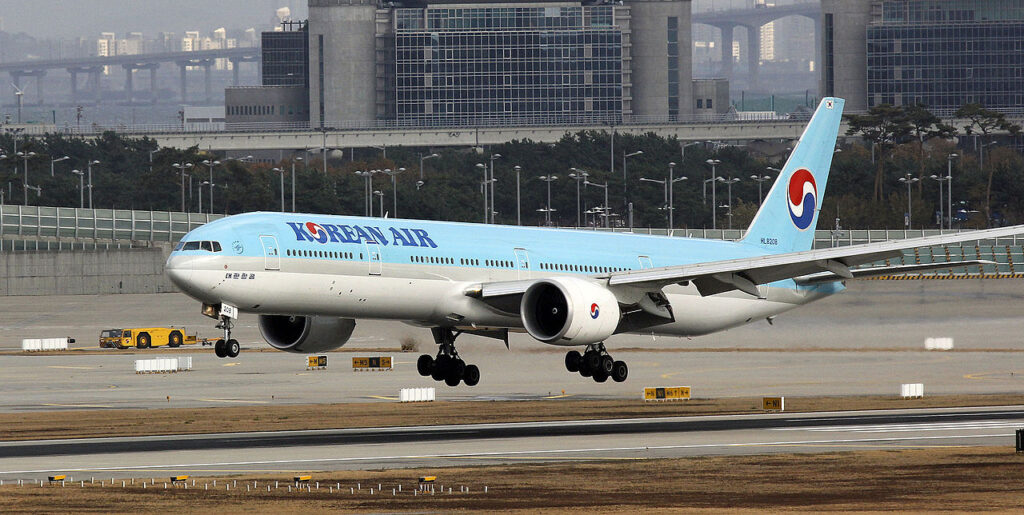
A Major Shift in Korean Air’s Future Fleet
Korean Air’s 103-aircraft Boeing order marks a significant step in its long-term fleet modernization.
The 95 passenger aircraft will expand capacity across three aircraft families, while the eight 777-8Fs will strengthen the airline’s cargo operation. Together, the aircraft will help replace older jets and provide capacity for the expanded network created through the Asiana integration.
The order also reinforces Boeing’s role in Korean Air’s future fleet, although the airline is simultaneously adding Airbus A350 and A350F aircraft.
As deliveries begin, Korean Air will progressively introduce newer-generation aircraft while reducing its dependence on older 747s and other aging fleet types. The result will be a substantially different fleet profile as the carrier moves through the remainder of the decade and into the 2030s.
Stay tuned with us. Further, follow us on social media for the latest updates.
Join us on Telegram Group for the Latest Aviation Updates. Subsequently, follow us on Google News
