

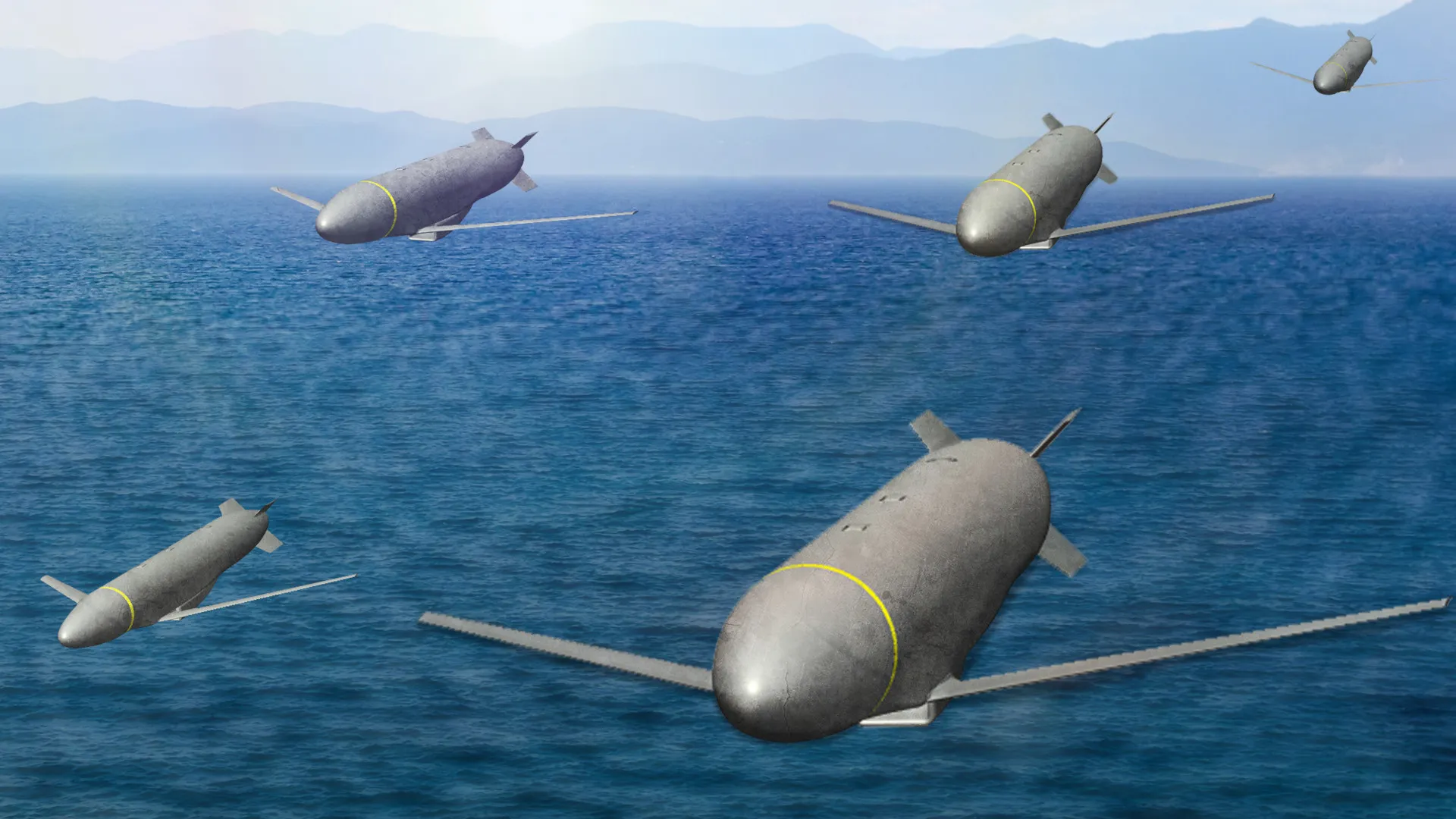
WASHINGTON- The US Air Force is seeking defence industry partners to accelerate production of a new long-range cruise missile intended for Ukraine, with plans to procure more than 1,000 weapons under an ambitious delivery schedule. The programme centres on the Extended Range Attack Munition (ERAM), an air-launched precision-guided missile designed to provide an affordable strike capability against high-value targets.
The latest request for information (RFI), issued by the United States, asks potential manufacturers to demonstrate their technical and production capabilities. Responses are due by November 19, 2026, as Washington looks to expand the supply of relatively inexpensive precision weapons amid continuing military demands in Ukraine.

US Seeks ERAM Production
The US Air Force has outlined several performance requirements for the proposed ERAM production programme. The weapon belongs to the 500-pound class and must have a range exceeding 250 nautical miles (about 463 kilometres) and a speed above Mach 0.6.
The missile must also achieve terminal accuracy within 10 metres of its intended target, including in environments affected by electronic interference and degraded GPS signals. Its required effects include blast and fragmentation, alongside limited penetration capability.
The Air Force describes ERAM as a next-generation standoff weapon intended to provide affordable mass for military operations. Its air-launched design lets aircraft engage fixed targets from a distance rather than approach heavily defended areas.
The production schedule represents a major challenge for potential suppliers. According to the RFI, contractors should begin delivering the first missiles no later than three months after receiving a contract, with deliveries of more than 1,000 weapons expected to finish within 15 months.
The RFI is an industry capability assessment rather than a confirmed production contract. The Air Force has not announced which companies will receive the next production award.
ERAM Completes Live Test
The programme has already progressed through an accelerated development and testing phase. In 2024, the US Air Force awarded development contracts to Zone 5 Technologies and CoAspire, two relatively small American defence companies, to produce ERAM prototypes.
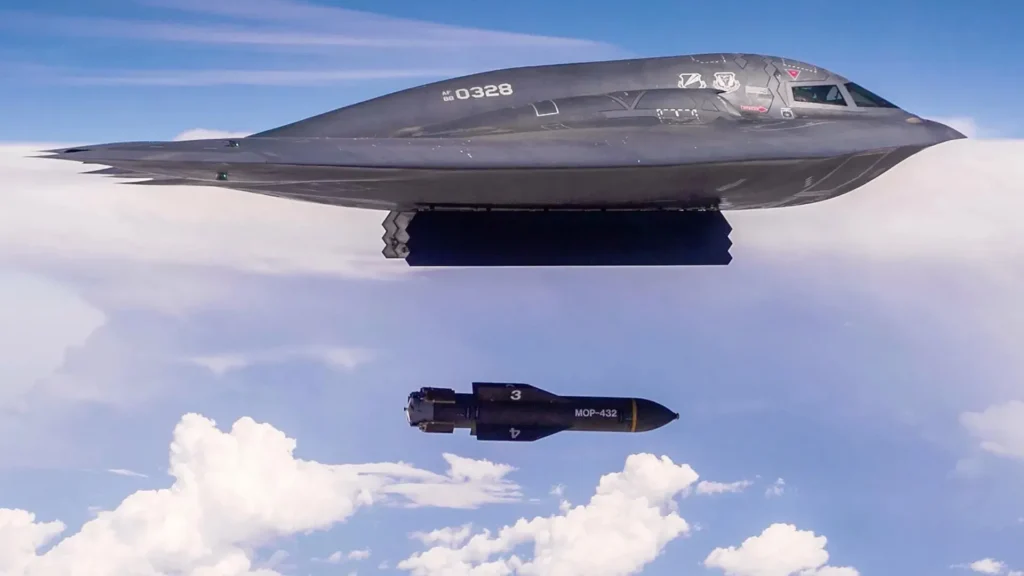
On January 21, 2026, the Air Force conducted a live-warhead test at Eglin Air Force Base in Florida. The test achieved its primary objectives, including a full warhead detonation, according to the service’s January 30 announcement.
The successful demonstration took place less than 16 months after the programme’s initial contract award. It provided additional evidence that the Air Force could develop and test a new standoff weapon within a substantially shorter period than traditional military acquisition programmes.
The initiative reflects the Pentagon’s wider interest in developing weapons that cost less and can be manufactured in larger quantities. The approach is particularly relevant as modern conflicts place significant demands on inventories of expensive precision-guided munitions.
Ukraine Missile Deliveries
Ukraine already has an approved potential procurement package involving ERAM missiles. On August 28, 2025, the US State Department approved a possible $825 million Foreign Military Sale covering up to 3,350 ERAM missiles and an equal number of embedded GPS and inertial navigation systems.
Denmark, the Netherlands and Norway are providing funding support, alongside US Foreign Military Financing. Zone 5 Technologies and CoAspire were identified as the principal contractors for the proposed sale, Defense News flagged.
However, approval of the potential sale does not automatically confirm that all 3,350 missiles have been delivered or entered Ukrainian service. Reports in June 2026 suggested that Ukraine might have used the AGM-188A Rusty Dagger, an ERAM-related variant, against a Russian electronics facility, but its operational use has not been independently confirmed by the US Air Force.
The latest production request could therefore represent another important step in expanding the programme. With more than 1,000 additional missiles targeted under a compressed delivery schedule, the Air Force is testing whether the defence industry can meet Ukraine’s requirements while establishing a scalable supply of affordable long-range weapons.
Stay tuned with us. Further, follow us on social media for the latest updates.
Join us on Telegram Group for the Latest Aviation Updates. Subsequently, follow us on Google News
