

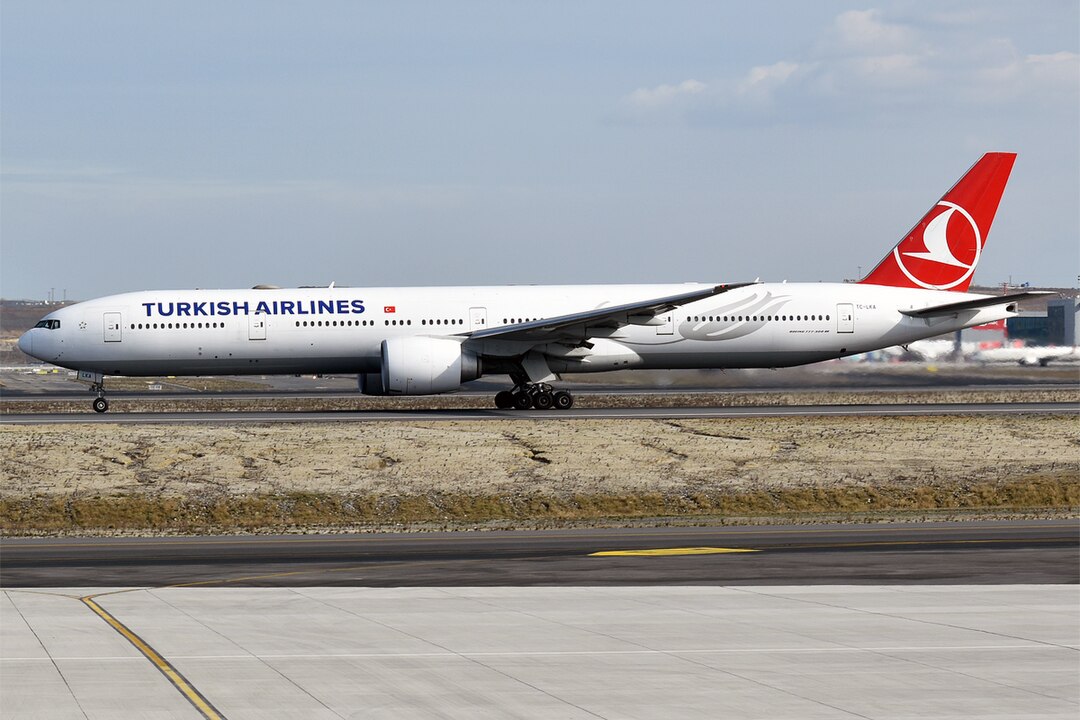
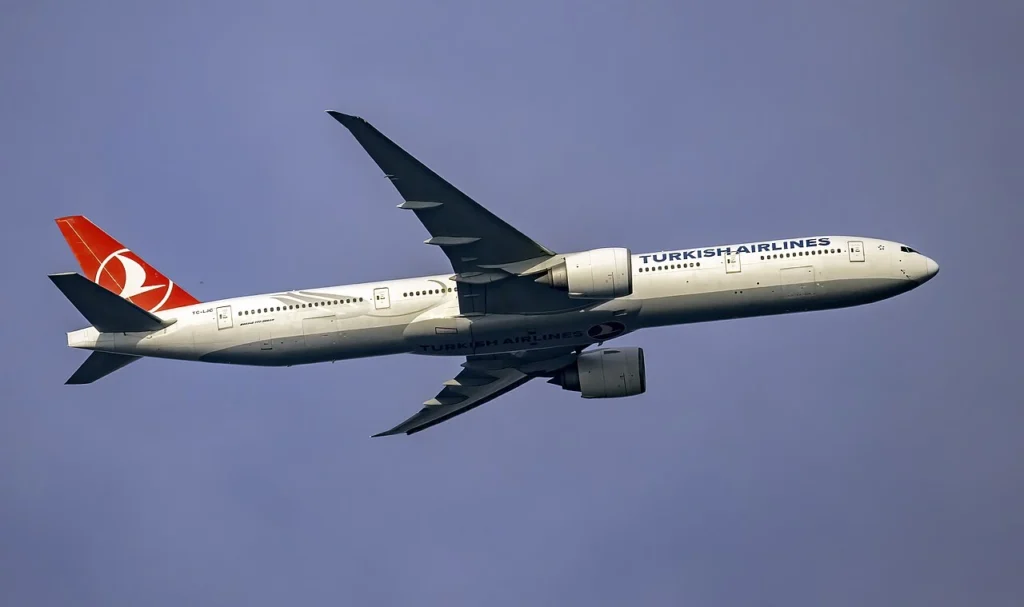
ISTANBUL- Turkish Airlines (TK) flight TK3, operated by a Boeing 777-300ER, declared a medical emergency while flying from Istanbul Airport (IST) to New York John F. Kennedy International Airport (JFK) after a passenger suffered a suspected heart attack. Air traffic controllers coordinated priority handling as the crew requested immediate medical assistance upon arrival.
The aircraft landed safely at New York John F. Kennedy International Airport (JFK), where Emergency Medical Technicians (EMTs) were already positioned near the runway. The passenger received immediate medical attention after the aircraft vacated the runway.
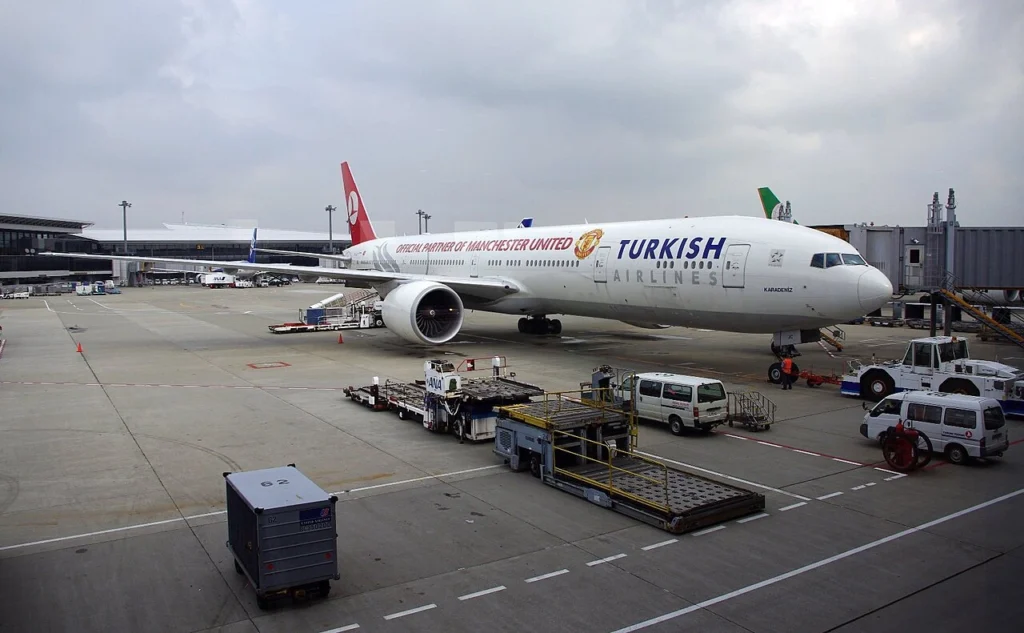
Turkish Airlines 777 Emergency Landing at JFK
The incident involved Turkish Airlines (TK) Boeing 777-300ER, registration TC-JJS, operating flight TK3 from Istanbul Airport (IST) to New York John F. Kennedy International Airport (JFK) on July 26, 2026.
While cruising at 36,000 feet, approximately 90 miles east of Boston, the flight crew initially contacted Boston Center to report that a passenger required urgent medical attention. The crew requested priority routing to shorten the remaining flight time.
During the first radio exchanges, the pilots informed controllers that a 55-year-old male passenger seated in 42C was experiencing severe breathing difficulties. A doctor on board had examined the passenger and advised that immediate medical care was necessary because the condition could worsen rapidly.
Air traffic control sought clarification after initially misunderstanding the information, believing multiple passengers required assistance. The crew later confirmed that only one passenger was critically ill and continued providing updated medical information as the situation evolved.
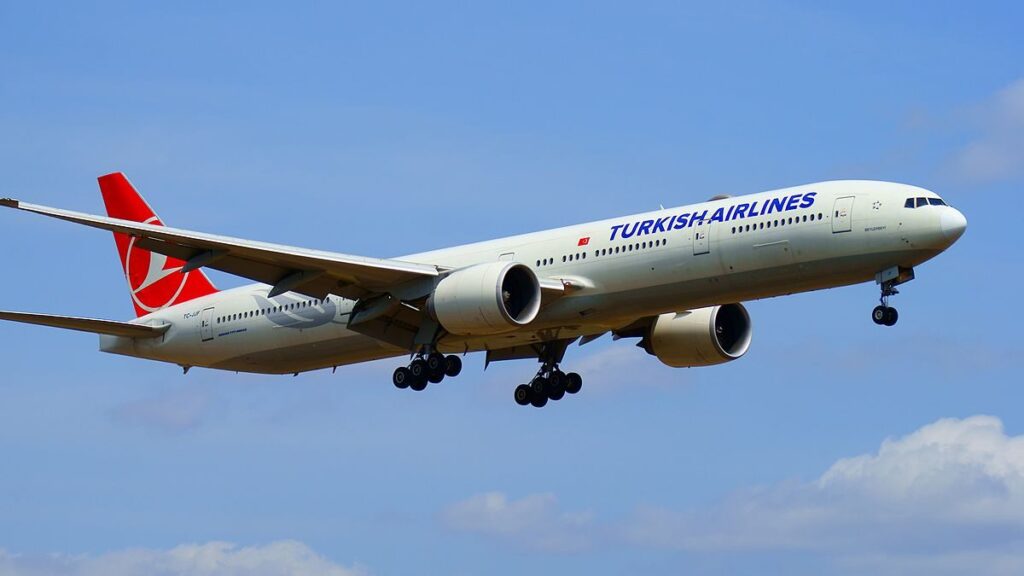
Passenger’s Condition Worsened During Flight
As the aircraft continued toward New York, the flight crew advised controllers that the passenger’s condition had deteriorated further.
According to information relayed by the onboard doctor, the passenger was suffering increasing respiratory distress and was believed to be experiencing a possible heart attack. The pilots subsequently declared a medical emergency and requested every available shortcut to reduce the flight time.
Later radio transmissions confirmed that the cabin crew and medical volunteers had begun cardiopulmonary resuscitation (CPR) while the aircraft remained airborne. The crew informed controllers that CPR was in progress and emphasized the urgency of obtaining medical assistance immediately after landing.
Throughout the emergency, air traffic controllers coordinated direct routings, expedited descent clearances, and removed speed restrictions to help the aircraft reach New York as quickly as possible.
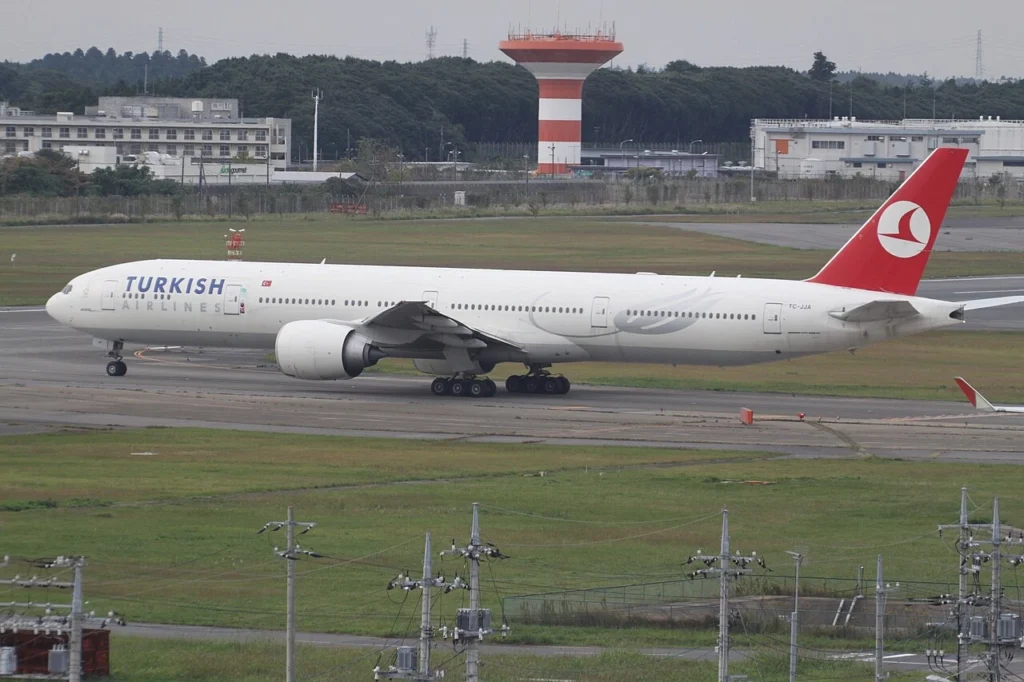
Priority Approach Coordinated Into New York
As the flight approached the New York terminal area, controllers coordinated the arrival with New York Approach and John F. Kennedy Airport.
The crew requested an ILS approach to Runway 22L, although they were ultimately cleared for the RNAV X approach to Runway 22L. Controllers continuously provided priority vectors while allowing the aircraft to maintain higher speeds whenever operationally possible.
The pilots also made a specific request that medical teams meet the aircraft immediately after it vacated the runway, rather than waiting at the terminal gate. They explained that taxiing to the gate could delay treatment for the passenger.
Recognizing the urgency, controllers arranged for emergency responders to position themselves on Taxiway Juliet, allowing the aircraft to stop shortly after clearing the runway.
Safe Landing and Immediate Medical Response
The Boeing 777 landed safely on Runway 22L at New York John F. Kennedy International Airport (JFK).
Following touchdown, the aircraft exited the runway via Taxiway Juliet and stopped short of Taxiway Yankee, exactly as coordinated with air traffic control. Emergency Medical Technicians were already waiting beside the taxiway.
Ground controllers confirmed that rescue personnel had reached the aircraft before authorizing any further movement. The crew remained in contact with emergency responders while the medical team boarded to assist the passenger.
The available communications conclude with emergency services attending to the passenger after the aircraft came to a stop. No official update on the passenger’s medical condition has been released.
ATC and Pilots Transcript
Here’s a detailed transcription of communication between Turkish Airlines flight TK3 and New York JFK ATC as flagged by YouCanSeeATC:
New York Approach: Turkish 3 Heavy, New York Approach. Altimeter 29.93. Expect the RNAV X Runway 22L approach.
Turkish 3 Heavy: Expect RNAV X Runway 22L, altimeter 29.93. Turkish 3. May I request further descent?
New York Approach: Turkish 3 Heavy, I’ll have a descent for you in just a second, sir.
Turkish 3 Heavy: Roger.
New York Approach: Turkish 3 Heavy, descend and maintain 9,000.
Turkish 3 Heavy: Descend and maintain 9,000, altimeter 29.93, Turkish 3 Heavy.
New York Approach: Turkish 3 Heavy, you’re currently 1.3 miles from traffic. Cross CAPIT at or above 2,900. Cleared RNAV X Runway 22L approach.
Turkish 3 Heavy: Cross CAPIT at or above 2,900. Cleared RNAV X Runway 22L approach. Turkish 3 Heavy, Mayday.
New York Approach: Turkish 3 Heavy, contact Kennedy Tower 119.1. Good day.
Turkish 3 Heavy: 119.1. Good day, Turkish 3 Heavy.
Turkish Airlines TK3 and Kennedy Tower Transcript
Turkish 3 Heavy: Turkish 3 Heavy, Mayday.
Kennedy Tower: Turkish 3 Heavy, Kennedy Tower. Runway 22L, cleared to land.
Turkish 3 Heavy: Cleared to land Runway 22L, Turkish 3 Heavy.
Kennedy Tower: Turkish 3 Heavy, emergency equipment is standing by.
Turkish 3 Heavy: Roger.
Kennedy Tower: Turkish 3 Heavy, the plan is to vacate the runway via Juliet, hold short of Yankee, and the EMTs will meet you on Taxiway Juliet.
Turkish 3 Heavy: Roger. We’ll vacate via Juliet, hold short of Yankee, and wait for medical assistance on Juliet.
Kennedy Tower: Turkish 3 Heavy, vacate via Juliet, hold short of Yankee. The EMTs will meet you there.
Turkish 3 Heavy: Vacate via Juliet, hold short of Yankee. Turkish 3, Mayday.
Kennedy Tower: Turkish 3 Heavy, the emergency equipment will be on frequency 121.65. Switch to 121.65.
Turkish 3 Heavy: Roger, switching to 121.65, Turkish 3 Heavy.
Turkish Airlines TK3 and Kennedy Ground Transcript
Kennedy Ground: Turkish 3 Heavy, Kennedy Ground.
Turkish 3 Heavy: We are holding short of Yankee, off Juliet, waiting for the medical assistance on Juliet. Turkish 3, Mayday.
Kennedy Ground: Turkish 3, Mayday. We just want to confirm, you still want the EMTs to come to your current position?
Turkish 3 Heavy: Affirmative.
Kennedy Ground: Turkish 3 Heavy, at this location you want the EMTs to assist the passenger?
Turkish 3 Heavy: Affirmative, Turkish 3 Heavy.
Kennedy Ground: Turkish 3 Heavy, you can remain there. The rescue team is with you on the same frequency.
Coordinated Response Helped Expedite the Emergency
The incident demonstrated the coordination between the flight crew, onboard medical personnel, air traffic controllers, and airport emergency services during an in-flight medical emergency.
Controllers provided priority handling from the initial request through landing, including direct routings, expedited descents, and continuous coordination with New York Approach, Kennedy Tower, and airport rescue teams.
Their efforts enabled the aircraft to reach the airport quickly and ensured emergency medical personnel were positioned only moments after the aircraft cleared the runway.
Stay tuned with us. Further, follow us on social media for the latest updates.
Join us on Telegram Group for the Latest Aviation Updates. Subsequently, follow us on Google News
