

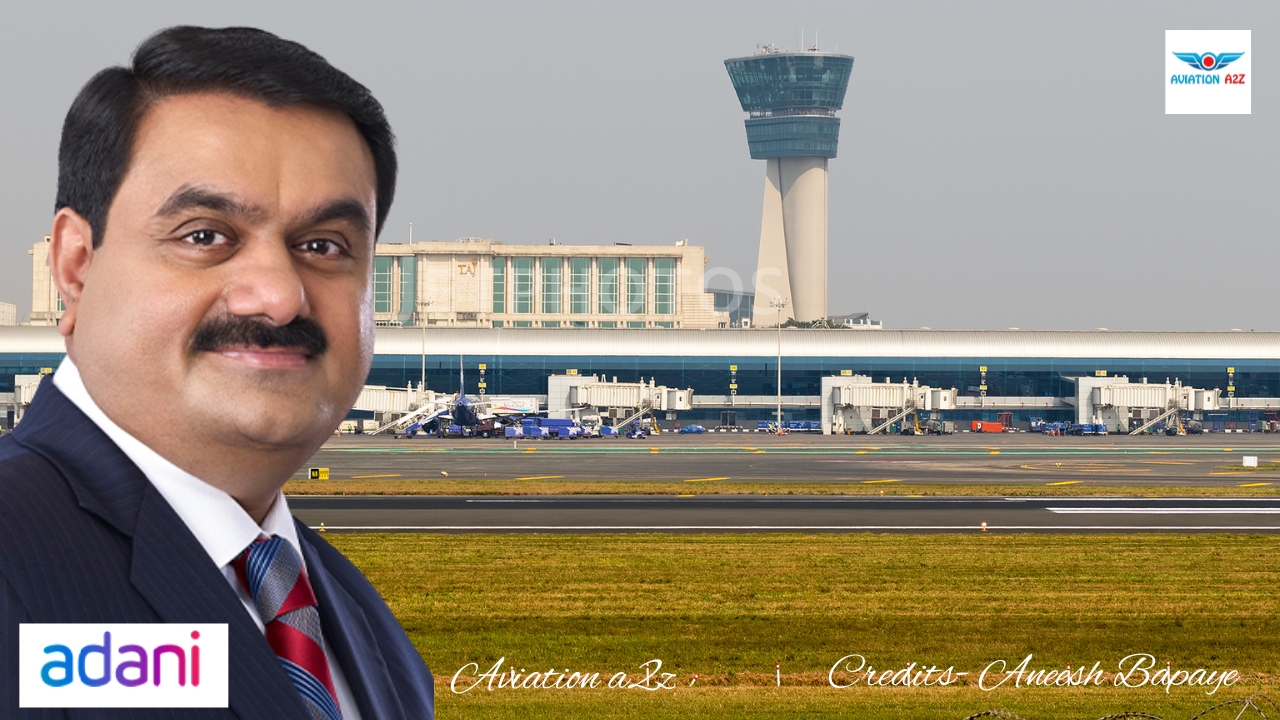
MUMBAI- Adani Group’s alleged airline plans have come under scrutiny after a reported June 4 letter from Adani Airports to the Airports Authority of India (AAI) sought a waiver that could allow the group and its affiliates to participate in scheduled airline operations.
The development has raised questions because the purported letter refers to an airline business, while an Adani Enterprises filing to the BSE and NSE on July 24 said reports that the group was evaluating an airline were “entirely baseless and factually incorrect.”

Adani Airline Plans Face Questions Over Conflicting Claims
A June 4 letter shared by Mahua Moitra from Adani Airports to the Airports Authority of India has triggered scrutiny after the Trinamool Congress Member of Parliament shared the document on X and alleged a contradiction between its contents and a later Adani Group stock-exchange disclosure.
According to the purported letter, Adani Airports sought a waiver from restrictions under the 2006 airport privatisation agreement.
The requested waiver would allow Adani Defence & Aerospace and its affiliates to participate in scheduled airline operations in India.
Moitra accused the Adani Group of “lying brazenly to Stock Exchanges”, arguing that the June 4 letter indicated an interest in entering the airline business, while a July 24 communication from Adani Enterprises to the BSE and NSE denied reports that the group was planning to launch an airline.
The Economic Times reported on the developments surrounding the purported letter and the subsequent stock-exchange denial.
The document shared by Moitra reportedly asks the AAI to permit Adani Defence & Aerospace and/or its affiliates to directly or indirectly invest in, establish, acquire, own, promote or control a scheduled airline in India.
It also seeks permission for:
- Any airport operator within the Adani Group and/or its affiliates to hold equity, directly or indirectly, in a scheduled airline.
- The proposed airline to obtain and maintain an Air Operator Certificate (AOC).
- The airline to secure related approvals from the Directorate General of Civil Aviation (DGCA), the Ministry of Civil Aviation and other competent authorities.
The purported letter reportedly argues that Adani Defence & Aerospace and other Adani Group entities are currently constrained from pursuing airline operations and obtaining an AOC despite possessing the capability, commitment and long-term strategic intent to contribute to India’s aviation sector.
The request therefore focuses on removing restrictions that the group says prevent airport-related entities from participating in airline operations.

Adani Defence and Aerospace’s Proposed Aviation Role
The letter reportedly states that Adani Defence & Aerospace has been evaluating participation in the airline business as a natural extension of the Adani Group’s broader commitment to the aviation ecosystem.
It also states that Adani Defence & Aerospace is working with Embraer, the Brazilian aerospace manufacturer, toward establishing capabilities for manufacturing regional aircraft in India.
The letter links these activities to a potential next-generation airline model focused on regional connectivity. It says such a platform could help bridge connectivity gaps across Tier-II and Tier-III cities while contributing to additional capacity in India’s aviation sector.
The proposed model therefore combines several areas of aviation activity, including airport infrastructure, regional airline operations and regional aircraft manufacturing capabilities.

Regional Connectivity and UDAN Programme
Regional connectivity is a central justification cited in the purported letter.
According to the document, an Adani-backed airline platform could serve underserved Tier-II and Tier-III cities and complement the objectives of the government’s UDAN regional connectivity programme.
The letter also argues that allowing airport operators to participate in the airline business could encourage the emergence of another large-scale airline operator.
It says the requested waiver could:
- Increase competition in the aviation sector.
- Reduce concentration risk.
- Strengthen overall sector resilience.
- Expand aviation capacity.
- Improve connectivity to underserved markets.
The document further argues that the proposal would be aligned with the Ministry of Civil Aviation’s policy objective of encouraging new airline entrants and expanding capacity.

Adani Enterprises Denies Airline Plans
The reported June 4 letter contrasts with Adani Enterprises’ July 24 stock-exchange disclosure.
The company denied reports that it was planning to launch an airline after reports of the group’s possible entry into commercial aviation generated market speculation.
In its stock-exchange filing, Adani Enterprises described reports that it was evaluating an airline business as “entirely baseless and factually incorrect.” The company also said it was not evaluating any proposal to enter the airline business.
This creates the central issue surrounding the controversy: the purported June 4 document describes a request for regulatory permission that could enable Adani entities to participate in scheduled airline operations, while the July 24 filing states that the group was not evaluating a proposal to enter the airline business.
The available material does not, by itself, establish that Adani Group had formally committed to launching an airline.
The purported letter indicates that a waiver was sought, while the later stock-exchange filing represents the group’s stated position that it was not evaluating an airline proposal.

Airline Industry Raises Conflict of Interest
The possibility of airport operators owning airlines has also drawn opposition from incumbent carriers.
IndiGo Managing Director Rahul Bhatia said allowing airport operators to own airlines could create a “massive conflict of interest” and potentially hurt consumers.
The concern centers on the possibility that an entity with control or influence over airport infrastructure could also have interests in an airline competing for passengers, slots, facilities and other airport resources.
Government officials, however, have indicated that any change in the existing framework would include safeguards requiring operational separation between airport and airline businesses.
The safeguards discussed include restrictions on sharing commercially sensitive information and limitations on common management between airport and airline operations.

Adani Group’s Position in India’s Airport Sector
The issue is significant because Adani Group already has an extensive presence across India’s airport sector.
The group is India’s largest private airport operator and manages eight airports, including Chhatrapati Shivaji Maharaj International Airport in Mumbai (BOM). It is also developing Navi Mumbai International Airport (NMI).
This existing airport footprint gives the group a substantial position within India’s aviation infrastructure sector.
The purported letter’s request for permission to allow an airport operator or its affiliates to hold equity in a scheduled airline therefore raises broader questions about the separation between airport infrastructure and airline operations.

What the Dispute Means for India’s Aviation Market
The controversy brings two separate issues into focus.
The first is whether Adani entities have explored or sought regulatory permission for potential participation in the airline business. The purported June 4 letter, as shared by Moitra, describes such a request and identifies Adani Defence & Aerospace and affiliates as potential participants.
The second is whether that reported regulatory request amounts to an actual plan to launch an airline. Adani Enterprises’ July 24 stock-exchange filing explicitly denied that the group was evaluating a proposal to enter the airline business.
The distinction is important because seeking regulatory clarity or a waiver does not necessarily establish that an airline has been formally approved, launched or committed to operations.
Any airline entering the market would also require an AOC and approvals from the DGCA, Ministry of Civil Aviation and other relevant authorities.
The debate over airport and airline ownership will also depend on the regulatory safeguards applied to prevent conflicts of interest, protect commercially sensitive information and maintain fair competition.

Key Takeaway
The controversy stems from an apparent contradiction between a purported June 4 letter from Adani Airports seeking a waiver that could enable Adani entities to participate in scheduled airline operations and Adani Enterprises’ July 24 denial that the group was evaluating an airline business.
The purported letter presents regional connectivity, additional capacity, competition and aviation-sector resilience as reasons for allowing airport operators and their affiliates to participate in airlines. It also refers to Adani Defence & Aerospace’s work with Embraer on regional aircraft manufacturing capabilities in India.
However, the document does not by itself establish that Adani Group has committed to launching an airline. The group’s July 24 stock-exchange filing remains its stated public denial of plans to enter the airline business.
Stay tuned with us. Further, follow us on social media for the latest updates.
Join us on Telegram Group for the Latest Aviation Updates. Subsequently, follow us on Google News
