

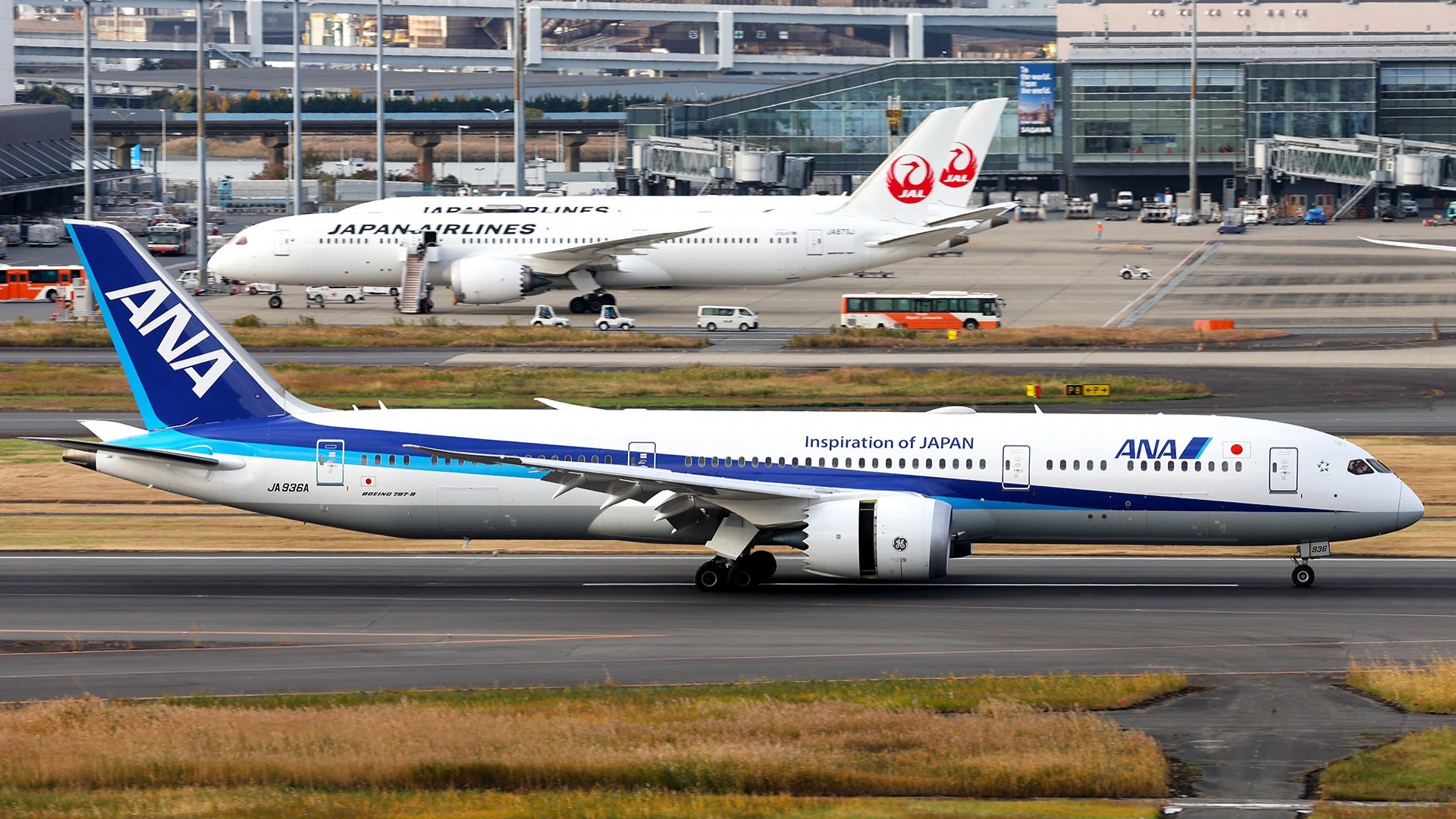
Japan Airlines (JL) provides some of the widest economy class seats of any mainline carrier, setting it apart from most competitors that squeeze passengers into tighter cabins. The Tokyo Haneda (HND) based airline reaches this comfort level by choosing roomier seat layouts on its widebody fleet instead of following the industry norm.
Most economy seats around the world measure 17 to 18 inches wide, with carriers such as Singapore Airlines (SQ) and Cathay Pacific (CX) sitting near the top alongside Japan Airlines. US operators including Delta Air Lines (DL), United Airlines (UA), and American Airlines (AA) generally fall at the lower end of that range, leaving Asian carriers to lead the field.
How Japan Airlines Creates Extra Cabin Space
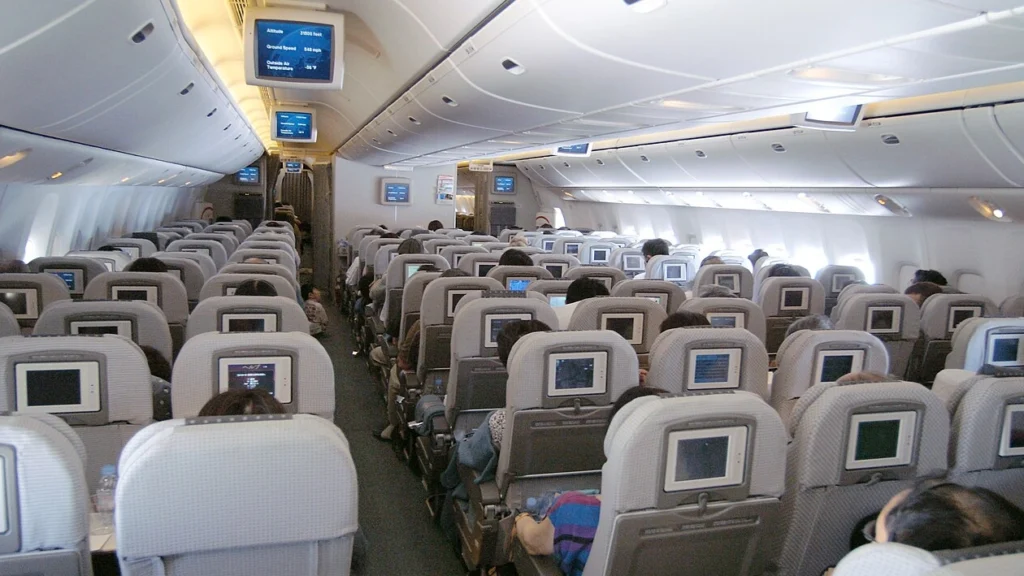
Japan Airlines stands out because it selects wider seat layouts than most rivals on the same aircraft. It configures the Boeing 777-300ER nine-abreast in a 3-3-3 pattern rather than the ten-abreast 3-4-3 layout used across most of the industry. This choice gives each passenger noticeably more lateral space.
The airline describes its widebody dimensions as “approximately 47 cm in JAL SKY SUITE 777 [and] approximately 45 cm in JAL SKY SUITE 767.” That converts to around 18.5 inches on the 777s and 17.7 inches on its legacy Boeing 767s.
Japan Airlines also configures its Boeing 787 Dreamliners eight-abreast in a 2-4-2 layout, which is unusual because the industry standard is nine-abreast.
The carrier states that its “JAL SKY SUITE 787 features a more relaxed eight-across seat layout rather than the industry standard nine-across, allowing for an extra 5 cm in seat width.” These seats reach roughly 18.9 inches, or 48 cm. All Nippon Airways (NH) once offered similar eight-abreast 787s but later switched them to nine-abreast.
Korean Air (KE) is another carrier that configures the 777-300ER nine-abreast. It recently planned to switch these aircraft to ten-abreast but reversed the decision after public criticism, Simple Flying reported.
Asian Carriers Lead For Economy Space
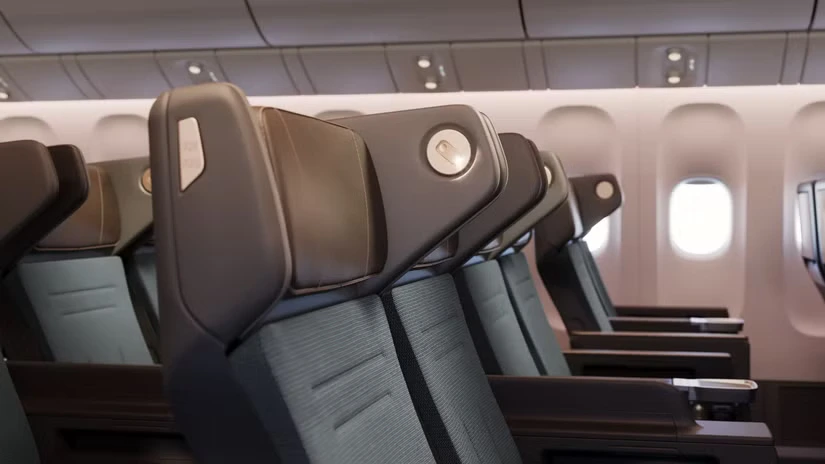
The airlines that most often provide the widest economy seats are based in Asia. Singapore Airlines is known for economy seats measuring around 18.5 to 19 inches, or 47 to 48 cm, on its widebody aircraft. Cathay Pacific offers economy seats up to 18.5 inches, or 47 cm, and both carriers configure their Boeing 777s nine-abreast.
The Airbus A380 also delivers generous width. All Nippon Airways offers around 18 inches on its three Airbus A380s. Airbus describes the Singapore Airlines A380 economy cabin this way: “Economy Class also offers more space with 18.5-inch-wide seats and an improved design that provides additional back support and a six-way adjustable headrest with foldable wings.”
Asiana Airlines (OZ), which is being absorbed by Korean Air, advertises economy seats of 18.9 inches with 33 inches of pitch on its A380s. Korean Air’s own A380s carry economy seats 18.1 inches wide with 33 to 34 inches of pitch. According to seat-mapping resource AeroLOPA, these wide configurations remain rare across the global fleet.
Why Most Airlines Offer 17 To 18 Inches
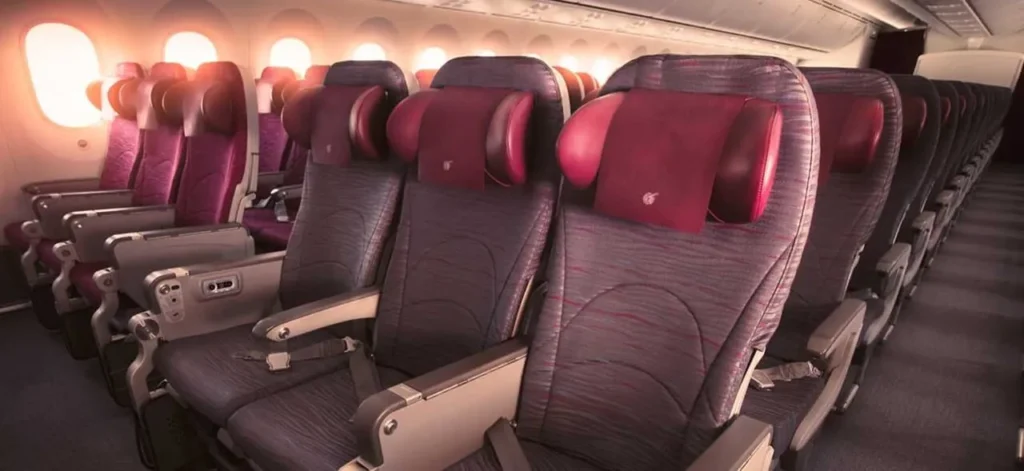
Most mainline carriers provide between 17 and 18 inches of economy seat width on their widebody jets. Examples include Qatar Airways (QR), Etihad Airways (EY), Virgin Atlantic (VS), Air France (AF), Qantas (QF), Ethiopian Airlines (ET), Air New Zealand (NZ), and Air India (AI).
Airlines have limited control over seat width because the aircraft cabin sets the boundaries. Economy A320 and Boeing 737 jets always seat six-abreast, A220s seat five-abreast, A350s and 787s seat nine-abreast, and 777s seat ten-abreast.
Carriers can adjust width only at the margins by changing sidewall and insulation design, which can add 0.3 to 0.6 inches per seat, or by reducing armrest thickness. Thinner armrests do not actually move passengers further apart.
Boeing 777 Versus Airbus A350
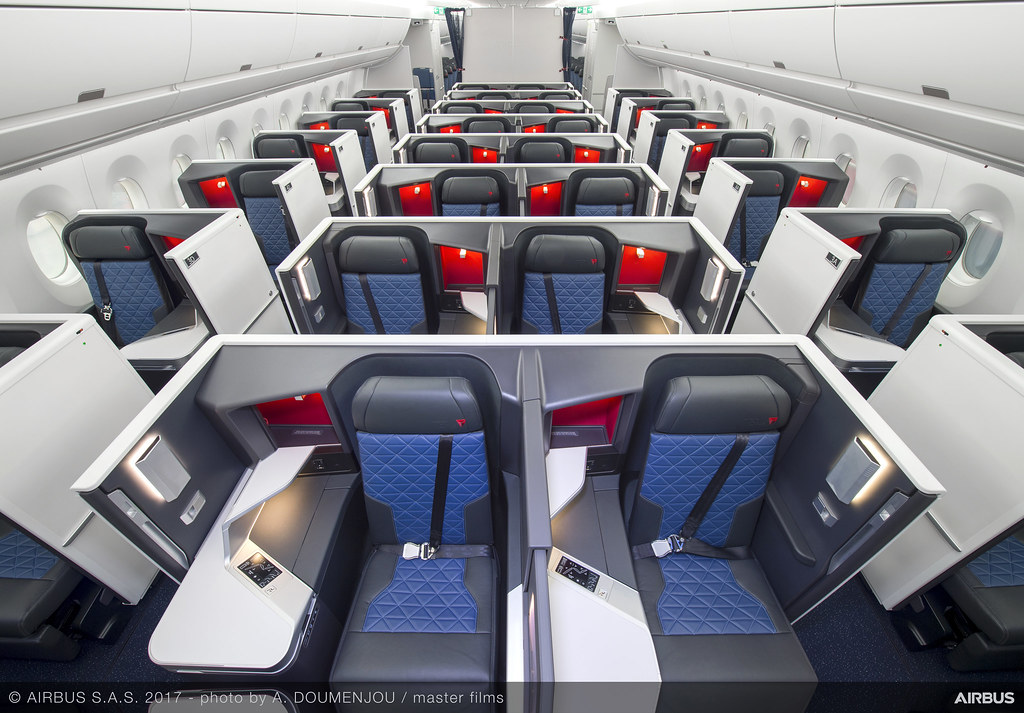
The Boeing 777-300ER is a wider aircraft than the Airbus A350, yet most airlines configure it ten-abreast while keeping the A350 nine-abreast.
The 777 was designed to seat nine-abreast comfortably, but in practice almost all operators now fit ten across. For carriers such as United and American, this results in seats of just 17 inches or narrower.
The A350 was built with a narrower cabin, though a newer production standard added about four inches of space through thinner walls. As a result, economy passengers often find wider seats on the narrower A350 than on the wider 777.
French Bee (BF) is an exception, fitting 480 seats into its A350-1000s at just 16.7 inches wide, while its Premium Blue cabin uses a 2-4-2 layout with 18- to 19-inch seats.
The Airbus A220 Advantage
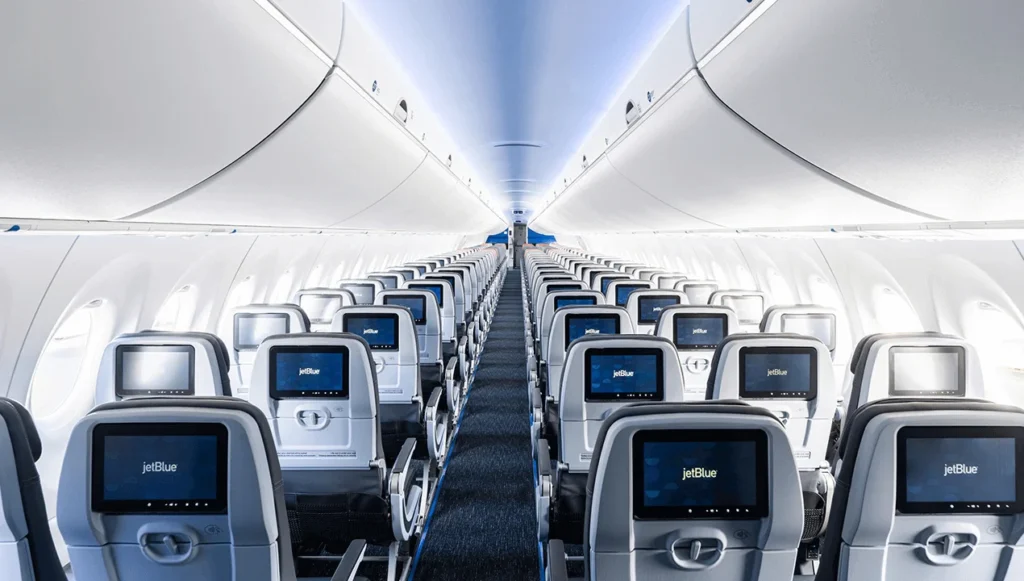
The Airbus A220 offers some of the widest economy seats among narrowbody and regional jets. Designed as the Bombardier CSeries for five-abreast seating, it gives passengers more room than most single-aisle aircraft.
JetBlue (B6) lists A220-300 seats at 18.5 inches in the A and C positions and 19 inches in the D, E, and F positions.
Delta, the world’s largest A220 operator, provides 18.6 inches in Delta Main and 18.1 inches in Delta Comfort. Breeze Airways (MX) offers 18-inch seats with 30 inches of pitch. Delta currently operates 82 A220s, JetBlue 58, Breeze Airways 49, and Air Canada (AC) 41.
Southwest Stands Out Among Boeing 737 Operators
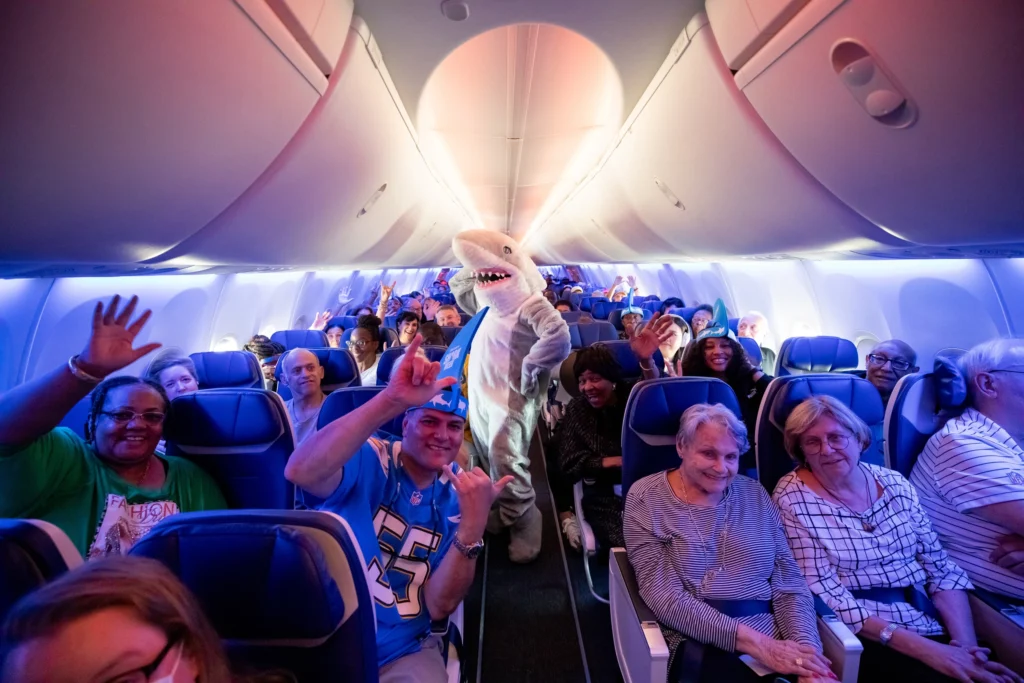
Southwest Airlines (WN) provides some of the widest seats in its market segment despite flying only the Boeing 737.
Its seats measure around 17.8 inches, achieved through slimmer armrests, thinner seat backs, and optimized cushioning on its Boeing 737 MAX 8 and retrofitted 737-800 aircraft. By comparison, American typically offers 17 inches, United up to 17.3 inches, and Delta around 17.5 inches.
Southwest also changed its long-standing policy on larger passengers. As of January 2026, travelers who “encroach upon the neighboring seat(s) should proactively purchase the needed number of seats prior to travel to ensure the additional seat is available.”
This brings Southwest closer to the standard US practice of requiring an extra seat or a premium upgrade.
Stay tuned with us. Further, follow us on social media for the latest updates.
Join us on Telegram Group for the Latest Aviation Updates. Subsequently, follow us on Google News
