

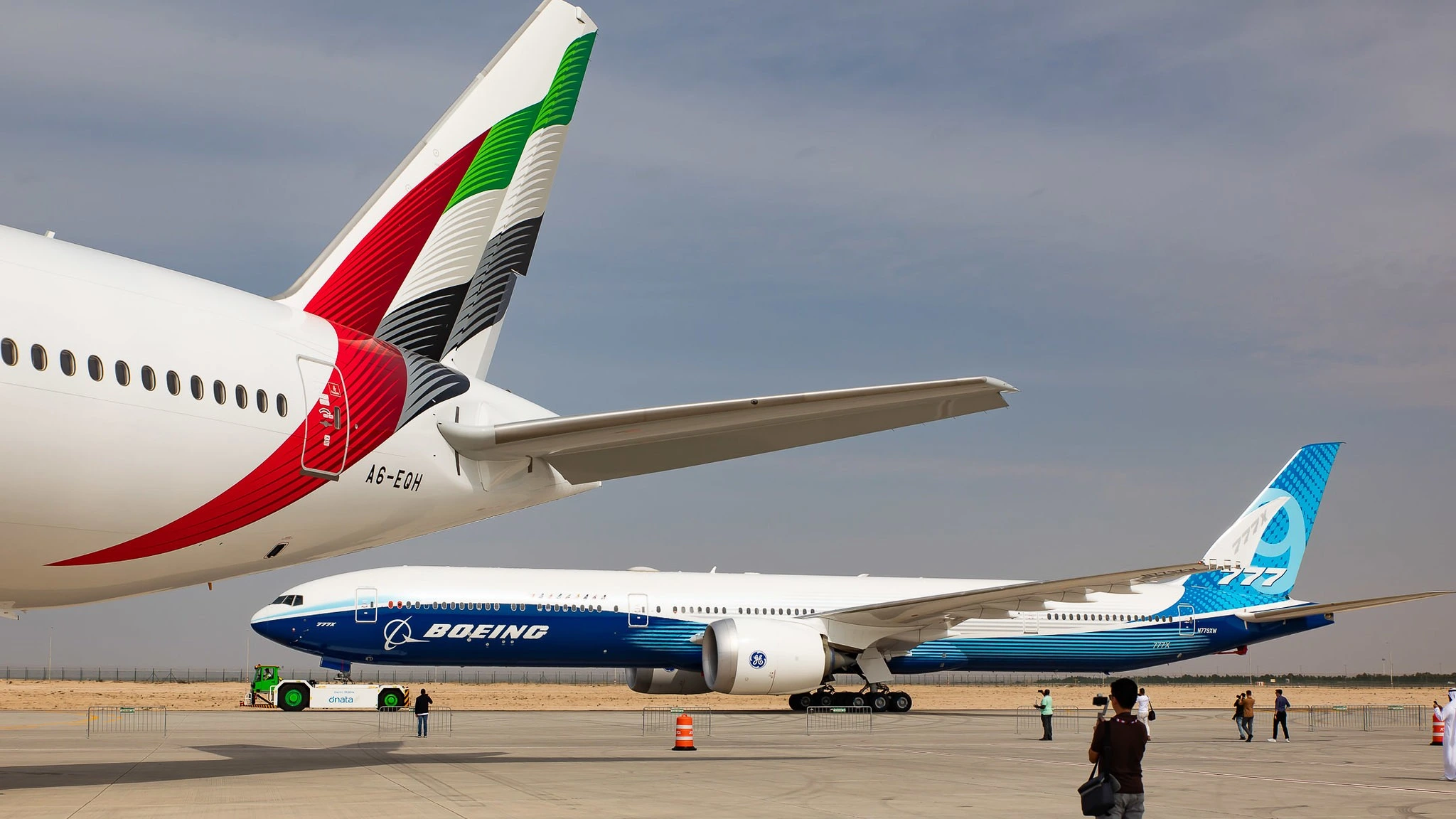
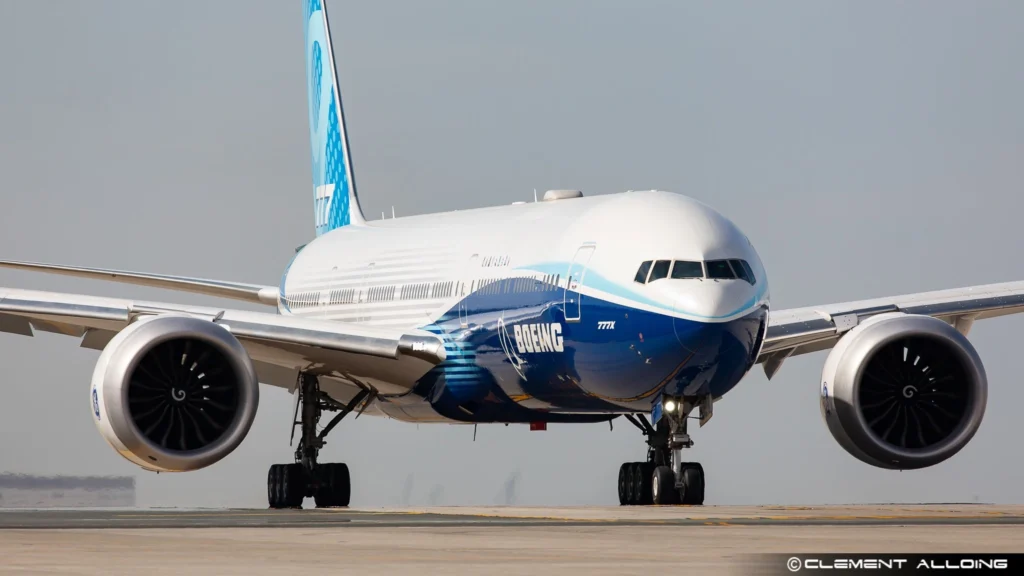
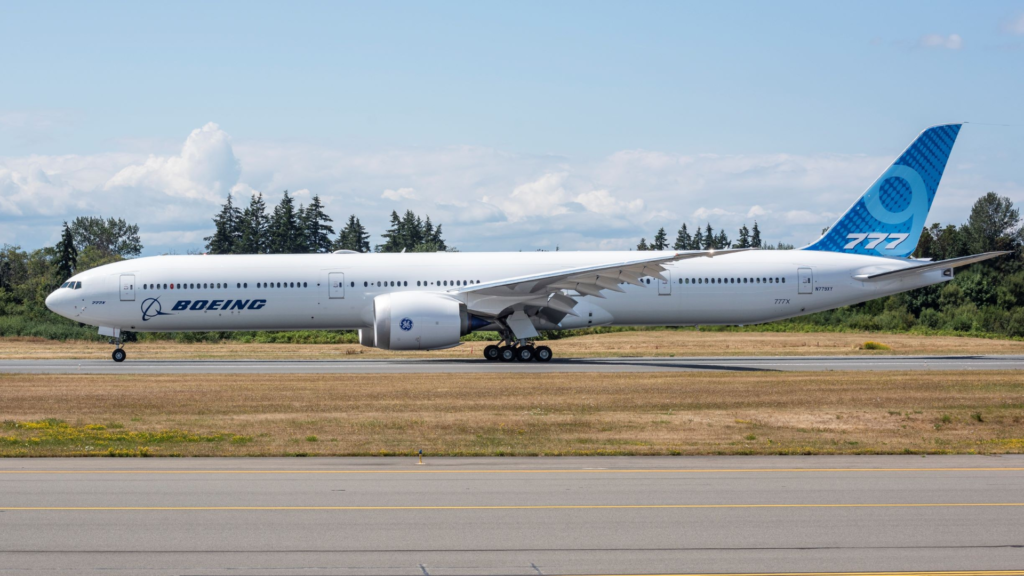
ARLINGTON, VIRGINIA— Boeing has broken apart one of its earliest-built 777-9 airframes, a jet that spent roughly six years grounded at Paine Field (PAE) in Everett without ever flying. The widebody carried partial Emirates (EK) markings and was meant to join the Gulf carrier before its teardown.
The aircraft was written off as part of the $15 billion in charges Boeing has booked against the delayed 777X program. Its scrapping reflects a wider problem for the manufacturer, which built dozens of early jets that now need costly rework before any airline will accept them.
Boeing Scraps Emirates 777X
The airframe, known internally as WH007 and carrying line number 1611, was the seventh 777-9 ever assembled. It rolled out of the factory in July 2019 and was set to enter service with Emirates under the registration A6-EZT. Its folding wingtips were painted in Emirates colors, though the rest of the structure stayed bare.
The jet never flew. It sat in storage at Paine Field for around six years before Boeing disassembled it in the late summer of 2025. Because it was built years ahead of certification, WH007 was completed to an early configuration standard that no longer matched the final design.
Plane spotters photographed the airframe with its wingtips removed just months after it left the factory, and its engines were never installed.
Boeing confirmed the teardown, stating it chose not to finish one of its “partially assembled” 777-9s. The company said the aircraft had been written off in earlier financial results but did not give an exact date for when it was taken apart. The teardown was first reported by The Air Current.
ALSO READ: Over 30 New Boeing 777X Jets Need Major Rework Before Delivery
What Change Incorporation Means
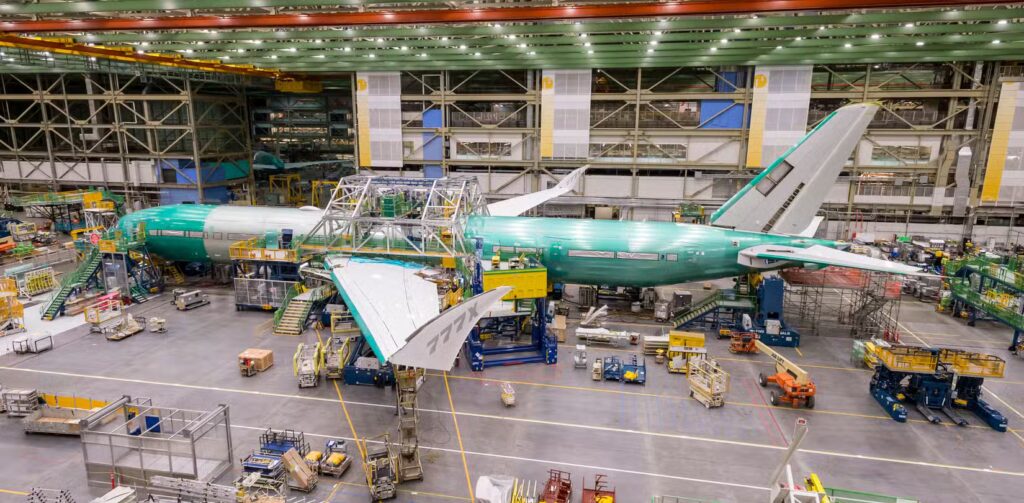
Change incorporation is the process of retrofitting aircraft that were already built so they match the final, certified design.
The 777X has faced more testing and certification hurdles than Boeing first expected, and findings from flight testing along with new Federal Aviation Administration (FAA) requirements must be applied to every jet already produced.
This work is normal for any new aircraft program, but the 777X has gone through more changes than most since its launch.
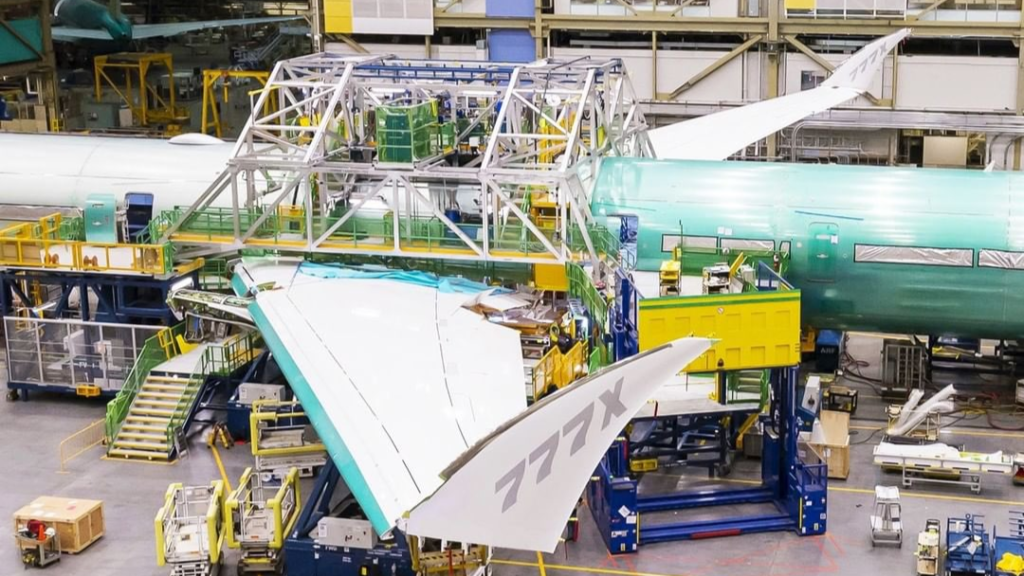
Boeing is believed to have built up to 40 airframes, and all of them will need some level of rework. As a rule, the older the jet, the more work it requires. WH007 was the second 777X built for Emirates, following WH006, line number 1605, which will fly as A6-EZD.
Airlines Reject The Early Airframes
The cost of this rework is high. When Boeing still published list prices, it valued a single 777-9 at more than $442 million. The manufacturer has not said how much its change incorporation charges will total across the built fleet.
Emirates likely influenced the decision to scrap WH007. Airline president Sir Tim Clark has made clear the carrier will not take any stored 777X due to the heavy rework these jets face.
Emirates is by far the largest 777X customer, with 270 aircraft on order, which is close to half of all passenger 777X orders. At least one other carrier, which has not been named, has also declined early-build jets.
A Familiar Problem For Boeing
The 777X was first slated to enter service in 2020 but is now scheduled to debut in 2027 with launch operator Lufthansa (LH). The delay has left Boeing holding a growing inventory of unwanted jets.
The manufacturer has faced this situation before. Its early 787 Dreamliners, nicknamed the “Terrible Teens,” needed years of expensive rework and were later sold at steep discounts, while some never entered service. Earlier this year, a 787-8 with just 13 hours of total flight time was broken apart at Roswell Air Center (ROW) in New Mexico.
Stay tuned with us. Further, follow us on social media for the latest updates.
Join us on Telegram Group for the Latest Aviation Updates. Subsequently, follow us on Google News
