

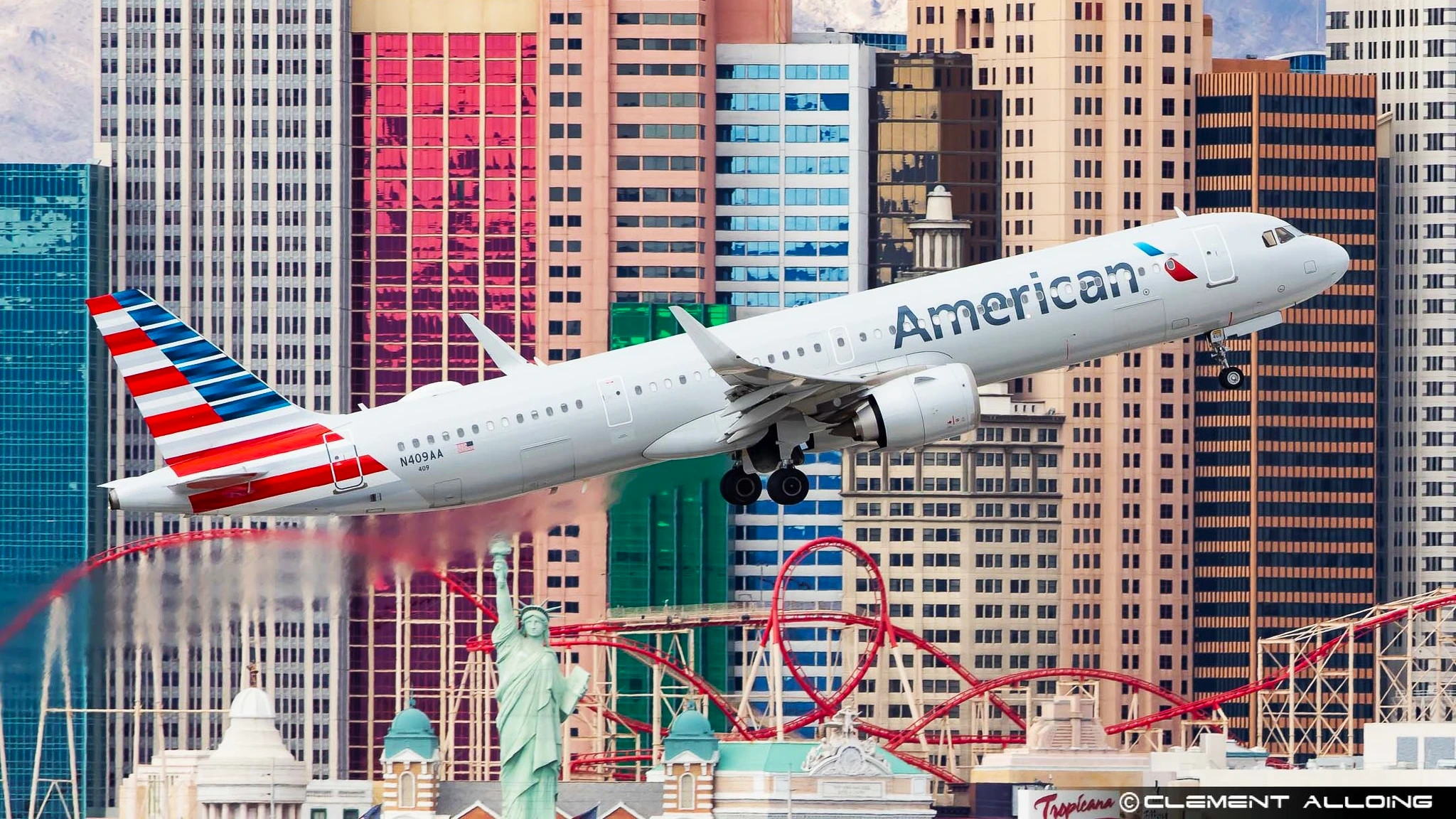
FORT WORTH- American Airlines (AA) passengers flying from Charlotte Douglas International Airport (CLT) to Chicago O’Hare International Airport (ORD) endured a punishing journey after a 7.5-hour departure delay was followed by a diversion to the wrong city.
Severe thunderstorms across the Chicago area turned a routine domestic hop into an ordeal lasting most of a day.
Flight AA836 eventually diverted to Minneapolis-St. Paul International Airport (MSP) before reaching its destination almost 11 hours behind schedule.
The disruption struck during one of the busiest travel weekends of the year in the United States.

American Airlines Flight AA836 Ended Up In The Wrong City
The trouble started on the ground in Charlotte. The service was scheduled to leave at 1:05 PM but did not push back until 8:27 PM, a delay of almost seven and a half hours before the aircraft had even departed.
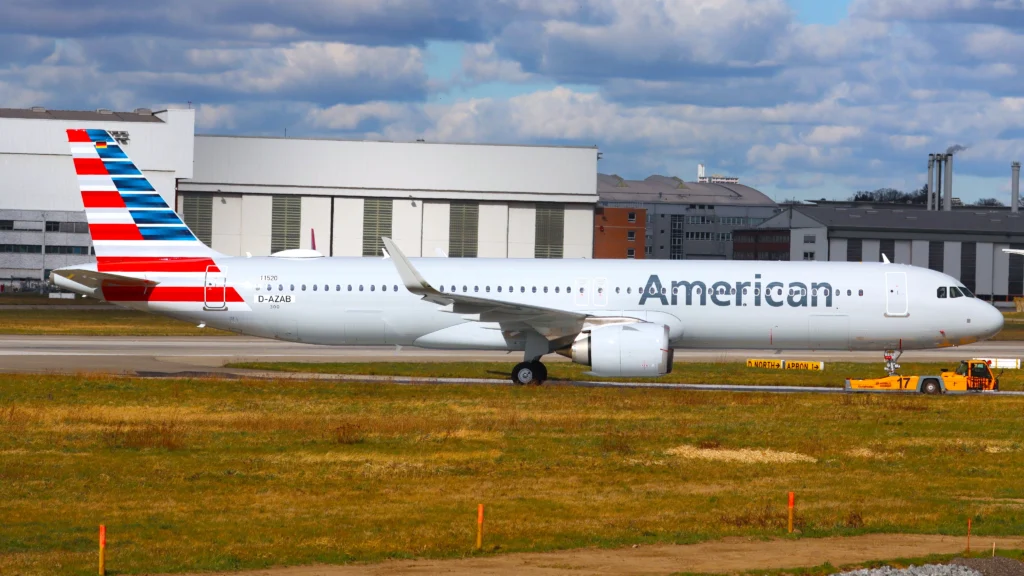
Flight tracking data from Flightradar24 shows the aircraft, an Airbus A321neo, tried to weave around storm cells on its way north.
As it approached Chicago O’Hare, the crew judged conditions too dangerous to land and diverted to Minneapolis for safety. Flightradar24 captured the moment on social media as the diversion unfolded:
The jet touched down at MSP at 10:08 PM and sat on the ground for roughly two hours. The same aircraft departed again just after 00:15 AM and finally landed at O’Hare at 01:22 AM, against an original scheduled arrival of 2:40 PM. That worked out to a delay of nearly 11 hours.
As reported by Simple Flying, American Airlines was contacted for comment but a representative could not be reached before publication.

11-Hour Weather Delay
The cause matters as much as the length. Under US Department of Transportation (DOT) rules, weather delays are classed as “uncontrollable,” which changes what passengers are owed.
Airlines are not required to reimburse meals or hotel stays when weather is to blame, and any assistance in those cases is left to the carrier’s discretion rather than mandated by law.
Refund rights still apply, however. DOT rules entitle travelers to a full refund whenever a domestic flight arrives three or more hours late, and they choose not to take it, regardless of the cause.
A separate proposal that would have forced airlines to pay cash compensation for long delays was withdrawn in late 2025, so passengers on flights like AA836 have a right to their money back but no automatic payout for the hours lost.
Those who still flew to Chicago, as most on AA836 did, generally fall outside refund eligibility because they completed the journey.
Over 600 Cancellations And 1,000 Delays At O’Hare
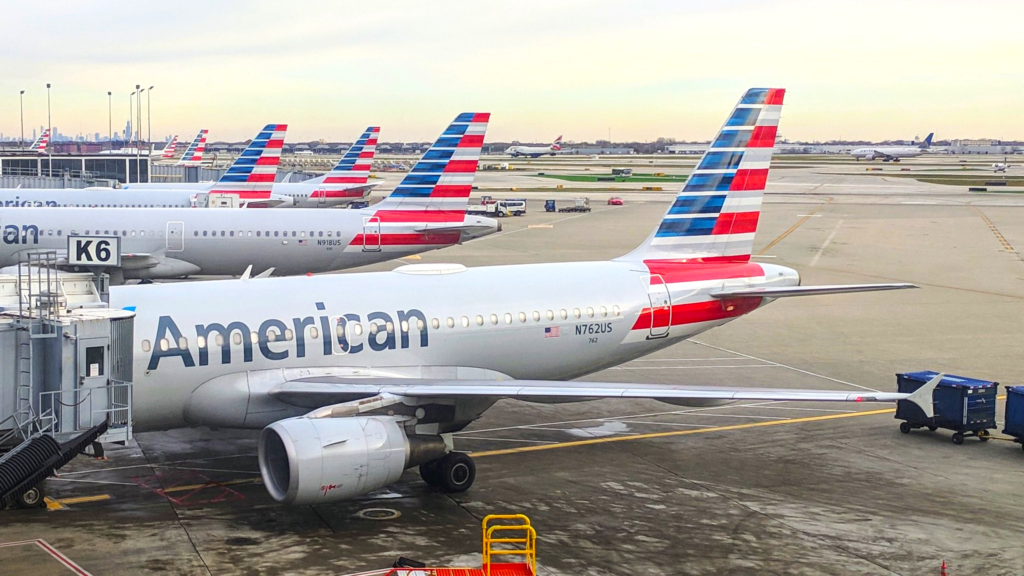
The diversion was one small part of a much larger breakdown. Data from FlightAware shows O’Hare recorded more than 600 inbound and outbound cancellations that day, alongside over 1,000 delayed flights. That left roughly 20% of scheduled flights canceled and close to 40% delayed.
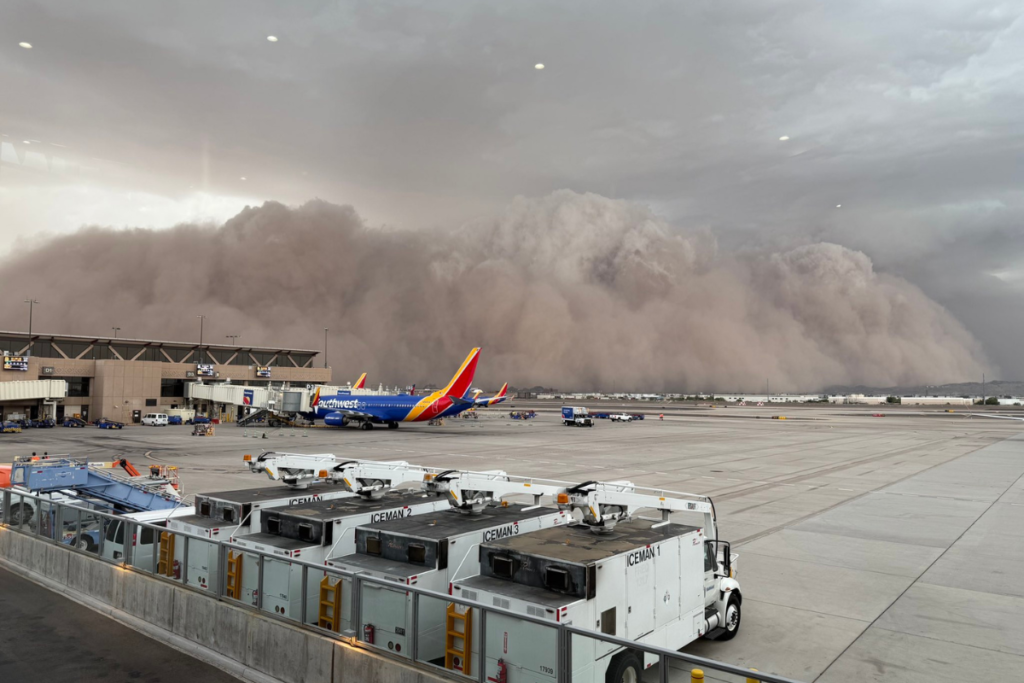
Ground stops hit both O’Hare and Chicago Midway International Airport (MDW) as thunderstorms and strong winds swept through.
American limited its outright cancellations to fewer than 50, a relatively strong recovery, but still saw more than 1,000 flights delayed across its network, most of them at O’Hare. United Airlines, which also runs a major hub at the airport, absorbed heavy disruption of its own.
Why O’Hare Is Exposed To Storms
O’Hare’s scale is both its strength and its weakness. The airport handled 857,392 aircraft movements in 2025, making it the world’s busiest by takeoffs and landings and pushing it ahead of Hartsfield-Jackson Atlanta International Airport (ATL) for the first time since 2019, though Atlanta remains the busiest by passenger count. A hub that dense has little slack, so a few hours of storms cascade into hundreds of delays.
That fragility has been sharpened by a rare airline rivalry. O’Hare is the only major airport in the world with two competing hub carriers operating side by side, and in 2026 that competition boiled over.
American announced a return to 500 daily departures from ORD, restoring its pre-pandemic footprint, after United countered with plans for up to 750 daily flights, the largest schedule any airline has ever flown at the airport. Both carriers were racing to add flights partly because gate allocations at O’Hare track flight volume, so more departures mean more gates.
The scheduling war grew so aggressive that the Federal Aviation Administration (FAA) stepped in. With carriers filing more than 3,080 daily operations for the summer, well above the 2,680 flown in 2025, the FAA capped O’Hare at roughly 2,800 daily movements for the season to protect the runway, terminal, and air traffic control systems from overload.
The cap means the airport is already running close to its ceiling, leaving even less room to recover when severe weather strikes.
Disruption During A Record Holiday Weekend
The timing amplified the pain. The delayed and diverted flight fell during the Fourth of July rush, one of the busiest travel periods in the country.
The Transportation Security Administration (TSA) projected it would screen nearly 18.7 million passengers between June 30 and July 6, with July 2 expected to be the single busiest day at more than three million air travelers.
Demand was further inflated by the ongoing 2026 FIFA World Cup, which has drawn a wave of international visitors, and the America 250 celebrations marking the nation’s 250th anniversary of independence. When airline resources are already stretched this thin, a line of summer storms is all it takes to strand a full aircraft nearly 11 hours from its schedule.
Stay tuned with us. Further, follow us on social media for the latest updates.
Join us on Telegram Group for the Latest Aviation Updates. Subsequently, follow us on Google News
