

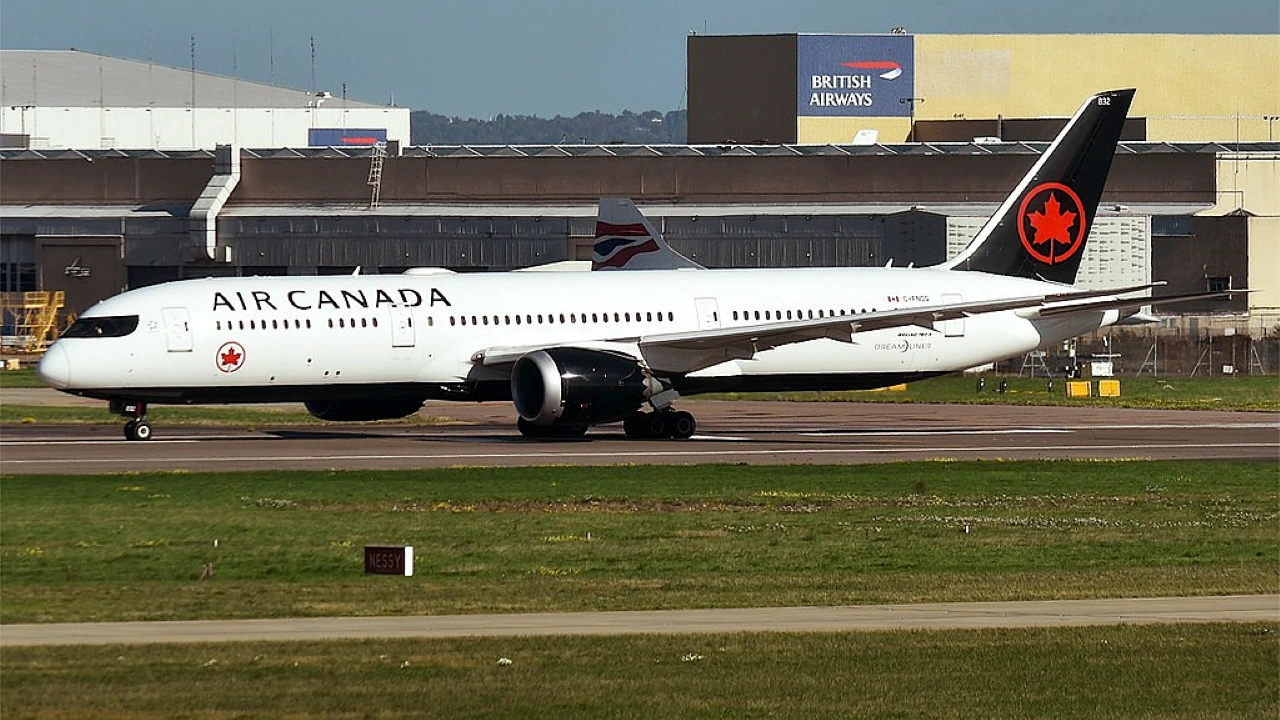
EDINBURGH- An Air Canada (AC) Boeing 787-9 Dreamliner returned to Edinburgh Airport (EDI) on June 14, 2026, after the crew is reported to have declared an emergency over the North Atlantic. Flight AC937 was operating from Edinburgh (EDI) to Montreal-Pierre Elliott Trudeau International Airport (YUL) when it reversed course.
The aircraft departed Edinburgh (EDI) at around 9:30 am and had reached a position northwest of Ireland before turning back toward the Scottish capital. Flight tracking data shows it landed safely at Edinburgh (EDI) at approximately 11:45 am.
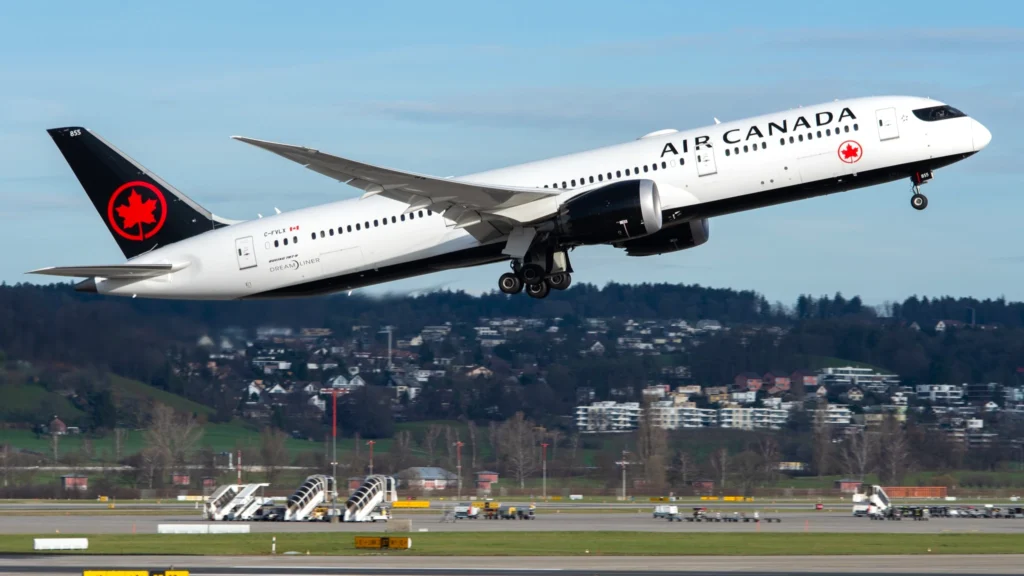
Air Canada 787 Flight Makes U-Turn
Flight AC937 climbed to its planned cruising level and tracked west toward the oceanic entry point before the crew elected to return.
The flight is understood to have transmitted a 7700 transponder code, which signals a general emergency to air traffic control.
The aircraft did not continue across the Atlantic. After turning back near the oceanic boundary, it descended and routed eastbound toward Edinburgh, completing a flight that lasted just over two hours from departure to landing. The return path took it back over the same airspace it had crossed on the outbound leg.
We analysed the ACRAS message:
AC937, C-FRTU (787-9), EDI–YUL, turned back near the oceanic boundary and returned to Edinburgh ~1052Z. Inferred but unconfirmed: a technical issue (left-engine EEC and/or electrical) prompted it.
The single most operationally significant item is the left-engine EEC Channel A fault, and the in-flight (0937) ATA 24 electrical message is the only one that clearly post-dates departure.
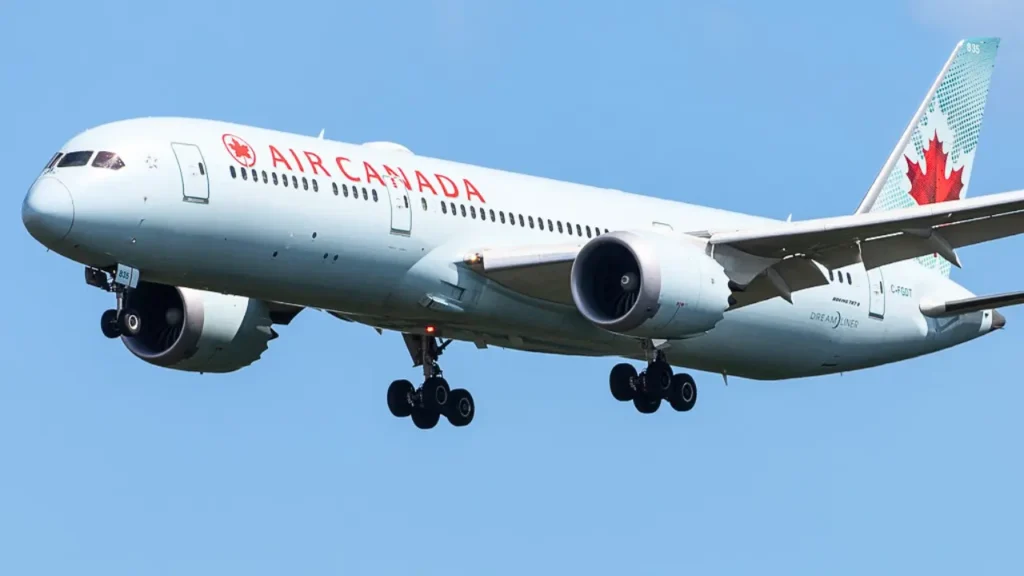
Boeing 787-9 Dreamliner Operated the Service
The flight used a Boeing 787-9 Dreamliner registered C-FRTU. The widebody type serves Air Canada (AC) long-haul routes, including transatlantic services between the United Kingdom and Canada.
The aircraft handled the return and landing without further reported incident. Crews follow standard procedures during an air return, which can include managing aircraft weight before landing back at the departure airport.
The reason for the emergency has not been confirmed. No official statement detailing a specific technical or operational fault was available at the time of the return.
Air returns can result from a range of factors, including technical indications, system warnings, or precautionary decisions by the flight crew. In this case, the trigger behind the decision to turn AC937 back to Edinburgh (EDI) has not been publicly established.
Bottom Line
Air Canada (AC) operates services linking Edinburgh (EDI) with destinations in Canada, including Montreal-Trudeau (YUL). The route carries passengers across the North Atlantic on a journey that typically takes several hours.
The diversion meant passengers on AC937 returned to their point of departure rather than reaching Montreal (YUL) as scheduled.
Affected travelers would normally be rebooked or accommodated under the airline’s standard procedures following a disrupted flight.
Stay tuned with us. Further, follow us on social media for the latest updates.
Join us on Telegram Group for the Latest Aviation Updates. Subsequently, follow us on Google News
