


DÜSSELDORF— A Eurowings (EW) Airbus A320-200 suffered a serious wake turbulence encounter with an Emirates (EK) Airbus A380-800 near Sarajevo (SJJ), Bosnia and Herzegovina, leaving four passengers and one cabin crew member injured during the mid-air upset.
The incident occurred while the Eurowings narrowbody was operating flight EW-635 from Rhodes (RHO) to Cologne (CGN), climbing behind the Emirates flagship EK1 service from Dubai (DXB) to London Heathrow (LHR).
The smaller jet stopped climbing, descended sharply, and continued to its destination, where medical teams were waiting on arrival, Aviation Hearld reported.
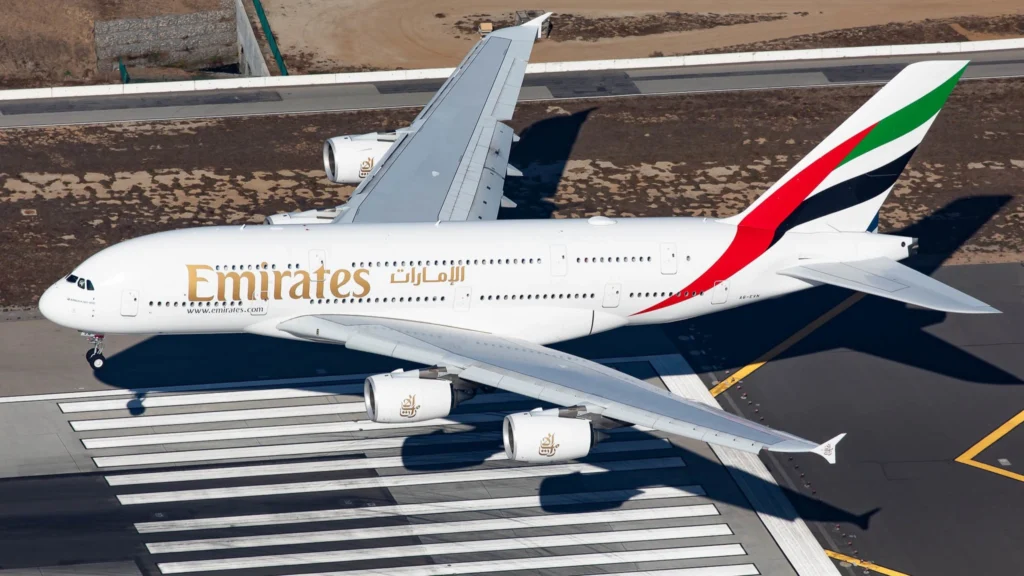
Emirates A380 Wake Turbulence Injures Five
The Eurowings Airbus A320-200, registered D-AEWS, was cruising at Flight Level 360 about 20 nautical miles east of Sarajevo when air traffic control cleared the aircraft to climb to FL380.
At the same moment, the Emirates Airbus A380-800, registered A6-EUF, was already maintaining FL380 in the same airspace.
The superjumbo was positioned around 13 nautical miles east-northeast of Sarajevo and approximately 7.6 nautical miles ahead of the climbing A320.
As the narrowbody passed through the altitudes, the flight crew encountered atmospheric turbulence combined with wake turbulence from the A380.

The Mid-Air Upset
The A320 stopped its climb at approximately FL376, falling short of the cleared altitude. The aircraft then descended back to FL360 at a rate of up to 3,000 feet per minute.
The sudden movement caused significant disruption inside the cabin. Four passengers and one flight attendant sustained minor injuries.
The cabin crew member was thrown against the ceiling during the most violent phase of the upset, according to information reported by The Aviation Herald.
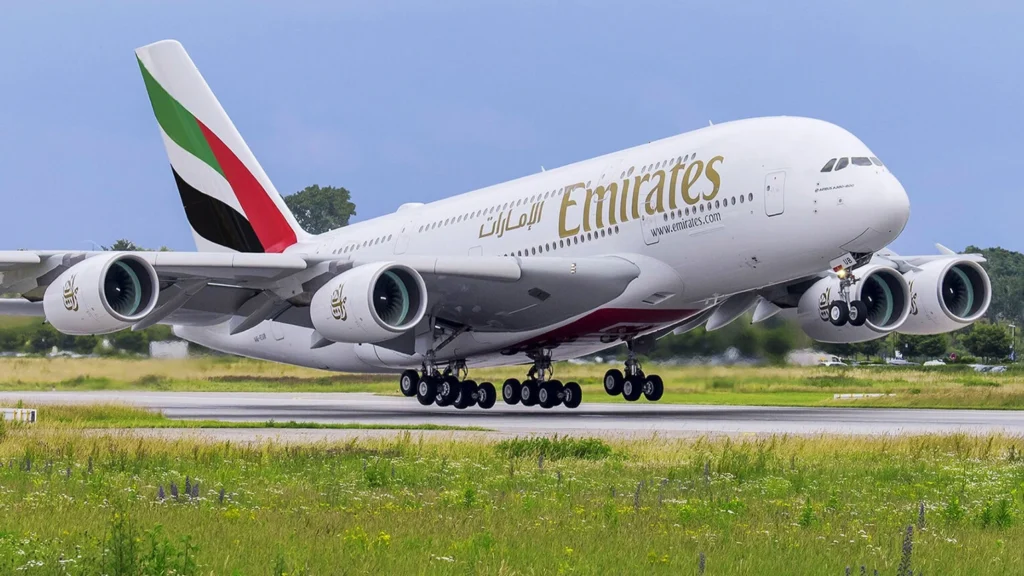
Landing and Aftermath in Cologne
The Eurowings crew continued the flight to Cologne, where medical services were on standby. The injured individuals received initial treatment on board the aircraft before being transferred to a local hospital for further assessment.
Authorities secured both the Cockpit Voice Recorder and the Flight Data Recorder for analysis. The Emirates A380 was unaffected by the encounter and continued safely to London Heathrow.
The A320 remained on the ground in Cologne for about four and a half hours after its arrival. The aircraft later returned to service and departed for its next sector with a delay of around three and a half hours.
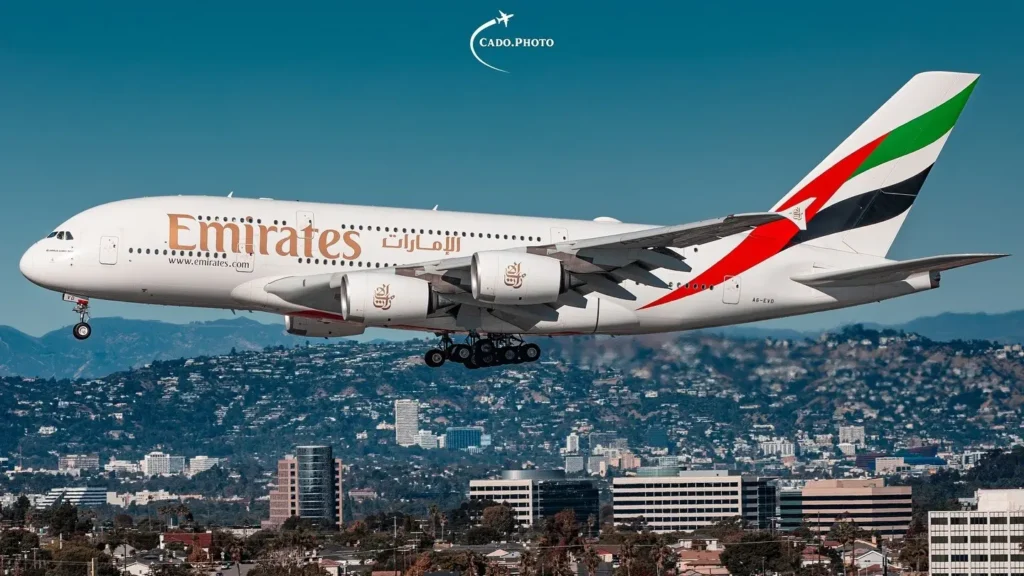
Separation Standards and Wake Turbulence Concerns
The incident raises questions about wake turbulence separation minimums. ICAO recommendations require a minimum separation of 7.0 nautical miles between an A380, classified as Super category, and a trailing A320, classified as Medium weight, when operating at the same altitude or up to 1,000 feet below.
At the time of the encounter, the Eurowings A320 was approximately 7.6 nautical miles behind the Emirates A380, placing the separation only marginally above the required threshold.
Why A380 Wake Turbulence Remains Hazardous
Wake turbulence from the A380 is well documented as particularly dangerous due to the size and mass of the aircraft. The wingtip vortices generated by the four-engine superjumbo can persist for several minutes and travel considerable distances behind the aircraft.
These vortices pose a real risk to lighter aircraft operating on similar flight paths. A previous incident in January 2017 saw an Emirates A380-800 over the Arabian Sea send a business jet into an uncontrolled descent, highlighting the recurring nature of such encounters even when published separation rules are observed.
Stay tuned with us. Further, follow us on social media for the latest updates.
Join us on Telegram Group for the Latest Aviation Updates. Subsequently, follow us on Google News
