

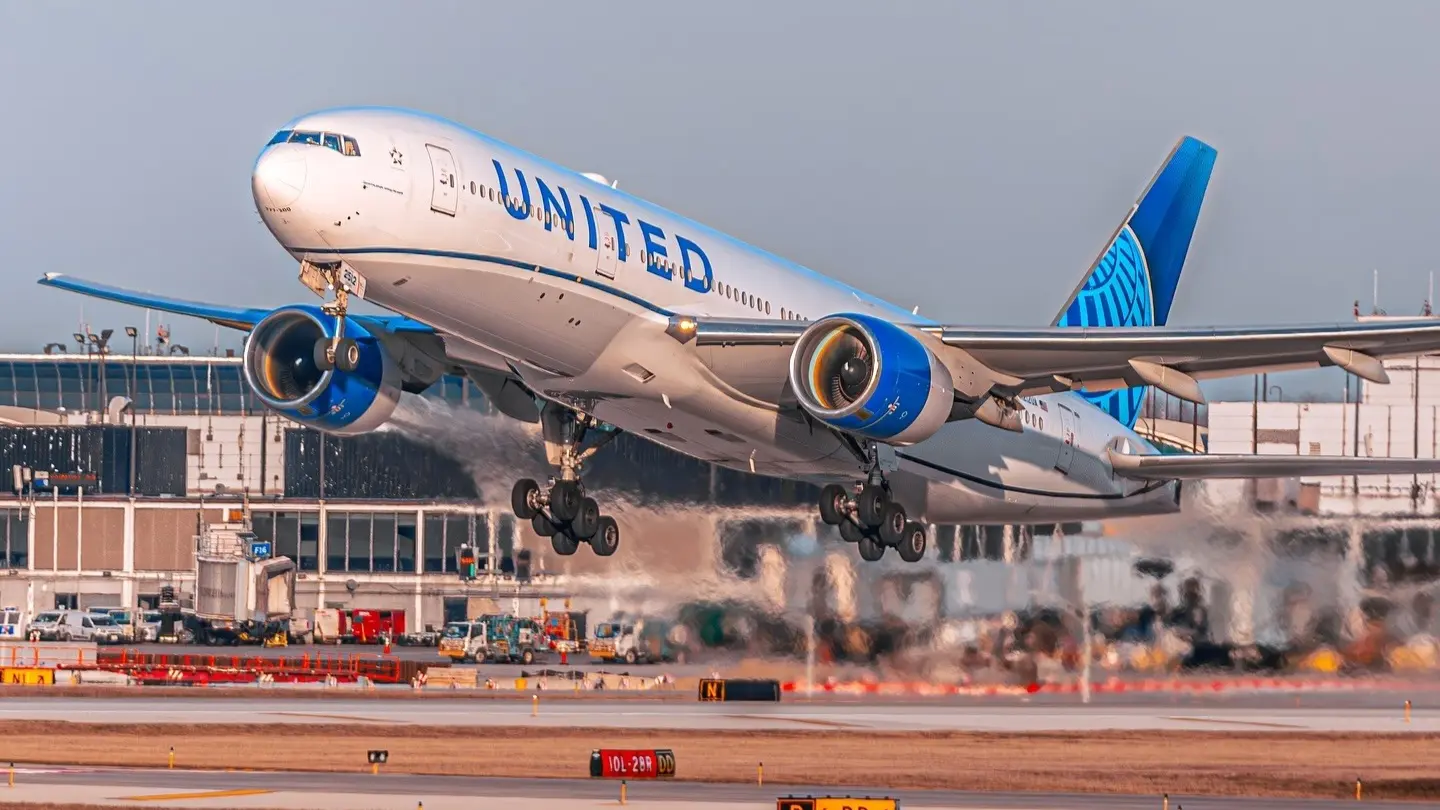
CHICAGO – United Airlines (UA) is preparing to introduce Starlink-powered in-flight Wi-Fi on its long-haul fleet, beginning with a select group of Boeing 777-200ER aircraft inherited from Continental Airlines after the 2010 merger.
The first upgraded aircraft is expected to enter testing soon as the carrier pushes ahead with a fleetwide connectivity overhaul.
The rollout centers on 22 Boeing 777-224ER aircraft equipped with General Electric GE90 engines.
United confirmed that the first modified aircraft, registered N77018, is currently undergoing work after arriving at Rio de Janeiro–Galeão International Airport (GIG), while additional testing and certification flights are planned ahead of the busy summer travel season.
Starlink Fleet Upgrade
United has accelerated its transition away from older Panasonic connectivity systems after passengers recently reported internet outages on several long-haul flights.
Industry observers believe the carrier may have begun phasing out the previous system ahead of Starlink installations.
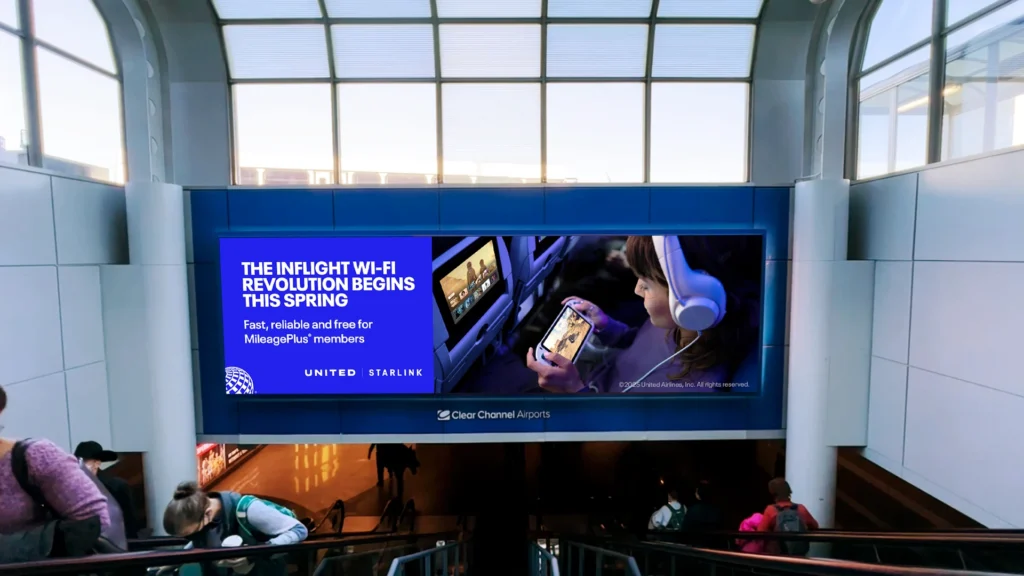
The airline has already installed Starlink hardware across its Embraer E175 regional fleet, consisting of nearly 250 aircraft.
Retrofits are also progressing across the Boeing 737 narrowbody fleet as United works toward equipping its entire mainline operation with high-speed satellite internet.
Earlier this year, United showcased the Starlink initiative during a promotional event at Los Angeles International Airport (LAX).
The airline plans to complete Starlink installations across its widebody fleet by the end of next year, while roughly half of its single-aisle aircraft are expected to receive the service during 2026.
GE90 777 Selection
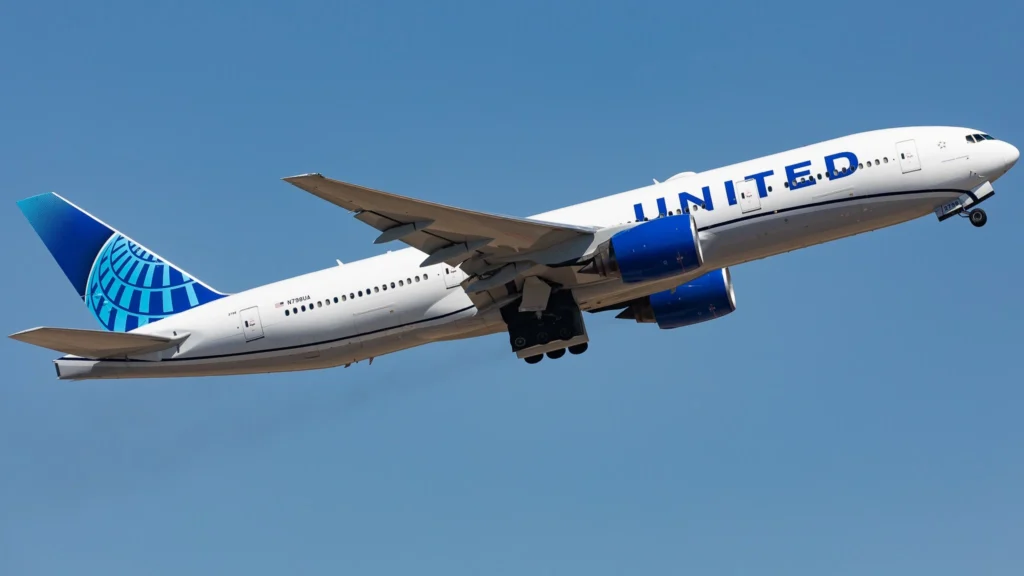
The Boeing 777-200ER aircraft selected for the first widebody installations differ from much of United’s existing 777 fleet.
These aircraft were delivered between 1998 and 2007 and originally operated under Continental Airlines before the merger with United.
Unlike older Pratt & Whitney-powered Boeing 777 variants in the fleet, these aircraft feature General Electric GE90 engines.
The GE90 remains one of the most reliable high-thrust turbofan engines in commercial aviation and was previously the world’s most powerful jet engine before the GE9X entered service.
The aircraft also feature newer electrical systems and updated internal architecture compared to older 777 models.
While United has not officially stated why these aircraft were chosen first, their more modern systems likely simplify Starlink integration and reduce retrofit complexity.
Heavy Maintenance Timing
Another major factor behind the decision appears linked to maintenance scheduling.
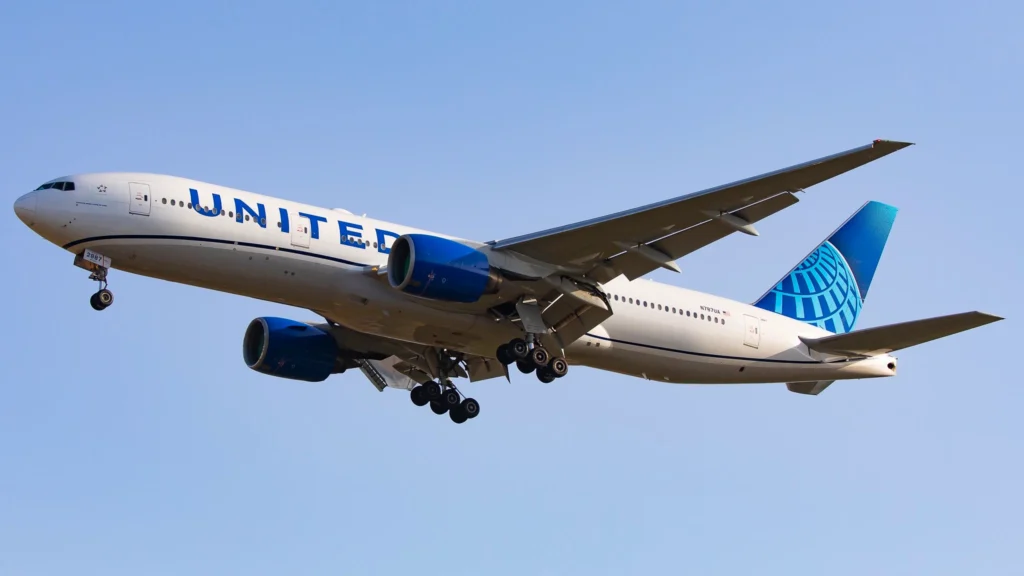
Many of the selected Boeing 777-200ERs are approaching major D-check maintenance cycles, which involve extensive inspections, structural evaluations, and cabin disassembly.
By combining Starlink installation work with scheduled heavy maintenance, United can minimize aircraft downtime while reducing overall retrofit costs.
Engineers will already have access to wiring systems, cabin panels, and fuselage structures during the inspection process.
United also views the 777-224ER fleet as a long-term investment due to its younger average age and premium international configuration.
These aircraft feature Polaris business class cabins and extended-range capability, making them valuable assets for international routes well into the next decade.
The Starlink rollout represents a key part of United’s broader strategy to improve passenger experience and restore reliable onboard connectivity across its global network.
Stay tuned with us. Further, follow us on social media for the latest updates.
Join us on Telegram Group for the Latest Aviation Updates. Subsequently, follow us on Google News
