

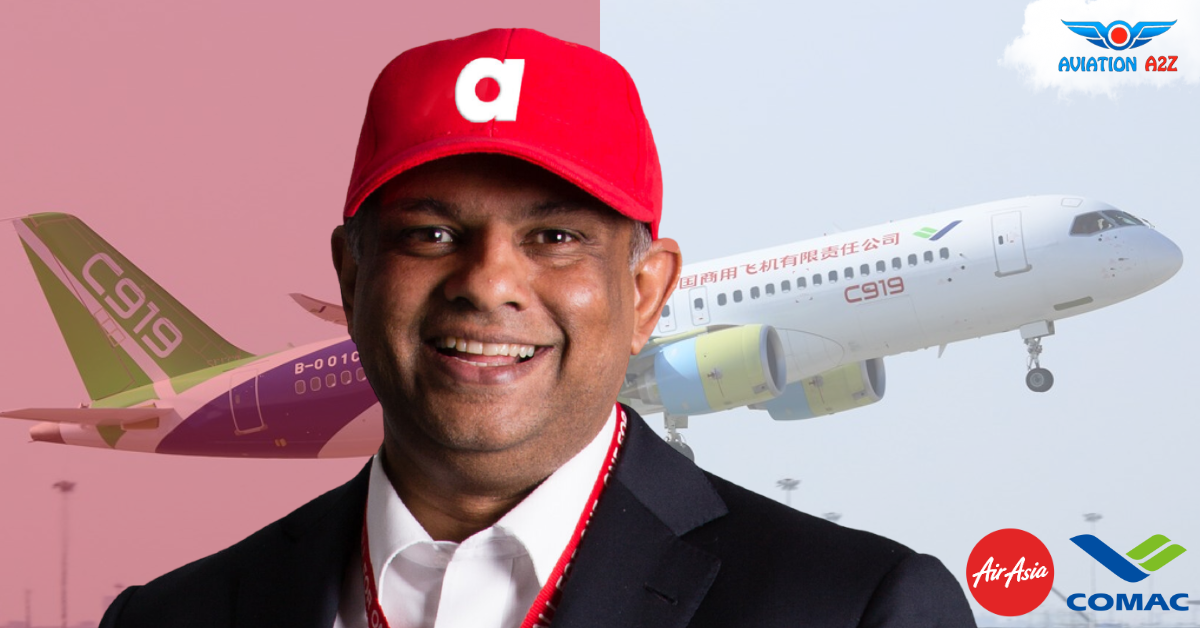
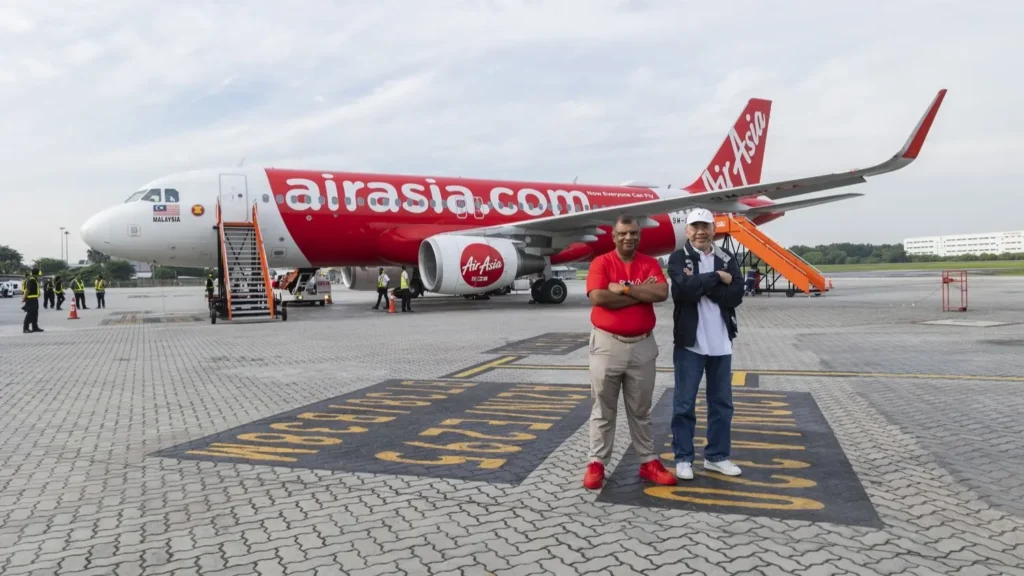
AirAsia remains one of Asia’s most recognisable low-cost carriers, having transformed regional travel with its aggressive pricing and vast network across Southeast Asia and beyond.
Now operating under Capital A Berhad, the airline has expanded into digital services, logistics, and aviation engineering, making it far more than just a budget airline.
Following a turbulent few years during and after the pandemic, the group has steadily recovered, restoring capacity and improving profitability. With such a wide-ranging business model, leadership remains crucial, and at the centre of it is its long-time chief executive.
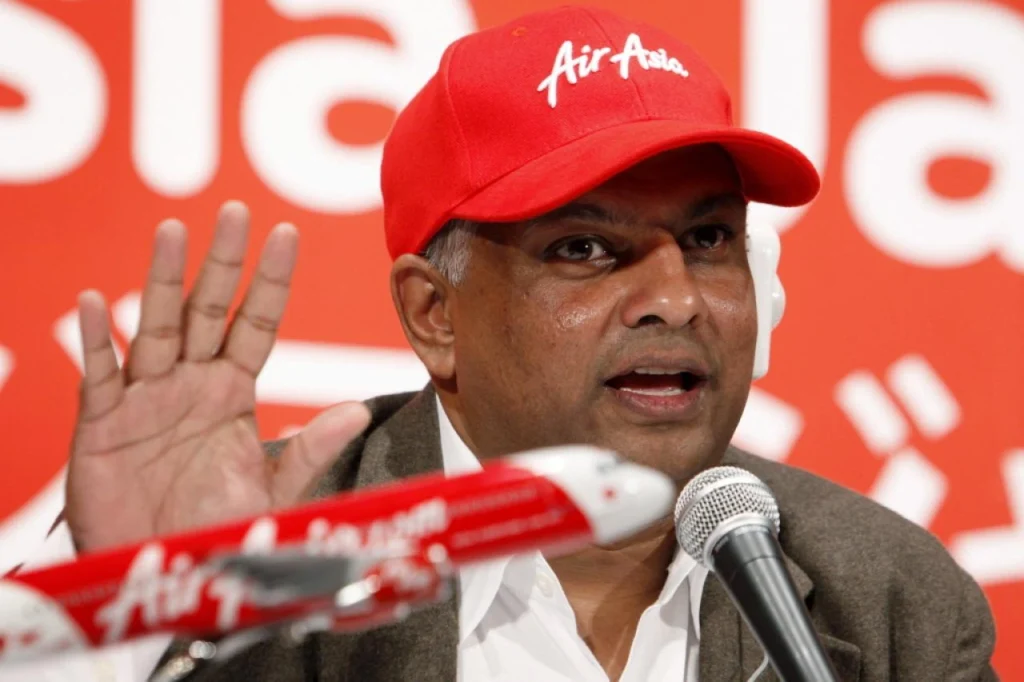
Here is a closer look at who Tony Fernandes is, and how much he earns heading AirAsia in 2026.
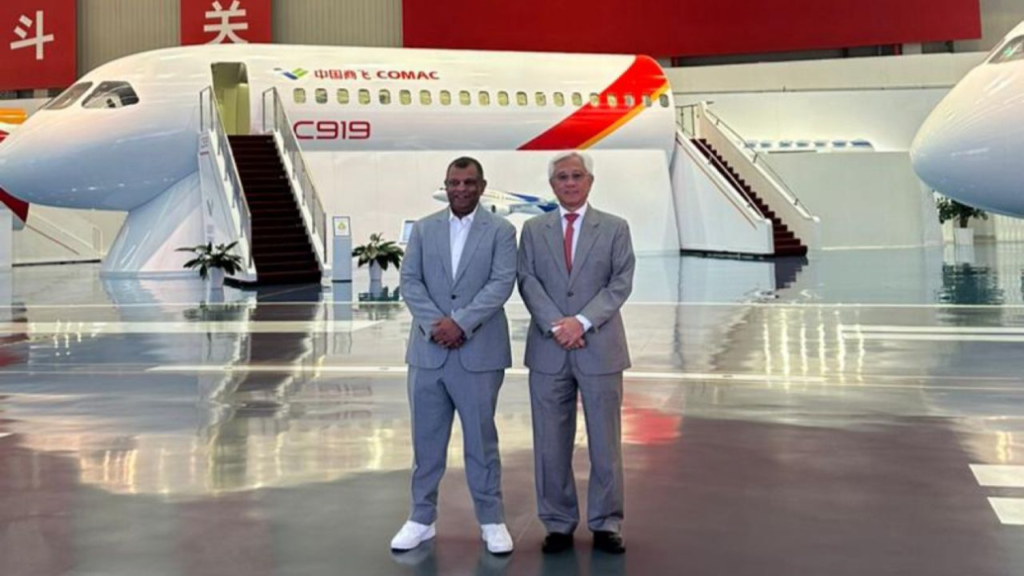
Who is AirAsia CEO Tony Fernandes?
Tony Fernandes is one of the most well-known figures in global aviation, particularly in the low-cost airline segment. A Malaysian entrepreneur, he originally started his career in the music industry with Warner Music before making a bold move into aviation in 2001.
Fernandes famously acquired AirAsia for a symbolic amount and turned it into a highly successful budget airline within a decade. His strategy was simple but effective — make flying affordable and accessible across Asia. That vision helped AirAsia grow into one of the largest low-cost airline groups in the world.
Over the years, he has overseen expansion into multiple markets, including Thailand, Indonesia, and the Philippines, while also pushing into long-haul operations and digital ventures. Despite facing financial challenges during the pandemic, Fernandes played a key role in restructuring the group and stabilising operations.
Known for his hands-on and unconventional leadership style, Fernandes remains deeply involved in the airline’s strategy, branding, and customer experience.
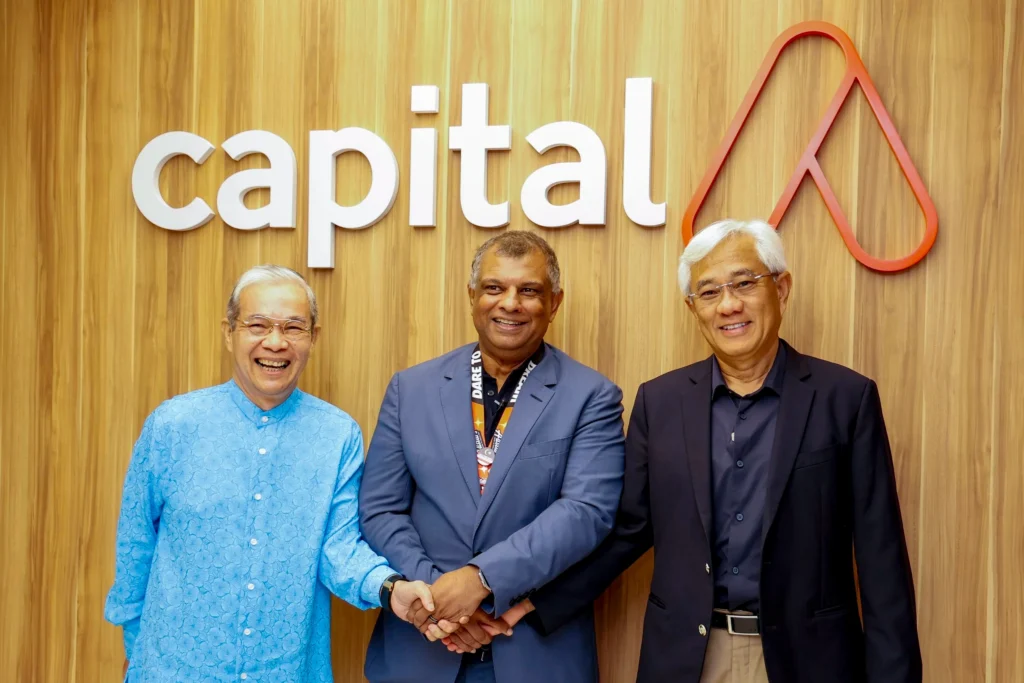
AirAsia CEO Tony Fernandes Salary and Compensation
Unlike many European or American airlines, AirAsia does not pay a massive salary to its CEO, with its payment structure largely aligned with its geographical corporate culture. Here is a look at Tony Fernandes’ estimated compensation.
- Total estimated annual compensation (2025–2026): around MYR 15–17 million (approximately US$3.2–3.6 million)
- Base salary component: roughly MYR 7–9 million
- Bonuses and incentives: approximately MYR 7–8 million, largely performance-linked
- Structure split: close to 50% fixed salary and 50% variable incentives
In overall terms, Fernandes’ salary can reach the US$9 million mark.
A significant portion of his compensation is tied to performance metrics, including profitability, restructuring progress, and long-term shareholder value. Given the group’s recovery phase, variable pay plays a crucial role in determining final earnings each year.
ALSO READ: Air New Zealand CEO Salary in 2026

Salary Comparison
When comparing Tony Fernandes’ compensation with that of other major low-cost airline leaders in the Asia-Pacific region, some clear differences emerge.
At Jetstar Airways, CEO Stephanie Tully operates under the broader Qantas Group structure. Estimated total compensation for Jetstar’s leadership typically falls in the range of AUD 2–3 million (US$1.3–2 million) annually, reflecting its role as a subsidiary rather than a standalone airline.
Meanwhile, at IndiGo, former CEO Pieter Elbers led India’s largest airline by market share. His compensation was estimated at INR 40 crore annually (US$5 million), which is a testament to IndiGo’s dominance of the Indian subcontinent market
Compared to both, Fernandes’ MYR 15–17 million (US$3+ million) guaranteed compensation stands lower, but his overall package can reach a higher number. This reflects not only his CEO role but also his position as a co-founder and group leader overseeing a broader aviation and digital ecosystem.
The comparison highlights a key trend – entrepreneur-led airline groups in Asia tend to offer higher executive compensation, especially when leadership spans multiple business verticals beyond core airline operations.
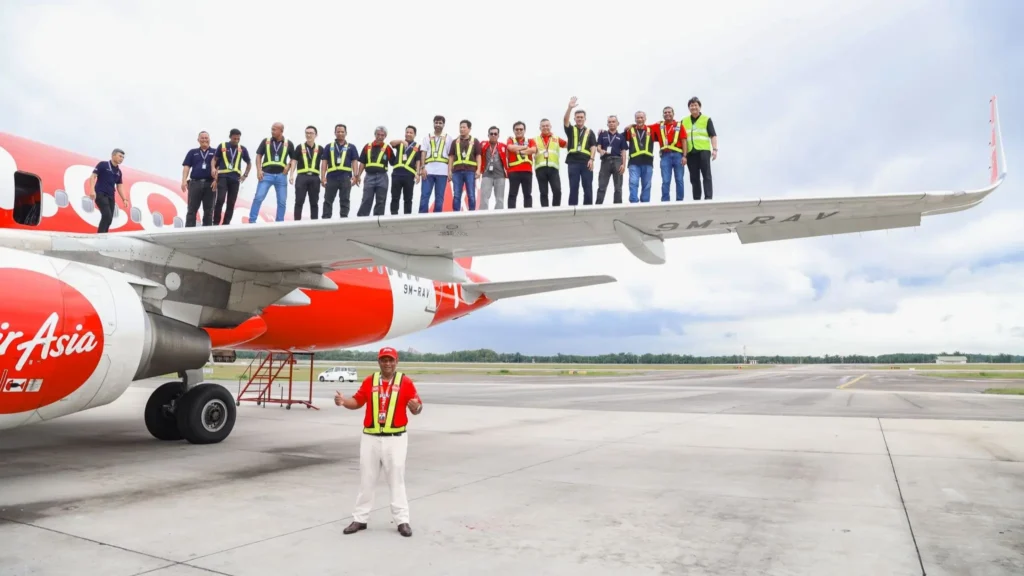
AirAsia’s Strategic Focus for 2026
Looking ahead, AirAsia’s priorities remain centred on growth, recovery, and diversification. The group is continuing to restore full fleet utilisation while expanding into high-demand regional markets.
A major focus is digital transformation, with the AirAsia MOVE platform aiming to integrate travel, fintech, and lifestyle services into a single ecosystem. This shift is expected to generate additional revenue streams beyond traditional airline operations.
At the same time, cost discipline remains critical, with efforts to streamline operations and improve margins after years of financial strain. The airline is also expanding ancillary revenue sources, including baggage, seat selection, and onboard services.
Cargo and logistics, through Teleport, continue to grow as a strategic pillar, particularly with rising e-commerce demand across Southeast Asia.
Overall, Fernandes’ leadership in 2026 is defined by balancing aggressive expansion with financial discipline, ensuring the airline group remains competitive in an increasingly crowded low-cost market.
ALSO READ: Japan Airlines CEO Salary in 2026
Bottom Line
Tony Fernandes’ compensation as AirAsia’s CEO reflects both his long-standing influence on the airline and the scale of the broader Capital A group.
While his pay is higher than that of many regional low-cost airline executives, it is heavily performance-linked and tied to the company’s recovery and expansion.
In 2026, Fernandes remains one of the most prominent figures in Asian aviation, and his salary mirrors not just operational responsibility, but also his role as a founder driving long-term strategic direction.
AirAsia CEO Salary FAQs
His estimated guaranteed compensation is around MYR 15–17 million (US$3.2–3.6 million) annually.
In overall terms, Fernandes earns significantly more, with IndiGo CEO Pieter Elbers estimated at INR 40 crore per year, roughly half of Fernandes’ package.
About half of his compensation is performance-linked, meaning actual earnings vary based on AirAsia’s financial results.
Stay tuned with us. Further, follow us on social media for the latest updates.
Join us on Telegram Group for the Latest Aviation Updates. Subsequently, follow us on Google News
