

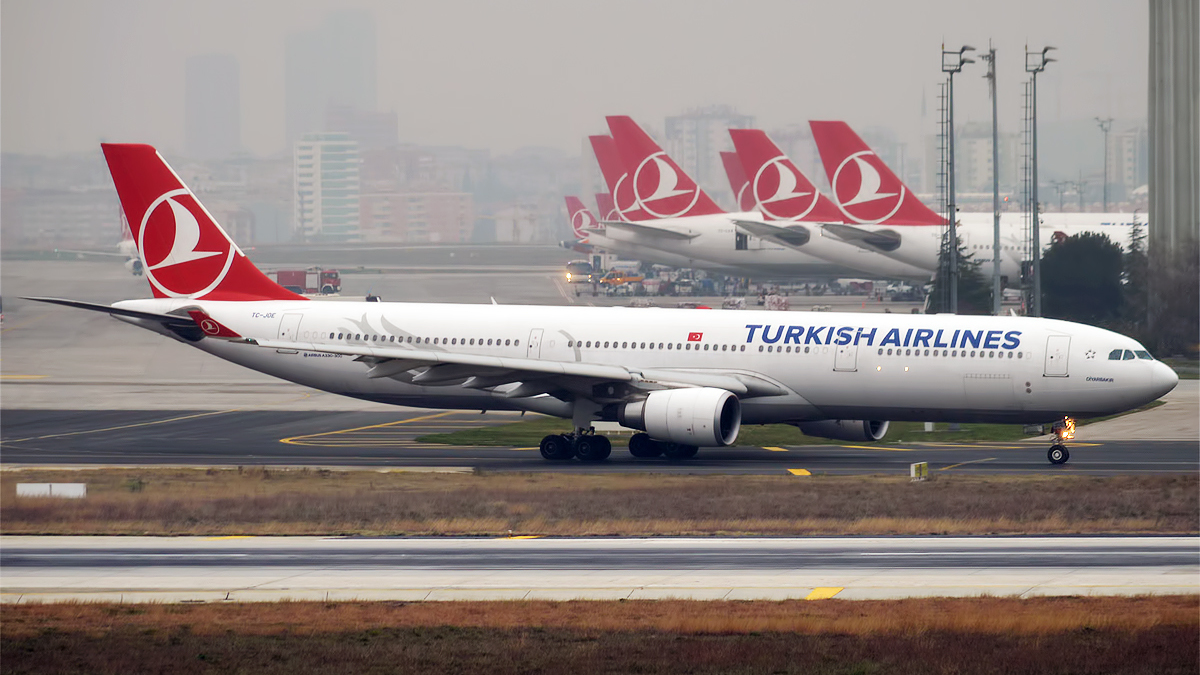
ISTANBUL— A Turkish Airlines (TK) aircraft operating flight TK726 from Istanbul Airport (IST) to Tribhuvan International Airport (KTM) in Kathmandu experienced a tyre fire on its right landing gear during touchdown on Monday morning (May 11, 2026). Airport fire services contained the blaze, and all occupants were evacuated through the emergency exits.
The flight carried 278 passengers and 11 crew members, including several United Nations officials. Airport security at Tribhuvan International Airport (KTM) confirmed that the Turkish Airlines crew completed the evacuation safely, with no reported injuries.
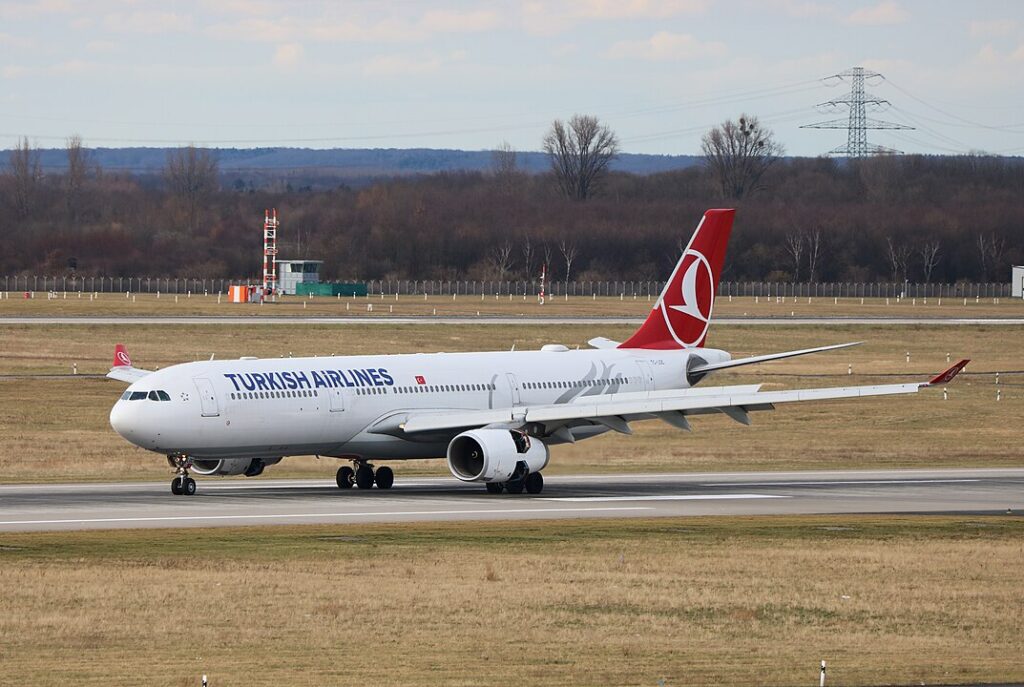
Turkish Airlines Plane Tyres Catch Fire
The incident took place during the landing roll at Tribhuvan International Airport in Kathmandu. The right-side tyres of the aircraft caught fire as the aircraft made contact with the runway. Airport ground crews deployed fire engines and brought the flames under control before the situation escalated.
SP Rajkumar Silawal of the airport security division shared the details with news agency ANI. He confirmed that the aircraft carrying the call sign TK726 was inbound from Istanbul when the tyre fire occurred during landing. He added that the fire was contained using a fire engine and that all passengers were safely evacuated.
A video circulating on social media showed flames on the right landing gear, accompanied by a thick column of grey smoke rising from the wheel assembly. Passengers exited the aircraft through the emergency doors and slides while ground teams worked to suppress the fire.
The flight TK726 was operated by Airbus A330-300, registered as TC-JNP. Further, it is a 14-year-old aircraft powered by two Rolls-Royce Trent 700 engines.
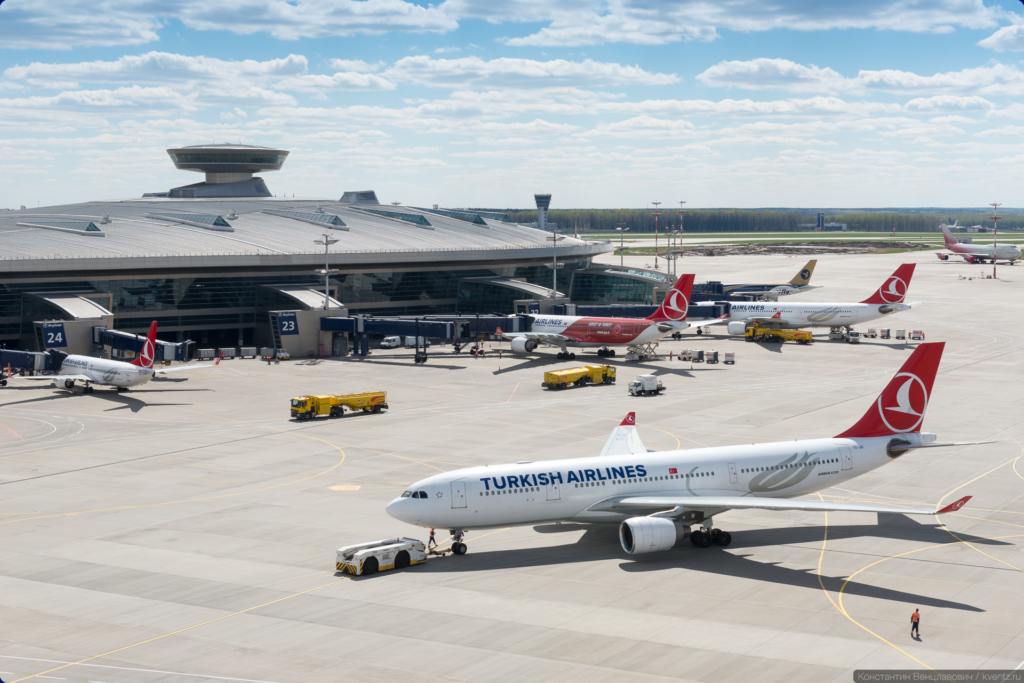
Passenger Composition and Evacuation Response
The flight manifest included 278 passengers along with 11 crew members. Among the travellers were several officials associated with the United Nations who had been routed through Kathmandu for their assignments in Nepal.
Cabin crew members initiated the emergency evacuation procedure once the aircraft came to a stop. All occupants exited the aircraft using the emergency slides and were moved to a safe distance from the burning landing gear. Fire suppression teams continued cooling operations on the affected wheel area after the evacuation was complete.
Neither the Tribhuvan International Airport authorities nor Turkish Airlines have issued an official statement regarding the incident. The exact cause of the tyre fire remains under investigation, and no preliminary findings have been released to the public.
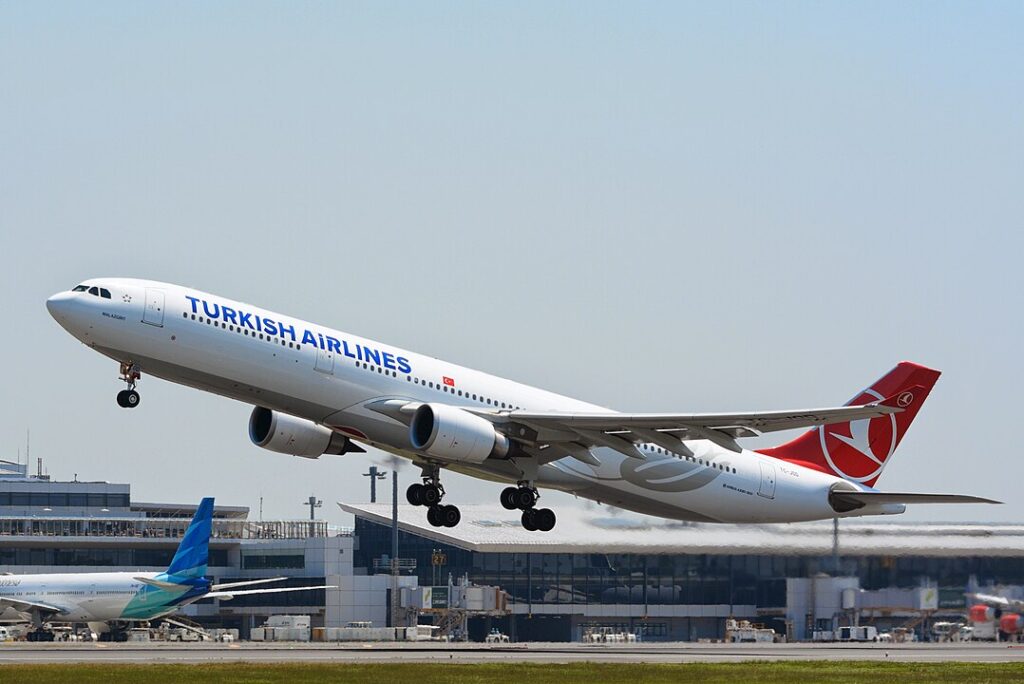
Previous Turkish Airlines Incident at Kathmandu
Turkish Airlines has experienced a serious incident at the same airport in the past. In 2015, a Turkish Airlines aircraft skidded off the runway at Tribhuvan International Airport and came to rest on the grassy shoulder after losing balance during the landing sequence. The runway closure that followed kept the airport shut for four days.
Initial reports from the 2015 event suggested that a loss of situational awareness by the flight captain during the final approach caused the Airbus A330 to deviate from the runway centre line. That flight, also operating under call sign TK726 from Istanbul, was carrying 224 people when it veered into the grassland to the left of the runway at the fog-affected airport.
No passengers sustained injuries during the 2015 runway excursion, and all occupants were evacuated through the emergency doors. The repeated involvement of the same flight number at the same airport has drawn attention from aviation observers, although no link between the two events has been established.
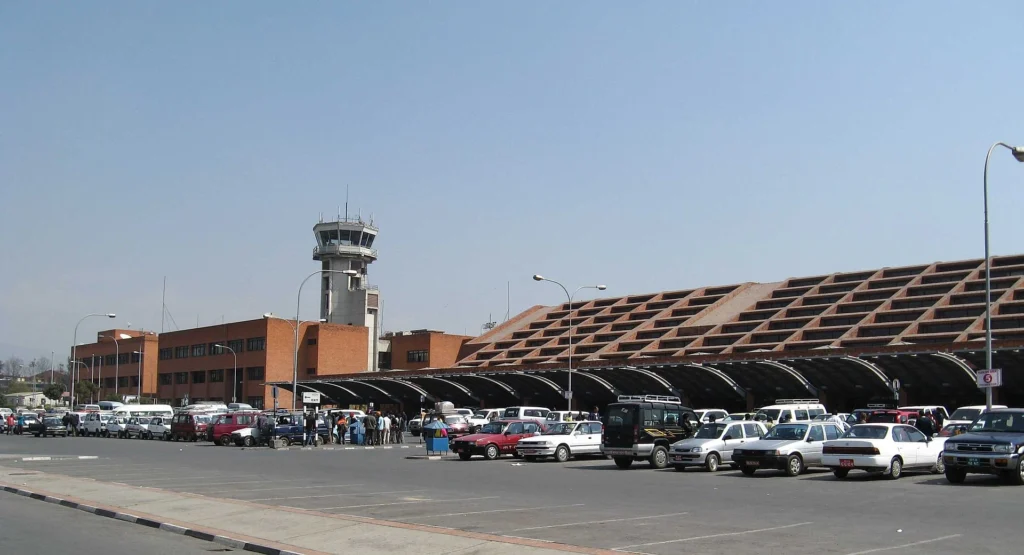
Tribhuvan International Airport Operational Context
Tribhuvan International Airport (KTM) is the only international gateway serving Nepal and handles a significant volume of widebody traffic from Europe, the Middle East, and Asia.
The airport has a single runway and is bordered by terrain that limits operational flexibility during emergency situations.
Operations at the airport were affected briefly while emergency crews secured the area and inspected the runway surface.
Stay tuned with us. Further, follow us on social media for the latest updates.
Join us on Telegram Group for the Latest Aviation Updates. Subsequently, follow us on Google News
