

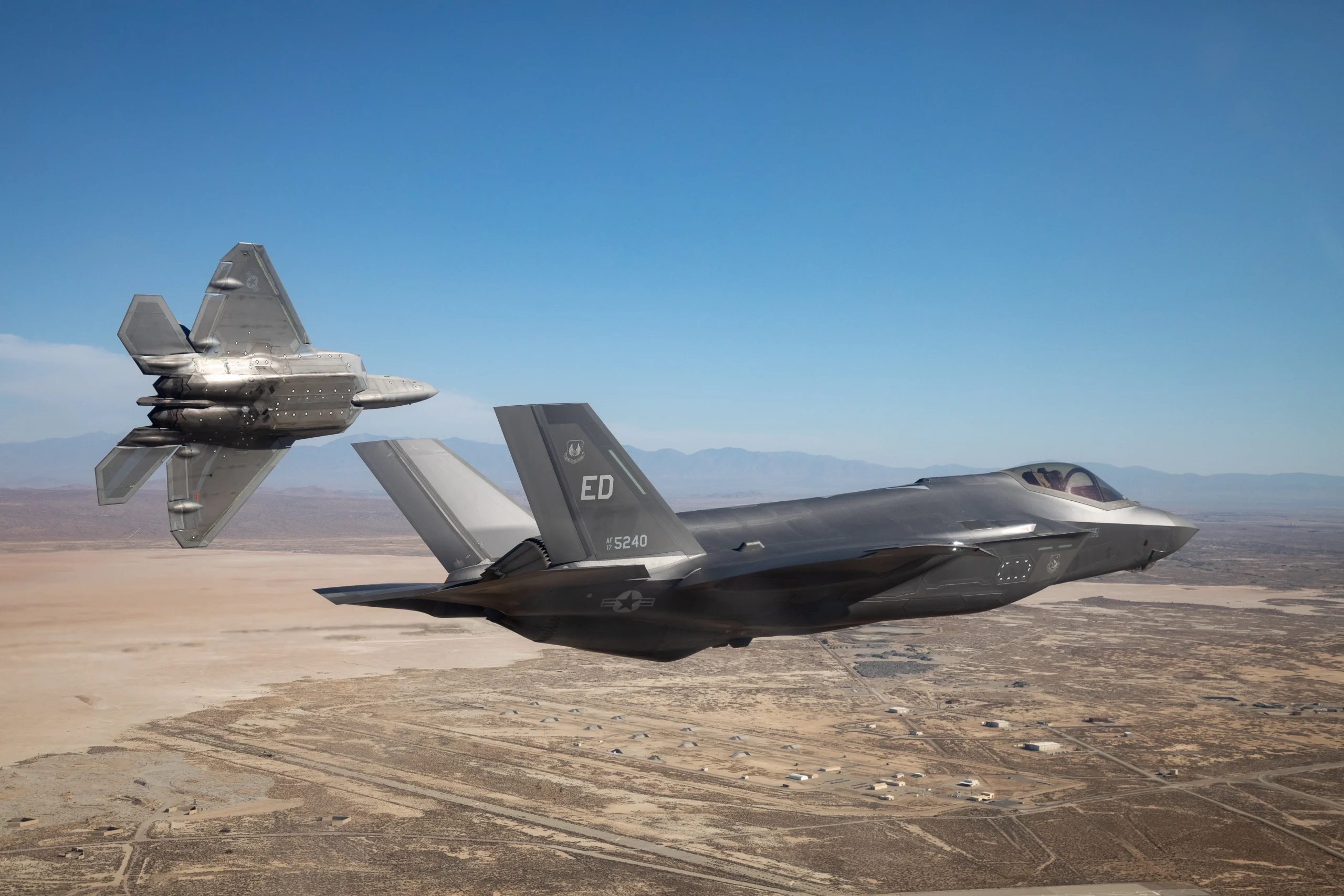
Modern air combat has quietly moved beyond the simplistic metrics of speed and maneuverability.
In 2026, the world’s most powerful fighter jets are defined by their ability to fuse data, evade detection, strike first, and survive in heavily contested environments shaped by advanced air defenses and electronic warfare.
5 Powerful Fighter Jets
This list, first reported by Simple Flying, examines five aircraft that best embody that evolving definition of power—ranging from fifth-generation stealth platforms to highly refined 4.5-generation fighters that continue to deliver exceptional combat value across multiple theatres.
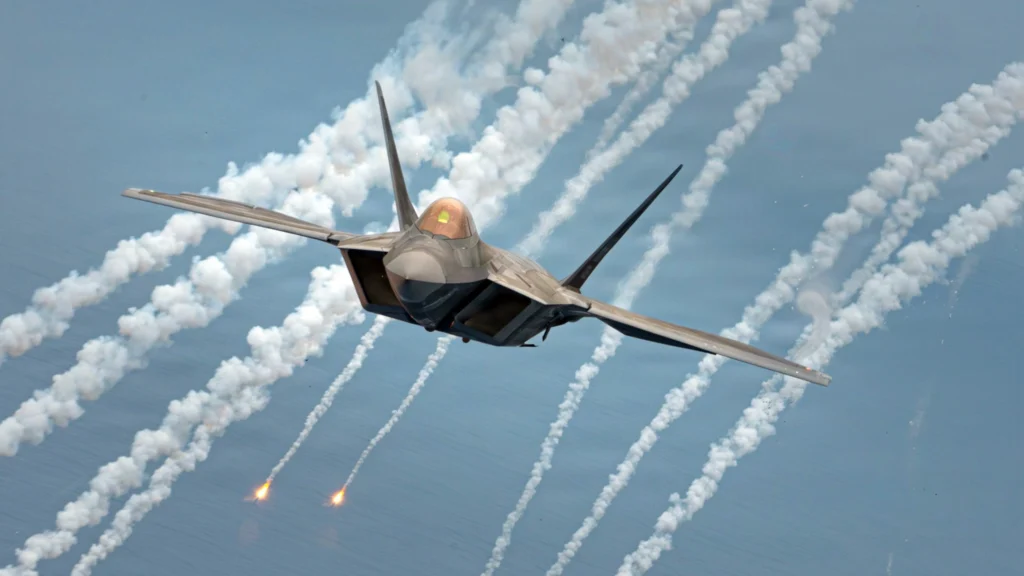
1. Lockheed Martin F-22 Raptor
The Lockheed Martin F-22 Raptor remains the purest expression of air superiority ever fielded. Designed during the Cold War’s closing years but optimized for modern conflict, the aircraft prioritizes stealth, supercruise, and agility in a way no other fighter fully replicates.
It continues to serve as the backbone of the United States Air Force’s (USAF) air-dominance strategy, particularly in high-threat environments where first-look, first-shot, first-kill dynamics determine engagement outcomes. Even decades after its introduction, it is still widely regarded as the benchmark for air-to-air combat.
Key Characteristics
- Stealth-optimized airframe with low radar cross-section
- Supercruise capability (supersonic flight without afterburner)
- Thrust-vectoring engines enable extreme maneuverability
- Advanced sensor fusion for real-time situational awareness
- Designed primarily for air superiority rather than multirole tasks
Specifications
| Category | Specification |
|---|---|
| Top Speed | Mach 2+ (≈ 2,455 km/h) |
| Combat Range | 530 nautical miles (≈ 981 km) |
| Engine Type | Twin Pratt & Whitney F119 turbofans |
| Role | Air Superiority Fighter |
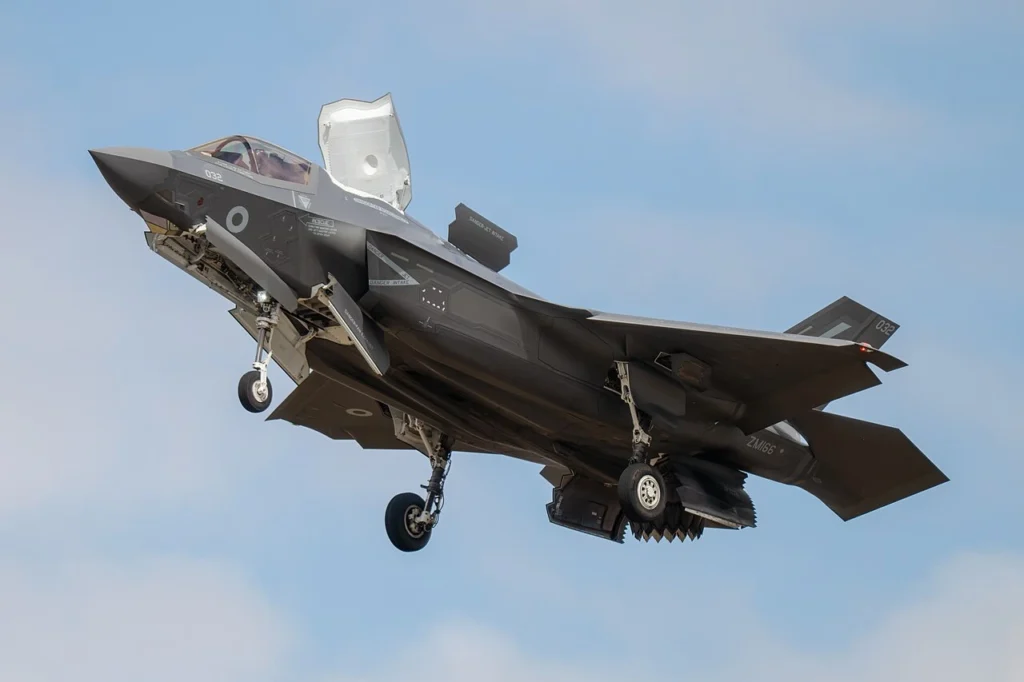
2. Lockheed Martin F-35 Lightning II
If the F-22 represents specialization, the Lockheed Martin F-35 Lightning II represents integration. The aircraft is less about raw aerodynamic dominance and more about information warfare, acting as a flying sensor node that connects assets across air, land, sea, and space domains.
Its influence extends beyond its own capabilities, shaping how allied air forces operate collectively. The F-35’s ability to gather, process, and disseminate battlefield data in real time gives it disproportionate strategic weight in modern conflicts.
Key Characteristics
- Advanced sensor fusion and data-sharing capabilities
- Stealth design optimized for penetration missions
- Multirole flexibility: air combat, strike, ISR, and SEAD
- Network-centric warfare integration across allied forces
- Wide international adoption is enhancing interoperability
Specifications
| Category | Specification |
|---|---|
| Top Speed | Mach 1.6 (≈ 1,931 km/h) |
| Combat Range | 590 nautical miles (≈ 1,093 km) |
| Variants | F-35A, F-35B, F-35C |
| Role | Multirole Stealth Fighter |
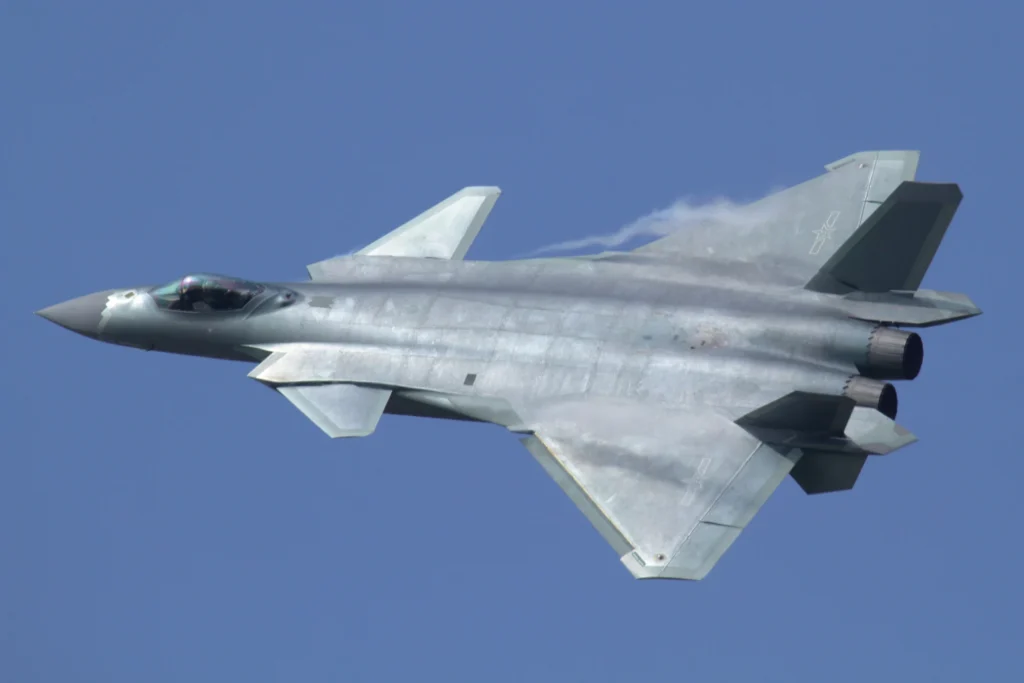
3. Chengdu J-20 Mighty Dragon
The Chengdu J-20 signals China’s arrival in the upper tier of advanced fighter design. Developed for the People’s Liberation Army Air Force (PLAAF), the aircraft emphasizes long-range engagement and stealth penetration, rather than close-range dogfighting.
Its strategic role is particularly notable: targeting high-value assets such as airborne early warning aircraft, refueling tankers, and command platforms. As production scales up, the J-20 is becoming a central pillar of China’s airpower projection.
Key Characteristics
- Long-range stealth platform optimized for beyond-visual-range combat
- Internal weapons bays to preserve low observability
- Advanced radar and sensor systems
- Increasing production rates and ongoing engine upgrades
- Focus on disrupting adversary support infrastructure
Specifications
| Category | Specification |
|---|---|
| Top Speed | Mach 2.0 (≈ 2,470 km/h) |
| Combat Range | 700 nautical miles (≈ 1,300 km) |
| Role | Stealth Air Superiority / Strike Fighter |
| Operator | People’s Liberation Army Air Force |
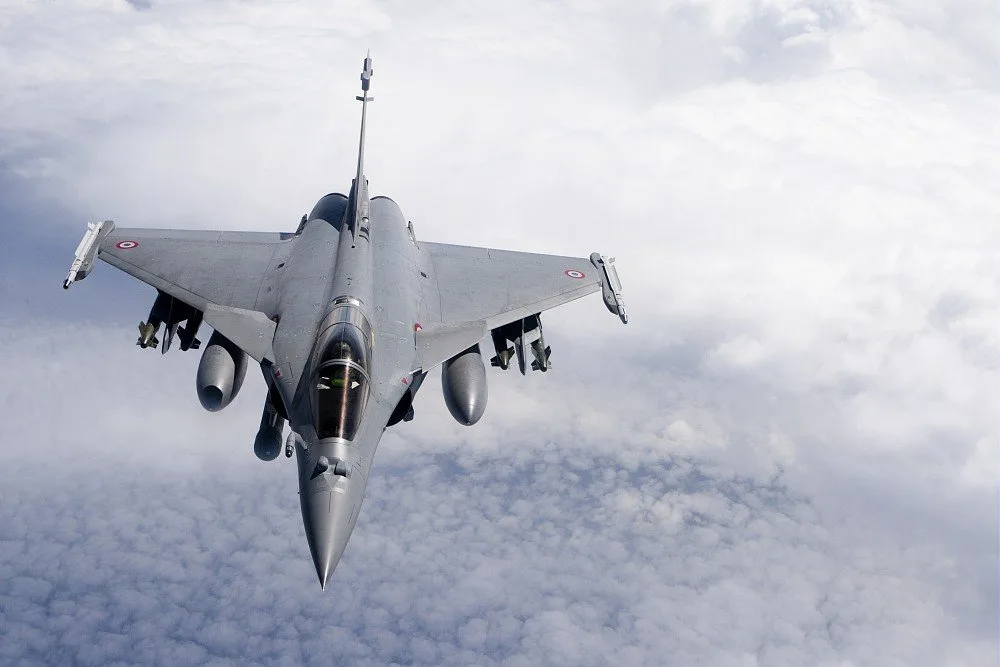
4. Dassault Rafale
The Dassault Rafale demonstrates that stealth is not the sole determinant of combat effectiveness. As a highly refined 4.5-generation fighter, it offers an exceptional balance of performance, range, payload, and operational flexibility.
France has deployed the Rafale across a wide spectrum of missions, including nuclear deterrence, air defense, and expeditionary operations. Its consistent export success further reinforces its reputation as one of the most versatile combat aircraft in service today.
Key Characteristics
- Omnirole capability across diverse mission profiles
- Strong payload capacity with advanced weapons integration
- Proven combat record in multiple theatres
- Advanced electronic warfare suite (SPECTRA)
- High operational reliability and export success
Specifications
| Category | Specification |
|---|---|
| Top Speed | Mach 1.8 (≈ 2,223 km/h) |
| Combat Range | 1,000 nautical miles (≈ 1,852 km) |
| Engine Type | Twin Snecma M88 turbofans |
| Role | Multirole Fighter |
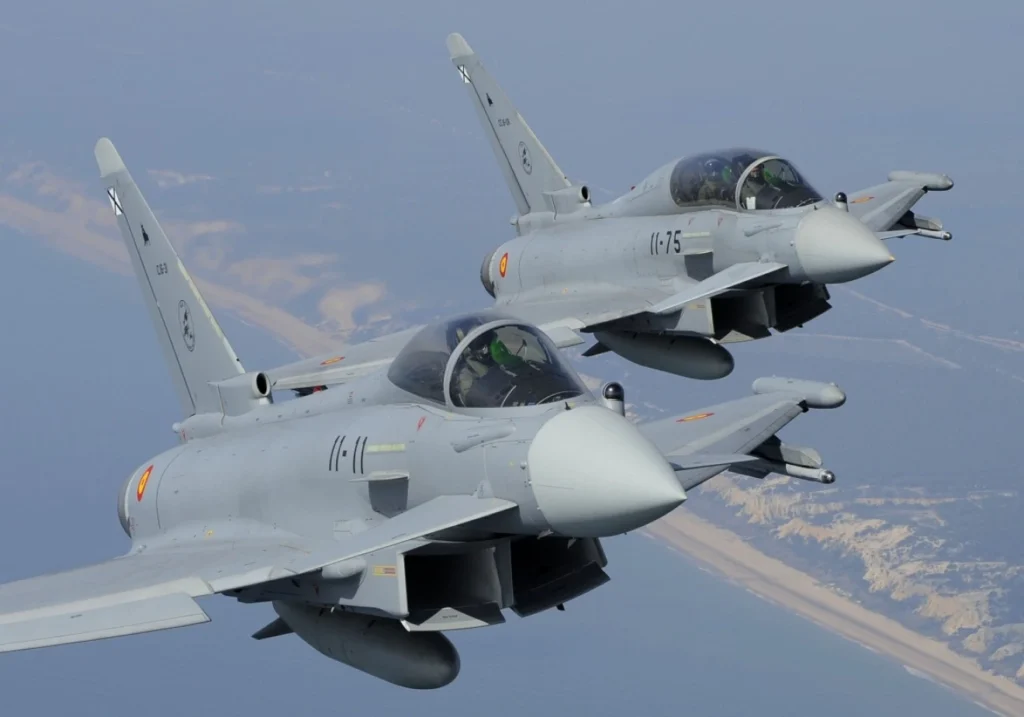
5. Eurofighter Typhoon
The Eurofighter Typhoon was initially conceived as a high-performance interceptor, but it has evolved into a capable multirole platform with strong air combat credentials. Its design emphasizes speed, climb rate, and agility, making it particularly effective in air policing and quick-reaction alert missions.
Ongoing upgrades—including new radar systems and expanded strike capabilities—have ensured that the Typhoon remains operationally relevant in an era increasingly dominated by stealth platforms.
Key Characteristics
- High thrust-to-weight ratio enabling strong climb performance
- Excellent agility and supersonic performance
- Advanced radar and weapons integration upgrades
- Multinational support ensuring long-term sustainability
- Effective in both air superiority and strike roles
Specifications
| Category | Specification |
|---|---|
| Top Speed | Mach 2.0 (≈ 2,495 km/h) |
| Combat Range | 750 nautical miles (≈ 1,389 km) |
| Engine Type | Twin Eurojet EJ200 turbofans |
| Role | Multirole Fighter |
Bottom Line
The aircraft listed above highlight a critical shift in aerial warfare. Power is no longer defined by speed alone but by a combination of survivability, information dominance, and operational flexibility.
Fifth-generation fighters like the F-22 and F-35 dominate in contested environments through stealth and sensor fusion. At the same time, platforms like the Rafale and Typhoon continue to prove their worth through adaptability and sustained combat performance. Meanwhile, the J-20 underscores how rapidly the global balance of airpower is evolving.
Ultimately, the most powerful fighter is not simply the fastest or the most maneuverable. It is the one that can detect threats first, act decisively, and survive long enough to shape the outcome of the battle.
Stay tuned with us. Further, follow us on social media for the latest updates.
Join us on Telegram Group for the Latest Aviation Updates. Subsequently, follow us on Google News
