

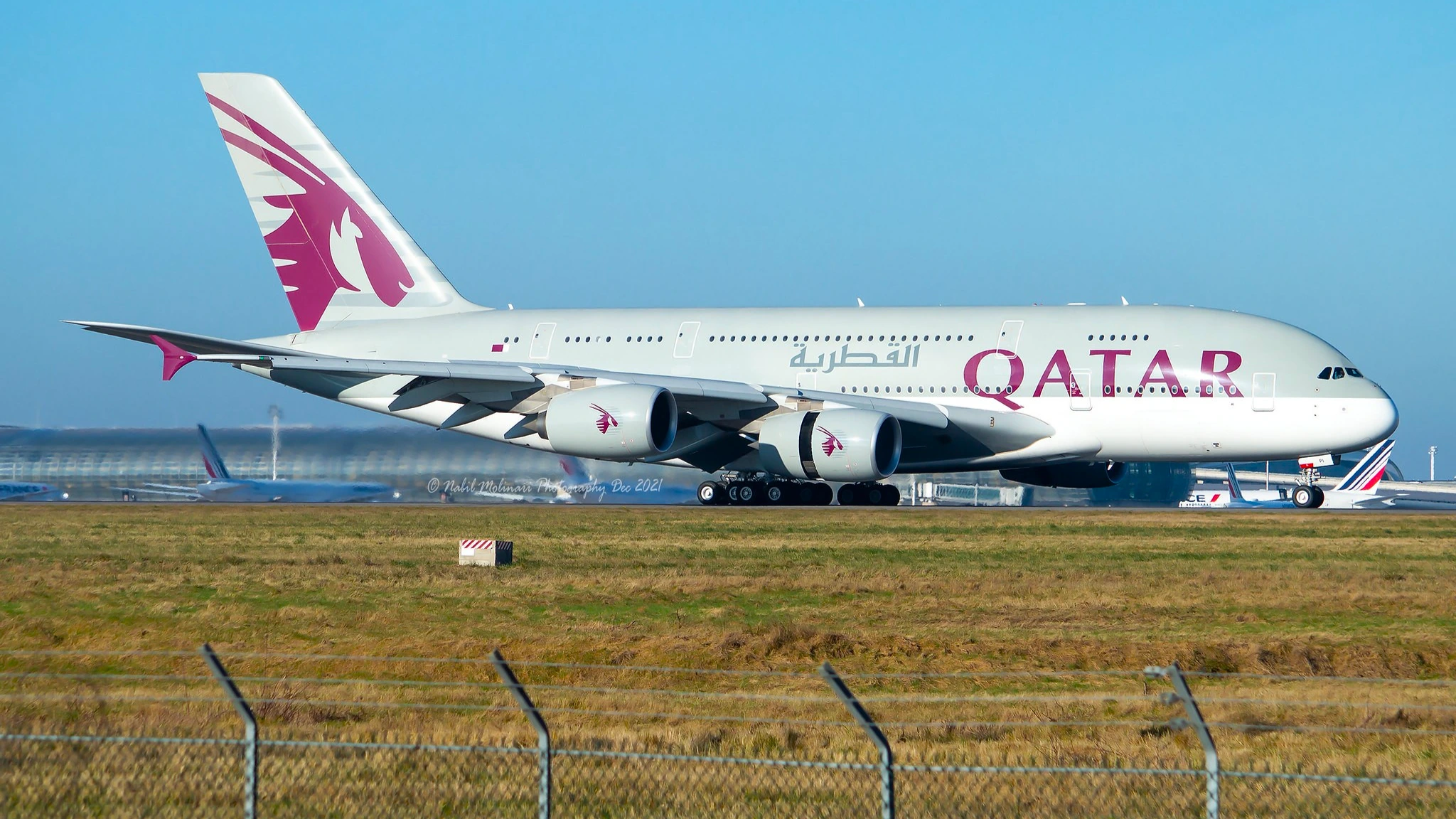
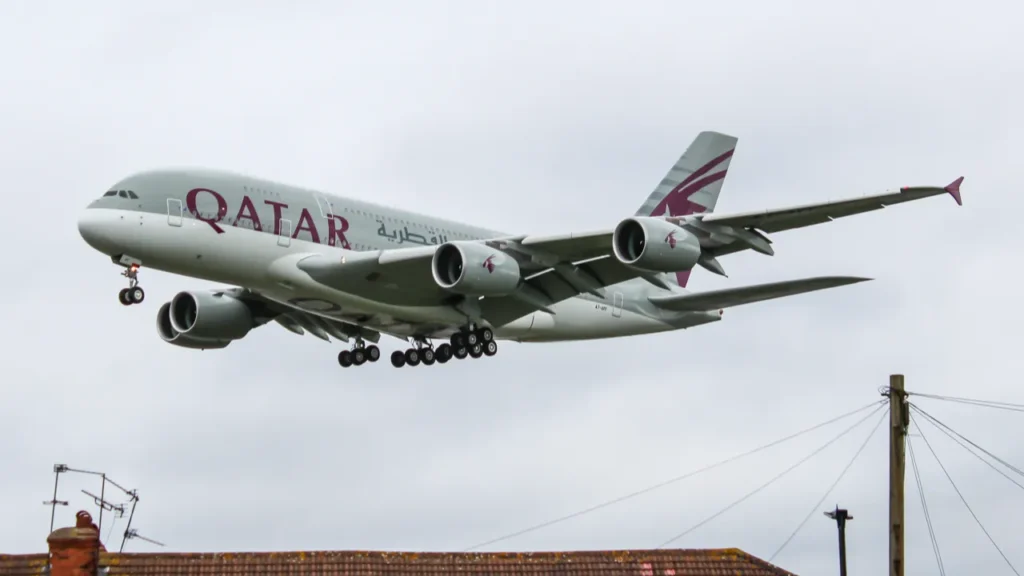
DOHA- Qatar Airways (QR) plans to resume Airbus A380 operations on June 16, 2026, after grounding its entire active fleet of eight superjumbos throughout April and May.
The Oneworld alliance member updated its schedule through September 15, 2026, confirming Doha (DOH) to Bangkok Suvarnabhumi (BKK) and Doha (DOH) to London Heathrow (LHR) as the only two A380 routes for the summer period.
The revised schedule marks a significant reduction from earlier plans that included five A380 destinations. Qatar Airways (QR) has removed superjumbo services to Paris Charles de Gaulle (CDG), Singapore Changi (SIN), and Sydney Kingsford Smith (SYD) for the June through August window. Those three routes now carry a tentative A380 return date of September 16, 2026.
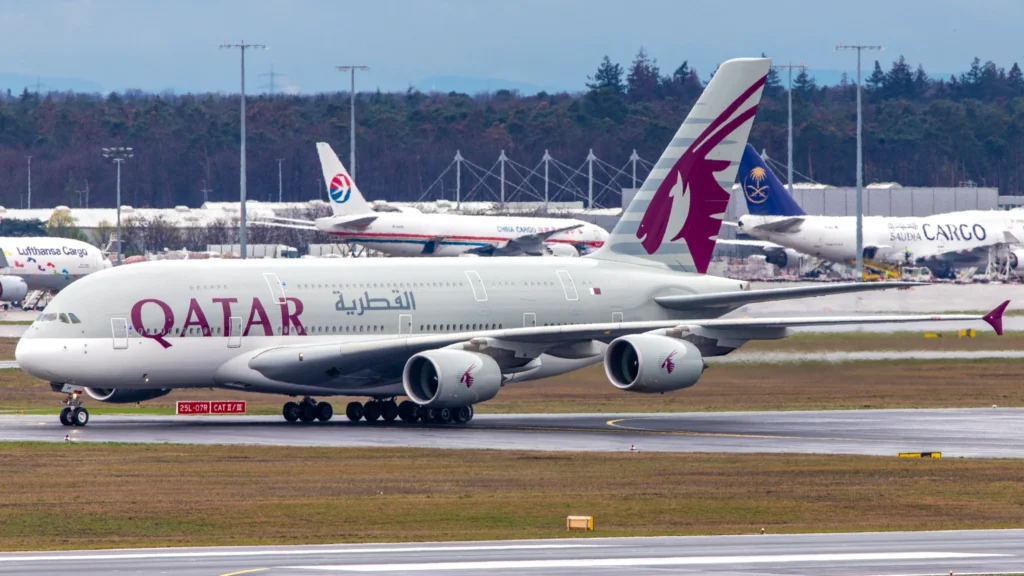
Qatar Airways to Resume A380 Flights
Qatar Airways originally planned to bring back Airbus A380 services on June 1, 2026, across five long-haul routes from Hamad International Airport (DOH). That timeline has shifted twice, Aeroroutes reported.
The return date first moved to June 1 and now stands at June 16, a delay of over two weeks from the initial target.
The planned A380 operations for June 16 through September 15 cover two city pairs with increased frequency. Bangkok Suvarnabhumi (BKK) receives twice-daily A380 service under flight numbers QR834/835 and QR836/837.
London Heathrow (LHR) also gets twice-daily A380 flights, operating as QR011/006, QR103/104, and QR003/004. This represents an upgrade from the originally planned ten-weekly service to Bangkok and once-daily to London.
The three suspended A380 routes will operate with smaller widebody aircraft during the summer. Paris Charles de Gaulle (CDG) shifts to the 354-seat Boeing 777-300ER.
Singapore Changi (SIN) receives a mix of the 283-seat Airbus A350-900 and 327-seat A350-1000. Sydney Kingsford Smith (SYD) gets the A350-1000.
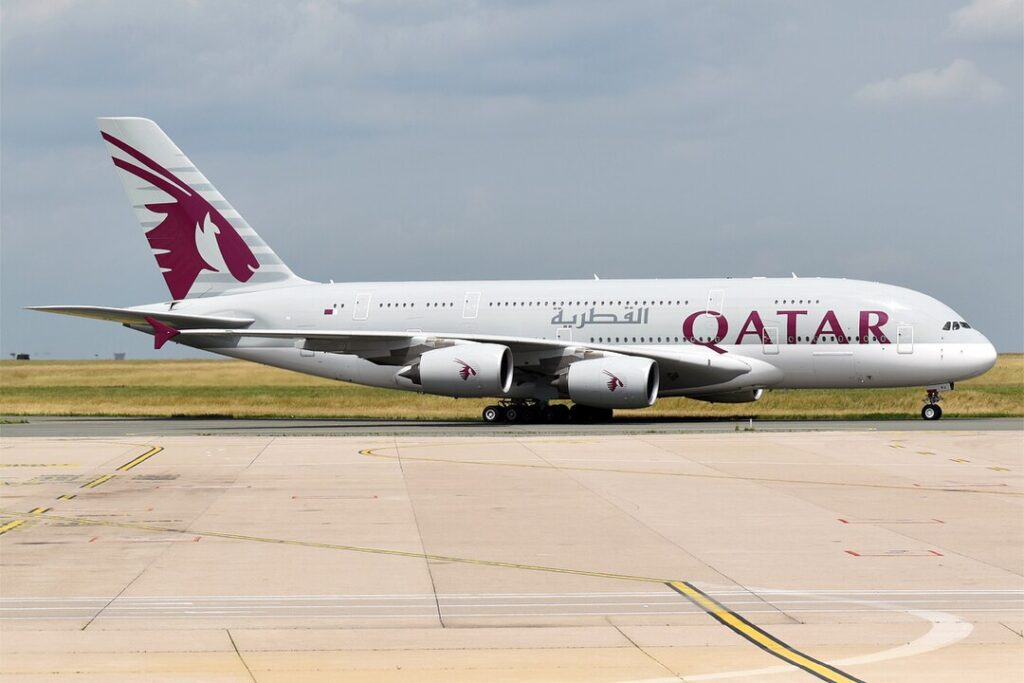
Why Qatar Airways Grounded Its Entire A380 Fleet
Qatar Airways grounded all eight operational A380 superjumbos in April 2026 due to regional disruptions tied to the Iran conflict.
The airline cancelled over 12,000 flights during April and May and suspended service to more than 60 destinations. All grounded aircraft were consolidated at Hamad International Airport (DOH) in Doha.
Two compounding factors drove the decision. Restricted airspace limited available flight corridors from Qatar, adding significant time to journey durations. Elevated jet fuel costs made the fuel-intensive, 517-seat A380 economically unviable on reduced-capacity routes.
Qatar Airways extended refund eligibility through July 2026, signaling the airline was prepared for a potentially longer disruption period.
The airline operates ten A380s in total. Two aircraft have remained in long-term storage since 2020 and are not expected to return to service. At least one active frame, A7-APC, was repositioned to Teruel Airport in Spain for storage during the grounding period.
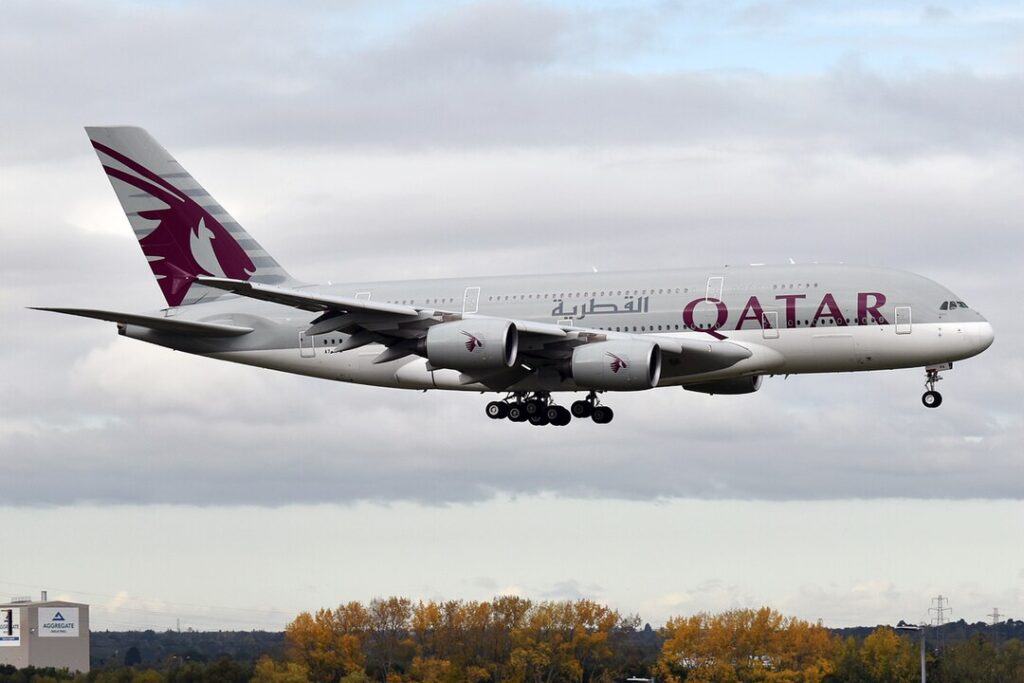
A380 Operations Expected to Decline Year-Over-Year
The reduced A380 schedule reflects a broader contraction in Qatar Airways’ superjumbo operations for 2026. Schedule data shows the airline plans approximately 920 A380 departures from Doha between April and December 2026, down 43% from 1,620 departures during the same period in 2025.
The complete April and May grounding accounts for over half of that reduction. However, every month from June through December shows fewer planned A380 flights compared to 2025. The winter 2026/2027 schedule indicates 305 A380 departures from Doha in November and December, a 22% decline from the same months in 2025.
Bangkok historically received the highest A380 frequency from Qatar Airways. During November and December 2025, the airline operated 24 weekly A380 flights to the Thai capital, equivalent to three to four daily departures. That level of service is not expected to return this year.
Broader A380 Market Continues to Contract
Qatar Airways’ A380 pullback aligns with a wider industry trend. Global scheduled two-way A380 flights for April and May 2026 totaled 12,449, reflecting a 7% decline.
Emirates (EK), the largest A380 operator with 116 aircraft, saw its superjumbo services fall 14% during this period. Etihad Airways (EY) recorded a 16% year-over-year decline in A380 activity for April and May.
Airlines increasingly favor smaller, fuel-efficient widebodies like the Airbus A350 and Boeing 787 for long-haul operations. These aircraft offer lower trip costs and greater scheduling flexibility. Qatar Airways has leaned heavily on its A350 fleet as the A380 footprint shrinks.
Further schedule changes remain highly possible as the airline monitors regional stability and passenger demand through the summer period.
Stay tuned with us. Further, follow us on social media for the latest updates.
Join us on Telegram Group for the Latest Aviation Updates. Subsequently, follow us on Google News
