

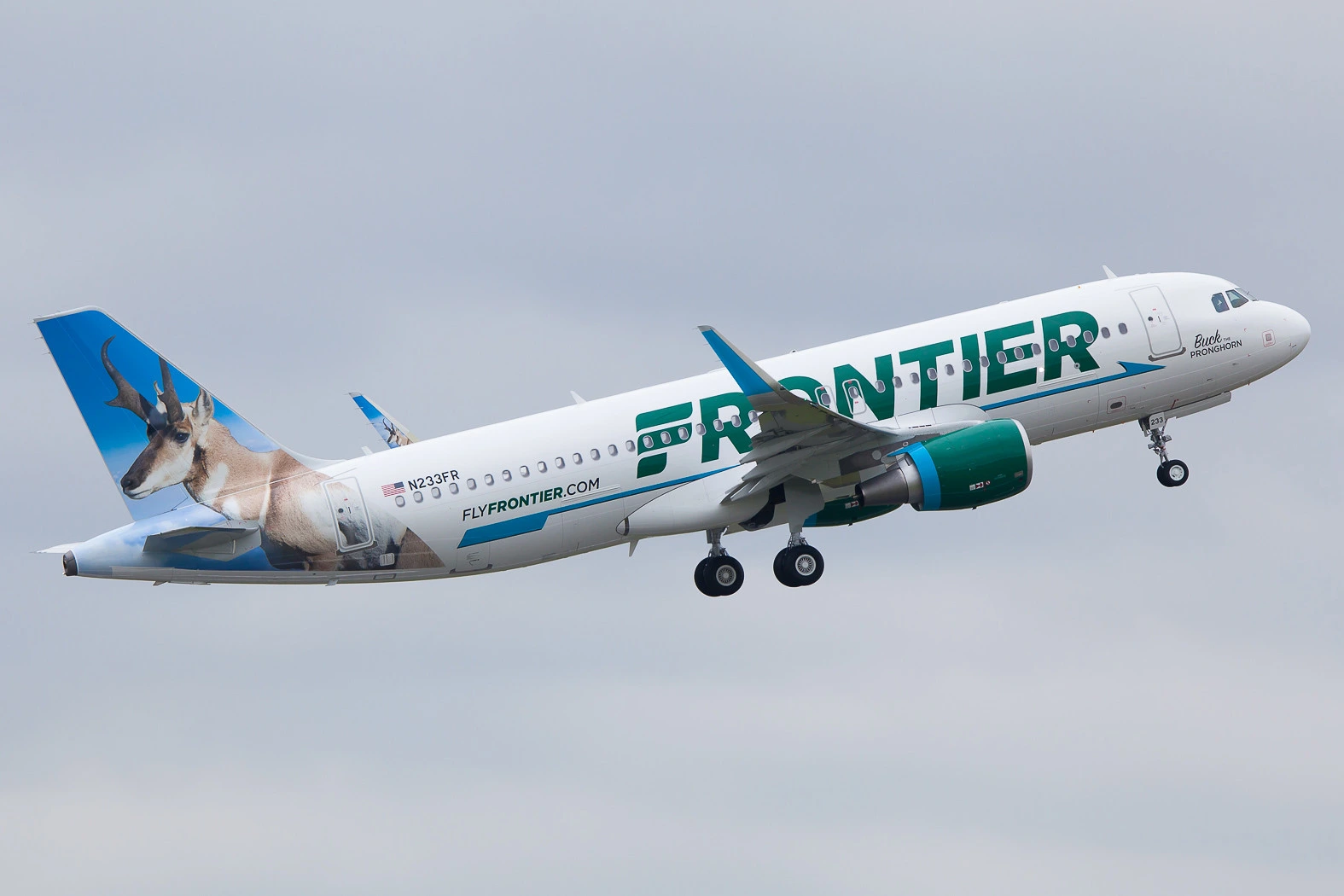
DENVER— Frontier Airlines (F9) will no longer be required to pay the remaining $162,000 portion of a federal fine tied to chronically delayed flights, following a revised decision by the U.S. Department of Transportation.
The Denver-based carrier secured relief after regulators credited the airline’s recent investments aimed at improving passenger experience during disruptions.
The case stems from enforcement action tied to operations involving Orlando International Airport (MCO) and Cyril E. King Airport in St. Thomas (STT), where repeated delays triggered regulatory scrutiny.
Frontier had initially been penalized for failing to adjust schedules despite persistent delays across specific routes.
Frontier Faces DOT Fine
Frontier became one of the first airlines to face penalties under a long-standing but rarely enforced rule targeting chronically delayed flights.
Under this regulation, a flight qualifies if it arrives more than 30 minutes late over half the time across at least five consecutive months.
Regulators initially imposed a $650,000 civil penalty after identifying three such flights between 2022 and 2023. The airline was instructed to pay half the amount upfront, while the remainder was conditional on future compliance.
Frontier paid the first installment of $162,000 in early 2025. However, the latest DOT revision removes the obligation for the second payment, effectively cutting the total penalty in half.
Consumer Investments Credited
The Department of Transportation justified its decision by citing Frontier’s recent “pro-consumer” initiatives.
These efforts included an $80,000 upgrade to its mobile application, enabling real-time push notifications for delays and disruptions.
In addition, the airline distributed over $100,000 in travel vouchers to affected passengers. Notably, these compensations were voluntary and not required under existing U.S. aviation consumer protection laws.
Regulators stated that such actions deliver direct value to passengers, making them more beneficial than fines paid to the government.
The revised approach signals a policy shift that prioritizes tangible customer benefits over punitive enforcement.

Chronically Delayed Rule
The chronically delayed flight rule aims to prevent airlines from maintaining unrealistic schedules. It places responsibility on carriers to proactively adjust operations, even when delays result from external factors like weather or air traffic congestion.
Historically, enforcement had been minimal despite the rule’s existence. That changed recently when authorities began issuing fines of up to $40,000 per violation in a stricter compliance push.
Frontier’s case highlights the evolving regulatory landscape. While the airline was found in violation, mitigating factors included operational constraints such as technical stops required due to aircraft weight restrictions.
The airline’s penalty remains significantly lower than similar enforcement actions. JetBlue Airways (B6), for example, faced a $2 million fine under the same rule, though it also benefited from a reduced payment structure.
Stay tuned with us. Further, follow us on social media for the latest updates.
Join us on Telegram Group for the Latest Aviation Updates. Subsequently, follow us on Google News
