

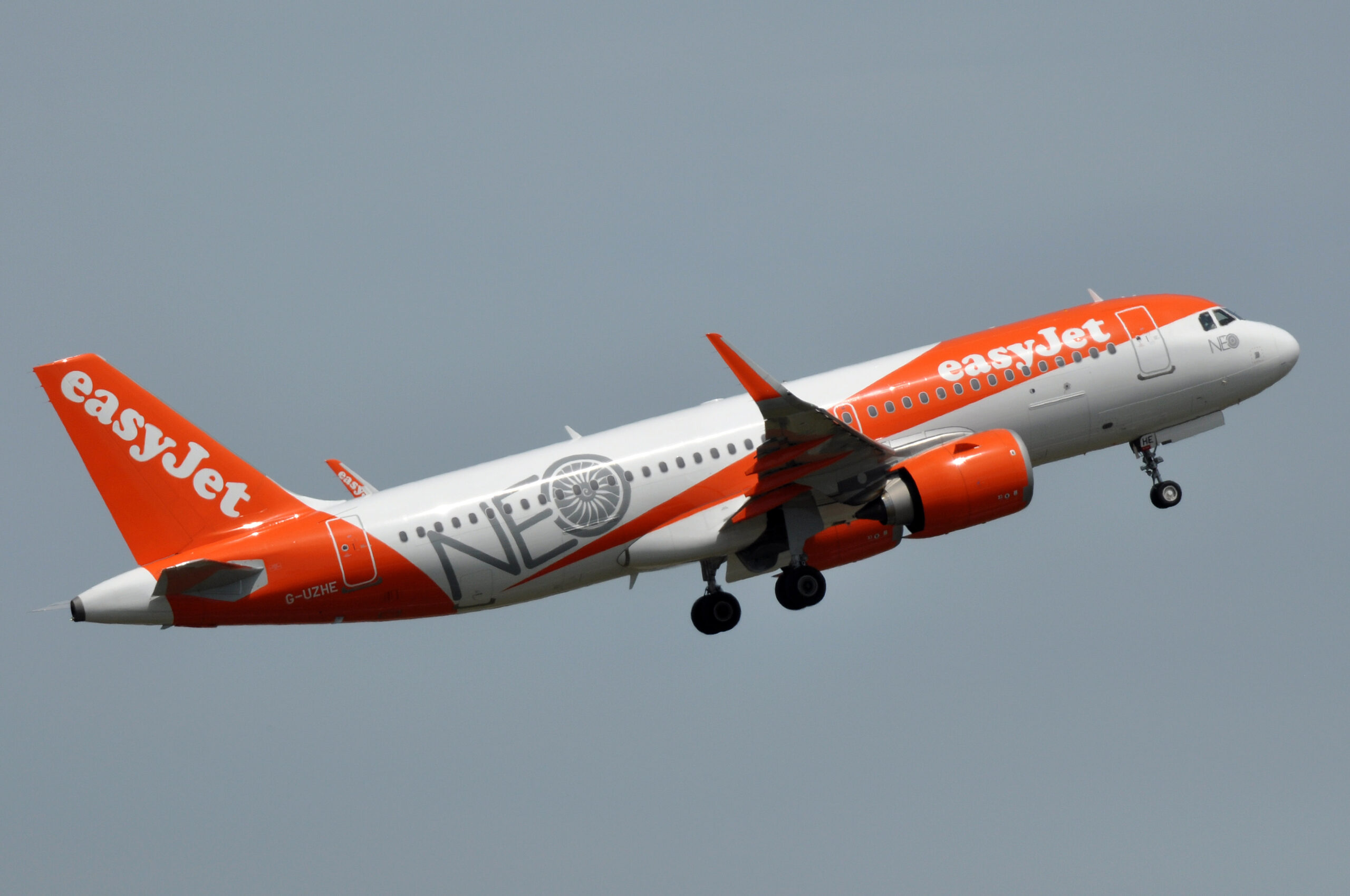
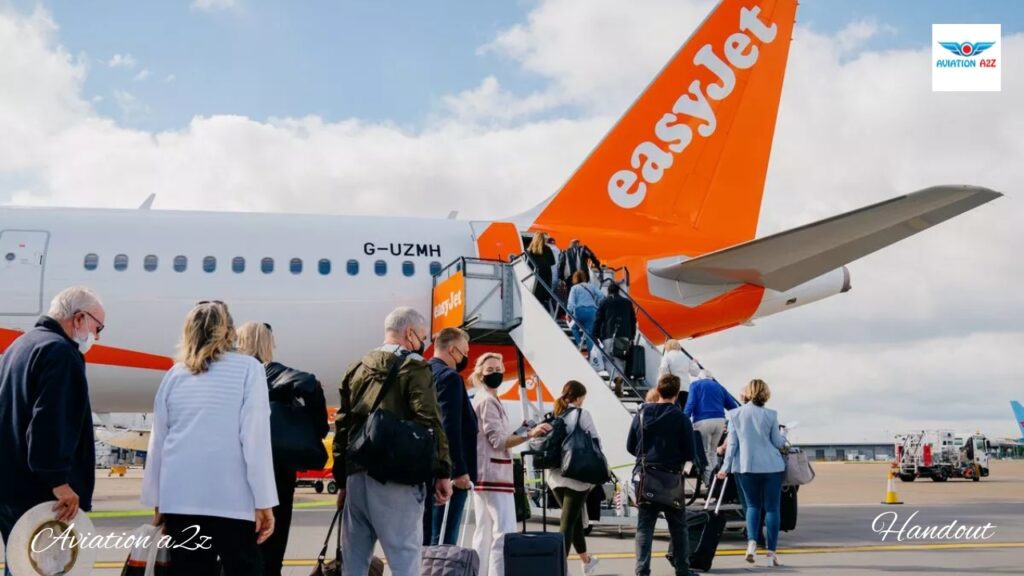
LUTON- Passengers flying with EasyJet (U2) from Milan Linate Airport (LIN) to Manchester Airport (MAN) faced severe disruption after long EU border queues caused more than 100 travellers to miss their flight. The delays were linked to the rollout of the new European Entry-Exit System.
The system, introduced across the Schengen Zone, requires biometric checks for non-EU travellers. Its early implementation led to long processing times, passenger distress, and significant financial losses for affected travellers.
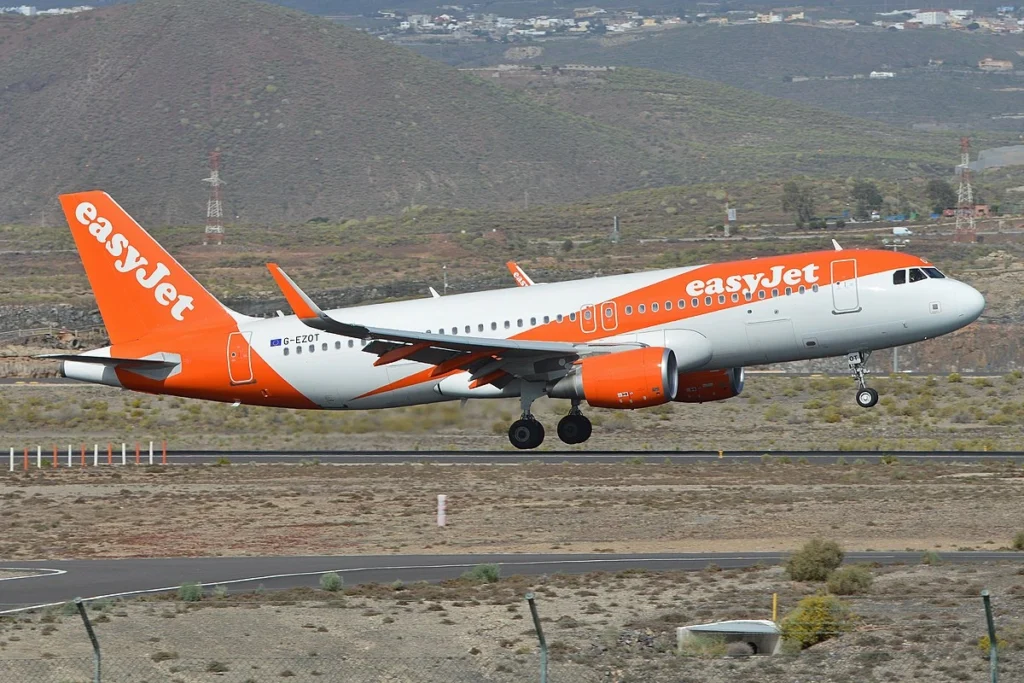
EasyJet Passengers Miss Flights
The European Entry-Exit System (EES) became fully operational on Friday, introducing mandatory biometric registration for third-country nationals, including UK passengers.
Travellers must now undergo facial recognition and fingerprint scans when entering and leaving the Schengen Zone.
This new requirement has increased processing times at border control. Reports from ACI Europe and Airlines for Europe indicate waiting times of up to two to three hours during peak periods.
Operational disruptions were severe in some cases. At one point, no passengers reached a departure gate by its scheduled closing time, and only 12 arrived 90 minutes later.
According to the BBC, these early-stage failures highlight system inefficiencies during high passenger volumes.
Passenger Ordeal Reveals Human Impact
Passengers described chaotic and distressing conditions at Milan Linate Airport. Overcrowded queues led to people fainting, vomiting, and arguing as they waited for hours to complete biometric checks.
Carol Boon, a 59-year-old traveller from Staffordshire, said the experience was “just horrible” and “very stressful.”
She reported that people fainted and became sick while waiting. Her group missed their flight and had to book an apartment in Milan while waiting for a new departure.
Max Hume, 56, from Leeds, described the situation as “awful” and said he spent £1,800 to return to the UK via Luxembourg. He stated that EasyJet offered a £19 alternative with additional costs, which he declined due to the expense.
Joy Oliver, travelling with family, called the situation “absolute carnage.” She rebooked a flight to Edinburgh, forcing her family to make additional travel arrangements to reach their final destination.
Adam Hoijard from Wirral reported that his family waited for hours despite arriving early. He said passengers began “freaking out and feeling sick.” His family spent £1,000 on new tickets, and he noted emotional distress affecting his 5-year-old son.
Missed Flights and Financial Losses
Several passengers stated they arrived at the airport up to three hours early but were not informed of their boarding gate until approximately 90 minutes before departure. This limited their ability to reach the gate in time despite waiting in long queues.
When flights departed, some passengers reported inadequate assistance from airline staff. Travellers said they were left to arrange their own accommodation and alternative flights.
EasyJet stated that it had warned passengers to allow extra time due to expected delays and held flights where operationally possible.
The airline also confirmed that free flight transfers were offered to affected customers, while apologizing for the disruption and stating that the issue was outside its control.
The disruption caused significant financial strain for passengers. Many incurred costs ranging from £1,000 to £1,800 for alternative travel routes, accommodation, and additional transport.
Some travellers rerouted through cities such as Luxembourg or rebooked flights to alternative UK airports, including London Gatwick and Edinburgh.
These changes created further logistical challenges, including arranging ground transport and retrieving vehicles left at original destinations.
Policy Constraints and Expert Insight
The implementation of the EES has reduced flexibility for border authorities. Previously, authorities could fully suspend the system during excessive delays. Under current rules, only partial suspension is allowed.
Industry bodies have raised concerns about this limitation, especially ahead of peak travel seasons. Airlines must also operate within strict constraints such as fixed airport slots and crew duty limits, restricting their ability to delay flights indefinitely.
Travel expert Laura Featonby explained that the new system requires passengers to provide biometric data and answer security questions, with information stored for up to three years. This data is verified again upon exit.
She noted that travellers who entered the EU before the system’s launch may face additional complications during exit checks, increasing processing time. She also emphasized that such disruptions are typical “teething problems” for newly introduced systems.
What Travellers Should Expect
The EES represents a long-term shift in EU border management. Travellers should expect longer processing times and plan accordingly by arriving well in advance of departure.
While initial disruptions may reduce as systems stabilize, biometric verification will remain a standard requirement for entry and exit across the Schengen Zone.
Stay tuned with us. Further, follow us on social media for the latest updates.
Join us on Telegram Group for the Latest Aviation Updates. Subsequently, follow us on Google News
