

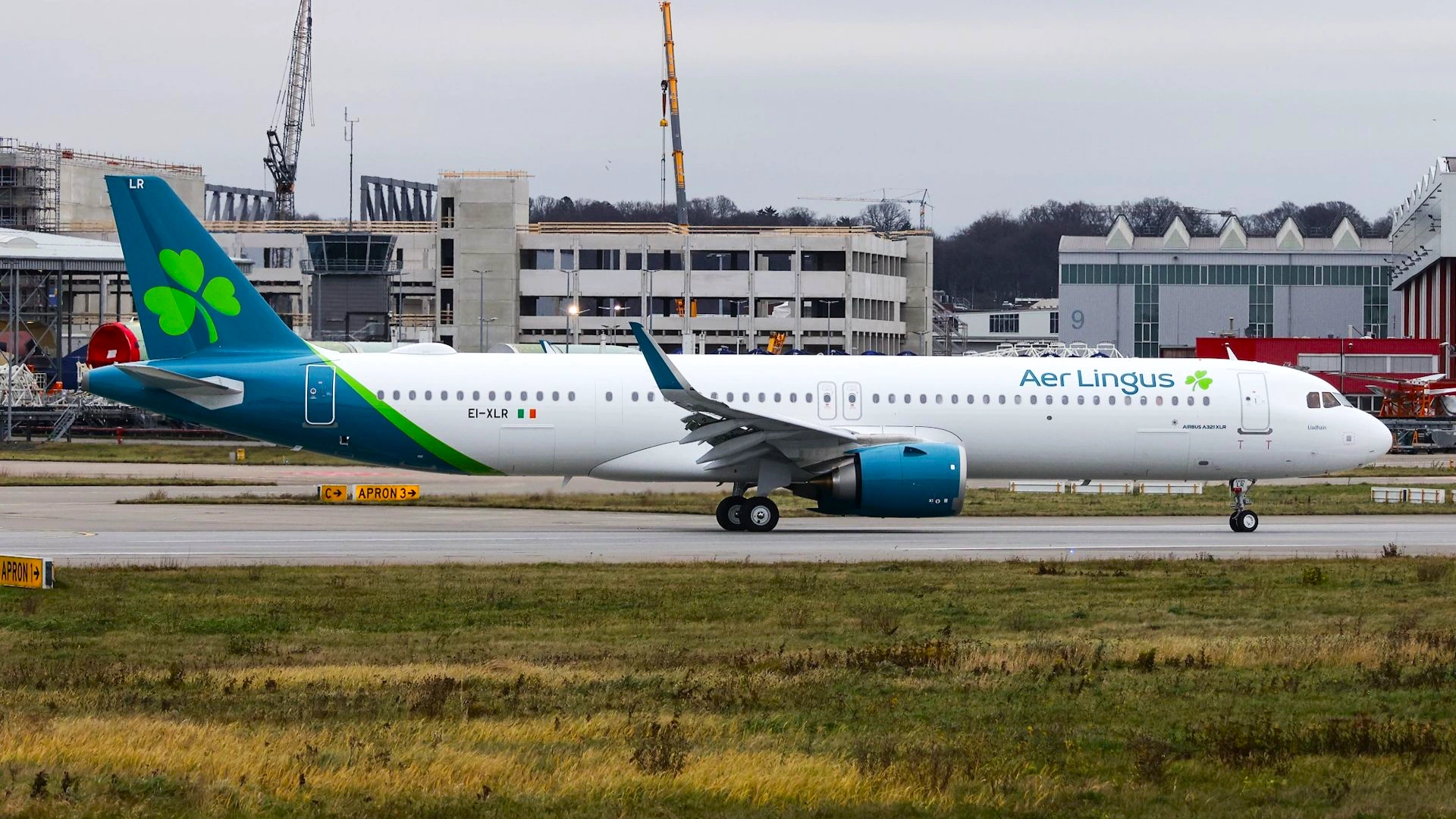
DUBLIN- A senior Aer Lingus (EI) cabin crew member is challenging his dismissal after an onboard dispute on Flight EI515. The case centers on allegations that a passenger was denied access to the lavatory and left in tears during the journey.
Ireland’s Workplace Relations Commission is examining the matter following conflicting testimony about safety procedures, timing, and passenger treatment.
Lavatory Dispute on Aer Lingus Flight EI515
Passengers waited for the inbound jet in a part of the terminal with apparently no bathrooms available.
Upon boarding, the passenger tried to push past O’Neill to use the toilet during fuelling. O’Neill refused on safety grounds. The passenger then muttered oh for f***s sake under his breath, but not directly to O’Neill.
An opportunity to use the lavatory existed after refuelling ended and before pushback, yet O’Neill did not allow it.
After takeoff, while the fasten seatbelt sign remained on, the passenger stood up to reach the forward bathroom near the jump seats. O’Neill sent him back to his seat.
Joan O’Gorman said it seemed strange that O’Neill was not letting the passenger go. The forward bathroom light was definitely green. O’Neill then told the passenger you can’t go to the toilet I’ll tell you whenever you can go to the toilet.
O’Neill’s written account stated the passenger initially tried to push past him on board. After two verbal warnings, O’Neill and the captain agreed the passenger should receive a Dip 1 form as a written warning for disruptive behaviour.
O’Neill asked Claire Durkan to obtain the passenger’s boarding card to record his name.
The passenger said he wasn’t giving his boarding pass unless he could go to the toilet. Durkan relayed the message. O’Neill replied that he won’t be allowed to go to the toilet unless he gives the boarding pass.
The seatbelt light stayed on, and the passenger had yet to use the bathroom when trolley service started.
Reported by the Irish Times, Durkan estimated about 45 or 50 minutes had elapsed, but then said that might sound a little too long.
Conflicting Testimony Over Timing and Access
Durkan testified that after refuelling ended and before pushback, there was an opportunity for the passenger to use the lavatory. She stated that O’Neill did not inform the passenger of that opportunity.
After take-off, while the seatbelt sign remained illuminated, the passenger again attempted to use the forward lavatory.
He was instructed by O’Neill to return to his seat. Durkan said O’Neill later told the passenger: “You can’t go to the toilet. I’ll tell you whenever you can go to the toilet.”
Durkan further stated that O’Neill directed her to obtain the passenger’s boarding pass to record his details for the Dip 1 form.
She testified that the passenger refused to hand over his boarding pass unless she allowed him to use the toilet.
According to her evidence, O’Neill responded that she would not permit the passenger to use the lavatory unless he provided the boarding pass.
The seatbelt sign remained on during this exchange, and the passenger had still not used the lavatory when trolley service began.
There was disagreement regarding the length of time the passenger was unable to access the restroom.
Durkan estimated the duration at approximately 45 to 50 minutes, but later acknowledged that it might have sounded too long. Jason Murray, representing O’Neill, suggested it may have been as short as 10 minutes and stated that the witness did not know the precise duration.
Another crew member, Joan O’Gorman, testified that the forward lavatory light was definitely green when the passenger attempted to use it.
She estimated the time without access was between 45 minutes and one hour. She agreed with airline counsel Tom Mallon that this occurred about halfway through the flight.
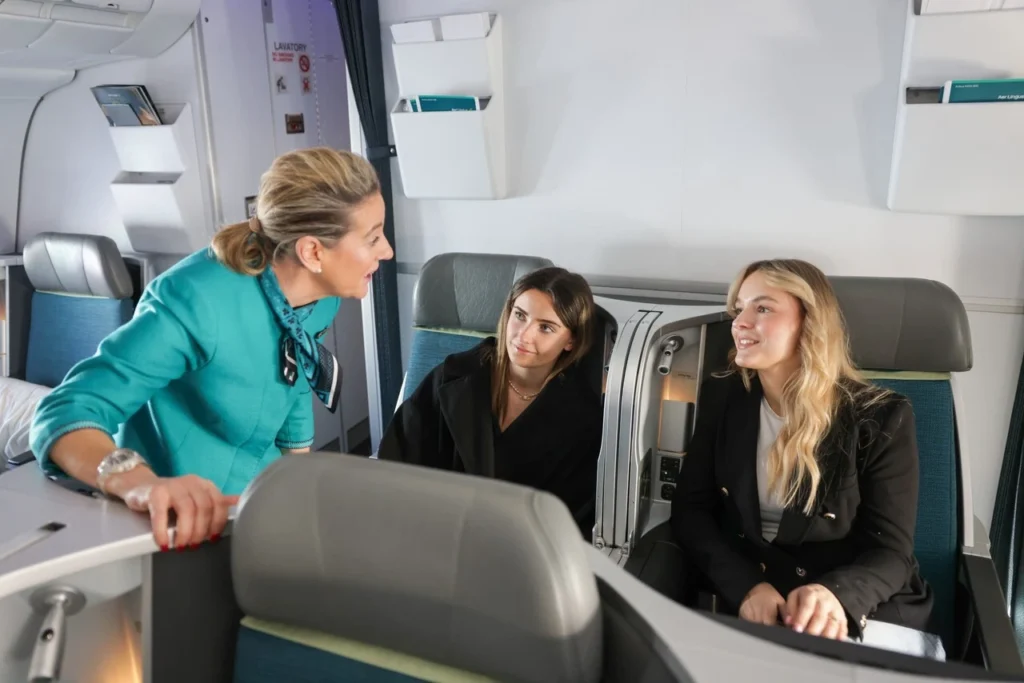
O’Gorman told the tribunal that she saw the passenger walking down the aisle toward the rear lavatory and that he was crying.
When asked whether she had ever observed a man of that age cry due to an interaction with cabin crew in her 10 years of flying experience, she responded that she had not.
Legal Representation and Ongoing Proceedings
Lawyers instructed by the trade union Fórsa support O’Neill’s claim. The airline’s legal team disputes aspects of the testimony and maintains that they followed procedures.
The hearing will continue for 2 more days before adjudication officer Michael MacNamee. O’Neill will likely give evidence later in the year.
The case highlights the balance airlines must maintain between enforcing aviation safety rules and safeguarding passenger welfare during operational disruptions.
Safety Protocols and Employment Law Considerations
Airline procedures restrict passenger movement during refuelling and when the seatbelt sign is illuminated. Cabin crew must enforce these regulations to ensure onboard safety.
The tribunal will determine whether the actions taken were proportionate, consistent with company policy, and compliant with Irish employment law.
The outcome may guide how airlines manage passenger conduct disputes during delays.
Stay tuned with us. Further, follow us on social media for the latest updates.
Join us on Telegram Group for the Latest Aviation Updates. Subsequently, follow us on Google News
